
How to pack your first trekking backpack: a complete beginner's guide
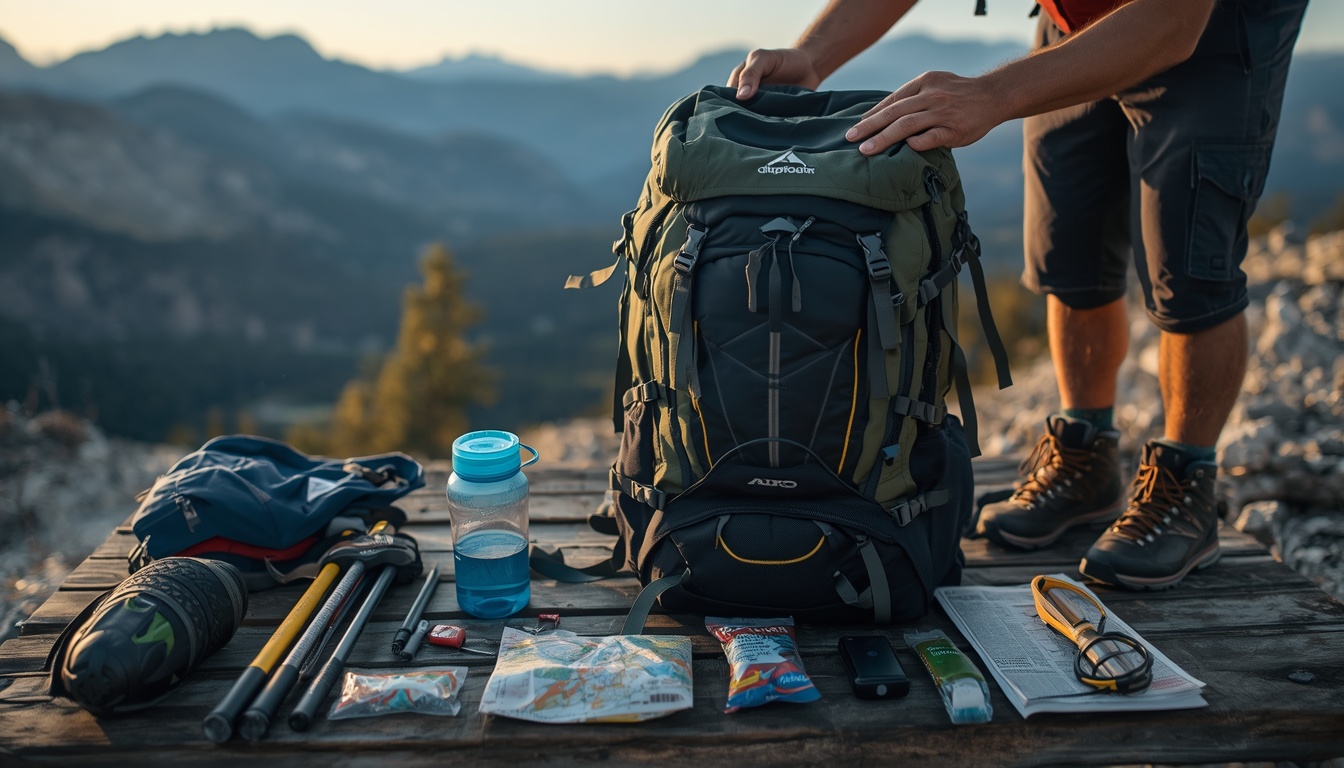
When I was planning my first trek, the thing I thought about most was my trekking backpack. So you’ve decided to go trekking.
You’ve looked up walking routes online. Maybe you’ve had a look at trekking clubs or organised tours. You’ve picked where you’re going, set a date, and everything seems ready.
Then that famous question pops into your head:
“What should I take with me?”
If it’s your first time trekking, this question can be harder than you’d think. Once you start searching online, you’ll come across kit lists that are wildly different from one another.
One person says, “Whatever you do, don’t forget a power bank.” Someone else tells you, “You absolutely have to carry a knife.” And some people share lists so long you’d think you were going camping for three days.
At first glance, all of it seems to make sense.
But dig a little deeper and you’ll notice something:
The point of packing your first trekking backpack isn’t to fill it as full as you can. The real aim is to pick the kit you’ll actually need.
An overstuffed backpack doesn’t just weigh more. It can also tire you out faster on the walk and make it harder to enjoy being outdoors.
So what really belongs in your first trekking backpack? Which items are non-negotiable, and which can change depending on the route?
Let’s take a look together.
The first rule of packing a trekking backpack
Almost everyone planning their first trek has the same thought.

“What if I need it?”
That thought is behind one of the most common mistakes beginners make. Of course you need to be prepared when you head outdoors. But being prepared doesn’t mean stuffing everything you can think of into your backpack.
A day walk of 8–10 kilometres near town, for example, won’t call for the same things as a two-day mountain route. So before you pack your trekking backpack, ask yourself one question: what kind of route am I going on?
Because
- how long you’ll be walking,
- the weather,
- whether there are water sources along the way,
- the season,
- how difficult the trail is
all have a direct effect on the kit you need to take. In short, you should pack for the route you’re going on, not “just in case”.
Why does choosing the right trekking backpack matter?
Before we get to the kit that goes inside, we need to talk about the backpack itself. Putting the right kit into the wrong backpack can make the whole walk a lot less comfortable.
You don’t need a huge mountaineering pack for your first trek. If you’re planning day walks, a 20–30 litre backpack is more than enough for most people. If you’d like to choose a litre range based on the number of nights, have a look at the table in How many litres should a trekking backpack be?
That volume will easily hold the basics: water, spare clothes, snacks, first aid supplies and kit like trekking poles. But volume isn’t the only thing to pay attention to. The carrying system matters at least as much.
Models with adjustable shoulder straps, a sternum strap and a hip belt spread the load more evenly across your body. It might look like a small detail at first, but the longer you walk, the more clearly you’ll feel the difference.
Essential kit for your first trekking backpack
Right, now we can start packing.

I’m going to group the kit here by what it’s for, not by order of importance. I find this makes packing easier and makes you less likely to forget something important.
1. Water. If you asked me what the most important item in a trekking backpack is, I’d say water without a second thought. Running out of water doesn’t just hurt your performance. It can have a direct effect on your safety, too.
How much water you should take can’t be boiled down to a single number. It depends entirely on how long you’ll be walking, the temperature, how difficult the trail is and how much you personally drink.
A short walk in cool weather and a long trail in the middle of summer don’t have the same needs. So it wouldn’t be right to say, “You must carry this many litres of water.”
A much better approach is to find out, before you set off, whether there are reliable water sources along the route.
2. Energy-boosting snacks. One thing that surprises lots of people on their first trek is how quickly they get hungry. Because you’re on the move the whole time, your body burns more energy than usual. That’s why it’s worth keeping snacks in your backpack that are easy to carry, won’t go off and can give you a quick energy boost. Nuts, dried fruit, protein bars and energy bars, for example, can be a handy option while you’re walking.
The idea here isn’t a big meal. It’s to keep your energy levels steady throughout the day.
3. First aid kit. I hope you never have to use it. But a first aid kit tops the list of things you’ll regret not having with you the moment you need one.
When we hear “first aid”, many of us picture a big, heavy bag. For day walks, though, a small first aid kit that covers the basics is usually enough.
It’s a good idea to have plasters, sterile gauze, an elastic bandage, antiseptic wipes and any medication you take regularly, for example.
What matters here isn’t just carrying a first aid kit. Knowing how to use the basic supplies inside it matters just as much.
4. A waterproof or light outer layer. You should always check the weather forecast before you go trekking. But out in nature, the weather doesn’t always behave the way it was forecast.
Especially at high altitude, sunshine can give way to rain or strong wind within a few hours. That’s why it’s a good habit to keep a light waterproof or outer layer in your backpack, one that folds down easily. I’m not talking about a heavy ski jacket here. The aim is to carry a light layer that protects you from short showers and wind.
If you’ve already read our guides to Gore-Tex and DWR technology, you’ll know much better why layers like this matter.
5. Spare socks. They might seem trivial at first, but spare socks are one of the most useful things you can have in a trekking backpack.
Your feet are far more likely to get wet than you’d think, especially in rain, at stream crossings or on long walks.
Walking for hours in wet socks doesn’t just make you less comfortable. It can also raise the risk of problems like friction blisters. So keeping a dry pair of socks in your backpack is one of those habits that looks small but can make a big difference.
If you’re planning long walks, it’s also worth choosing technical trekking socks, which handle moisture better, over cotton ones.
6. Phone and power bank. These days most of us use our phones to find our way outdoors. Navigation… The weather forecast… Taking photos… Getting in touch in an emergency… All of this can drain your battery faster than you’d expect. That’s why carrying a small power bank, especially on long walks, can matter not just for comfort but for safety as well.
The point isn’t to keep using your phone all day. It’s to make sure your phone still works when you need it.
7. Torch and whistle. Even if your first trek is a short day route, it’s worth having a small torch or a head torch in your backpack.
Out in nature, plans don’t always go the way we’d like. The walk might take longer than you expected. It might get dark earlier than you planned. The trail might take more time than you’d guessed.
At times like that, a small light source becomes far more valuable than you’d imagine.
In the same way, a small whistle is something most people don’t think twice about. Yet in an emergency, it can be one of the easiest ways to make yourself heard over long distances. It takes up almost no space and weighs next to nothing.
8. Sun cream and a hat. When we think of trekking, most of us picture shady forest paths. But plenty of routes cross open ground for long stretches.
Walking for hours in the sun, especially in spring and summer, can hurt your performance and be bad for your skin. So it’s a good habit to keep a small tube of sun cream and a hat in your backpack. These two might seem unimportant at first, but by the end of the day you may well feel the difference they make.
How should you pack a trekking backpack?
Packing your kit the right way matters as much as taking the right kit.
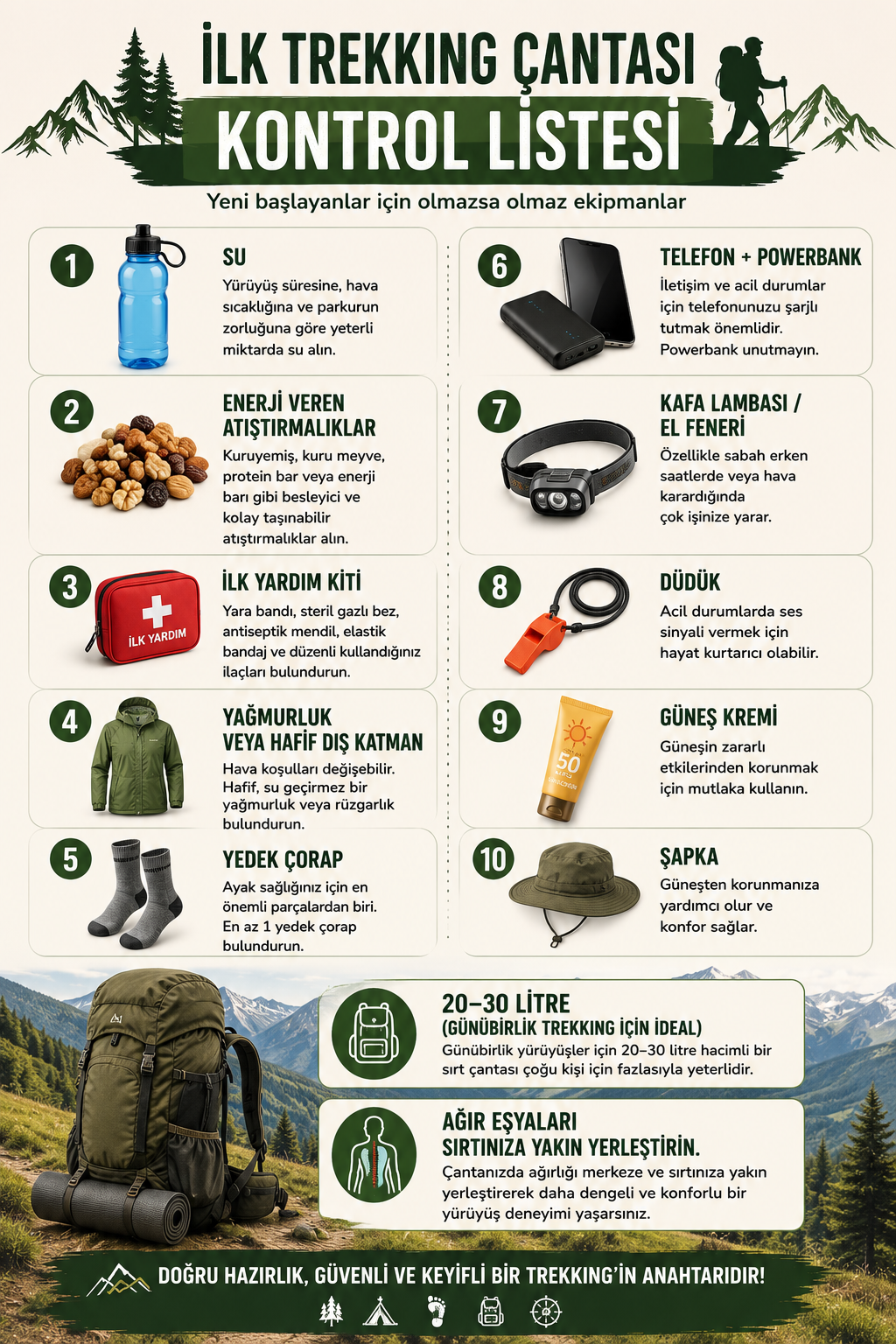
A badly packed backpack can throw off your balance on the walk and put more load on your shoulders than it should. As a general rule, heavy kit should go close to your back and in the middle of the pack. That brings the centre of gravity closer to your body, so you feel more balanced as you walk.
Putting the things you use often into easy-to-reach pockets makes life a lot easier.
For example,
- water,
- snacks,
- your waterproof,
- your phone
are things you’ll reach for often during the day, and you don’t want to unpack your whole backpack every time. It’s a small bit of organisation, but on long walks it can make a real difference to how comfortable you are.
The most common beginner mistakes
Lots of people make the same mistakes when getting ready for their first trek. The good news is that most of them are easy to avoid before you even set off.
1. Buying a bigger backpack than you need. People often go for a large pack thinking, “I’ll use it later on too.” But a big backpack usually just leads you to carry more stuff. For your first day walks, a 20–30 litre backpack is enough for most people.
2. Carrying more than you need. “It might come in handy.” That sentence is usually the biggest reason trekking backpacks end up heavy. Before you put any piece of kit in, ask yourself: “Am I actually likely to use this?” That simple question can get rid of most of the unnecessary weight.
3. Thinking a first aid kit is unnecessary. We hope you never need it. But even a small wound, a blister or a minor cut can be enough to show you why a first aid kit matters. A small first aid kit with the basic supplies can make a big difference in lots of situations.
4. Not checking the weather. A day that starts out sunny in the morning can change completely by the afternoon. At high altitude especially, conditions can shift in a short space of time. That’s why checking the forecast before you set off, and packing kit to match, is one of the most important habits to get into.
5. Using a new backpack for the first time on the day of the trek. If you can, try out your new backpack on a short test walk before the trek. Are the shoulder straps adjusted properly? Is the hip belt comfortable? Does the backpack sit well on your back? These small checks can head off lots of problems before they start.
The bottom line: how do you pack a good trekking backpack?
When you pack your first trekking backpack, your aim shouldn’t be to carry as much as possible. The real goal is to choose the kit that suits your route, and to do it thoughtfully.
A well-packed backpack makes the walk safer and more enjoyable. Unnecessary weight, on the other hand, can start draining your energy from the very first kilometres.
Keep this in mind, too:
After your first trek, you’ll probably find there are things in your backpack you never use again. On the other hand, some things you thought were unimportant at first may become things you can’t do without.
That’s perfectly normal. A well-packed trekking backpack doesn’t come from memorising long kit lists you’ve seen online; it takes shape as you gain experience.
Even so, so that you never cut corners on safety, I’d recommend making a habit of taking your essential kit on every walk.
Frequently asked questions
How many litres should your first trekking backpack be?
For day walks, a 20–30 litre backpack is enough for most people. For routes that involve camping or several days, you might go for a larger pack.
What's the most important item in a trekking backpack?
If you had to pick just one, it would most likely be water. How much you need to carry depends on how long you'll be walking, the temperature and the water sources along the route.
Do you really need a first aid kit?
Yes. A small first aid kit with the basic supplies can be very useful when something unexpected happens.
Should you carry a GPS device instead of your phone?
For beginners, a phone is usually enough. On long, demanding routes, though, you might go for backup navigation options or a dedicated GPS device.
Should you fill your trekking backpack right to the top?
No. The point isn't to carry as much as possible, but to choose the kit you'll actually need, and to choose it thoughtfully.