
What should go in an outdoor first aid kit? A guide to safer adventures

A first aid kit is probably one of the last things on your mind when you head outdoors. When there’s a new route to explore, fresh air to breathe and nature to enjoy, nobody wants to think about a possible injury or accident.
That’s perfectly normal. Most outdoor activities go by without any problems at all. But one of the defining things about nature is that it’s unpredictable. You might have walked a trail dozens, even hundreds of times without a single issue. Then one day a small bit of bad luck can turn your whole plan upside down.
Sometimes a loose stone underfoot can throw you off balance. A thorny plant can scratch your hand. A new pair of shoes can give you a blister on your heel. Even a small cut that looks like nothing can become a real nuisance on a walk that lasts for hours.
That’s why the point of an outdoor first aid kit isn’t to deal with major accidents. Its real job is to stop small problems from getting bigger and to support you until you can get professional help. So what should actually go in one?
Should we carry a big medical kit just in case? Or are a few basic items enough?
Let’s take a look.
Why does an outdoor first aid kit matter?
Out on the trail, you won’t always be able to get help as quickly as you would in the city.

In town, it’s usually easy enough to get to a pharmacy, a health centre or a hospital with a minor injury. Out in nature, it’s a completely different story. The trail you’re on could be kilometres from the nearest village. And even if the distance is short, the terrain can mean it takes a long time for help to reach you.
Add no phone signal, changing weather and tough ground to the mix, and even a problem that looks trivial at first can turn into something more serious. This is exactly where a first aid kit comes in.
Of course, a first aid kit isn’t a magic box that protects you from everything. But put together properly, it can help you keep a lot of minor injuries under control and give you real support until professional help arrives.
Do you need to carry a big kit?
One of the most common mistakes people make with their first outdoor first aid kit is trying to empty the whole medicine cabinet at home into it. Most of the time, there’s no need. Outdoors, what matters isn’t taking as much as possible, but carrying the right things you might actually need.
An oversized, heavy first aid kit just adds to the load on your back. It can also make it harder to find what you need. A compact, well-organised kit built around the basics will be far more practical.
On day walks in particular, a small kit is usually enough. For longer camping trips or multi-day treks, though, you may need to add a bit more depending on how long and how demanding the trip is.
Essential items for an outdoor first aid kit
Every route has its own needs. But there are some basic items that are worth having on almost any outdoor activity.
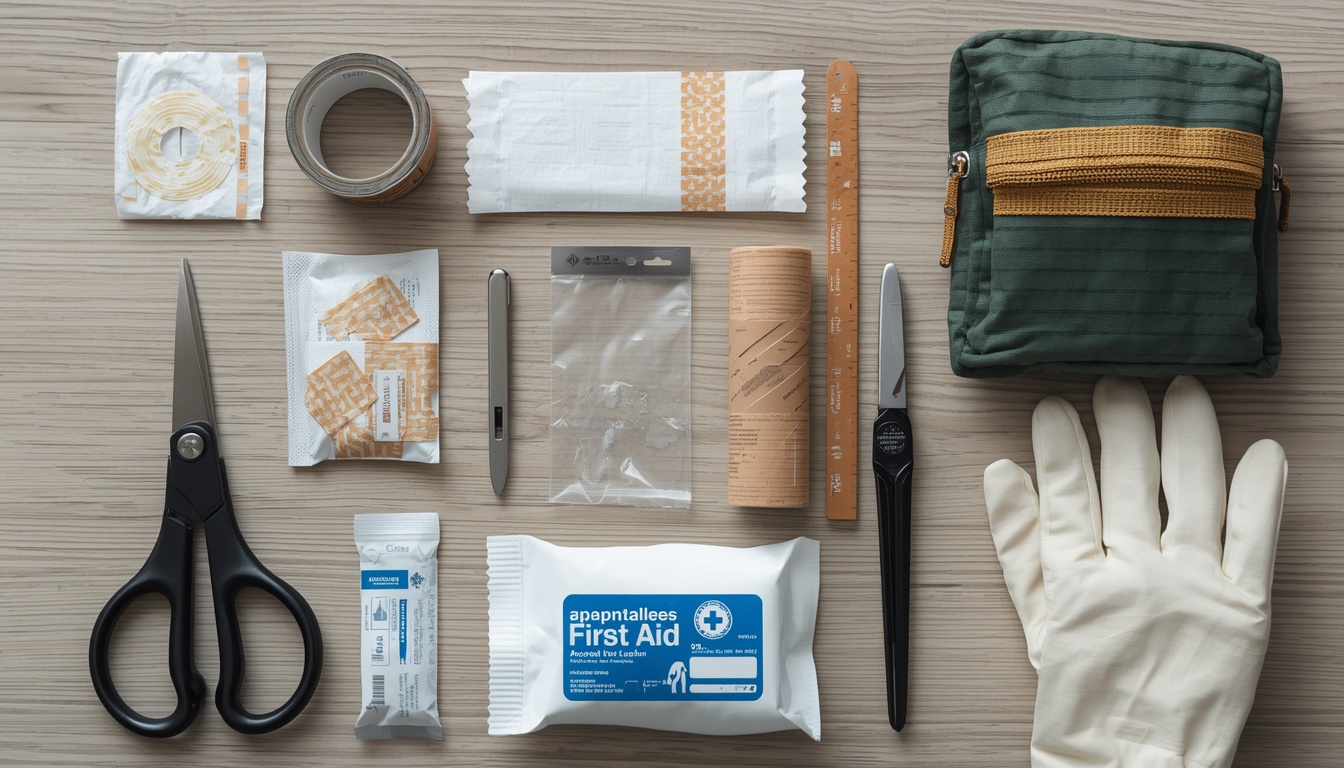
| Item | What is it for? |
|---|---|
| Adhesive plasters | One of the items you’ll use most. A practical fix for small cuts, scrapes and minor injuries. A few in different sizes are usually enough. |
| Sterile gauze | For when a plaster won’t do. Helps control bleeding and keep the wound covered and clean. Carry it in its sterile packaging. |
| Elastic bandage | Gives support for sprains and minor soft tissue injuries. Can also hold gauze in place. Takes up very little space. |
| Antiseptic cleansing supplies | Important for cleaning wounds and reducing the risk of infection. Single-use antiseptic wipes are a good choice; follow the instructions for use. |
| Medical tape | Useful whenever you need to hold gauze or a bandage in place. A small roll comes in handy in far more situations than you’d think. |
| Scissors | Needed for cutting bandages and preparing gauze. The scissors in ready-made kits aren’t always good enough; you may want a pair suited to outdoor use. |
| Disposable gloves | First aid should protect not only the injured person but the person helping too. They take up almost no space but do an important job. |
| Emergency blanket | It may look like a thin sheet of foil, but it’s one of the most useful things in the kit. It helps when the weather changes unexpectedly and helps keep body heat in. |
| Tweezers | Outdoors you can end up with small thorns, splinters or other bits stuck in your skin. A good pair of tweezers makes the job much easier. |
A quick note on the tweezers: no, they’re not for your eyebrows. 😊 They really do come in handy for the splinters and thorns you’ll run into outdoors.
An emergency blanket, meanwhile, is extremely light and takes up almost no room in your bag. That’s why a lot of experienced outdoor people count it as a basic piece of kit. It also regularly appears on the mandatory kit lists for trail running races.
Is the same first aid kit fine for summer and winter?
A first aid kit for outdoor activities isn’t set in stone.
You may need to make small changes depending on the activity, the season and where you are. If you’re planning a long summer trek, for example, insect stings, sunburn and fluid loss in the heat may become bigger concerns. In winter, low temperatures, long exposure to the cold and the risk of hypothermia matter much more.
So when you pack your first aid kit, it’s worth asking yourself not just “What should a kit have in general?” but also “Where am I going?” The kit you put together should suit the activity you’re doing.
Don’t forget your personal medication
Personal medication is one of the things most often overlooked in first aid kits. If you take regular prescription medicines or allergy medication, or use specific products your doctor has recommended, you can treat these as part of your first aid kit too. The key thing to remember here is this:
A standard first aid kit put together for someone else may not fully cover your needs.
So when you pack your kit, always take your own health into account.
How should you check your first aid kit?
Putting a first aid kit together and then not opening it for years is a very common mistake. Over time, some products can pass their expiry date. Sterile packaging can get damaged. You might forget to replace something you’ve used.
That’s why it’s a good habit to give your kit a quick check, especially before the season starts or before a long outdoor trip. A few minutes spent checking can greatly reduce the chance of finding something missing just when you need it.
Where should you carry your first aid kit?
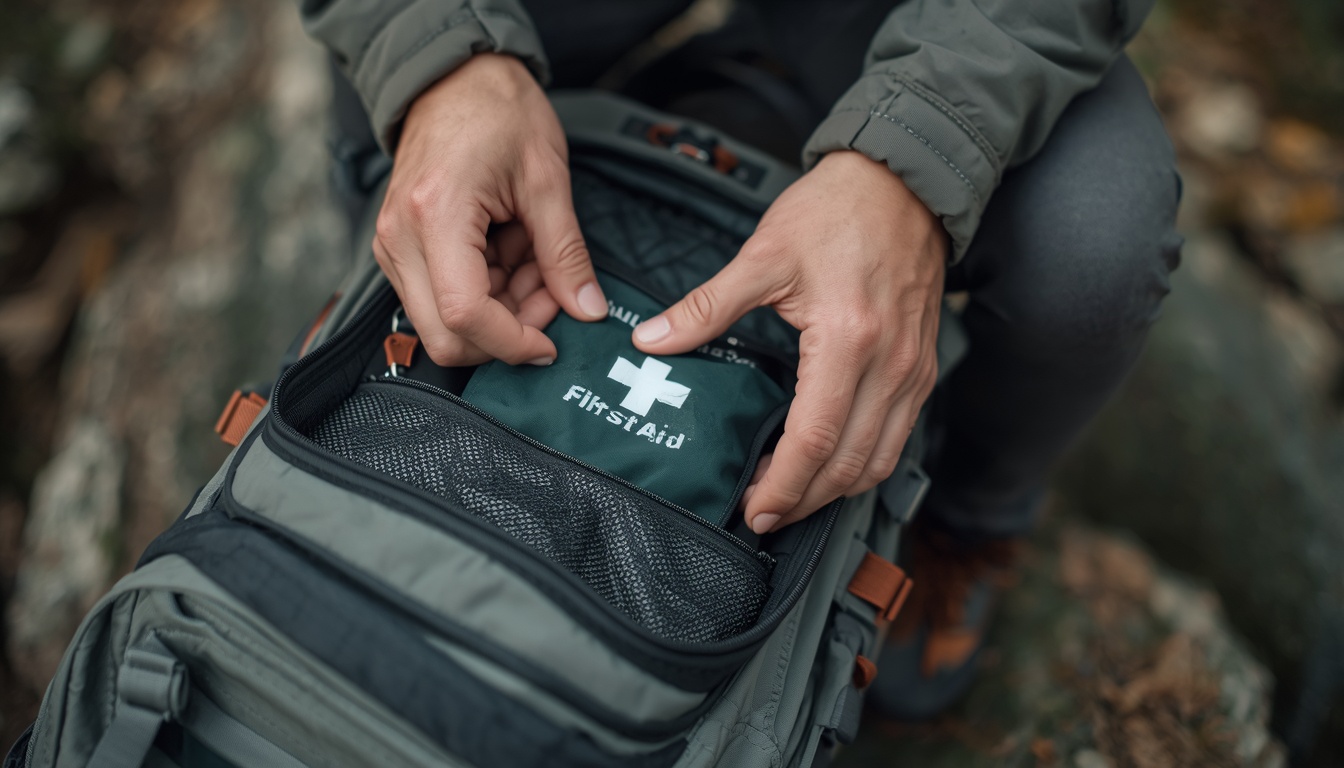
Where you put your first aid kit matters just as much as what’s in it. Some people stuff it right at the bottom of their backpack. But in an emergency, you don’t want to spend minutes rummaging through your bag.
So it’s much better to keep your first aid kit in a pocket you can reach easily. If you’re walking in a group, it also helps if everyone else knows where the first aid kit is.
The most common beginner mistakes
The mistakes people make when putting a first aid kit together tend to be very similar. Here are the most common ones.
1. Carrying more than you need.
It can be tempting to throw every product you can think of into your first aid kit. But that just makes it unnecessarily heavy. What matters isn’t carrying as much as possible, but keeping the basic items you might genuinely need with you, neatly organised.
2. Never checking the kit.
Once a first aid kit is packed, it often gets carried around for a long time without ever being checked. But over time, items can run out or pass their expiry dates. A quick check every so often can save you from getting caught out when you need it.
3. Not knowing how to use what’s inside.
Having a first aid kit matters. But knowing how to use what’s in it matters at least as much. Taking a basic first aid course or learning first aid from reliable sources will help you act with far more confidence if something does happen.
4. Putting the kit where you can’t reach it.
A first aid kit is there for emergencies. So rather than leaving it buried at the bottom of your bag, it’s much better to carry it in a compartment you can get to easily. It may seem like a small detail, but it can save you precious time when it counts.
5. Not preparing for the route you’re taking.
No two outdoor activities are the same. A short walk near town and a trek lasting several days won’t have the same needs. So when you put your first aid kit together, always think about the trail you’re heading for, the weather and how long you’ll be out.
The bottom line: how to put together the right first aid kit
The best thing about outdoor sports is the way they leave us alone with nature. But when we head outdoors, we take responsibility with us as well as freedom. Packing a first aid kit doesn’t mean something bad is bound to happen. If anything, it helps you be more aware and better prepared for the unexpected.
And you don’t need a big, heavy medical kit to do it. A compact first aid kit that suits your needs, gets checked regularly and holds the right items will usually be enough. If there’s one thought to take away from this article, maybe it’s this:
Outdoors, the best first aid kit isn’t just the one you carry; it’s the one you know how to use.
Frequently asked questions
Does an outdoor first aid kit have to be big?
No. For most day activities, a compact first aid kit with the basic essentials will be enough.
Should I put medication in my first aid kit?
You can carry any personal medication you take regularly or that your doctor has recommended. When it comes to general medicine use, the best approach is to follow the advice of a healthcare professional.
How often should you check a first aid kit?
It's a good idea to check the contents, especially before the season starts or before a long outdoor trip. Going through expiry dates and missing items is a good habit to get into.
Is an emergency blanket really necessary?
Many experienced outdoor people see it as a basic piece of kit. Because it's light and takes up very little space, it can be a real help in unexpected situations.
Do I need first aid training?
Basic first aid knowledge is a big advantage not only in outdoor sports but in everyday life too. Knowing how to use what's in your kit is just as important as carrying it.