
7 things to test in autumn before you go winter camping
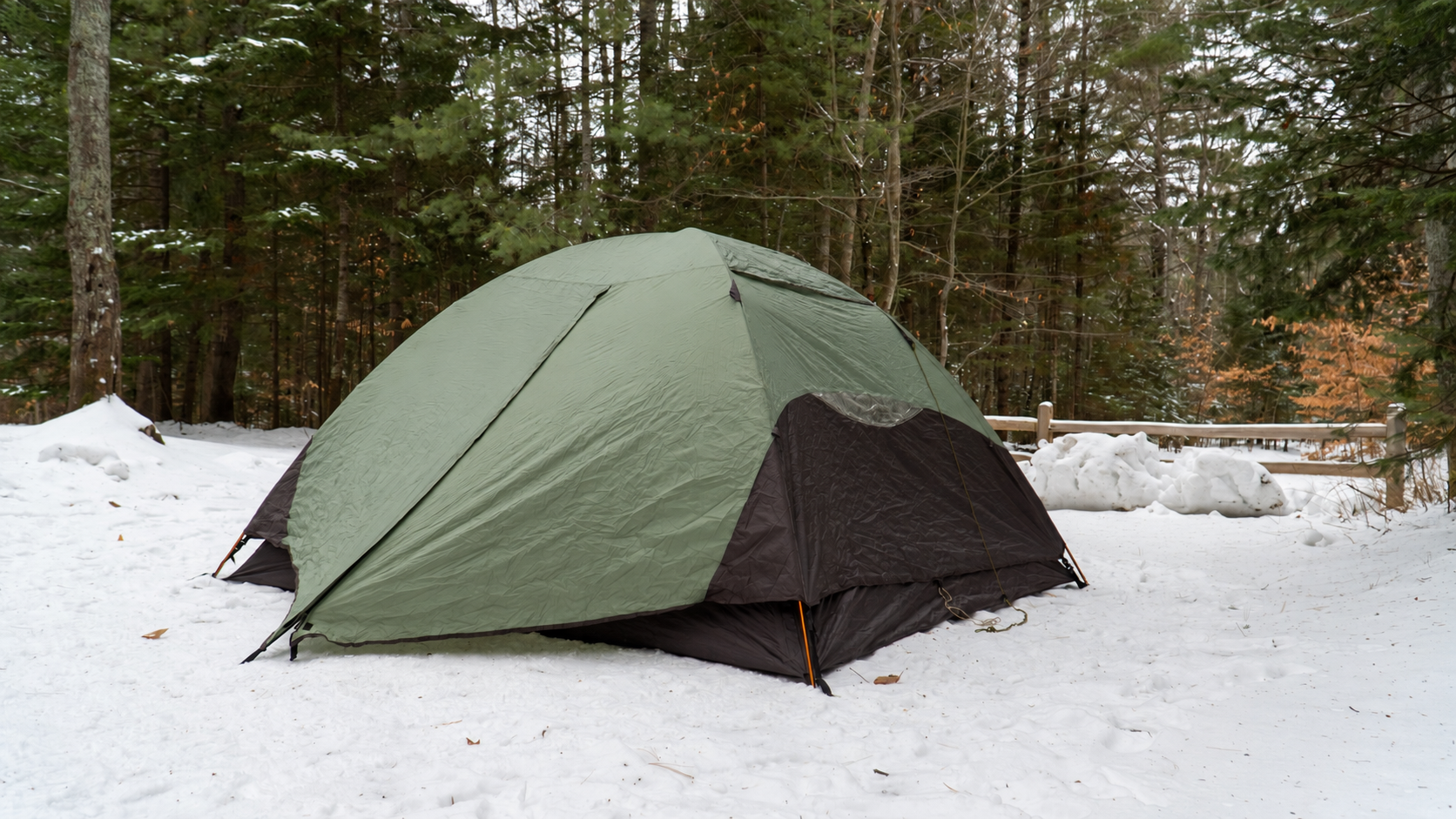
When you start preparing for winter camping, your attention naturally turns to the kit list. A warmer sleeping bag, a four-season tent, thick socks, a different stove… All of these matter, but buying the gear is only part of the job. You also need to see how it works in the cold. A sleeping mat valve that opens easily at home may be much fiddlier with gloves on. A tent you can pitch in a few minutes in the garden may put up more of a fight in the wind.
And even if the temperature rating on your sleeping bag looks reassuring, an inadequate mat can leave you losing heat to the ground all night.
It makes more sense to discover these things in autumn than on your first winter camping trip. The weather is cool, rain and wind are possible, but conditions are generally less demanding than in winter. If something goes wrong, it’s also easier to call it a night and head home. Your first test doesn’t need to involve a remote route. A campsite near your car, with mobile reception and an easy way home if needed, is a better choice. The point is to find out where your setup falls short, rather than see how much hardship you can endure.
1. Are your sleeping bag and mat warm enough?
You might look at your sleeping bag’s temperature rating and assume you’ll be comfortable all night. But the bag isn’t the only thing that determines how warm you sleep. Your mat, clothing, moisture, wind and personal sensitivity to the cold all affect the result. The mat, in particular, sometimes gets overlooked. Your body weight compresses the insulation beneath you in the sleeping bag, so it may not provide enough insulation from the ground.
So even with a good sleeping bag, you may feel cold around your back and hips if your mat isn’t up to the job. That’s why winter camping guides recommend well-insulated mats alongside a warm bag, including two mats used together where needed. REI’s winter camping guide lists a warm sleeping bag, two sleeping pads and a stove suited to cold conditions among the essentials.
Choose an autumn overnight trip where the temperature drops noticeably after dark, and set up the sleep system you plan to use in winter. Don’t make the test easier by adding an extra blanket inside the bag. Use your intended mat, thermal clothing and socks. In the morning, go beyond “I was cold.” Try to work out where the cold came from:
- Did your feet never warm up, or were you losing heat to the ground?
- Did you sweat inside the sleeping bag?
- Did the mat stay inflated until morning?
- Did you have to put on extra clothing during the night?
Check the overnight low on your phone, too. That gives you a personal record of how your setup felt at a particular temperature, which is often more useful than the number on a label. To compare the insulation of different mats, you can also look at their R-value.
2. Can you pitch your tent in rain and wind?
Pitching a tent for the first time at camp is already a poor idea. Doing it for the first time on a winter night is worse. A tent that goes up easily in calm sunshine behaves differently once the wind picks up. The inner tent can flap around while you’re dealing with the poles, the flysheet becomes harder to position, and small parts can end up in the mud. An autumn day with light rain and moderate wind is a useful rehearsal. You don’t need to go looking for particularly bad weather.
Testing equipment in a storm creates unnecessary risk.
Once the tent is up, take a walk around it:
- Are the pegs holding firmly in the ground?
- Can you adjust the guy lines with gloves on?
- Is the flysheet touching the inner tent anywhere?
- Is water pooling at the entrance?
- Do you have enough sheltered space for your backpack and footwear?
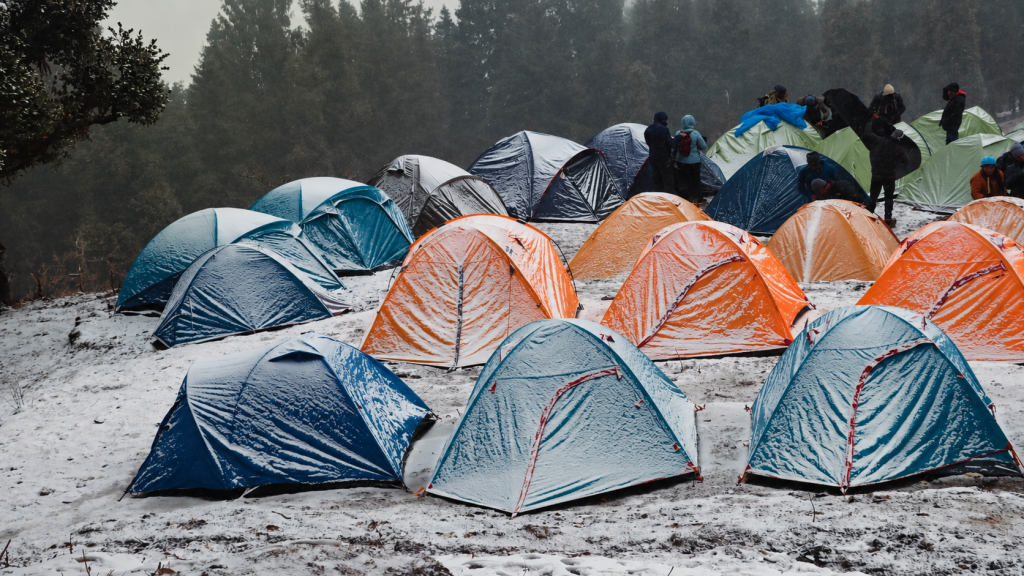
Check for moisture inside the tent in the morning, too. If you close every vent because it’s cold, moisture from your breath and wet gear can build up inside. What looks like a leak may actually be condensation. If droplets are landing on your sleeping bag or clothes, rethink your ventilation. Campsite selection is part of the test as well. Choose somewhere that drains well, isn’t directly exposed to the wind and has no broken branches hanging overhead.
For winter camping, access to water and being able to find your tent again in the dark also become important. REI’s campsite advice specifically highlights wind protection, hazardous trees, water access and recognisable landmarks.
3. Does your layering system work while you’re walking?
We tend to focus on avoiding the cold when preparing for winter camping. But overheating and sweating while walking can also be a serious problem. Once you reach camp, you move less, and damp clothing quickly starts to cool down. That’s why you need to test your layering system while walking with a backpack, rather than just sitting in a camping chair. Walk for 30–45 minutes in your planned winter base layer, fleece or similar midlayer, and outer shell. Don’t leave the backpack empty. Then stop and wait for 15–20 minutes.
If you sweated heavily during the walk, you probably started with too much clothing on. Was opening zips or vents enough, or did you need to remove a whole layer? If you felt cold as soon as you stopped, check how damp your clothes became. Also see how easy it is to change layers. If putting on your jacket when rain starts means unpacking half your bag, your organisation needs some work. Set aside a dry base layer and socks for camp.
Don’t wear those during the day. Keep them in a separate waterproof bag and change when you arrive. Even on an autumn night, you’ll notice the difference this can make.
4. Do your boots, socks and gloves work as a setup?
Thicker socks don’t automatically mean warmer feet. If the socks make your boots too tight, your toes may feel cramped, with discomfort developing after a few hours. Take an autumn walk on wet ground in the boots and socks you plan to wear in winter. Muddy sections, wet grass and small water crossings are enough to give you a sense of how your boots perform. You don’t need to deliberately step into water.
At the end of the walk, take your socks off and check:
- Is there rubbing around your heels?
- Are your toes hitting the front of the boots?
- Are your socks damper than you expected?
Even if the boots haven’t leaked, sweat may have made your socks wet. With gloves, consider more than warmth. Open the tent zip, tie a knot, operate the mat valve and press the button on your head torch. If you have to remove your gloves every time, things will be awkward in winter. Thin liner gloves paired with warmer, water-resistant outer gloves can help. When you remove the outer pair, your hands aren’t completely exposed.
But you’ll only know whether that setup works for you once you’ve actually used it.
5. How does your stove perform in cold and windy conditions?
Lighting a camping stove at home is easy. The surface is level, your hands are warm and there’s no wind. At camp, even a small meal can take longer than expected. On your autumn trip, cook an actual meal you’d plan to make in winter. Simply lighting the stove and boiling a mug of water isn’t a complete test. Take it out of the bag, set it up, prepare the food, clean the cookware and pack everything away again.
See how long the water takes to boil. Did you use more fuel than expected? Could you adjust the stove with gloves on? Did your lighter work properly? Did the wind keep pushing the flame around? If dinner takes too long, consider a simpler menu for winter. One-pot meals that create little washing-up and don’t need you hovering over the stove for ages are more practical in the cold.
Don’t move the stove inside your tent to escape the rain while testing it. Fuel-burning stoves, lanterns and heaters can produce carbon monoxide. You can’t see or smell this gas. Symptoms such as headaches, dizziness, weakness and sleepiness can also be mistaken for tiredness. The US Consumer Product Safety Commission explicitly warns that fuel-burning camping equipment must not be used in enclosed spaces such as tents.
For safer ways to stay warm around camp, see our guide to staying warm without a fire.
6. Is your water plan practical?
In cold weather, you may not feel thirsty as often as you do in summer. If every drink also involves opening your backpack, taking off your gloves and dealing with a cold bottle, it’s easy to keep putting it off. During your autumn trip, track how much you drink over a day. If the bottle is difficult to reach, change where you keep it. If you bring a flask, check whether its capacity is enough. If you use a water filter, try filling and filtering with cold hands.
Also check the manufacturer’s instructions for storing your filter in freezing conditions. The same approach may not apply to every model.
Will you carry water on your winter trip, collect it from a natural source or melt snow? Decide before you leave. Melting snow sounds simple, but it takes time and fuel. Even without snow in autumn, you can heat the amount of water you expect to need on your stove and see how long it takes. A warm drink is welcome in the cold. Tea and soup can count towards your daily fluid plan, too.
Drinking regularly and getting enough energy help your body maintain its temperature in cold weather. REI’s winter camping food and water advice also recommends regular drinking throughout the day and warm meals that are easy to prepare.
7. Can you pack up and head back in the dark?
Winter days end early. If you reach your campsite later than planned, you may have to finish pitching in the dark. If the weather deteriorates, you may also need to pack up and leave after nightfall. Practising this in a safe setting in autumn can be useful. Put on your head torch, find your dry clothing in the backpack, unpack the tent and repack a few items you need. Jobs that seem simple in daylight can take longer than expected in the dark.
Searching for a black glove in a black backpack, struggling to find your head torch button or forgetting which pocket holds the spare battery may sound like minor issues. In the cold and wind, they quickly become frustrating. Make sure your offline map really is saved on your phone. Keep your power bank, spare batteries and a second light source somewhere accessible. Don’t rely on one phone for navigation, communication and lighting.
One evening, pack up as though you were ending the trip early and returning to your car. See how long it takes. Follow the route back from camp in the dark. Decide in advance what would make you turn back, too. Stronger wind? Wet clothing? A sleep system that isn’t warm enough? If you only start considering that decision once things have gone downhill, it’s easier to talk yourself into continuing.
Come home from your autumn trip with notes for winter
You might feel a little cold during this test or struggle with pitching the tent. Those are the weak points you’re trying to identify. But if you start getting seriously cold, your clothes are wet or the weather becomes worse than expected, end the trip. This isn’t an endurance test. When you get home, make a short list:
- Was the mat warm enough?
- Were the boots too tight with thick socks?
- Did the stove fuel last as long as expected?
- Which item couldn’t you find in the dark?
That makes it clearer what you need to change before winter camping. Perhaps you don’t need a new sleeping bag, but you do need a better-insulated mat. Perhaps your tent is perfectly adequate, but you need to learn how to use its guy lines. Finding these things out in autumn is safer and much less stressful.