
Padel or pickleball? Which racket sport should you try?
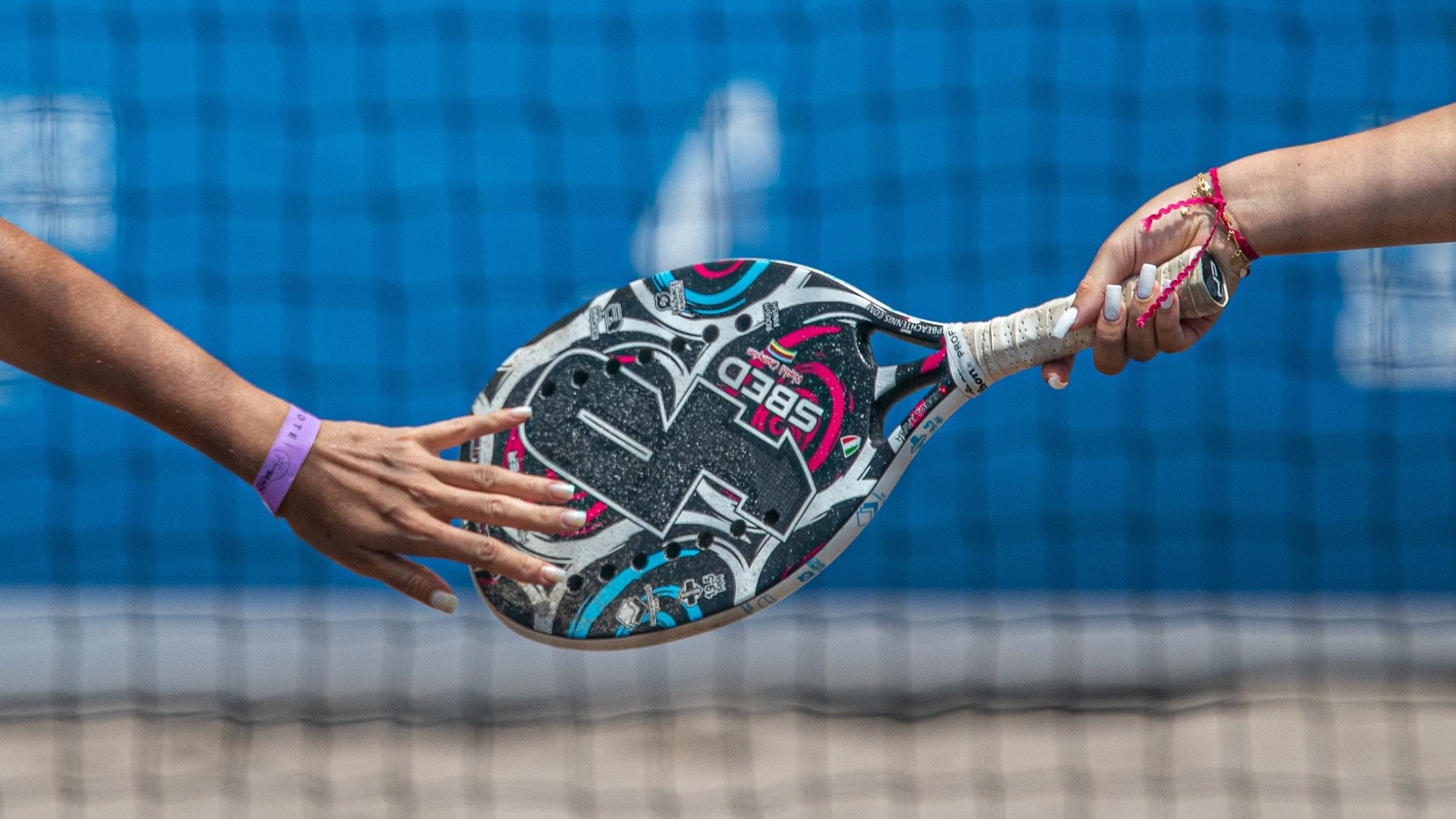
If you’ve been looking into racket sports lately, you’ve probably noticed two names coming up alongside tennis: padel and pickleball. Both are attracting more interest in Türkiye’s racket sports scene. But which one makes more sense to start with?
Both are played on smaller courts than tennis, using solid-faced rackets or paddles rather than strung tennis rackets. They can also feel more approachable for beginners. Add a few similarities, and it’s easy to assume they’re simply two versions of the same sport. Step onto the court, though, and the differences soon become clear.
Padel brings glass walls into play, usually involves four players, and tends to keep you moving more. Pickleball uses a perforated plastic ball on a smaller court and often offers a more controlled pace, particularly in doubles. So there’s no single answer to “Which is better, padel or pickleball?”
The right choice depends on the kind of game you want, the courts available near you, how many people you can play with, and your budget.
In this guide, we’ll compare everything from court layouts and learning curves to physical effort and equipment costs.
What’s the Main Difference Between Padel and Pickleball?
The biggest difference goes beyond the racket or ball. The two games work quite differently.
Padel courts have glass walls and metal mesh around the back and sides. After the ball bounces on your side of the court, it can hit the glass and still remain in play. That means learning to read rebounds off the glass, as well as shots coming from your opponents.
Pickleball has no walls involved in play. It’s played on a smaller court with a lightweight, perforated plastic ball. Near the net, there’s a special area called the non-volley zone, better known as the “kitchen.” Specific rules restrict volleying in this area—that is, hitting the ball before it bounces.
Here’s the basic picture:
- In padel, the glass walls and court geometry are a big part of the game.
- In pickleball, short shots, court positioning, and exchanges around the kitchen line take centre stage.
- Padel is usually played as doubles.
- Pickleball can be played as singles or doubles.
Both borrow some shots from tennis, but their rules and the decisions you make on court are quite different.
Padel Courts and Equipment
A standard padel court is 10 metres wide and 20 metres long. A net runs across the middle, much like in tennis, with glass and metal surfaces enclosing the court.
Those surfaces do more than mark the boundaries. They can also become an active part of the game.
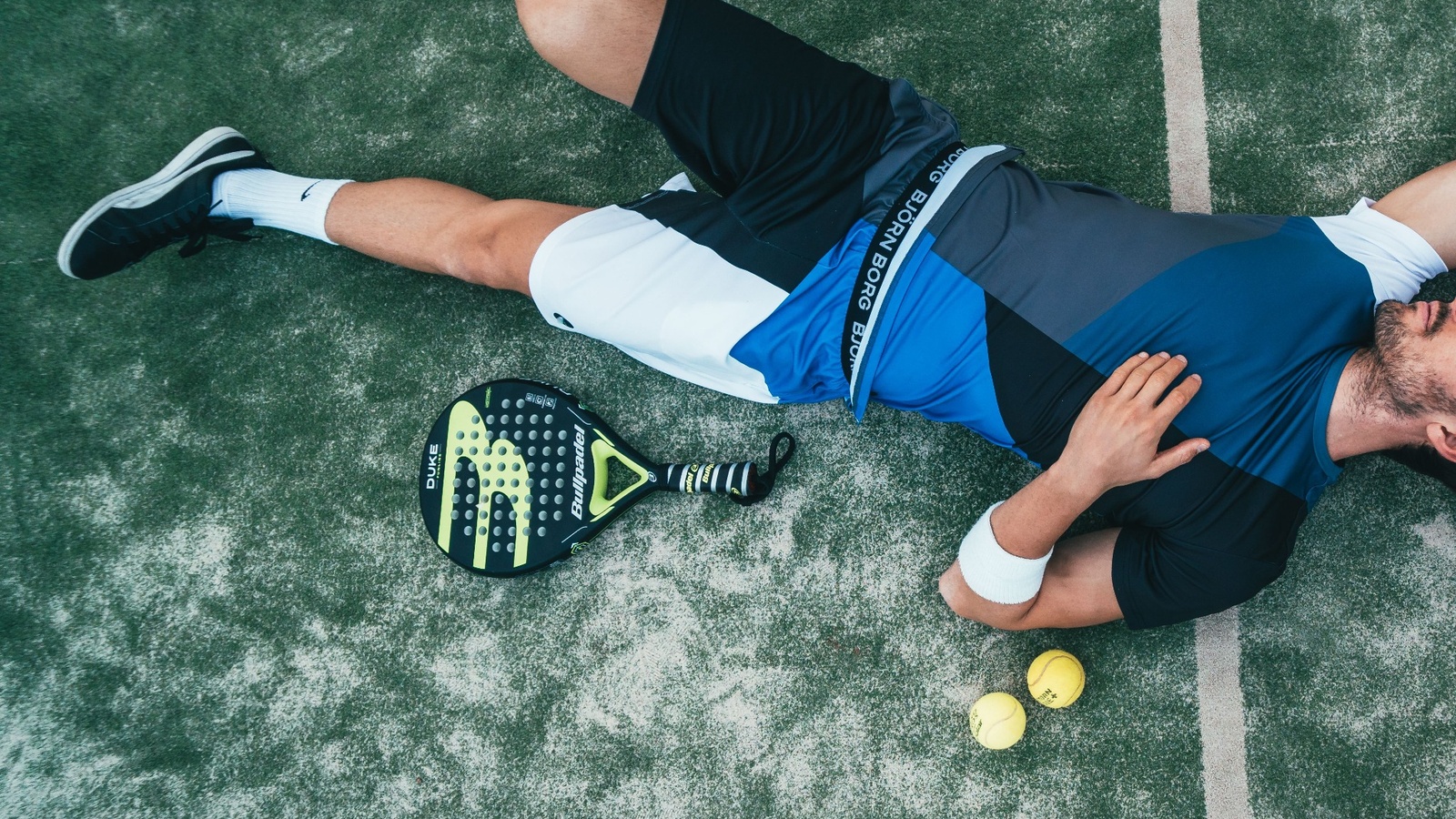
Padel rackets don’t have strings like tennis rackets. They have a solid face with holes that affect air resistance. Beginner models often use softer materials and a round shape designed to make control easier.
A padel ball looks very similar to a tennis ball, but its internal pressure and bounce characteristics differ. These differences help it suit the pace of padel and the rebounds off the glass.
To play, you’ll need:
- A padel racket
- Padel balls
- Shoes suited to the court surface
- A racket bag, if you want one
- A spare overgrip
Pickleball Courts and Equipment
A pickleball court measures 20 × 44 feet within the lines, or approximately 6.10 × 13.41 metres.
USA Pickleball recommends leaving extra space around the court lines so players can move comfortably and safely. The recommended total playing area is at least 30 × 60 feet, and ideally 34 × 64 feet.
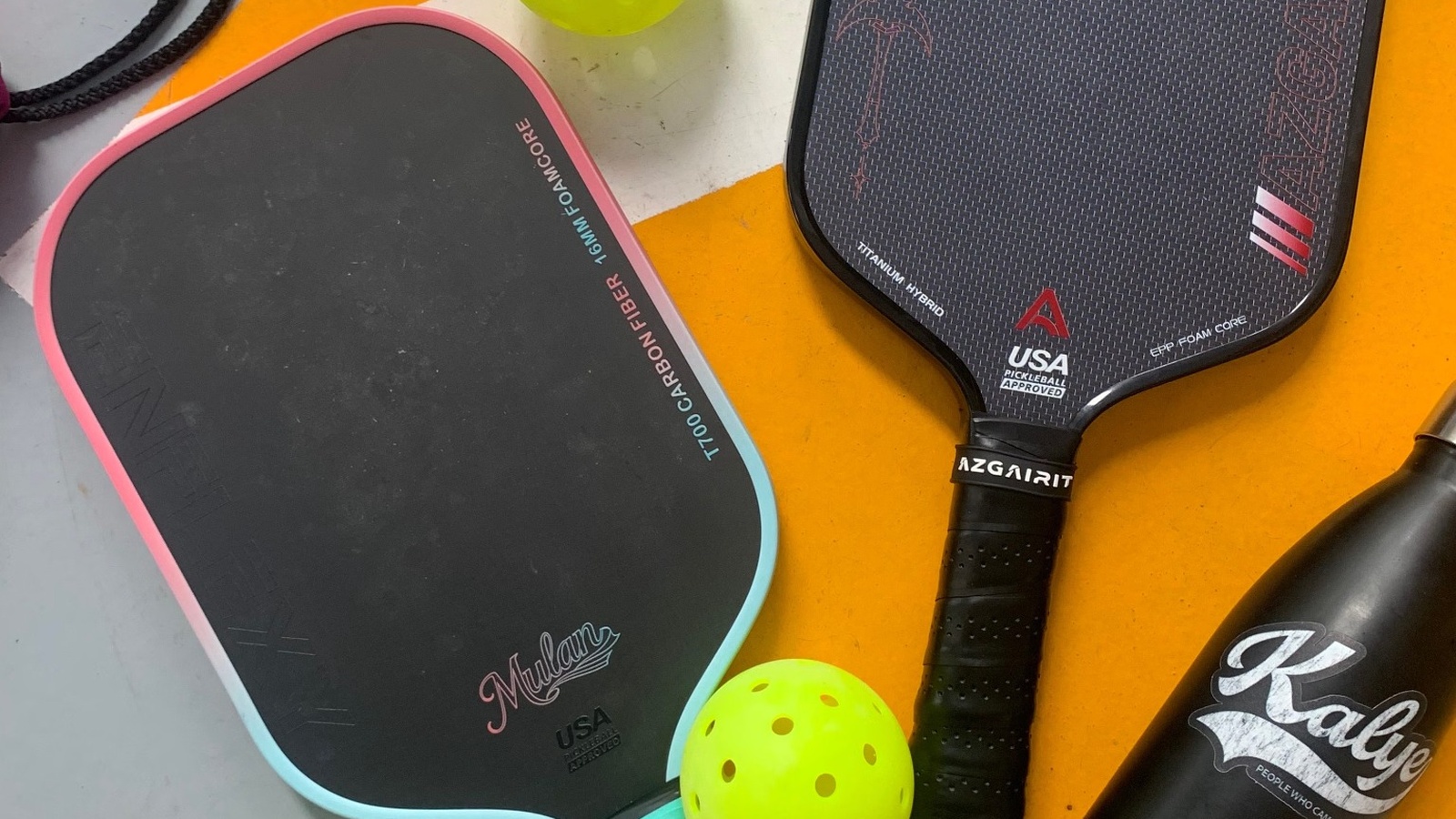
The first time I saw a pickleball paddle, it reminded me of an oversized table tennis paddle. Compared with a padel racket, it’s thinner and usually lighter. If you’re choosing one, our guide to choosing a pickleball paddle is a useful place to start.
Wooden beginner models are available, along with composite paddles made using fibreglass, graphite, or carbon fibre.
Pickleball balls are made from hard plastic and have multiple holes. Indoor and outdoor balls can differ in the number and size of those holes, as well as their material properties.
The essentials are:
- A pickleball paddle
- A pickleball ball suited to indoor or outdoor play
- A net at the correct height
- Court shoes that help you control your footing when stopping and changing direction
Which Is Easier to Learn: Padel or Pickleball?
Both can get beginners rallying sooner than tennis. That’s a real advantage when you’re trying a racket sport for the first time: you get to enjoy an actual game fairly quickly. Still, “learning to play” has two parts:
- Getting the ball over the net and starting a game
- Learning the rules, positioning, and which shots to choose
Because the pickleball ball travels more slowly and the court is smaller, getting those first rallies going is generally easier. Lighter paddles can also help beginners control the ball. On the other hand, the scoring system, serving order, two-bounce rule, and kitchen rules can feel confusing at first.
In padel, sending the ball over to the other side isn’t especially difficult either. The real adjustment is learning to play with the glass. Once you start reading the rebounds and using the walls well, the game becomes much more enjoyable.
Pickleball may have a slight edge when it comes to getting started. At higher levels, though, both demand plenty of practice in positioning, shot selection, and working with a partner.
If this is your first racket sport:
- Pickleball may feel easier if your priority is getting straight into a game.
- Padel is also an approachable option if you’re happy to take a few lessons and learn how the glass works.
Which Is More Physically Demanding?
Your fitness, the pace of the match, and whether you’re playing singles or doubles all make a difference. Generally, though, padel requires more physical effort than doubles pickleball.
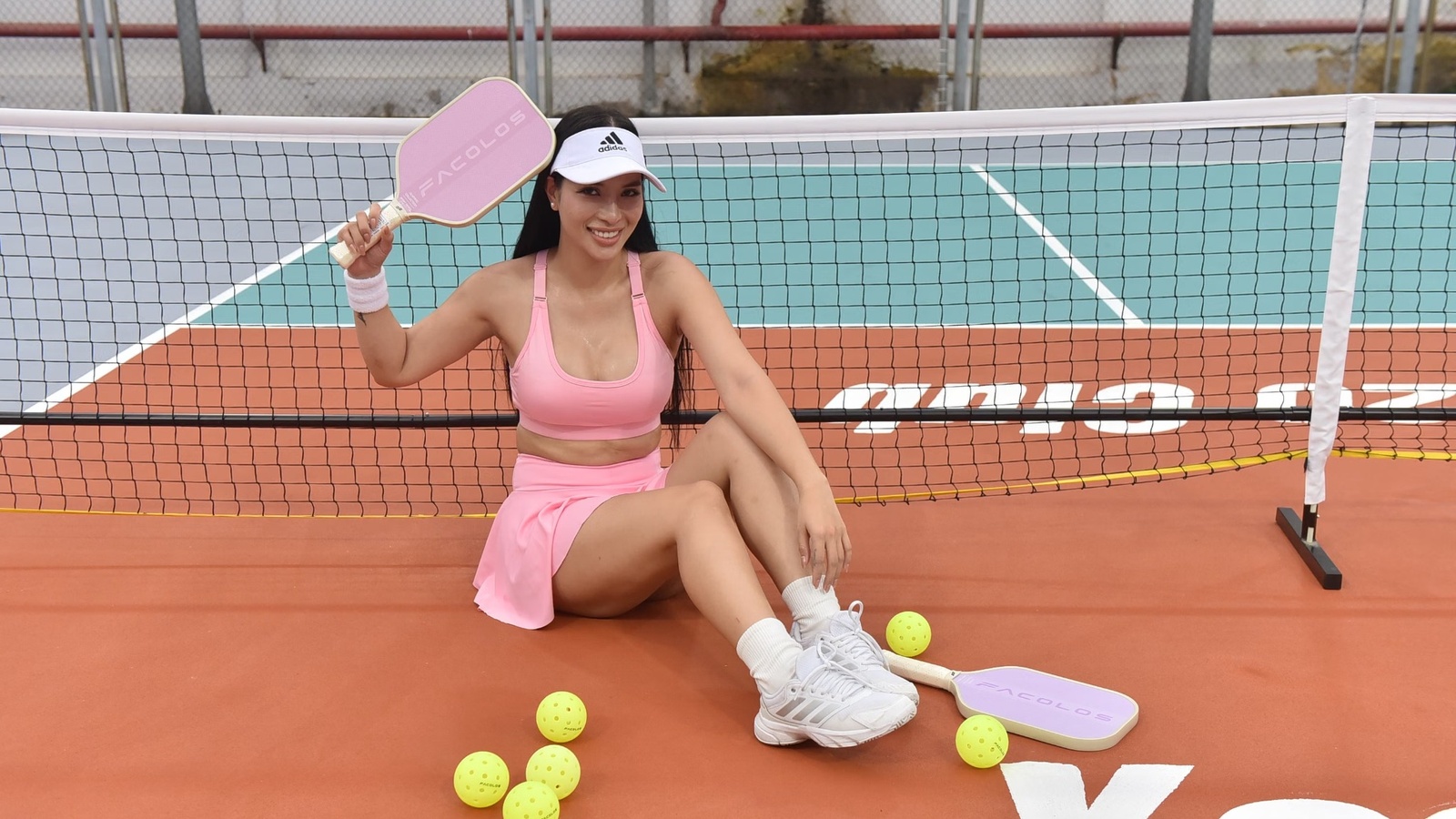
A padel court may not look particularly big. But once balls start coming back off the glass, a match can be more tiring than you expect. The walls can keep rallies going longer, with more movement forwards and backwards and repeated short bursts of acceleration.
Common movements in padel include:
- Short runs
- Sudden changes of direction
- Moving forwards and backwards
- Rotating your torso
- Staying in a ready position with your knees bent
- Overhead shots
In doubles pickleball, two players share a smaller area. Once you’re positioned near the kitchen line, much of the game revolves around short shots, volleys, and quick reactions. That doesn’t mean pickleball is always played at a gentle pace, though. In singles, you have to cover your entire side on your own, which can take considerably more effort.
As a general comparison:
- Padel doubles: moderate to high effort
- Pickleball doubles: low to moderate effort
- Pickleball singles: moderate to high effort
How much energy you use depends on the players’ level, the length of the rallies, and how competitive the match gets.
Which Sport Is Easier on Your Joints?
This is one of the questions you’ll often come across when researching the two sports.
Some people find pickleball easier on their joints because there’s less ground to cover, particularly in doubles. But it wouldn’t be accurate to describe any racket sport as completely joint-friendly or inherently low-risk. Both involve:
- Sudden changes of direction
- Quick stops
- Backward steps
- Reaching for the ball while off balance
- Repeated racket or paddle movements
Potential problems in padel include:
- Ankle sprains
- Knee strain
- Calf and Achilles issues
- Elbow and shoulder pain
- Lower back strain
In pickleball, particularly on hard surfaces, potential risks include:
- Slips and falls
- Ankle or knee strain
- Calf and Achilles issues
- Losing your balance while moving backwards
- Elbow, wrist, and shoulder pain from repeated use
If you have knee, hip, lower back, or balance problems, don’t assume pickleball is completely safe for you simply because the court is smaller. If you have an existing health condition, speak to a doctor or physiotherapist before starting.
For either sport, these habits can help:
- Warm up properly before playing.
- Wear suitable court shoes.
- Avoid charging after every ball without control in your first few matches.
- Increase your playing time and intensity gradually.
Do Padel and Pickleball Need Different Shoes?
Let’s get this out of the way first: running shoes aren’t an ideal choice for either sport. They’re mainly designed for forward movement. Padel and pickleball involve plenty of side steps, sudden direction changes, and quick stops.
Most running shoes don’t offer the lateral support you get from court shoes. When you change direction sharply, your foot may move around inside the shoe, increasing the risk of a sprain.
For padel, you can use padel shoes or tennis shoes suited to the surface. The right outsole may vary depending on whether the court has sand-dressed artificial grass or another surface. For pickleball, look at tennis shoes, pickleball shoes, or shoes designed for court sports in general.
You don’t need an expensive pair to get started. What matters is that they:
- Support your feet during sideways movement
- Keep your heels from moving around too much
- Don’t slide unpredictably on the surface
- Feel stable when you stop suddenly
Which Costs More: Padel or Pickleball?
Pickleball generally costs less in terms of beginner equipment. But the price of a racket or paddle is only part of the picture. Over time, you’ll also need to consider:
- Court hire
- Lessons
- Replacement balls
- Racket or paddle rental
- Travel costs
- Whether you can find a regular group to play with
Padel needs a purpose-built court, so court hire can make up a sizeable share of the overall cost. Splitting the fee between four players can bring the cost per person down.
Pickleball offers more flexibility because tennis, badminton, or multipurpose courts can be adapted for it. A portable net lets you set up a playing area on a suitable surface. If there’s no ready-to-use court near you, though, you may need to organise the net, court markings, and players yourself.
Which Is Easier to Find in Türkiye?
Court access varies from city to city, and even between districts in the same city.
Because padel requires dedicated courts, active venues are generally easier to find online. Court numbers are growing in major cities such as İstanbul, Ankara, İzmir, and Antalya, as well as in some tourist destinations.
Pickleball can be played on adapted sports courts, so it won’t always appear online as a separate “pickleball venue.” Some clubs, municipal facilities, hotels, residential complexes, and local groups convert existing courts for pickleball at certain times. If you’re planning to play in İstanbul, we’ve gathered verified padel and pickleball venues in the tables below.
We’ve divided padel venues into the European and Asian sides. Dedicated pickleball options are still limited across the city.
European Side
| Venue | District / Area | Courts | Access |
|---|---|---|---|
| Le Padel | Akatlar, Beşiktaş | 4 indoor | Online booking, lessons, and equipment rental |
| ISTA Padel – İstanbul Tenis Akademisi | İstinye, Sarıyer | 9 indoor | Online booking, tournaments, and lessons |
| Hillside City Club Etiler | Etiler, Beşiktaş | 2 indoor | Mainly membership-based |
| ENKA Spor Kulübü | İstinye, Sarıyer | 1 indoor | Check membership requirements and sport-specific programmes |
| O’Padel Community | Skyland–HOM Design Center, Sarıyer | 2 doubles + 2 singles courts, indoor | No membership required; book by phone or WhatsApp |
| The Padel House | Garanti Koza, Esenyurt | 4 indoor | Online booking, lessons, and tournaments |
| Rixos Tersane İstanbul | Haliç, Beyoğlu | 2 outdoor | Within the hotel; book by phone |
| Yeşilyurt Padel | Yeşilyurt, Bakırköy | 1 outdoor | Prices may differ for members and non-members |
| Padelist | Metrocity AVM, Levent–Şişli | 3 outdoor | Online booking and racket rental |
| Torchwell Sports Club | Tarabya, Sarıyer | 1 outdoor | Lessons and changing room |
| Casa Kilyos Padel Club | Kumköy–Kilyos, Sarıyer | 3 indoor/covered + 1 outdoor | Booking, equipment rental, and lessons |
| Silivrikapı Spor Köyü | Silivrikapı, Fatih | Outdoor padel courts | Fatih Municipality booking system |
| Çırpıcı Padel | Büyükada, Adalar | 1 outdoor | May operate seasonally; book before visiting |
| Padel İstanbul Spor Kulübü | Poligon, İstinye–Sarıyer | Padel courts within the venue | Confirm booking details and the current business name |
Asian Side
| Venue | District / Area | Courts | Access |
|---|---|---|---|
| İBB Maltepe Spor Tesisleri | Orhangazi Şehir Parkı, Maltepe | 3 outdoor | Online booking through Spor İstanbul |
| Antuka Tenis Akademisi / Antuka Padel | Yalı Mahallesi, Maltepe | 3 indoor | Online booking, lessons, and tournaments |
| Alfie The Padel | Clubsporium Bostancı, Kadıköy | Indoor padel venue | Online booking and changing room |
| Koç Topluluğu Spor Kulübü | Kuzguncuk, Üsküdar | 1 indoor | Requires being a Koç employee or a referral from one |
| Kalamış Atatürk Parkı padel area | Kalamış, Kadıköy | Outdoor court | Confirm booking arrangements with the municipality or operator |
Verified venues with active pickleball programmes.
| Venue | District | Side | Court Type / Status |
|---|---|---|---|
| İBB Maltepe Spor Tesisleri | Maltepe | Asian | Active pickleball programme; images of outdoor courts are available |
| Kafkale Spor Kompleksi | Tuzla | Asian | Active pickleball programme; the complex also has an indoor tennis court |
| Cemal Kamacı Spor Kompleksi | Kâğıthane | European | Active pickleball programme; outdoor pickleball court available |
Before choosing a sport, ask yourself:
- Is there a padel or pickleball court near home?
- How long does it take to get there?
- Can you rent a racket or paddle?
- Are beginner lessons available?
- Are there regular playing groups?
- If you turn up alone, will the venue match you with other players?
- Can you find people to split the court fee with?
If only one of the sports has an active local community, the more accessible option may make more sense in the long run.
To keep playing regularly, a court you can actually get to matters more than the perfect court. The idea that “the best gym is the one you can keep going to” applies here too.
Which Is Better for Socialising?
If you want a social side to your sport, start with one question: are you hoping to meet new people or spend time with your existing friends?
Since padel is usually played two against two, it encourages you to get a group of four together. Playing at dedicated venues, joining player-matching groups, and taking part in club events can help you build a social circle. To play regularly, though, you generally need three other people. Even one person dropping out can throw off the whole plan.
In many countries, pickleball has a well-established “open play” format: players wait by the court and rotate into games. In Türkiye, that system isn’t equally developed everywhere yet. If you don’t have a ready-made group and plan to start on your own, check whether the venue helps match players before you go.
Which Is Easier If You Already Play Tennis?
Tennis players bring useful skills to both sports:
- Hand-eye coordination
- The habit of preparing for the ball
- Net play
- Returning serves
- Reading an opponent’s position
- Familiarity with court shoes and lateral movement
That said, a few tennis habits will need adjusting.
In padel, you need to learn when to let the ball come back off the glass rather than hitting it as early as possible. That can take some getting used to. Alongside powerful shots, placement and moving together with your partner become especially important.
In pickleball, tennis players may hit harder than they need to. Soft shots around the kitchen line, short volleys, and controlled shots known as “dinks” make up a substantial part of the game.
Padel may initially feel more familiar and dynamic to a tennis player. Pickleball has different rules, but you can still pick it up fairly quickly. Even with a different racket or paddle and ball, your footwork, ball tracking, and timing give you a useful head start over someone starting from scratch.
Who Might Prefer Padel?
Padel could be a good fit if you:
- Want a more active, faster-paced racket sport
- Can regularly get four players together
- Like the idea of learning glass rebounds and a different court layout
- Prefer playing at a dedicated sports venue
- Want an alternative that feels similar to tennis but is more approachable at the start
- Enjoy social matches and club events
Keeping it up may be harder if you live far from a padel court, struggle to find three other players regularly, or don’t want to pay a venue fee for every match.
Before starting, find out whether any of your friends already play or would like to try. Having more than one small group to call on can also mean fewer cancelled plans when you need four players.
Who Might Prefer Pickleball?
Pickleball could make more sense if you:
- Want to get your first rallies going sooner
- Prefer a smaller court
- Want the option of singles as well as doubles
- Have a smaller budget for beginner equipment
- Like the flexibility of playing in different places with a portable net
- Want to play at a more controlled pace with family or friends
If there’s no ready-to-use court or player community nearby, though, you may need to handle the court setup and organise the players yourself.
Padel vs Pickleball: Comparison Table
| Feature | Padel | Pickleball |
|---|---|---|
| Court dimensions | 10 × 20 metres | 6.10 × 13.41 metres |
| Court layout | Enclosed by glass and metal surfaces | Open court without walls |
| Format | Usually doubles | Singles or doubles |
| Racket / paddle | Thick, perforated, and stringless | Thin paddle with a flat face |
| Ball | Similar to a tennis ball | Perforated plastic ball |
| Getting started | Approachable, but the glass takes getting used to | First rallies are generally easier |
| Physical intensity | Usually moderate to high | Low to moderate in doubles; higher in singles |
| Dedicated court required | Yes | Not always |
| Beginner equipment | Usually more expensive | Usually more affordable |
| Visibility of venues in Türkiye | Greater in major cities | Varies by area |
| Social format | Mostly four-player matches | Singles, doubles, and open play groups |
| Standout feature | Rebounds off the glass | The kitchen and the short game |
Should You Choose Padel or Pickleball?
If you’re looking for an active sport played at a dedicated venue, with glass rebounds adding an extra tactical layer, padel could be the better fit. If you’d rather start on a smaller court with a lighter ball and more affordable equipment, pickleball may appeal more. But don’t make the decision purely on how the sports sound on paper.
If there’s a padel venue near home, you can find a regular group, and you can split the court fee, padel may actually be more accessible for you over time. On the other hand, if you have a suitable space to use with friends and want a flexible setup with a portable net, pickleball has a clear advantage.
The Final Choice: Padel or Pickleball?
Although people in Türkiye sometimes mix them up, padel and pickleball offer different experiences. Padel brings the glass into play, involves more movement, usually needs four players, and requires a dedicated court. Pickleball’s smaller court, lightweight plastic ball, and adaptable setup can offer beginners more flexibility.
So the useful question isn’t just “Which one is more popular?” It’s:
Which one will you be able to play regularly?
Before buying equipment, try each sport at least once. After your first game, think beyond which one you picked up faster: which one do you want to play again next week? In the long run, the best racket sport is the one that keeps bringing you back to the court.