
How to Choose a Pickleball Paddle: Weight, Face Materials and Cores Explained
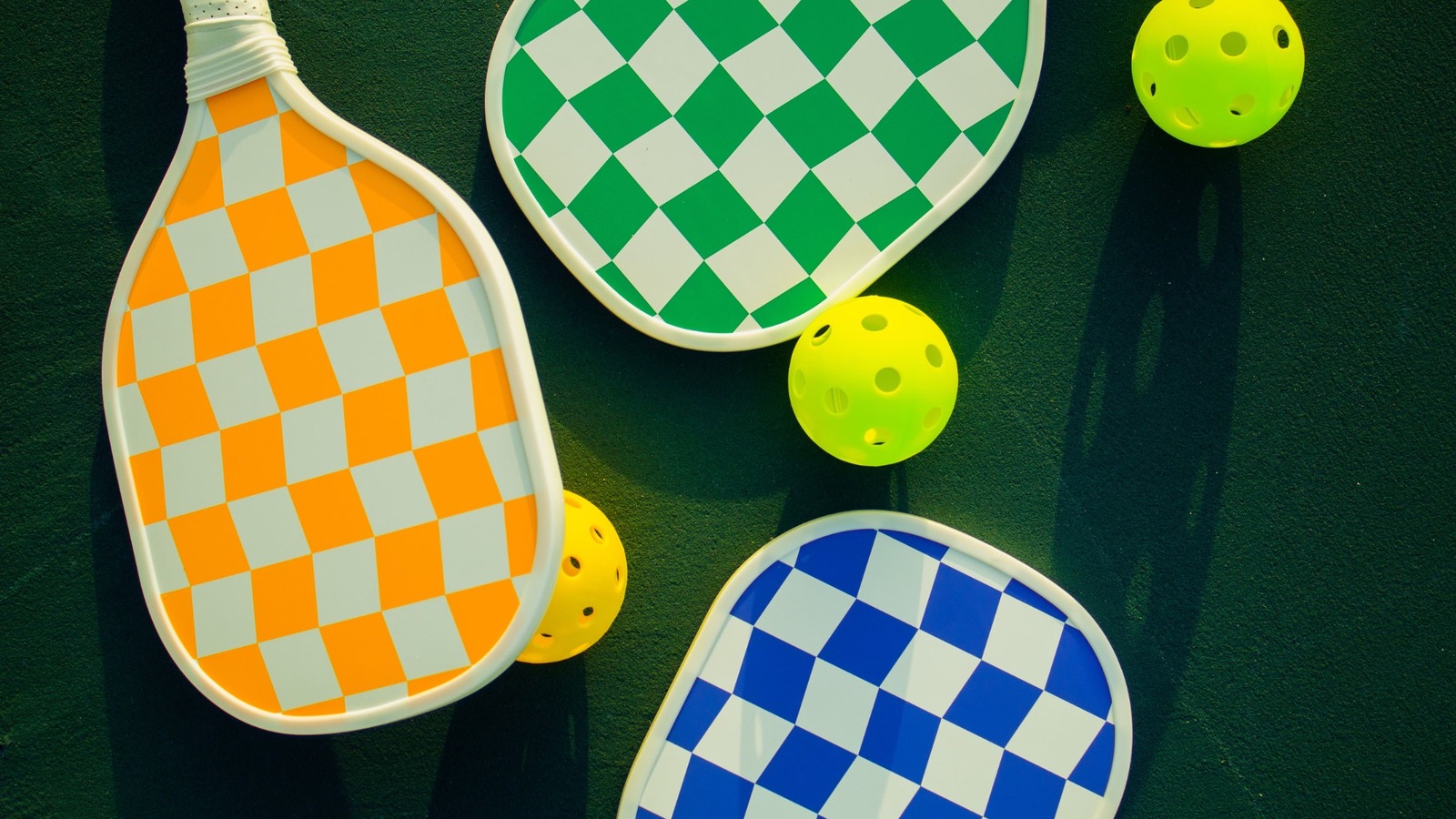
You’ve decided to give pickleball a go, played your first game and thought, “This is actually pretty fun. I could get into this.” When it’s time to buy your own equipment, a pickleball paddle will naturally be near the top of your list.
Then you start browsing shops or websites, and suddenly there are lightweight, midweight and heavyweight paddles to consider. Just as you get your head around weight, fiberglass and carbon fiber faces enter the conversation. Next come 14 mm and 16 mm cores, foam-core technology, and terms such as widebody and elongated. Your shopping list has acquired a vocabulary of its own.
Choosing a paddle isn’t just about materials, either. Shape, handle length, weight distribution and sweet spot size can all affect how it feels on court. Rather than hunting for the newest or most expensive paddle, look for one that suits your build, playing level and the way you want to play.
This guide walks through the main things to consider, with straightforward explanations and comparisons to help you make sense of the options.
What Should You Look for in a Pickleball Paddle?
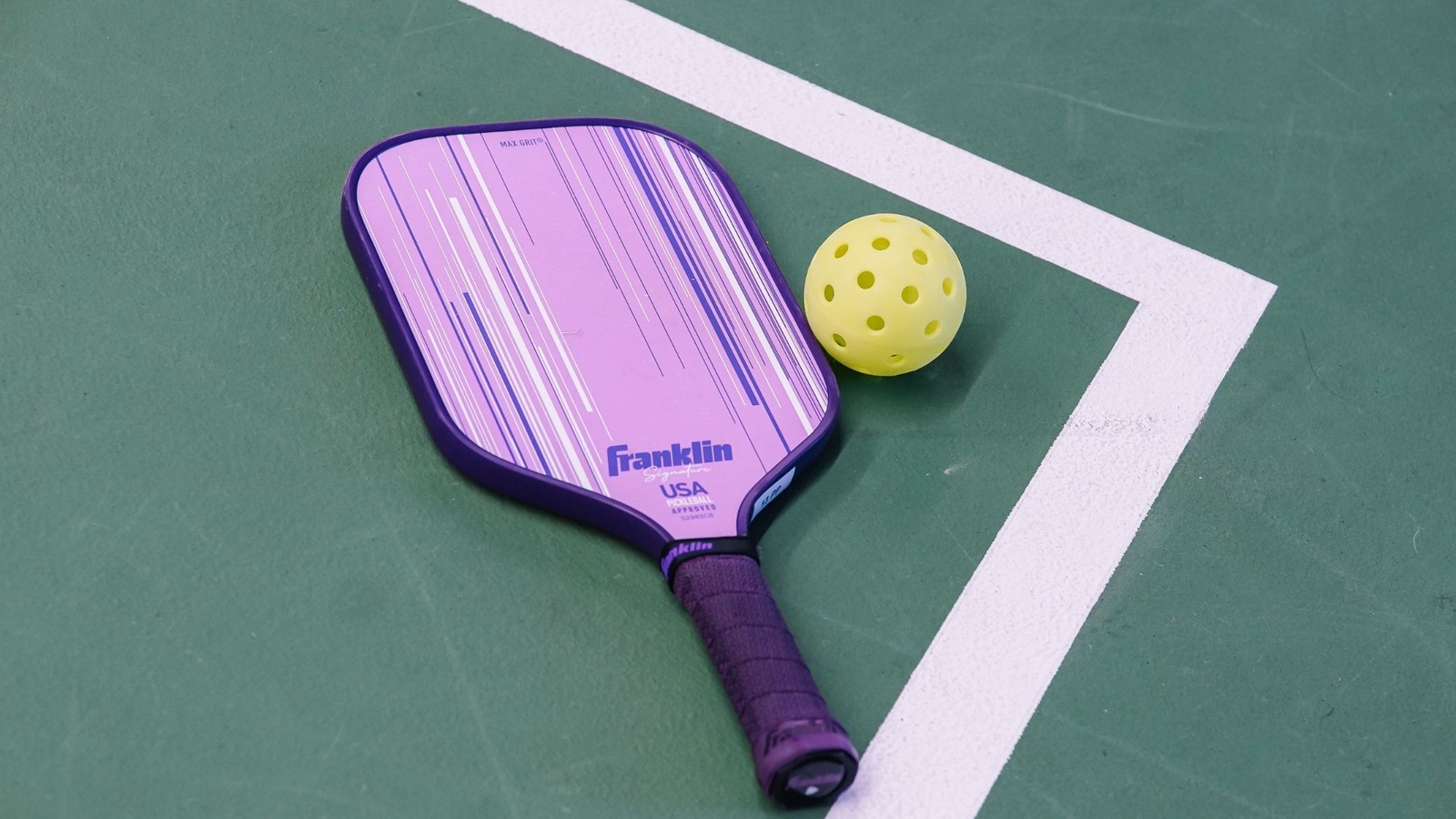
When assessing a paddle, consider these features together:
- Overall weight
- Weight distribution
- Face material
- Core thickness and construction
- Paddle shape
- Sweet spot size
- Handle length and grip size
- Tournament approval
Focusing on just one feature can lead you towards the wrong choice. A paddle that looks light on the spec sheet, for example, may feel more tiring than expected if much of its weight sits towards the head. The whole package matters.
How Much Should a Pickleball Paddle Weigh?
Many pickleball paddles weigh roughly 200–255 grams. Brands don’t all use the same classifications, though, so treat “lightweight”, “midweight” and “heavyweight” as general guides rather than fixed rules. For practical purposes, we can split them into three groups.
Lightweight Pickleball Paddles
Models weighing approximately 200–215 grams fall into the lightweight group.
Their biggest advantage is how easily and quickly you can move them. During fast volley exchanges at the net, getting the paddle into position may feel easier. Lightweight paddles can suit:
- Players new to pickleball
- Players who like quick hand movements
- Players who spend more time at the net
- Players who want to limit arm and shoulder fatigue
- Players who value control over power
That said, generating a hard serve or strong baseline shot with a very light paddle may require more effort from your arm. The paddle moves easily, but getting enough mass behind the ball can be harder.
Midweight Pickleball Paddles
Models weighing approximately 216–235 grams can be considered midweight. These paddles generally offer a balance of power and control, making them popular with beginners and intermediate players alike.
A midweight paddle can:
- Move quickly enough at the net
- Provide stability on baseline shots
- Feel more powerful than very light models
- Tire your arm less than heavier models
If you’re buying your first paddle or haven’t settled into a particular playing style yet, a midweight paddle is usually a sensible starting point.
Heavyweight Pickleball Paddles
At around 236 grams and above, paddles start moving into the heavyweight group. More mass behind the ball can help with hard serves and powerful drives. However, heavier paddles can also:
- Feel slower at the net
- Tire your forearm and shoulder during long games
- Make late shots harder to control
- Cause discomfort for players with arm, wrist or elbow sensitivity
“I want to hit harder, so I need the heaviest paddle” doesn’t always work out. Extra weight you can’t control may slow your movements rather than improve your game.
Why Does Weight Distribution Matter?
Two paddles can weigh exactly the same and still feel different on court. The reason is where that weight sits. Head-heavy paddles can:
- Produce more power on shots
- Feel more stable at the baseline
- Be slower during quick exchanges at the net
- Tire your wrist and forearm more during long games
Paddles with more weight towards the handle may feel more agile and make quick hand movements easier.
Whenever possible, do more than hold the paddle. Take a few practice swings and try moving it quickly from side to side as you would at the net. If it feels as though it’s pulling your wrist or shoulder forwards, the weight distribution may not suit you.
Even if you plan to buy online, trying a paddle with a similar weight and shape in a physical shop can make the decision easier.
Fiberglass or Carbon Fiber?
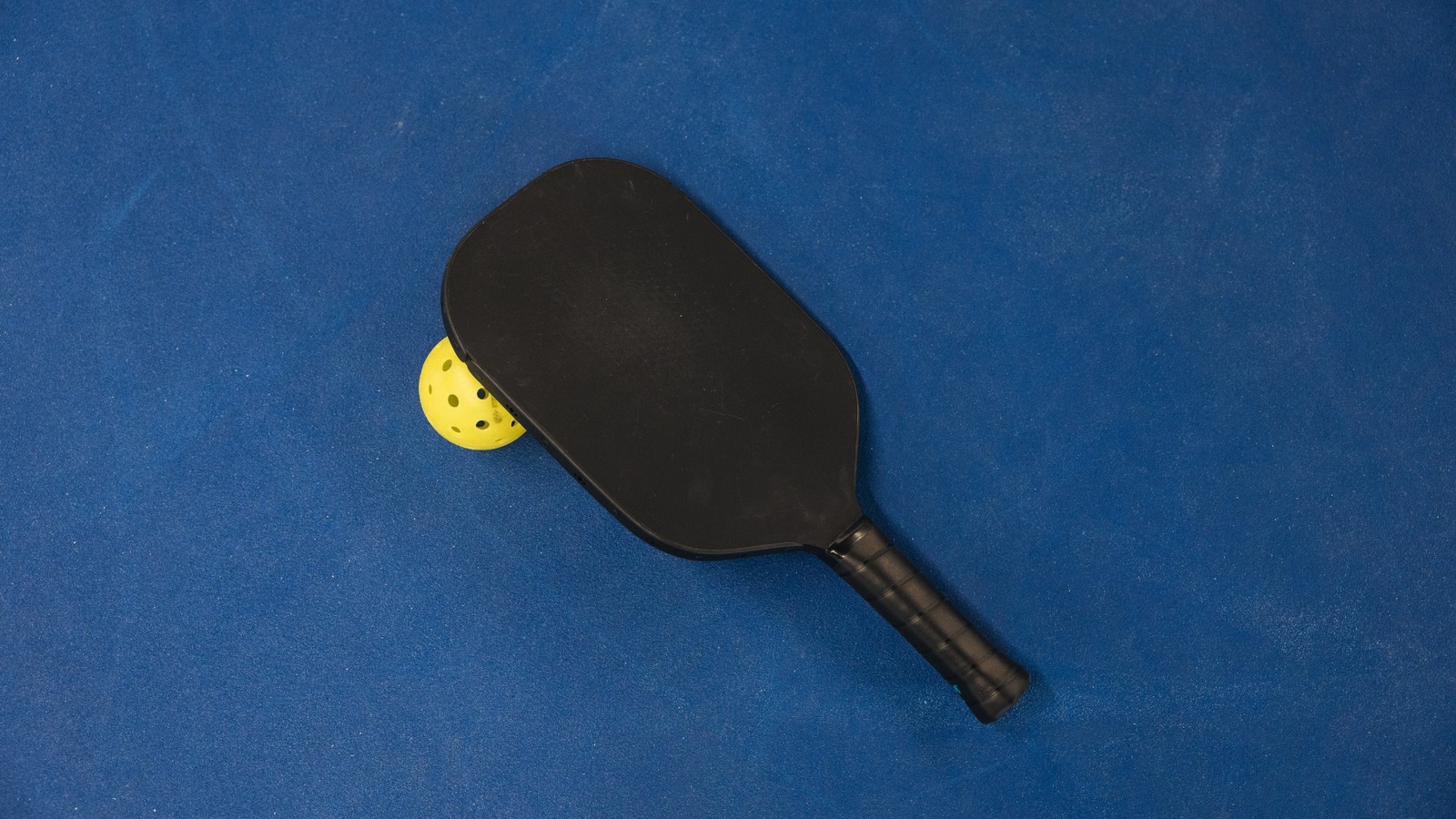
The face material can affect how the ball comes off the paddle, the feel of your shots, control and spin. Two of the most common options are fiberglass and carbon fiber.
Fiberglass Pickleball Paddles
Fiberglass faces generally have a lively, power-oriented feel.
Their main advantages include:
- The ball may come off the face faster
- Generating power without much effort can be easier
- They’re generally more affordable
- They can offer enough performance for beginners and social play
On the other hand, fiberglass may feel less controlled than carbon fiber on soft shots such as dinks and drops. Spin potential can also be more limited, depending on the surface texture.
If you’re trying pickleball for the first time and want to keep your starting budget modest, fiberglass is a reasonable option. That doesn’t make fiberglass paddles bad; they simply offer a different playing feel.
Carbon Fiber Pickleball Paddles
Carbon fiber faces generally stand out for control, spin and a more consistent response. They can:
- Offer more precision on soft shots such as dinks and drops
- Make it easier to put spin on the ball
- Respond more consistently on off-center contact
- Give regular players more room to develop their game
Textured surfaces described as “raw carbon fiber” can help grip the ball and generate spin. But “carbon fiber” in a product description doesn’t automatically mean a paddle is good. The carbon construction, surface durability and how the face is bonded to the core also affect performance.
If you’ll mainly play socially a few times a week or month, there’s no need to get lost in the finer details of carbon layups. Weight, shape and core thickness that suit your level will matter more for most players.
Which Should You Choose?
Here’s a simple way to frame it:
- For affordability and easy power: fiberglass
- For control, spin and longer-term use: carbon fiber
A fiberglass paddle may be enough for your first games. If you plan to play regularly and would rather not replace your paddle soon, a carbon fiber model may be the more sensible investment.
What Is a Pickleball Paddle Core?
The core is the internal section beneath the paddle face. Its construction can affect:
- Paddle stiffness
- How quickly the ball leaves the face
- Vibration levels
- Sweet spot size
- The balance between control and power
Many traditional paddles use a polymer honeycomb core. More recently, paddles with foam-supported edges or fully foam-based cores have also become more common.
14 mm or 16 mm: Which Core Thickness?
Two of the most common core thicknesses are 14 mm and 16 mm.
14 mm Pickleball Paddles
A 14 mm paddle tends to offer a thinner profile and a firmer, livelier feel.
These models can:
- Send the ball off the face faster
- Help with hard drives and serves
- Respond quickly at the net
- Be less forgiving of control errors
Power-oriented players with well-developed paddle control may prefer a 14 mm model.
16 mm Pickleball Paddles
A 16 mm paddle generally has a thicker profile and a softer feel. Its main advantages can include:
- Easier ball control
- More comfortable dinks and drops
- Better vibration damping
- A larger-feeling sweet spot
- More forgiveness for beginners
If you’re buying your first pickleball paddle, a 16 mm model will often be the safer starting choice. Just remember that thickness alone doesn’t define a paddle’s whole character. Face material, shape and weight distribution also influence the result.
What Is a Foam-Core Pickleball Paddle?
“Foam-core” describes paddles with an internal structure made entirely or largely from foam rather than a traditional honeycomb core. Some paddles use foam only around the edges for support. In some newer models, most of the core may consist of layers of foam with different densities.
The main aims of foam-core construction are to:
- Expand the sweet spot
- Reduce vibration
- Create a more consistent impact feel
- Reduce the risk of core deformation
- Maintain paddle performance for longer
As of 2026, CRBN’s TruFoam products and Paddletek’s Honeyfoam series are examples highlighting foam-core technology. Paddletek offers the Honeyfoam ESQ in its current range, while CRBN positions its TruFoam series around an all-foam core approach.
That doesn’t mean you need a foam-core paddle. For beginners and social players, a good polymer honeycomb model can be more than enough. Foam-core technology is more relevant to experienced players looking for a particular combination of control, power, feel or durability.
What Paddle Shapes Are Available?
Pickleball paddles generally fall into three main shape categories: standard or widebody, elongated, and hybrid.
Standard or Widebody Paddles
Standard paddles have a wider, relatively shorter body. Their advantages can include:
- A generous sweet spot
- Easier contact with the ball
- Quicker movement at the net
- More forgiveness on off-center shots
This is one of the most beginner-friendly shapes.
Elongated Paddles
Elongated paddles are longer and narrower. They can:
- Give you extra reach
- Help generate power on serves and drives
- Offer a longer handle for a two-handed backhand
- Help with court coverage in singles
However, the narrower face can mean a smaller sweet spot. They may also feel more head-heavy, making them slower at the net than standard models.
Hybrid Paddles
Hybrid paddles aim to combine the characteristics of standard and elongated shapes. They generally offer a design that is:
- A little longer than a standard paddle
- A little wider than an elongated paddle
- More balanced between power and control
If your playing style hasn’t fully taken shape yet, a hybrid can be a balanced option.
What About Handle Length and Grip Size?
First-time buyers often focus on weight, paddle dimensions and face material. But handle length and grip size also matter for comfort and control. Longer handles:
- Give you more room for a two-handed backhand
- May provide more leverage on serves
- Can reduce the available hitting surface
Shorter handles may suit players who use one hand and want quick paddle movements at the net. The grip should feel comfortable in your hand. Too thick, and it may restrict wrist movement. Too thin, and you may find yourself squeezing harder than necessary. If you’re between sizes, choosing a slightly smaller grip is more practical: you can build it up later with an overgrip.
What Makes a Good Beginner Pickleball Paddle?

Your first paddle doesn’t need to be a professional-level model or the most expensive one available. For beginners, these features generally make sense:
- Approximately 215–230 grams in weight
- An even or handle-biased balance
- A 16 mm core
- A standard, widebody or hybrid shape
- A generous sweet spot
- A comfortable grip
- A controlled, predictable response off the face
If your budget is limited, you can start with a fiberglass model. If you plan to play regularly, a carbon fiber paddle with a 16 mm core can be a balanced option that you can keep using for longer.
One common beginner mistake is choosing a heavy, elongated paddle because it seems more powerful. Combining a small sweet spot with a high swingweight can make learning harder. It also helps to ask yourself:
How often am I actually going to play pickleball? If it’s a social game once or twice a month, an entry-level paddle may cover your needs. If you’re planning to play several times a week and work on your technique, investing in a more durable, balanced model can make sense.
What Should You Consider When Choosing a Paddle Brand?
Well-known brands such as JOOLA, Selkirk, CRBN and Paddletek offer different paddles for beginner and performance-level play. But don’t choose on the brand name alone. Within a single brand’s range, you may find:
- Fiberglass and carbon fiber faces
- 14 mm and 16 mm cores
- Standard, hybrid and elongated shapes
- Control-oriented and power-oriented models
JOOLA’s current professional lineup includes series such as Perseus, Kosmos, Scorpeus, Hyperion and Agassi, with different shapes and playing characteristics. A better approach is to identify your needs first, then compare models from different brands that meet them.
If you plan to enter official tournaments, it’s also worth checking whether the exact model you’re buying appears on USA Pickleball’s current approved paddle list, rather than relying on the brand name. Approval is checked by model, not simply by brand.
Which Paddle Suits Which Player?
| Player profile | Suggested paddle features |
|---|---|
| First-time player | Midweight, 16 mm, widebody or hybrid |
| Social player | Fiberglass or a basic carbon fiber face |
| Control-focused player | 16 mm, carbon fiber, standard or hybrid |
| Spin-focused player | Textured carbon fiber face |
| Power-focused player | 14 mm, elongated shape or head-biased balance |
| Singles player | Elongated or hybrid shape |
| Two-handed backhand player | Longer handle |
| Player with arm sensitivity | Low swingweight and a 16 mm core |
These aren’t fixed rules. How a paddle feels in your hand will vary with your build and personal preferences.
Common Mistakes When Buying a Pickleball Paddle
Some of the most common mistakes include:
- Looking only at the models professional players use
- Choosing maximum power without considering control
- Ignoring weight distribution
- Not checking grip size
- Spending more than necessary on a first paddle
- Choosing a model just because it has a foam core
- Overlooking your level and how often you’ll play
A paddle with the latest technology may still be the wrong choice if it doesn’t suit your playing level and build.
So, What Is the Best Pickleball Paddle?
There isn’t one best paddle for everyone.
That answer can be a little frustrating. When researching equipment, most of us would quite like someone to say, “Buy this one.” But paddle choice depends on your expectations, build, playing frequency and style.
Still, we can give you a more concrete starting point:
Most beginners can make a balanced start with a paddle weighing around 215–230 grams, a 16 mm core and a standard or hybrid shape. If you want affordability and easy power, consider fiberglass. If control, spin and longer-term use matter more, carbon fiber may suit you better.
Elongated and 14 mm paddles can offer more power and reach, but may be less forgiving for beginners. Foam-core technology is a notable development in 2026, yet it isn’t necessary for every player. The right paddle is one that lets you control the ball comfortably, doesn’t tire your arm over longer sessions and suits the way you play.
Once you’ve settled on a paddle, shoes are next. Our guide to choosing pickleball shoes covers whether you can play in tennis shoes and five things to look for in court footwear.
If you’re buying a tennis racket too, similar principles apply to weight. Take a look at How Much Should a Beginner’s Tennis Racket Weigh?.
Frequently asked questions
What paddle weight suits a beginner?
Midweight paddles of around 215–230 grams are generally a balanced choice for beginners. Pay attention to weight distribution as well as overall weight.
Is a 14 mm or 16 mm pickleball paddle better?
A 14 mm paddle generally feels firmer, quicker and more power-oriented. A 16 mm paddle tends to feel softer, more controlled and more forgiving. Beginners will usually be better served by a 16 mm model.
Do I need a carbon fiber pickleball paddle?
No. Fiberglass can be enough for social players and anyone trying pickleball for the first time. For those planning to play regularly, carbon fiber may be a longer-term option.
Do I need a foam-core paddle?
No. Foam-core paddles may offer advantages in sweet spot size, vibration control and durability, but good polymer honeycomb models can be used at every level.
Can a beginner use an elongated paddle?
Yes, but its narrower face and smaller sweet spot may make it more demanding than a standard or hybrid model.
How do I check a paddle’s tournament approval?
Search for the brand and exact model name on USA Pickleball’s current approved equipment list. Approval applies to individual models, not to a brand’s entire range.