
Tennis Racket Weight: How Many Grams Should Beginners Choose?
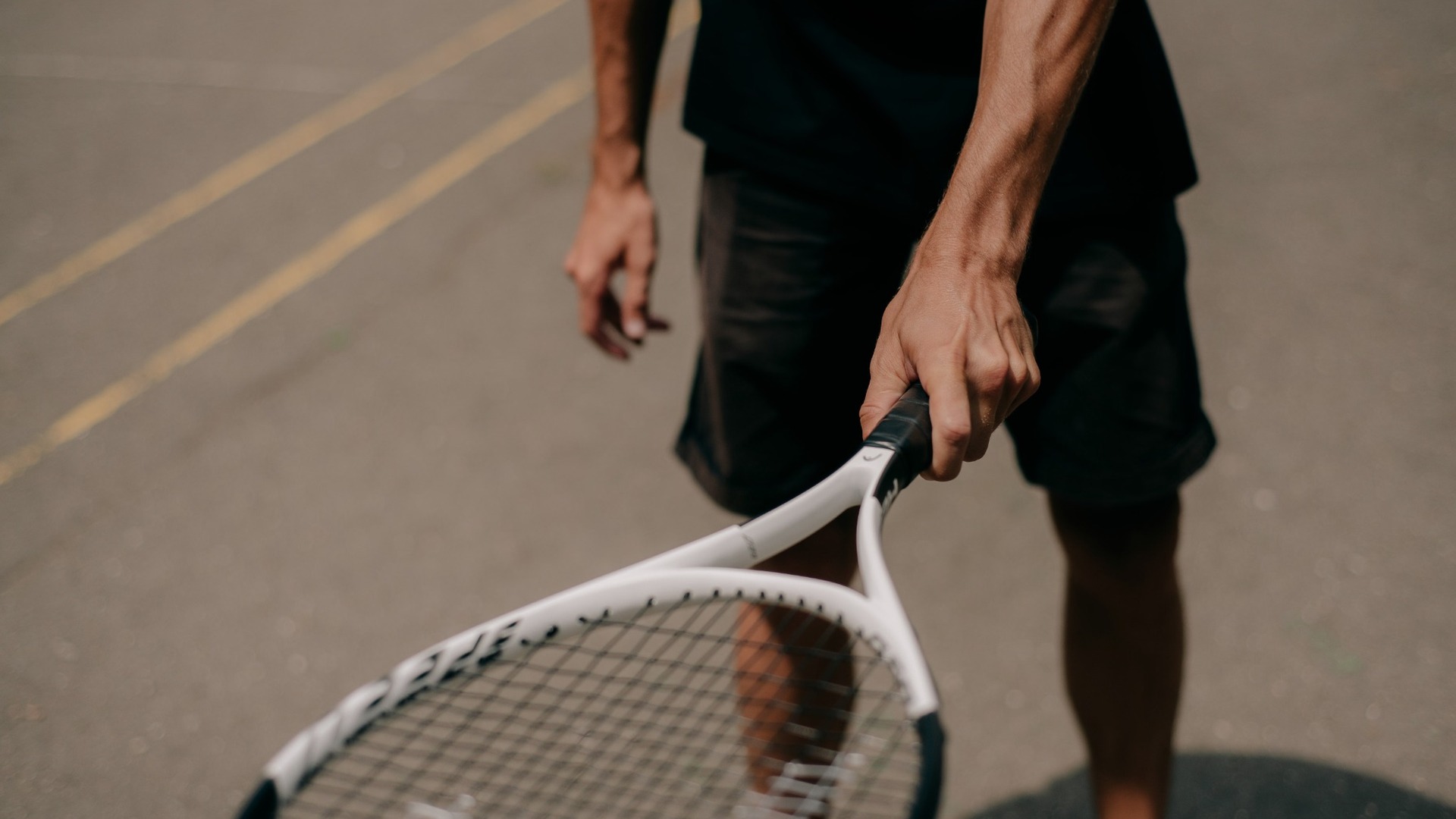
If you’ve decided to start playing tennis, first of all, good for you! It’s a sport that takes fitness, technique, and patience. Naturally, one of the first things you’ll need is a tennis racket, and choosing the right weight is a big part of getting that decision right. You might be drawn to a particular brand, a great colour, or the model your favourite pro uses. But before you reach for it, let’s take a breath.
Plenty of beginners pick a heavy racket thinking, “I’ll get used to it.” Starting out with one can leave your wrist, elbow, or shoulder feeling more tired than necessary during those first few weeks. Sure, some fatigue is normal while your body adjusts to a new sport. But why make things harder than they need to be?
A racket with a suitable weight will usually make learning easier than one that’s too heavy. Here’s the short answer: for adult beginners, 260–280 grams is often a good starting point. That’s the racket’s weight before the strings are fitted. Product listings usually call it “unstrung weight.” Once you add strings, an overgrip, and possibly a vibration dampener, the total weight in your hand will be a little higher.
Still, no single number works for everyone. Your strength, how often you play, your sporting background, and even how the racket distributes its weight can all affect the right choice.
Why does tennis racket weight matter so much?
A heavier racket brings more mass into contact with the ball. With a clean stroke, that can help you send the ball through the court and keep the racket from being pushed around at impact. On the other hand, accelerating a heavy racket throughout a match, serving, and changing direction at the last moment all take more effort.
Lighter rackets tend to feel very manoeuvrable at first. Getting ready at the net and switching between forehand and backhand become easier. But if a racket is too light, it can feel less stable against hard shots. You may then start working your arm harder than necessary to get the ball deep into the court.
As a beginner, your goal isn’t to find the lightest racket available. It’s to find one you can control comfortably, without it feeling like a toy when the ball arrives.
Suitable racket weight ranges for beginners
| Player profile | Suggested starting range, unstrung | Why? |
|---|---|---|
| Most adult women and adults with a lighter build | 250–270 g | Easy to swing and less tiring for the arm while learning technique. |
| Most adult men and players with average strength | 260–280 g | Offers a balanced starting point between manoeuvrability and stability. |
| Strong adults with a background in regular exercise | 275–290 g | Feels more solid against the ball while remaining manageable for a beginner. |
| Children and younger players | Depends on age and height | Racket length needs to be suitable as well as weight. |
These ranges aren’t strict rules; they’re a sensible starting guide. Someone who has been strength training for years might feel perfectly comfortable with a 285-gram racket. For a player with no racket sports experience, though, 300 grams could be unnecessarily tiring at first.
Is a 300-gram racket too heavy for a beginner?
For many beginners, it can be a bit much too soon. A racket weighing 300 grams unstrung reaches roughly 315–320 grams with strings and an overgrip. These rackets feel solid at impact, but they can put more load on your wrist and elbow, particularly when you’re late to the ball.
You might be thinking, “How much difference can 15 or 20 grams really make?” Fair question. But when you’re trying to meet an incoming ball at the right angle, you’re not swinging the racket just ten or fifteen times. Over a whole session, those seemingly small differences add up.
That doesn’t mean a 300-gram racket is always off the table. If you’re a strong adult who exercises regularly and you can accelerate it comfortably during a trial, it may work for you. Here’s a useful check: if, by the end of an hour’s lesson, you’re struggling to keep your arm up for serves or high balls, the racket is too heavy for you.
For your first racket, it makes sense to give yourself room to develop your technique. You can always move to a heavier model later as your need for power and control grows.
The weight on the label versus the weight you feel
The number on a racket’s label doesn’t tell the whole story. Two rackets that both weigh 270 grams can feel completely different in your hand. There are two main reasons for this.
Balance point
If more of the weight sits towards the head, the racket feels “head-heavy.” This can help add power, but getting the racket ready quickly may be harder. If more weight sits towards the handle, it feels “head-light.” The racket becomes more manoeuvrable, though at the same total weight it may feel a little less solid against the ball.
For many beginners, an evenly balanced or slightly head-light racket feels more comfortable while learning.
Swingweight: how heavy the racket feels in motion
Swingweight describes how heavy a racket feels when you swing it, rather than simply how much it weighs on a scale. A head-heavy 270-gram model with a high swingweight can feel more tiring than a different racket weighing 285 grams.
That’s why it’s worth trying a few service motions and forehand swings in the shop, rather than just holding the racket still.
Don’t choose a racket by weight alone
Even when the weight is right, the racket’s other features can make a real difference to your game.
- Head size: A head size of 100–105 square inches is often forgiving for beginners. It gives you a larger sweet spot, making it easier to get a decent result when you don’t hit the centre perfectly.
- Grip size: A grip that’s too small can let the racket twist in your hand, while one that’s too large can restrict comfortable wrist movement. As a quick starting check, look for roughly a finger’s width between your fingertips and your palm when you hold the racket.
- String pattern: A more open pattern, such as 16×19, can help with spin and easy power. It’s a common, straightforward choice for many beginners.
- Stiffness: Very stiff rackets can give the ball a lively response, but they may feel less comfortable if your elbows are sensitive. If you’ve had tennis elbow before, pay attention to overall comfort and string choice as well as weight.
A quick test to try in the shop or on court
My first suggestion before buying is to visit a shop that really specialises in tennis. You’re more likely to get useful guidance there, and you may be able to try rackets out, too.
Ask for a demo racket if possible. Holding one for five minutes tells you much less than using it for a lesson or a short hitting session. Some tennis shops also have small areas where you can hit a few balls.
While testing, ask yourself:
- Can you accelerate the racket in time on both forehands and backhands?
- Does it vibrate excessively in your hand against hard shots?
- Do your shoulder and forearm tire quickly after repeated serves?
- Do you constantly have to use excessive effort to get the ball deep towards the baseline?
A racket that’s too light often feels unstable and prone to vibration at impact. One that’s too heavy slows your swing and leaves you late to the ball. With a suitable weight, you can feel the racket working without struggling to get it into position in time.
Two common mistakes
“If a professional uses it, it must be right for me”
Professional players often use heavier, smaller-headed rackets that are more demanding to play with. And the model in the catalogue isn’t always the same as the player’s customised racket.
Starting with this kind of racket can be one of the most tiring choices for a beginner. For your first purchase, being able to learn comfortably is a better investment than looking like a pro.
Buying an extremely light racket just to avoid tiring your wrist
Very light adult rackets, around 220–240 grams, can feel easy to handle when you first pick them up. But if they lack stability at impact, you may try to compensate by putting more arm effort into every stroke. That doesn’t automatically make them comfortable in the long run.
Look for a balance between lightness and stability.
So, what’s a sensible choice for your first racket?
If you’re an adult beginner, 260–280 grams unstrung, a 100–105-square-inch head, and the right grip size are a sensible starting combination in many cases. If you have a lighter build, consider 250–270 grams. If you’re strong and exercise regularly, the 275–290-gram range may also suit you.
At the end of the day, you’re not buying a racket you have to use for the rest of your life. As your technique improves and you discover that you really enjoy playing, you can move on to different models. Spending a huge amount on your first racket isn’t necessarily the best investment. Putting part of that budget towards one-to-one lessons could help you learn faster.
Similar thinking about weight applies to other racket sports, too. If you’re interested, take a look at our guide to choosing a pickleball paddle or explore the other guides in our Racket Sports category.
Frequently asked questions
How much should a tennis racket weigh for a female beginner?
A typical starting range is 250–270 grams unstrung. Players with a strong sporting background may also feel comfortable around 275 grams.
How much should a tennis racket weigh for a male beginner?
For most adult men, 260–280 grams is a good starting range. Strong players who exercise regularly can also consider 285–290 grams.
How much weight do strings add?
Together, strings, an overgrip, and a vibration dampener can add roughly 15–25 grams, depending on the racket and setup.
Does a heavier racket hit harder?
With good technique and enough swing speed, a heavier racket can bring more stability and mass to the shot. But if it's too heavy for you to control, your swing slows down and you lose that advantage.