
A Guide to Yoga Styles: Hatha, Vinyasa, Yin, Ashtanga and Bikram
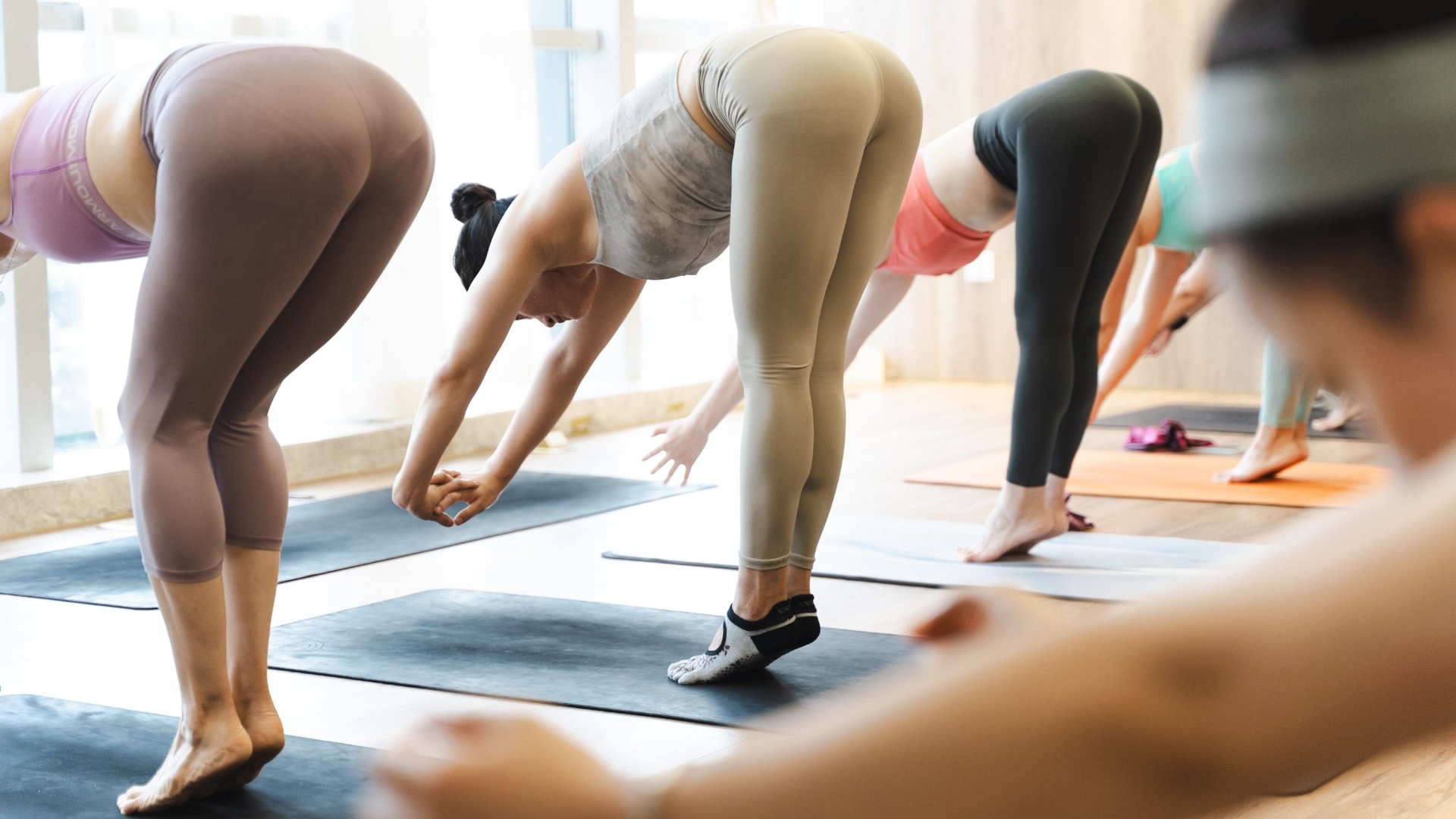
You’ve started getting curious about yoga, done a little research and found a studio near home that looks like a good fit. So far, so good. Then you open the class schedule. Hatha on Monday, Vinyasa on Tuesday, Yin on Wednesday… and Ashtanga somewhere in between: all different yoga styles, and you don’t yet know which one is for you.
Your first thought is probably, “What are all these, and which one am I supposed to book?” The studio has descriptions, but you don’t even know what level you are yet. All you wanted was to grab a mat and try yoga. Now you’re choosing classes before you’ve even walked through the door. These names can be confusing when you’re completely new to yoga. The differences aren’t actually that hard to understand, though. It helps to know what happens in each class and what that might feel like for you.
In one, you spend more time learning the poses. In another, you keep moving from one to the next. Elsewhere, you stay in the same position for a few minutes. And some people do all this in a heated room. Let’s make that schedule a little easier to read.
Hatha yoga: Let’s get to know the poses first
If you’re new to yoga, you’ll probably see Hatha mentioned quite a lot. Hatha is actually a broad term covering many approaches to yoga that include physical postures. On studio schedules, though, it usually describes a slower class where poses are explored individually. Say the teacher is demonstrating a standing pose. They explain where to put your feet and how to position your knee. Meanwhile, you’re trying to understand the instructions and stay upright. A Hatha class will often give you more time to work things out.
There’s already plenty going on in your head during those first few classes. “Was my right foot supposed to be in front? When do I lift my arms?” Adding a fast-moving sequence to the mix won’t suit everyone. If you’d like to learn the poses without rushing, a beginner Hatha class can be a good place to start. Just don’t assume a slower pace means an easy ride. Hold certain poses for a little while and your legs may start saying, “Right, we’ve got the idea. Can we move on?”
Vinyasa yoga: Moving from one pose to the next
In Vinyasa, movement and breath are linked in a flowing sequence. You might inhale as you raise your arms, exhale as you fold forward, then move into another pose. How you get into and out of a position is part of the practice too. There isn’t one fixed sequence that every class has to follow. A teacher might focus on balance one day and create a gentler flow the next. So if you try one class and think, “Okay, that’s Vinyasa,” your next session could feel quite different.
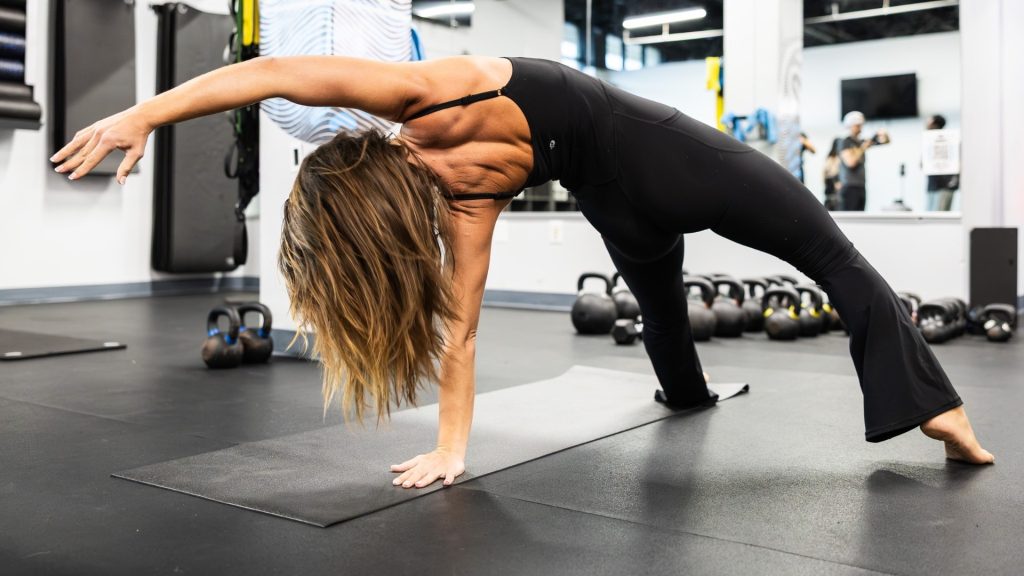
If you enjoy keeping moving, this kind of class might appeal to you. Check the level before booking, though. Beginner Vinyasa and an advanced class can be very different experiences. “Slow flow” generally means a more gently paced sequence. Don’t be surprised if you miss a few transitions in your first class. Everyone else might have moved on while you’re still wondering, “How exactly do I get up from here?” You can pause, watch the teacher and join back in. Nobody expects you to know all the movements on day one.
Yin yoga: We’re staying here for a while
In Yin yoga, you usually hold floor-based poses for several minutes. The time varies depending on the pose and the class. Cushions, blocks or blankets can be used for support. From the outside, it might look easy. After all, nobody’s constantly getting up and down. But stay in one position for a while and you discover a different side of the practice. Within the first minute, you might be wondering how long it’s been. Then tomorrow’s to-do list pops into your head. Followed by that message you haven’t answered.
Yin may appeal to you if you want fewer transitions and a chance to slow down. But slow doesn’t automatically mean easy, or suitable for everyone. The idea isn’t to push yourself as deeply into a pose as possible. You need to find a position that works for you. If you feel sharp pain, numbness or discomfort in a joint, don’t think, “I’ll hang on a little longer and it’ll loosen up.” Come out of the pose and let the teacher know.
Yin and restorative yoga often get mixed up too. In restorative classes, props support the body so you can rest comfortably. In Yin, you may feel a more noticeable stretch while holding a pose. So a Yin class you book thinking, “I just want to rest today,” might turn out differently from what you expected. For a closer look at where the practice comes from and how a class unfolds, read our guide What is Yin yoga?
Ashtanga yoga: A familiar sequence each time
In Ashtanga Vinyasa yoga, set series of poses are practised in a particular order. Breath and movement work together, and the practice can be physically demanding. Here’s a useful way to understand the difference from Vinyasa: in a Vinyasa class, the teacher’s sequence can change. In Ashtanga, you follow the order of the series you’re learning.
“Won’t I get bored doing the same movements?” Maybe you will. Or maybe that structure will be exactly what you enjoy. Some people find it reassuring to know what comes next. Rather than learning a new sequence every time, they can pay attention to how they’re doing within a familiar one.
If you see Mysore on the schedule, don’t assume it’s another yoga style to add to the list. It’s a way of teaching Ashtanga. Each person practises the section they’ve learned at their own breathing pace, while the teacher offers individual guidance. Beginners can learn the series gradually. In led classes, the group follows the teacher’s instructions together. If it’s your first time, tell the studio and ask which class would suit you. Seeing the full series in a video doesn’t mean you have to do the whole thing on your first day.
Bikram and other hot yoga styles: Why is the room so warm?
A traditional Bikram class includes 26 postures and two breathing exercises. They follow a set order, and the class traditionally lasts 90 minutes. The distinctive part is the room, heated to around 40–41°C, or roughly 105°F. So you’re dealing with the temperature as well as the poses. An effort you’re used to in an unheated studio may feel different in this setting.
There’s a small but important distinction here: not every hot yoga class is Bikram. “Hot yoga” is a broader term. A Vinyasa class taught in a heated room can be described as hot yoga too. If you see it on the schedule, ask what the class involves and how long it lasts.
Practising in the heat carries risks of overheating and dehydration. Don’t brush off dizziness or nausea because you don’t want to stop halfway through a class. If you have a health condition or take medication that affects your heat tolerance, speak to a healthcare professional before starting. Learning unfamiliar poses while getting used to a hot room could feel like a lot for your first yoga class. Keep that in mind when choosing. How much you’ll sweat isn’t a particularly useful measure of which class is right for you.
Comparing yoga styles: So which class should I book?
This table can help you make sense of the options:
| Style | What can you expect? | What should you ask before booking? |
|---|---|---|
| Hatha | Learning poses at a generally slower pace | Is this class suitable for beginners? |
| Vinyasa | A flowing sequence linking breath and movement | How fast is the flow, and what level is the class? |
| Yin | Mostly floor-based poses held for longer | Can the poses be adapted to suit me? |
| Ashtanga | A set sequence learned gradually | Would Mysore or a led class be better for me as a beginner? |
| Bikram | A set series practised in a heated room | What is the room temperature, and how long is the class? |
Still, don’t decide on the name alone. Two classes in the same style can differ in teaching approach, pace and the experience of the group. Calling the studio and saying, “I’ve never done yoga before. Which class should I start with?” will often make things much simpler.
Yoga styles and flexibility: Do I need to be flexible before I buy a mat?
No. You may not be able to reach your toes on your first day. You’re not expected to arrive already knowing how to do every pose. You can use blocks, bend your knees or try an easier variation the teacher offers. The person next to you might fold forward effortlessly, but that doesn’t mean you need to do the same. You don’t know how long they’ve been practising either.
If you don’t love your first class, don’t write off yoga straight away. Perhaps the pace wasn’t right for you, or you found the instructions hard to follow. Another beginner class might change your mind. Choosing a style doesn’t commit you to it for life. You’ll work out what you enjoy as you go. For now, notice whether you feel comfortable asking questions and whether the teacher can offer another option when you’re struggling. You’ll get to know the rest of those names once you’re on the mat.