
The benefits of Pilates: posture, core strength and lower back health

Watching Pilates from the outside, you might think some of the movements look quite gentle, even easy. Try them yourself, though, and after a few repetitions you may feel muscles around your abdomen and torso that you hadn’t paid much attention to before.
That’s because the aim isn’t to move as fast as possible or burn lots of calories in a short time. The focus is on controlled movement, keeping your torso stable, using your breath and noticing how your body moves.
As Pilates has become increasingly popular in recent years, researching it tends to bring up the familiar question:
Does it actually work?
Studies report positive findings in areas such as core strength, balance, movement control and chronic lower back pain. But treating it as a solution to every problem would be going too far.
What is Pilates?
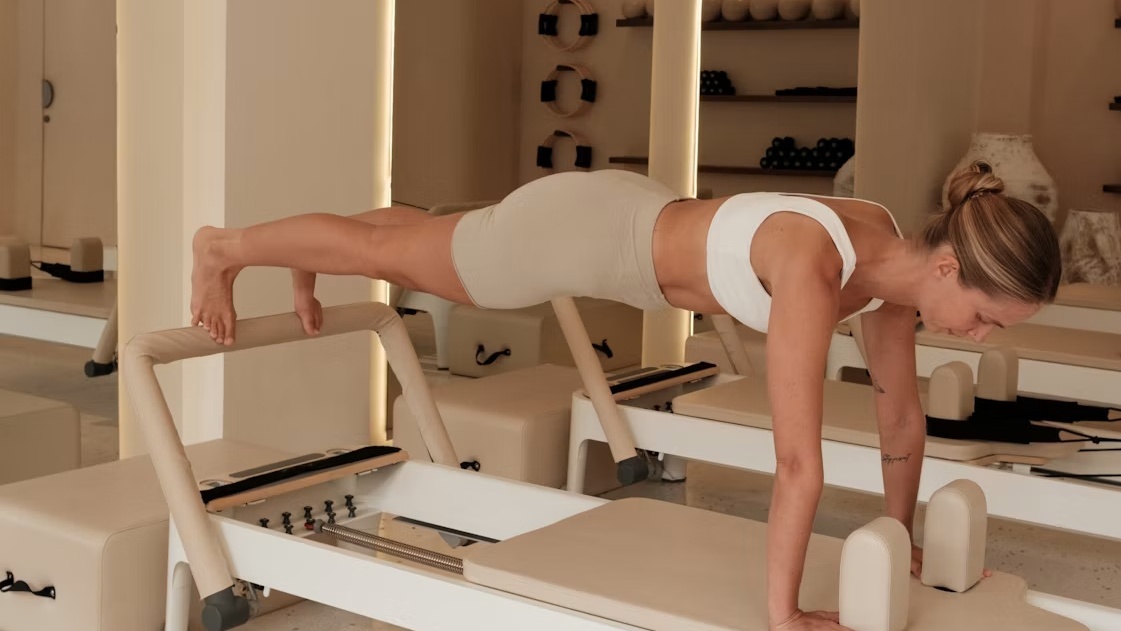
Pilates is an exercise system developed by Joseph Pilates that combines controlled movement, breathing and torso stabilisation. Today, it’s practised both on a mat and with equipment such as a reformer.
In general:
- It actively engages the core.
- Movements are controlled.
- Breathing is part of the exercise.
- Movement quality matters more than the number of repetitions.
- It can be done on a mat or with equipment.
So describing Pilates as simply stretching or an abdominal workout doesn’t quite capture it.
It may help strengthen your core
One of Pilates’ most distinctive features is how consistently it engages the core. Most people hear “core” and immediately think of their abs. But the area includes more than the abdomen. The muscles around the lower back and pelvis, along with deeper muscles that help stabilise the torso, are involved too.
During a class, you might move an arm or a leg while keeping your torso as controlled as possible. The goal is to learn how to use muscles together with control, as well as putting them to work.
Can Pilates improve posture?
Posture is one of the topics most often linked with Pilates. A definite promise such as “Pilates will fix your rounded back” wouldn’t be justified. But paying repeated attention to the position of your spine, pelvis and shoulders may help you become more aware of how you hold your body.
That awareness may be useful in everyday life, especially if you spend a lot of time at a desk. A systematic review published in 2024 reported that Pilates could produce positive results in some measures of posture. It also noted that the available research remains limited. Pilates may support posture, but it shouldn’t be seen as a method that solves every postural issue.
Can it help with lower back pain?
Chronic lower back pain is one of the most researched topics in Pilates. A Cochrane review found that Pilates may offer benefits for pain and function in people with chronic, non-specific lower back pain compared with no exercise or minimal intervention.
There’s an important detail, though: it hasn’t been shown to be clearly superior to other forms of exercise. So it’s better not to think of Pilates as a specific cure for lower back pain. If you have ongoing pain or don’t know what’s causing it, consult an appropriate healthcare professional before following a random video online.
It may improve balance and movement control
Moving your arms and legs while keeping your torso stable requires your body to make continual small balance adjustments. Researchers have looked at this effect particularly in older adults. A systematic review and meta-analysis published in 2024, covering 39 studies, reported that Pilates could produce positive results in measures of static and dynamic balance in older adults.
That doesn’t mean we can conclude “Pilates definitely prevents falls.” It may help with balance, but it doesn’t eliminate the risk of falling on its own.
It may contribute to flexibility
Flexibility is another area that can cause confusion when people talk about Pilates. Describing it purely as a flexibility programme wouldn’t be accurate. Still, many exercises involve lengthening muscles with control and moving joints through different ranges of motion.
With regular practice, you may see improvements in range of motion, particularly around the hips, hamstrings and spine. If maximum flexibility is your only goal, Pilates isn’t your only option. What’s useful is that it works on flexibility alongside strength and control.
Let me add a small note from my own experience. I’m not a particularly flexible person. After training three days a week with a personal trainer for around a year, I noticed I could open my legs wider than I ever had before. That doesn’t mean everyone will get the same result, of course, but I felt the effect of regular training on my own range of motion quite clearly.
It may increase body awareness
You’ll hear familiar cues throughout a class:
- “Keep your pelvis still.”
- “Relax your shoulders.”
- “Control your lower back.”
- “Don’t hold your breath.”
Doing all of those at once can feel difficult at first. At some point, you might even get a little fed up with the constant corrections. But over time, it becomes easier to notice your body’s position.
That awareness isn’t useful only in class. You may also start noticing how you hold your torso while sitting at your desk, lifting weights or doing another sport.
Mat Pilates or reformer Pilates?
These days, many people hear “Pilates” and immediately picture a reformer. But there’s more to Pilates than that one piece of equipment.
| Mat Pilates | Reformer Pilates | |
|---|---|---|
| Resistance | Body weight and gravity | Springs and the reformer system |
| Equipment | A mat and small pieces of equipment | A reformer machine |
| Cost | Lower | Usually higher |
| Practising at home | Straightforward | Requires equipment |
| Adjusting resistance | More limited | Can be adjusted more precisely |
Let’s clear up a common misunderstanding: mat Pilates isn’t the easy version of reformer Pilates. Some mat exercises are demanding because you have to stabilise your whole body using your own muscular control. On a reformer, adjusting the spring resistance can make an exercise harder or provide assistance when needed.
Which is better for you depends on your goals, budget and which you can practise more consistently.
Can Pilates help you lose weight?
As a physical activity, Pilates uses energy. But it doesn’t replace a high-intensity cardio workout. If weight loss is your main priority, building your entire plan around Pilates alone wouldn’t be the best approach.
You can combine Pilates with other activities, such as:
- Walking.
- Running.
- Swimming.
- Cycling.
- Strength training.
Its main contribution often lies in strength, control and movement quality, rather than burning large numbers of calories.
Who can do Pilates?
One of Pilates’ advantages is that exercises can be adapted to different levels. Someone who has never exercised before can get started, while someone who has trained for years can still have a challenging session.
But “anyone can do Pilates” and “every exercise suits everyone” don’t mean the same thing.
Speak to an appropriate healthcare professional and your instructor before starting, particularly if you:
- Have recently had surgery.
- Are pregnant.
- Have chronic lower back or neck problems.
- Have osteoporosis.
- Have a muscle or joint injury.
What do we make of the benefits of Pilates?
Pilates is an exercise system that engages the core, develops movement control and, with regular practice, may benefit areas such as balance, flexibility and strength. Research also suggests it may help with chronic, non-specific lower back pain.
But there’s no reason to consider it superior to every other form of exercise or a solution to every problem. It doesn’t need to be a miracle to be useful. It teaches you to move with control, use your torso and notice what your body is doing.
If core control and movement quality matter to you, it’s worth trying.
Sources
- WebMD — Pilates: Overview, Pros and Cons, Benefits, and More
- Cochrane — Pilates for Low Back Pain
- Fernández-Rodríguez et al. — Effects of Pilates on Body Posture: A Systematic Review, 2024
- Campos Júnior et al. — Effects of Pilates Exercises on Postural Balance and Reduced Risk of Falls in Older Adults: A Systematic Review and Meta-analysis, 2024
- Pilates Improves Physical Performance and Decreases Risk of Falls in Older Adults: A Systematic Review and Meta-analysis, Physiotherapy, 2021
Note: This article is for general information. Pilates does not replace treatment for any illness or musculoskeletal condition. If you have ongoing pain, an existing injury, are pregnant or have a known health condition, consult an appropriate healthcare professional before starting exercise.
Frequently asked questions
Can Pilates help you lose weight?
Pilates increases your energy expenditure, but it isn’t a high-intensity cardio exercise. If you want to lose weight, consider it alongside nutrition, daily movement and other exercise.
Can Pilates help with lower back pain?
Studies suggest it may help with chronic, non-specific lower back pain. However, it hasn’t been shown to be definitely superior to other forms of exercise. If you have an existing lower back problem, consult an appropriate healthcare professional before starting.
Is reformer Pilates better than mat Pilates?
Neither is universally better. Mat Pilates uses body weight, while a reformer offers adjustable spring resistance. Your choice depends on your goals and which you can keep doing consistently.
How many days a week should you do Pilates?
For beginners, 2–3 sessions a week may be a manageable starting point. But training intensity, other sports you do and how well you recover can change that number.
Can you do Pilates at home?
Yes. Mat Pilates, in particular, can be done at home with little equipment. If you’ve never done Pilates before, getting help from an instructor at the start may be useful for learning the basics.
Can Pilates correct your posture?
Pilates may support torso control and postural awareness. But the current evidence isn’t strong enough to say that it corrects every postural issue.