
What Is Yin Yoga? Its History, Benefits and What to Know Before Your First Class
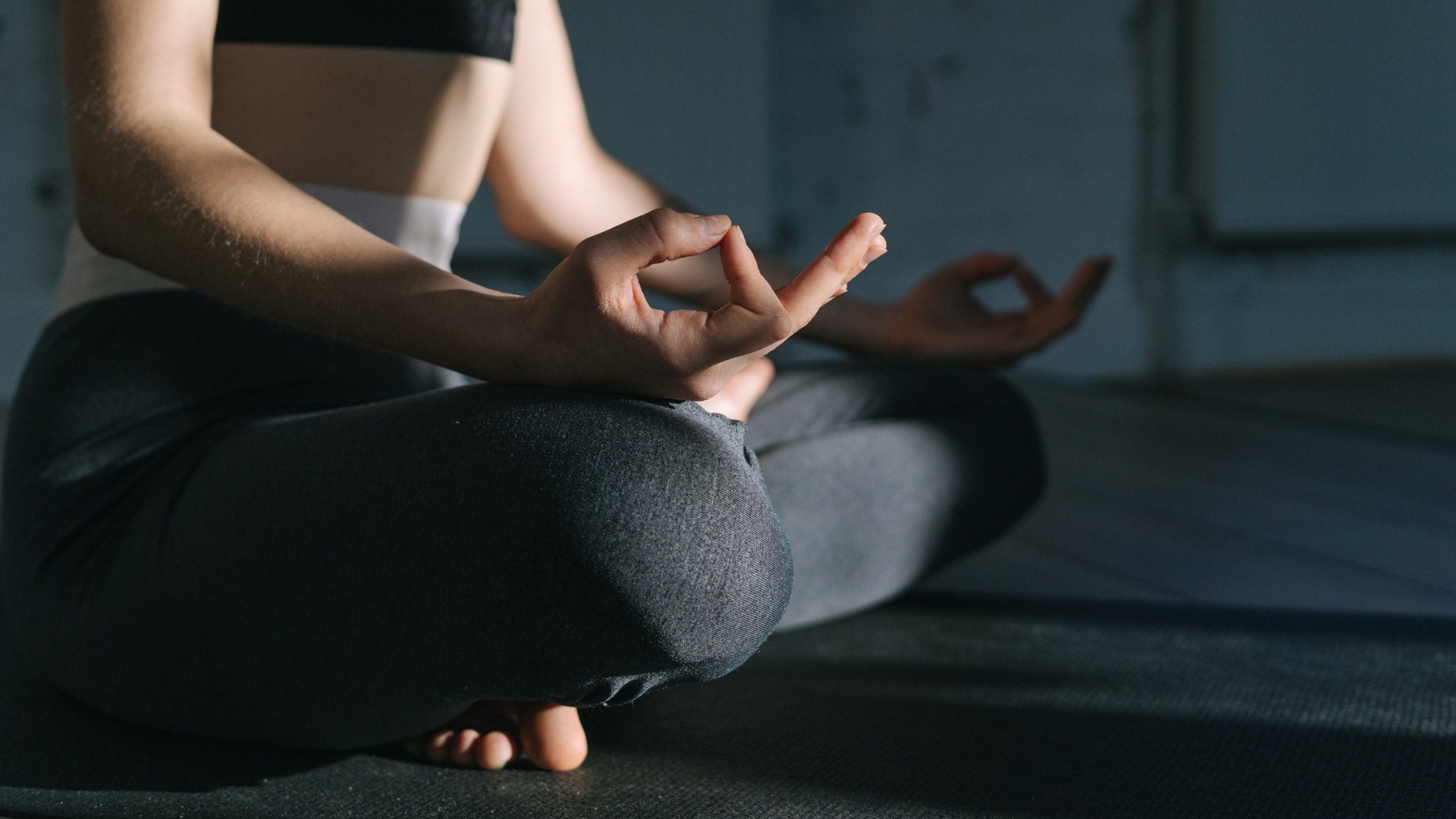
When we think of yoga, many of us picture people moving from one pose to the next or trying to keep their balance. The first reaction is often the same: “I’m nowhere near that flexible.” Yin yoga moves at a different pace. You settle into a pose and stay there for a few minutes.
From the outside, it looks pretty calm. If you’ve just watched a more active yoga class, you might wonder, “So the whole idea is to just stay like that?” As it turns out, staying still can be a challenge of its own. Your body may be in one place, but your mind can wander off to the shopping list, tomorrow’s plans or even that familiar question: “Did I unplug the iron?”
Joking aside, yin yoga is known for its long holds, mostly floor-based poses and attention to how your body feels. So where did this slower style of yoga come from, what might it help with, and what can you expect at your first class?
What kind of yoga is yin yoga?
Yin yoga poses are usually done sitting or lying down. You’ll often come across postures that focus on the hips, pelvis and the area around the spine. Rather than constantly changing poses, as you might in a more active class, you settle into one position and stay there for a while. Many classes use holds of around 3–5 minutes. But that isn’t a requirement for everyone. The time depends on the pose, your experience and how your body responds. If you’re new, you can use shorter holds, add support or work with your teacher to choose another position. Just because the person next to you is still in the pose doesn’t mean you have to stay there too.
The aim is to reduce unnecessary muscular effort. Cushions, blocks, blankets and long yoga pillows called bolsters can help with this. Using a prop doesn’t mean you’re doing half a pose. For example, a block under your knee may make it easier to stay comfortably in a particular position. [1]
One more thing: a slow class doesn’t mean every pose will feel completely comfortable. You may notice a gentle stretching sensation. It should stay manageable, without turning into pain or making it difficult to breathe comfortably.
The history of yin yoga: How did it begin?
Yin yoga draws on both the yoga tradition and Chinese Taoist approaches to movement and the body. But the classes you see in studios today aren’t a single system that has remained unchanged for thousands of years. Holding poses for a long time is an old practice; the approach now widely known as yin yoga developed through the contributions of several teachers.
One important name in this story is Paulie Zink. A martial artist and Taoist yoga teacher, Zink developed an approach in the late 1970s that brought together long holds, flowing movements and animal-inspired postures. His teaching covered more than the quiet floor-based poses you’ll see in many yin classes today.
Paul Grilley studied with Zink in the late 1980s. By focusing on long-held postures, he helped develop and popularize the approach. His emphasis on anatomy, differences between bodies and how a pose affects each individual became a distinctive part of his teaching. Sarah Powers combined these practices with meditation and mindfulness. She also played an important role in introducing and popularizing the name “yin yoga.”
All three names belong in the story. Zink’s pioneering work, Grilley’s development of the approach and Powers’ contributions help explain how the classes we know today took shape. [2][3]
What does “yin” mean?
In Chinese thought, yin and yang describe complementary qualities. Yin is associated with stillness, quiet and an inward focus, while yang is associated with movement and activity. These aren’t fixed labels you can stick on everything. Their meaning depends on how they relate to each other. In yoga, this idea is used to describe the relationship between more active and quieter practices. A flowing vinyasa class might be described as more “yang,” while a class built around long, quiet holds would be more “yin.”
In some classes, you may also hear about “qi,” meridians or energy associated with different organs. These are part of traditional Chinese thought and can help you understand yin yoga’s cultural background. They don’t, however, establish a claim such as “This pose heals this particular organ” as a scientifically proven fact. [2]
What does yin yoga do to the body?
When people explain yin yoga, the terms “connective tissue” and “fascia” often come up. Fascia is part of the connective tissue network that surrounds and links muscles and other structures. The yin approach pays particular attention to how sustained, controlled loading may affect these tissues.
If you hear someone say, “We switch off the muscles completely and stretch only the fascia,” take that explanation with a little caution. The body doesn’t work in such separate compartments. Muscles, tendons and connective tissues around the joints can all be loaded within the same posture. [1]
Improved flexibility isn’t explained simply by tissues getting longer, either. A 2025 analysis of 65 studies found that static stretching can be associated with reduced passive stiffness in the muscle–tendon unit and, with regular practice, greater tolerance of stretching. In other words, becoming more comfortable in the same movement may partly involve a change in how you experience the stretching sensation.
That research wasn’t specifically about yin yoga, though. We can’t take findings from stretching studies and present them as proof of all yin yoga’s effects. They give us some insight into what long holds might do to the body, and that’s as far as we can reasonably take them. [4]
What are the benefits of yin yoga?
Flexibility and ease of movement
Regular stretching that suits your body can improve joint range of motion. Yin yoga’s long holds may contribute to that. If you enjoy working at a quieter pace, it could also become a habit you find easy to keep up. [4]
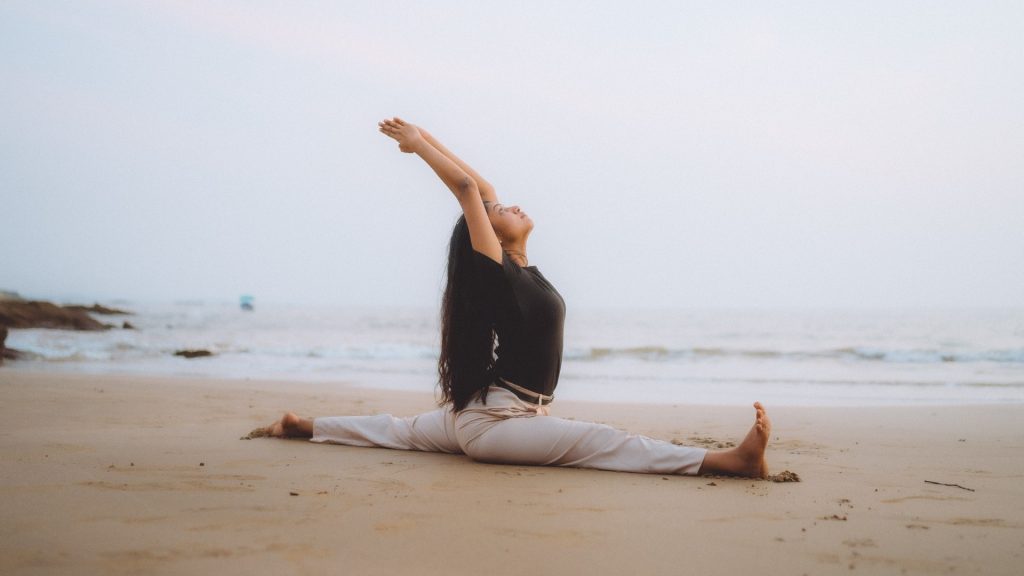
Just don’t set your expectations by looking at photos. Being more flexible doesn’t mean every pose will look exactly like someone else’s. Bone structure, joint characteristics and body proportions all affect how a posture looks. Two people can look different in the same pose and both be doing something appropriate for their bodies. Your knee not touching the floor doesn’t mean you’ve failed the class. [5]
Anxiety and sleep problems
One study of yin yoga, published in 2018, involved 105 adults with elevated stress levels. Participants were randomly assigned to three groups: yin yoga alone, yin yoga combined with psychoeducation and mindfulness practices, or a control group that did not take part in those activities. After five weeks, both intervention groups showed greater reductions in anxiety and self-reported sleep problems than the control group. But one detail matters: statistically significant reductions in perceived stress and depressive symptoms were found only in the group that also received psychoeducation and mindfulness practice.
These results are encouraging. Still, the study was short and didn’t compare yin yoga with another form of exercise. We can’t turn the findings into promises that “Yin yoga treats anxiety” or “Your sleep problems will definitely disappear.” [6]
Body awareness and attention
While staying in a pose, you may notice that you’re clenching your jaw, lifting your shoulders or holding your breath without realizing it. Simply spotting these small habits, which often go unnoticed during the day, can be useful. Your mind doesn’t have to go completely silent, either. Having thoughts doesn’t mean you’re “bad at meditation.” When your attention wanders, you can bring it back to your breath or a sensation in your body. A few minutes later, it may wander again. You bring it back again.
Yoga in general may offer benefits for areas such as stress management and sleep. But findings from research on other yoga styles shouldn’t automatically be applied to yin yoga. [7]
Are yin yoga and restorative yoga the same?
Both can involve a slow pace, long holds and props, so it’s understandable that they get mixed up. The main difference is the purpose of the pose and how much load it places on the body.
| Feature | Yin yoga | Restorative yoga |
|---|---|---|
| Main focus | Controlled loading and body awareness | Supported rest and relaxation |
| Sensation in the pose | A mild to moderate stretch may be present | Noticeable stretching is generally minimized |
| Role of props | Adapt the pose and regulate the load | Support the body as comfortably as possible |
In a yin class, you might feel a gentle stretch in a particular area. In a restorative class, more support may be used to reduce that sensation. Both can feel quiet, but they don’t offer exactly the same experience. When choosing a class, asking the teacher what it involves may be more useful than relying on the name alone. [8]
How do you practice yin yoga?
Sarah Powers describes three basic principles: settle into a pose at an appropriate depth, become still and stay for a while. [9]
An appropriate depth doesn’t mean going as far as you possibly can. Start where you feel a gentle stretch. This gives you room to pay attention to your body’s response throughout the hold. Don’t assume you need to move deeper after a little while, either. Where you are may be enough.
Becoming still doesn’t mean refusing to move, whatever happens. If you feel pain, numbness or tingling, or find it hard to breathe comfortably, adjust your position or come out of the pose. A small adjustment won’t ruin the class. Staying for a while doesn’t mean getting into a standoff with the timer. For your first attempts, you might choose holds of 1–2 minutes. You don’t have to keep increasing the time. A shorter hold you can come out of comfortably may be a better choice than forcing yourself through five minutes. Take your time coming out of the pose, too. Move slowly and, if needed, rest briefly in a comfortable position.
Getting ready for your first class
It’s normal to feel excited or a little nervous about trying something new. You don’t need to be able to touch your toes to start yin yoga. It’s more important to tell the teacher you’re new and let them know about any pain, injuries or movement restrictions. Comfortable clothes, a mat and a blanket may be enough to get started. If you’re going to a studio, ask which props are available. Since you won’t be moving much, you may get chilly; bringing a light extra layer is a good idea.
You may come across poses such as butterfly, child’s pose and a supine twist. Familiar names don’t mean every posture will suit you. If your knees, back or hips feel uncomfortable, ask the teacher for an alternative. To begin with, you could try one or two short sessions a week. That’s a suggestion, not a schedule everyone has to follow. Notice how you feel during the session, afterwards and the next day. If you’re experiencing pain, reassess the practice rather than increasing the duration.
Where does it fit for runners, cyclists and hikers?
When we run, we focus on distance. On the bike, it’s speed. On a hike, it’s where we’re heading. Alongside an active routine, yin yoga can give you some time to pause and notice how your body feels. But let’s not jump from that to “It speeds up recovery and prevents injuries.” Those claims need evidence of their own. Long holds also place a load on the body. Pushing an already sensitive area after a hard training session doesn’t become a good idea just because you’re doing yoga.
You could try it on a lighter day or in a separate session and see how you respond. Keep up your strength, endurance and balance work as well. If you enjoy yin yoga, it can have a place in your routine; don’t expect it to meet all your training needs.
Who should take extra care?
Moving slowly doesn’t mean there’s no risk. If you have an existing injury, unexplained pain or osteoporosis, or have recently had surgery, speak to a healthcare professional before starting. During pregnancy, poses and props may also need individual adjustments. [7]
Take particular care if your joints have an unusually large range of movement, known as hypermobility. In that situation, gaining more flexibility may not be the right goal. Maintaining control, using support and avoiding the very end of your range may be more appropriate. Discuss an approach that suits you with a physiotherapist and a teacher experienced in working with hypermobility. [10]
Then there’s that line we hear so often in sport: “No pain, no gain.” Don’t use it as your guide in yin yoga. Sharp pain, pinching in a joint, electric-shock sensations or numbness aren’t signals to push through. If an injury keeps you out of training, there isn’t much “gain” left in the equation.
How might you feel after your first session?
Not everyone has the same experience. Some people leave feeling calm and rested. Others find staying still for that long harder than they expected. You don’t have to walk out of your first class feeling transformed.
Pay more attention to how you feel during and after the practice than to how deeply you moved into each pose. If you head home thinking, “I’m moving a little more comfortably,” great. If you think, “A class this slow might not be for me,” that tells you something too. You can always try a shorter session or a different teacher if you’d like to give it another go.
And if you finish your first class remembering “I did unplug the iron, didn’t I?” just as clearly as the names of the poses, go easy on yourself. Getting used to staying still for a few minutes can take longer than we expect.
Sources
- Bernie Clark — What Is Yin Yoga?
- Paulie Zink — Original Yin Yoga: Art of Stillness and Flow
- Bernie Clark — Paul Grilley
- Ingram et al., 2025 — Mechanisms Underlying Range of Motion Improvements Following Acute and Chronic Static Stretching
- Bernie Clark — What Stops Me?
- Daukantaitė et al., 2018 — Five-week yin yoga-based interventions decreased plasma adrenomedullin and increased psychological health in stressed adults: A randomized controlled trial
- NCCIH — Yoga: Effectiveness and Safety
- Bernie Clark — Yin Yoga or Restorative Yoga?
- Bernie Clark — How to Practice Yin Yoga
- Bernie Clark — Hypermobility and Yoga