
Pilates at Home: A 15-Minute Beginner Mat Routine
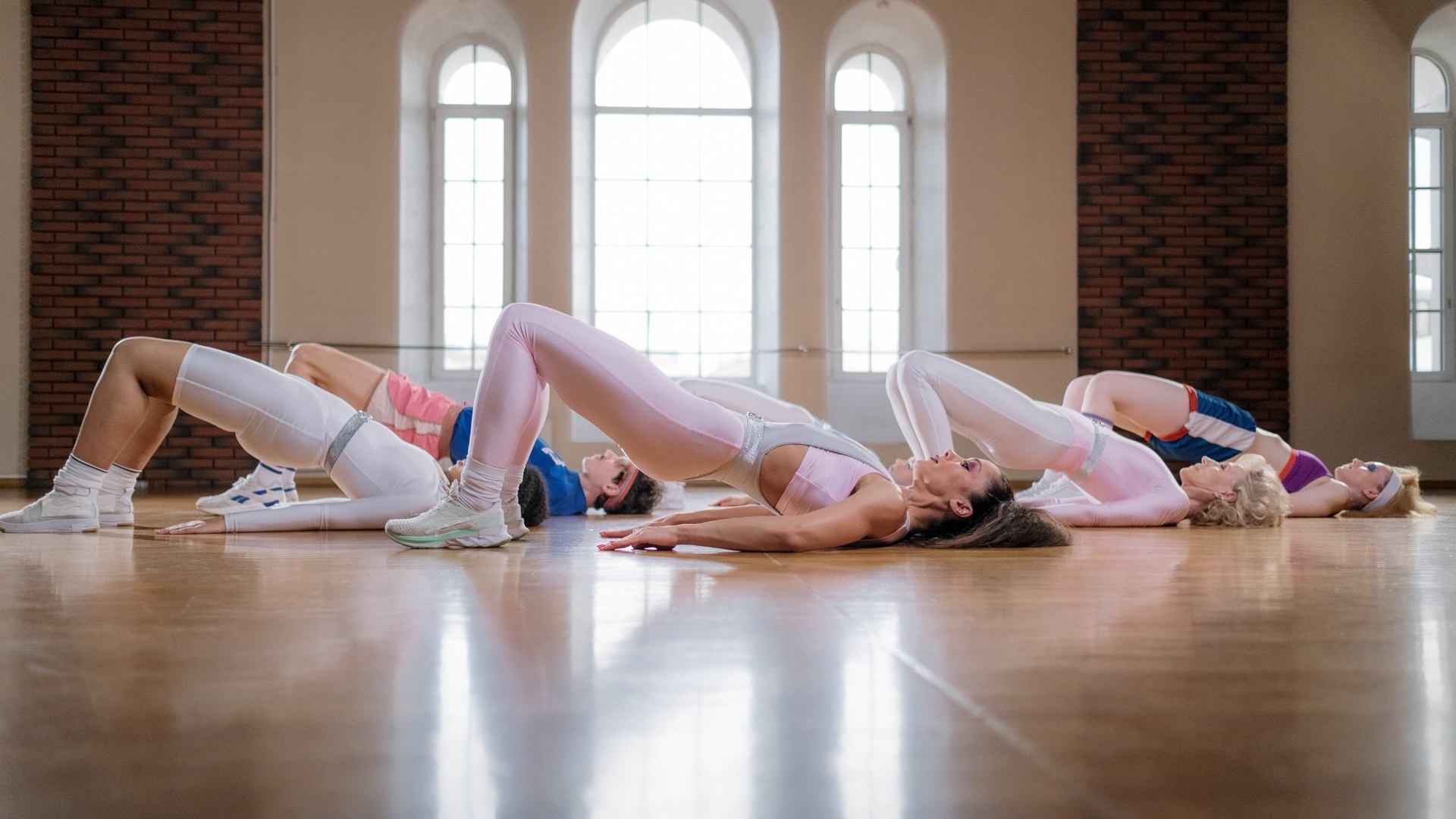
You can do Pilates at home without a reformer or a studio membership. A mat and a little space to move comfortably are enough to get started. That’s one of the nice things about mat Pilates: most exercises use your own body weight. It’s a practical option at home, especially if you’d like to work on core strength, balance, movement control and posture.
This beginner mat routine takes about 15 minutes. We’ve covered what Pilates is and how mat and reformer Pilates differ in a separate article. A quick note: if you have an ongoing injury, pain, recent surgery or a health condition that could affect your ability to exercise, it’s best to speak with your doctor or physiotherapist before starting.
What do you need to do Pilates at home?
Getting started takes very little equipment or expense:
- A Pilates or exercise mat
- Comfortable clothes
- A small area with enough room to stretch out your arms and legs
Pilates mats are usually a little thicker than yoga mats. You’re most likely to notice the difference during exercises on your back. If the only mat you have is the one you bought for yoga at home, you can start with that. A dedicated Pilates mat can wait. So can a resistance band, small Pilates ball or Pilates ring. You can add those once you’re comfortable with the exercises.
3 simple rules before you start Pilates at home
1. Focus on control over speed
In Pilates, there’s no need to squeeze in as many reps as possible. You may be used to gym sets like 3×12, 4×8 or 3×15. Here, how you move matters more than the rep count. Eight controlled reps are better than 15 with your form falling apart. Take your time, even if that means doing fewer reps.
2. Keep breathing
It’s easy to hold your breath without realising it, especially when an exercise gets hard. Think of breathing as part of the movement and keep it as steady as you can, even when you’re working harder.
3. Keep the range of motion manageable
Lifting your leg higher or rotating your torso further doesn’t necessarily improve the exercise. If you start to lose control, make the movement smaller. A few centimetres of controlled motion are worth more than a wide sweep you can’t control.
A 15-minute Pilates routine at home
The routine has four parts: 2 minutes of preparation, 7 minutes of main exercises, 4 minutes of balance and side work, and 2 minutes to cool down. Your first session may take a few minutes longer. Transitions will naturally get quicker as you learn the movements. There’s no need to race the stopwatch to finish in exactly 15 minutes. Aim for good form and control throughout.
First 2 minutes: preparation
1. Pilates breathing — about 45 seconds. Lie on your back with your knees bent and your feet flat on the floor. As you inhale, feel your ribs expand sideways. As you exhale, gently draw in your abdomen. The aim is to stay in control of your torso while you breathe, without forcing the movement.
2. Pelvic tilt — 8–10 reps. Stay in the same position. Gently tilt your pelvis towards you so the gap under your lower back gets a little smaller, then return to the starting position. Keep your hips on the floor and make the movement small and controlled.
Main exercises: about 7 minutes
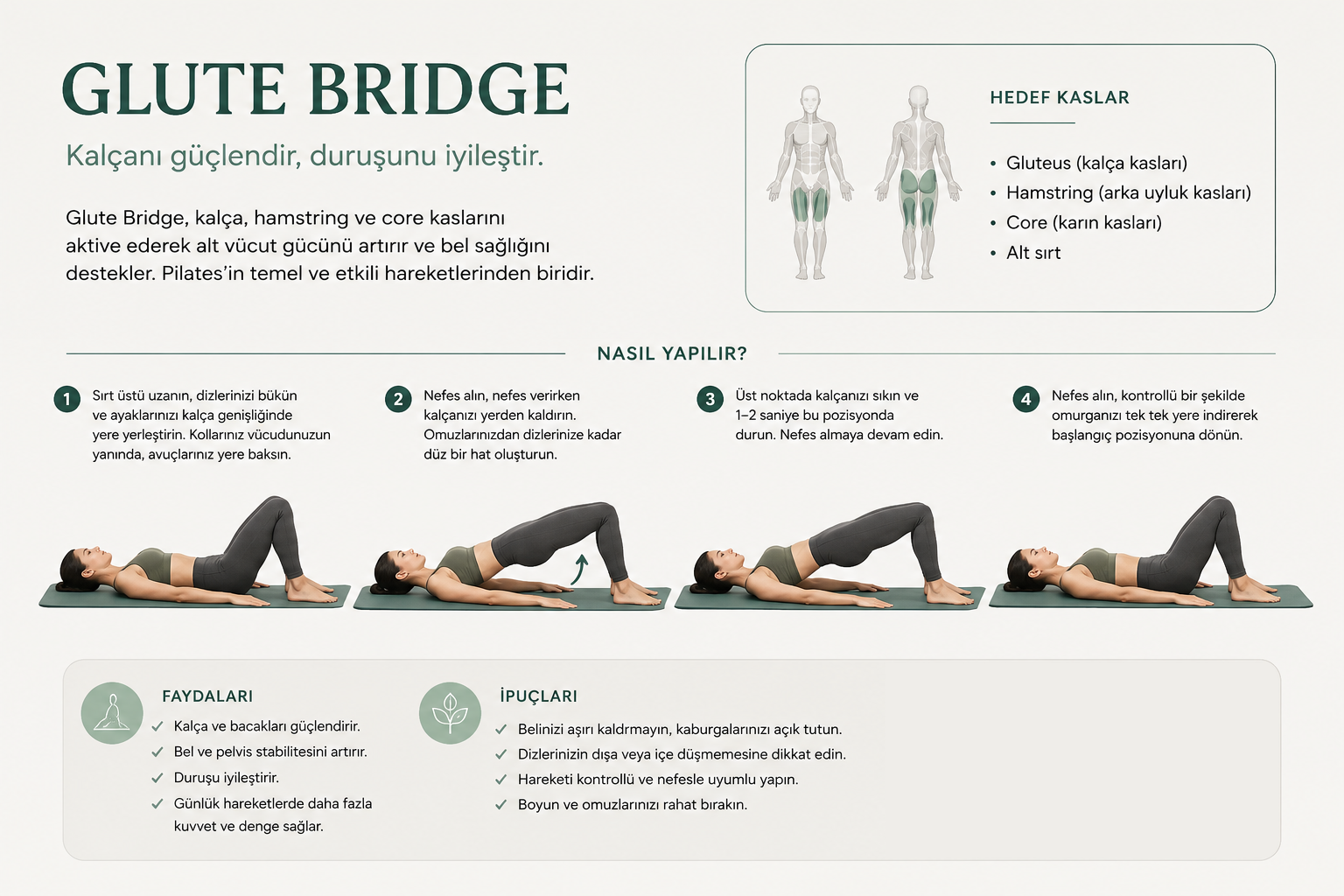
3. Glute bridge — 10 reps. Lie on your back with your knees bent and feet on the floor. Slowly lift your hips until your shoulders and knees form a roughly straight line. Pause briefly, then lower back down. There’s no need to lift your hips as high as possible. Focus on controlling your hips and torso without putting undue strain on your lower back.
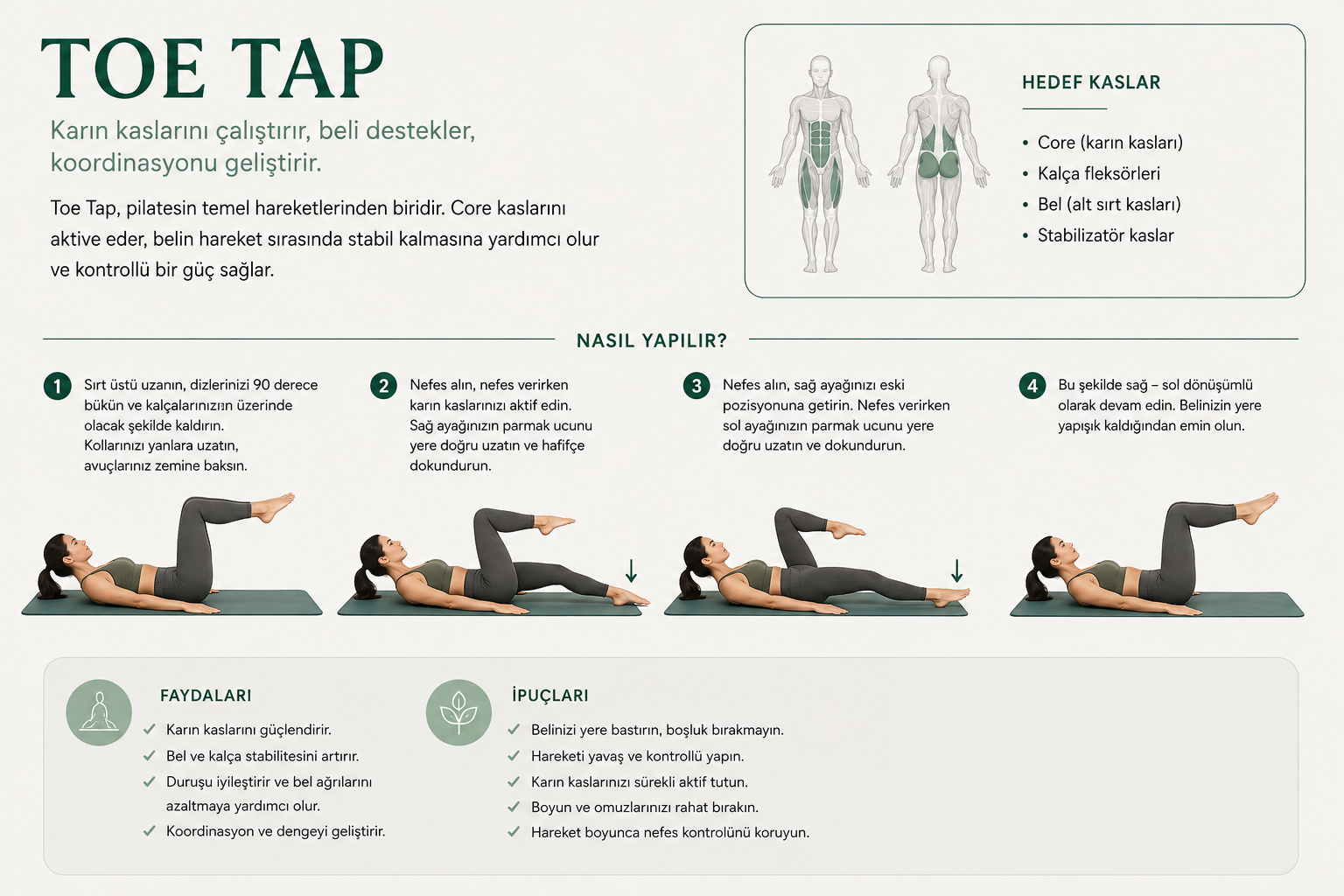
4. Toe tap — 8 reps per leg. Lie on your back and lift your legs with your knees bent to about 90 degrees. Slowly lower one foot and lightly tap the floor with your toes. Return to the starting position and switch legs. If you feel you’re losing control of your lower back, stop short of the floor and make the movement a little smaller.
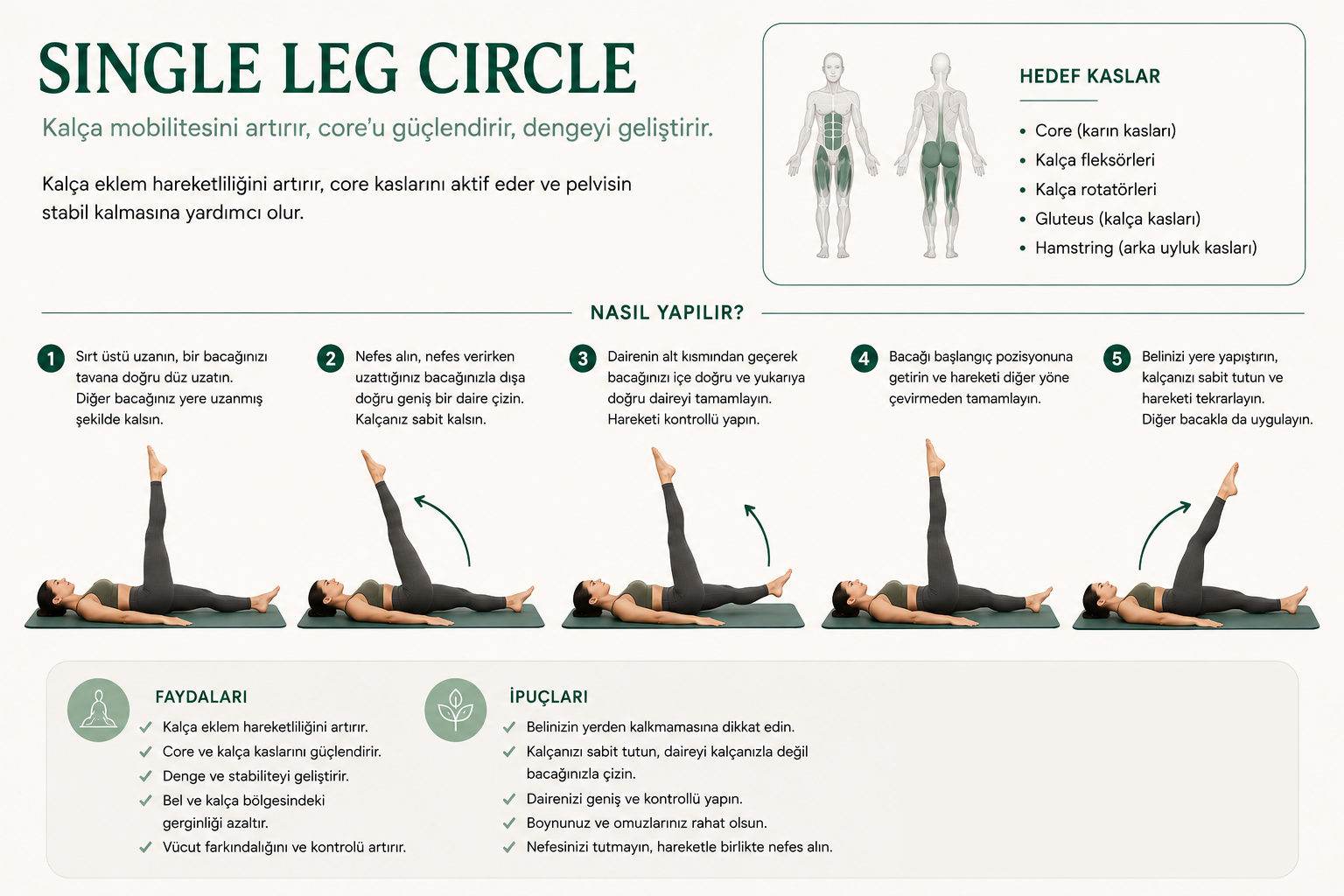
5. Single leg circle — 5 circles in each direction per leg. On your back, extend one leg upwards and draw small, controlled circles with it. Try to keep your pelvis as still as possible. If your hips start rocking from side to side, make the circles a little smaller.
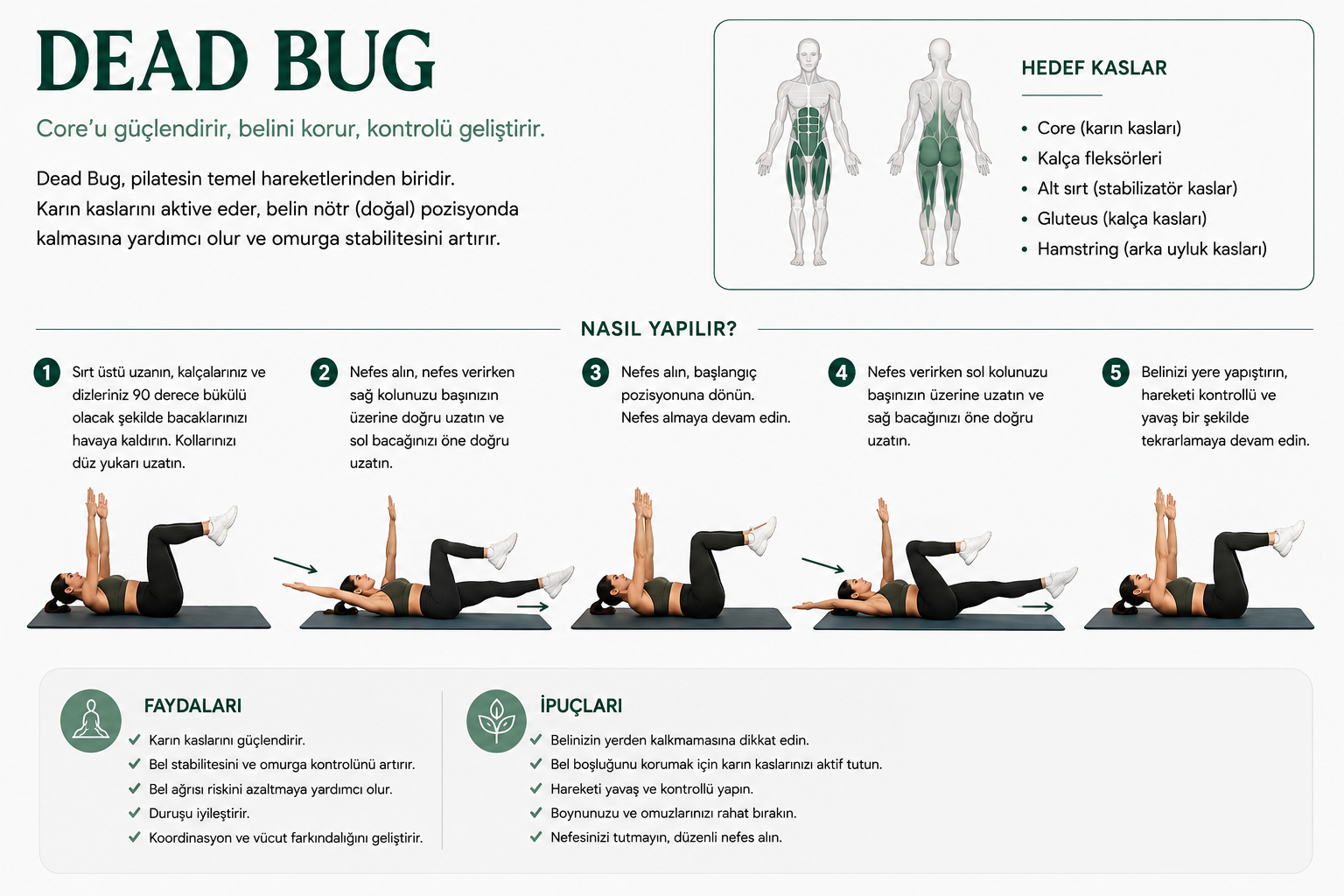
6. Dead bug — 6–8 reps per side. Bring your knees into tabletop and reach your arms upwards. Slowly extend the opposite arm and leg away from each other, return to the starting position and switch sides. If your lower back starts arching too far off the floor, shorten the movement and extend your leg only part of the way.
Balance and side work: about 4 minutes
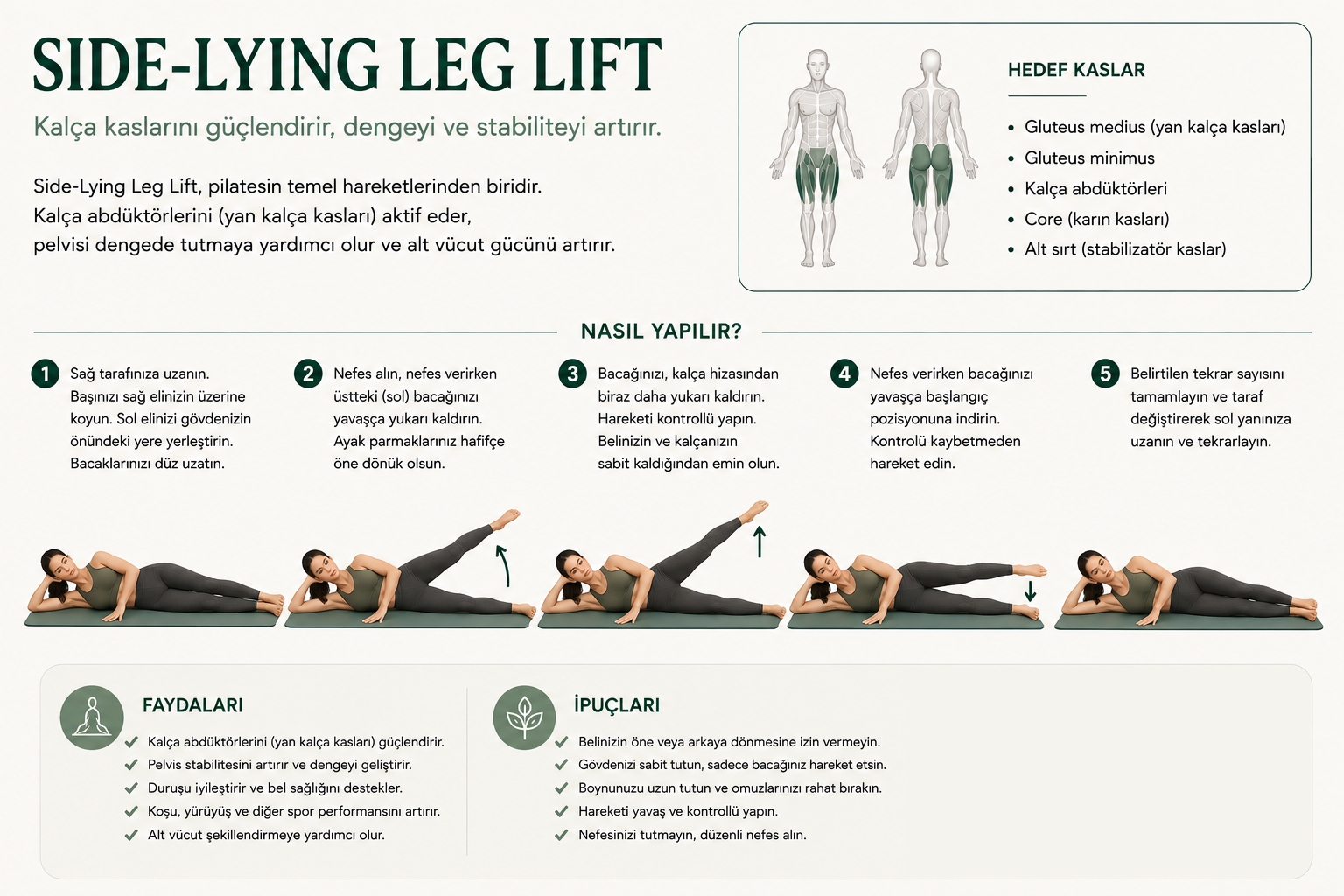
7. Side-lying leg lift — 10 reps per leg. Lie on your side and slowly raise and lower your top leg. If your pelvis rolls backwards when you lift too high, reduce the range. Staying in control throughout matters more than how high your leg goes.
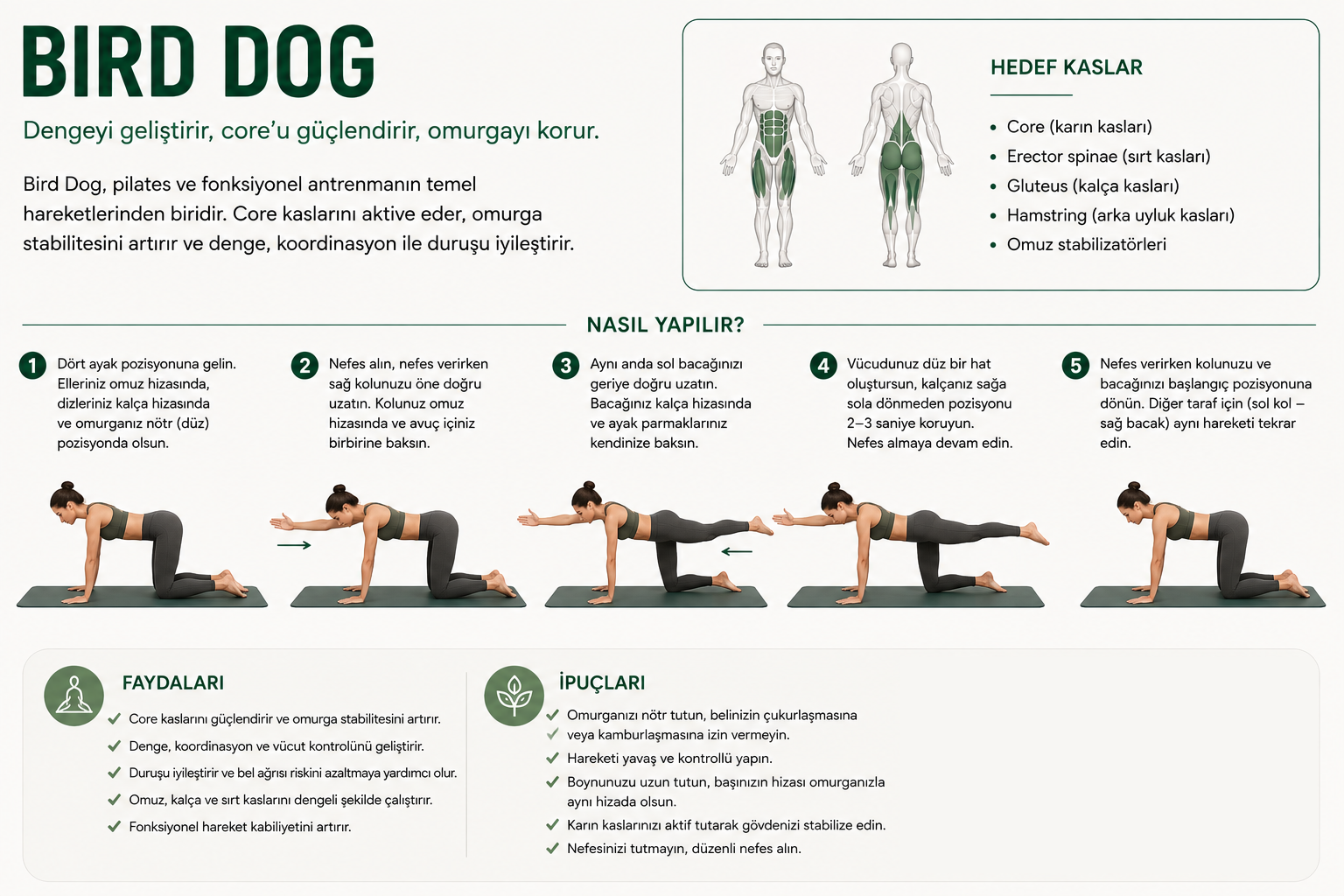
8. Bird dog — 6–8 reps per side. Get onto your hands and knees. Reach one arm forwards and the opposite leg back. Hold your balance briefly, return to the starting position and switch sides. If balancing is difficult, start by lifting just the arm or just the leg.
Last 2 minutes: cool-down
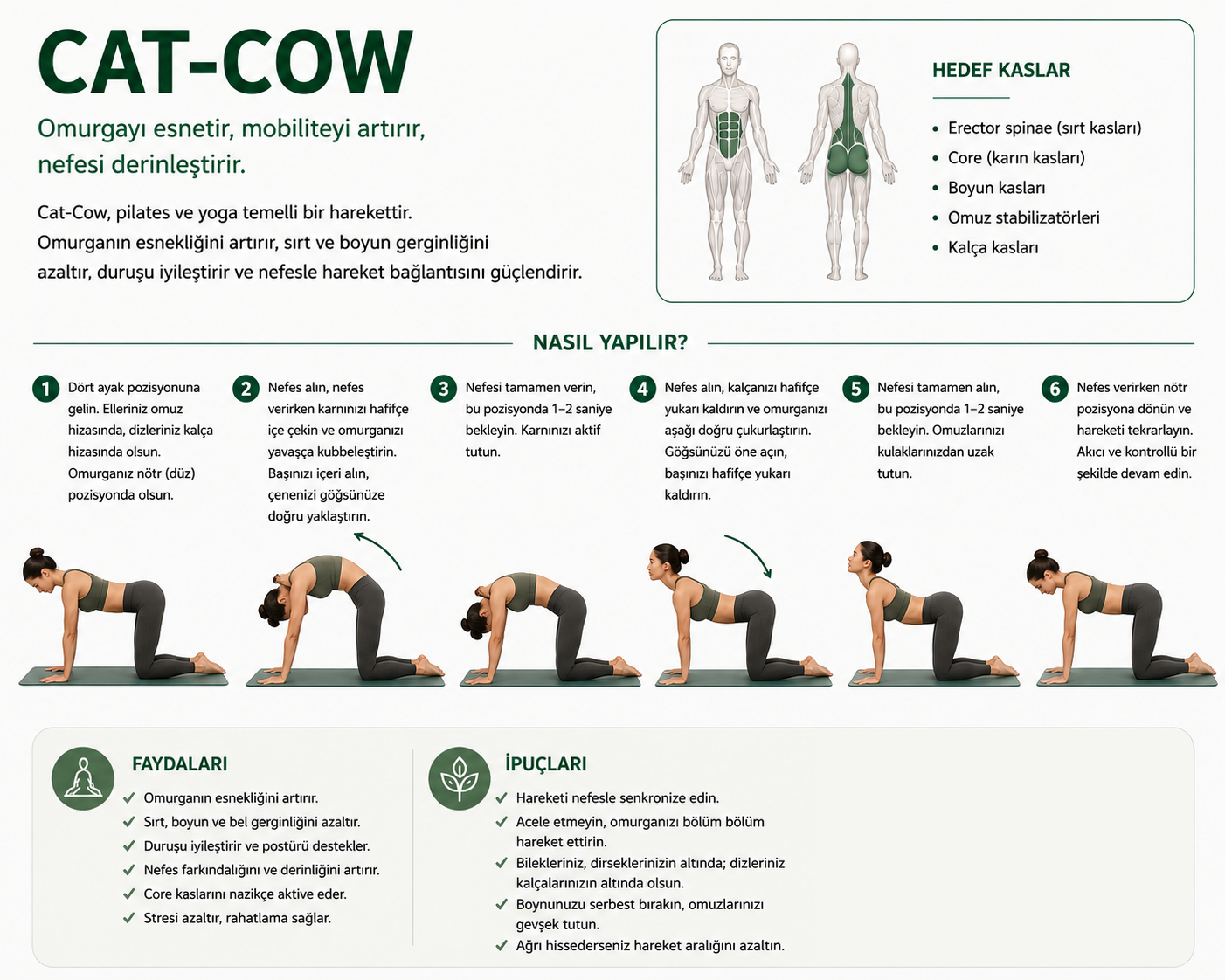
9. Cat-cow — 5–6 controlled reps. On your hands and knees, slowly round your spine, then gently arch it the other way. You can ease off the pace here.
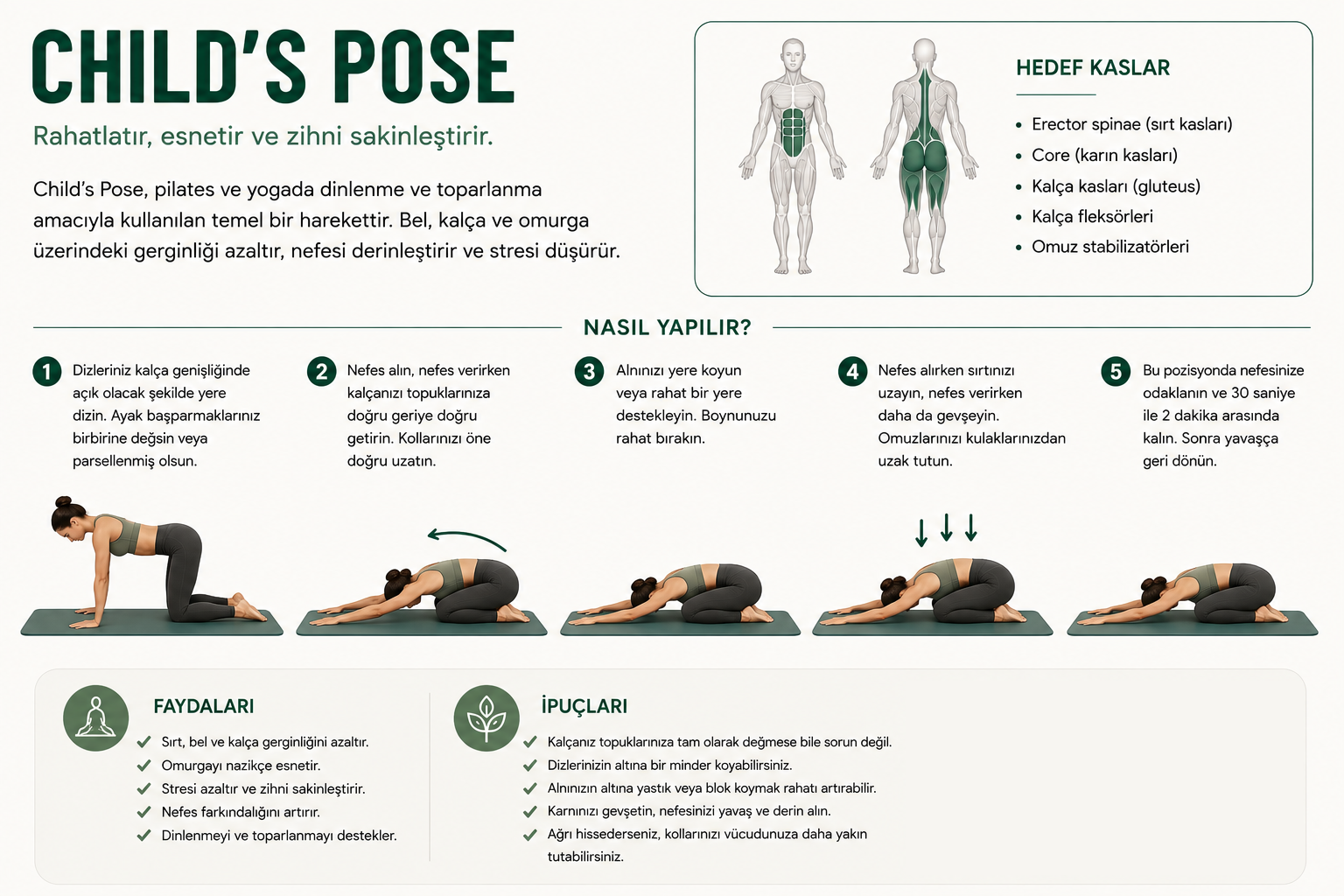
10. Child’s pose — about 45–60 seconds. Move your hips back towards your heels, stretch your arms forwards and breathe easily. If this position is uncomfortable for your knees or hips, skip it and finish on your back with a few calm breaths.
Is 15 minutes of Pilates enough?
Fifteen minutes might sound short. It would be a stretch to expect a 15-minute home routine to cover all your exercise needs. It can still be worthwhile. If you’re new to exercise, short, regular sessions can be much easier to keep up.
It’s tempting to start the first week with “I’ll do 50 minutes of Pilates four days a week.” Keeping that going for months may be much harder than sticking with a short routine two or three days a week. Research suggests Pilates may help with core strength, movement control, balance and posture. We look at these in the benefits of Pilates and cover lower back pain separately in Pilates or yoga for your lower back?
The aim here is to build a routine you can keep up from day one. As the movements get easier, you can make sessions longer or more challenging. Pilates is one of several good options for regular exercise. It has its place alongside other ways to move.
How can you build on the routine?
Give yourself a few weeks to learn the movements before making the routine harder. For the first 1–2 weeks, you can do it 2–3 times a week and focus on moving with control before adding reps.
In weeks 3–4, if the routine starts to feel easy, try:
- adding a few reps,
- moving a little more slowly,
- increasing your range of motion,
- shortening your rest breaks.
One change at a time is enough to make the routine more challenging. Later on, if 15 minutes starts to feel short, you can extend the routine to 20–25 minutes. You can also add a resistance band, a small Pilates ball or a Pilates ring at this stage if you’d like.
Can Pilates replace cardio?
Pilates can look quite gentle from the outside, but the intensity varies considerably depending on the routine. Some beginner classes are light, while more advanced sessions with continuous movement can noticeably raise your heart rate. Some studies also suggest Pilates may improve cardiorespiratory fitness.
A 15-minute beginner mat routine shouldn’t replace all your weekly aerobic exercise. The World Health Organization recommends at least 150 minutes of moderate-intensity aerobic activity per week for adults. For a more balanced routine, you can pair Pilates with aerobic activity you enjoy, such as walking, cycling or swimming.
Common mistakes when doing Pilates at home
A common beginner mistake is making the movements bigger than they need to be. It’s easy to assume a higher leg lift or a deeper twist will make the exercise more effective. Once you lose control, there isn’t much to gain from the extra range.
Holding your breath is another common mistake, especially when your abs are working hard. Also give yourself room to move differently from the person in the video. Flexibility, strength and joint mobility vary from person to person, so someone else’s range of motion may not suit you. If you feel sharp or sudden pain, stop the exercise.
Is it safe to do Pilates at home?
Beginner mat Pilates exercises may be suitable for most healthy adults. It is better to speak to a healthcare professional before starting a general routine you found online if:
- you have an ongoing injury,
- you have severe or unexplained pain,
- you’ve had surgery recently,
- you have a chronic health condition that affects exercise,
- you’re pregnant or have recently given birth.
References
- Wells C, Kolt GS, Bialocerkowski A — Defining Pilates Exercise: A Systematic Review, Complementary Therapies in Medicine, 2012.
- NHS — Pilates Video for Beginners.
- Franks J et al. — Pilates to Improve Core Muscle Activation in Chronic Low Back Pain: A Systematic Review, Healthcare, 2023.
- Li F et al. — Effects of Pilates on Body Posture: A Systematic Review, Archives of Rehabilitation Research and Clinical Translation, 2024.
- Fernández-Rodríguez R et al. — Pilates Method Improves Cardiorespiratory Fitness: A Systematic Review and Meta-Analysis, Journal of Clinical Medicine, 2019.
- World Health Organization — Physical Activity.
Editor’s note: This article offers general information and beginner exercise suggestions. It is not intended for diagnosis or treatment.
Frequently asked questions
Do you need a reformer to do Pilates at home?
No. You can do mat Pilates using your own body weight. Reformer Pilates is another way to practise, with springs and moving parts that offer different levels of resistance.
Do you need a Pilates mat?
No. If you already have a yoga or exercise mat, you can start with that. Pilates mats tend to be a little thicker, which can make exercises done on your back more comfortable.
How many days a week can you do Pilates at home?
Two or three days a week can be a good starting point for beginners. Once you get used to the movements, you can adjust the frequency based on your other workouts and how intense your sessions are.
Does Pilates work your abs?
Yes. Core control is an important part of Pilates. The exercises can also work your glutes, legs, back and upper body, depending on the programme.
Does Pilates help you lose weight?
Pilates is a form of physical activity, so it contributes to your energy expenditure. Weight loss depends on more than any one type of exercise. Your diet, daily movement and overall exercise level all matter.