
10 things to know before your first yoga class

You’ve booked your first yoga class. Now you have a few questions: Do you need to bring a mat? Do you wear socks? What happens if everyone else can touch their toes and you’re still somewhere around your knees?
You don’t need a new workout wardrobe or a collection of poses you’ve already mastered. Choosing a suitable class, making a few practical preparations and telling the instructor you’re new is a good start. You can learn the rest on the mat, one step at a time.
1. You don’t need to be flexible before you start yoga
“I’ll stretch a bit first, then start yoga” is a little like trying to learn to swim before signing up for swimming lessons. If your hands don’t reach the floor when you fold forward in your first class, that doesn’t mean you don’t belong there.
Nobody should expect everyone to go equally deep into a pose. Ask your instructor about options such as bending your knees, reducing your range of motion or using props. How far the person on the next mat can bend doesn’t decide what you should do that day.
Set yourself a more useful goal for your first class: get familiar with the instructions, find a comfortable range of movement and ask questions when something isn’t clear.
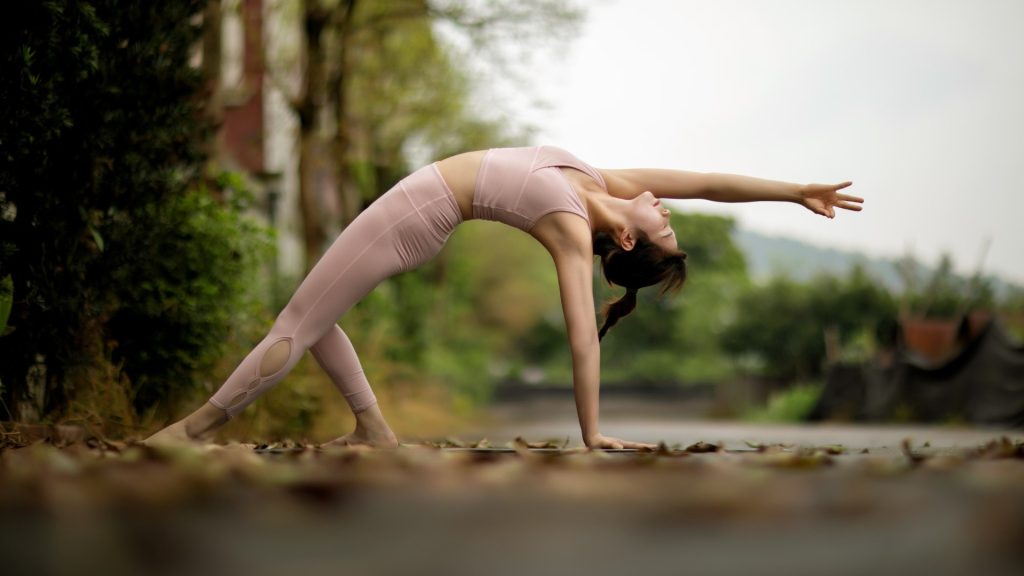
2. Check the level, not just the class name
Seeing “Hatha”, “Vinyasa” or “Yin” on the schedule doesn’t tell you everything about whether a class will suit you. The pace and teaching approach can vary between instructors, even when the class name is the same.
Before booking, ask the studio: “I’ve never done yoga before. Is this class suitable for a complete beginner?” A beginner or foundations class can be a good place to learn the movements.[1]
Hot yoga takes place in a heated room and comes with additional heat-related risks. Choosing a beginner class at room temperature for your first visit gives you fewer new conditions to adjust to at once.[2]
3. Choose clothes for how they move, not the logo
Comfortable leggings, joggers or shorts that let you move freely can all work. For your top, choose something you won’t need to keep adjusting every time you bend forward. Do a quick test before leaving home: raise your arms, bend forward and sit on the floor. If the waistband digs in, your T-shirt falls over your face or a seam bothers you, try something else. You don’t want to spend your first class negotiating with your clothes.
Yoga is usually practised barefoot in studios. If you’d prefer to wear socks, ask about the studio’s policy and check whether your regular socks slide on the mat.
4. Ask the studio before buying a mat
You may not need to buy a mat straight away. Some studios provide them, some rent them out and others ask you to bring your own. You can also ask how shared mats are cleaned.
Pack water and a small towel if you need one. If you think you might get chilly during the quiet part at the end, bring a light layer too. Check in advance whether props such as blocks, straps and blankets are available.
Waiting until you’ve taken a few classes can make choosing a mat easier. You’ll have a better idea of what you want in terms of grip, portability and how it feels under you.
5. Leave some breathing room between eating and class
Eating a large meal just before rushing to class can make forward folds and twists uncomfortable. Plan your meal so you arrive feeling comfortable.
Rather than following a single fasting window that supposedly works for everyone, consider your own digestion and the pace of the class. If you’re very hungry, a small snack that agrees with you may help. If you follow a specific eating plan or have a health condition, follow your healthcare team’s advice. Keep your water nearby. You can take a short break for a drink whenever you need one.
6. Arrive a little early and talk to the instructor
Arriving 10–15 minutes early is a practical choice for your first class. It gives you time to find the changing area, set up your mat and tell the instructor it’s your first visit.
Before class, mention any existing injury, health condition that affects your movement or circumstances such as pregnancy. Some practices may need to be adapted or skipped; consult a healthcare professional before starting when needed.[2]
You can also state your preference about hands-on adjustments. “I’d prefer verbal guidance” is enough. You don’t need to explain or justify what helps you feel comfortable.
7. Blocks and straps are a normal part of class
A yoga block can bring the floor closer to your hands or provide support in certain poses. A strap can make it easier to reach in some positions. Ask your instructor which props to use and how to use them. Picking up a block isn’t a declaration of your ability level. You’re choosing a tool that helps you find a more comfortable version of the movement that day.
If a pose doesn’t feel right for you, ask, “Is there another option for this?” Adapting a pose, reducing your range of motion and resting are all options you can use during class.[1]
8. Don’t stay in a pose through pain
Feeling your muscles work isn’t the same as feeling pain. If you experience sharp pain, a pinching sensation in a joint, numbness or dizziness, stop the movement and tell the instructor. Don’t wait just because everyone else is carrying on.
Beginners are advised to avoid advanced practices such as headstands and shoulder stands, as well as forceful breathing techniques.[2] There’s no need to put any of these on your first-class to-do list.
When you want to rest, ask the instructor to show you a comfortable position that suits you. A resting pose won’t necessarily feel equally restful for everyone.
9. You can turn up without memorising pose names
If the instructor says “downward-facing dog” and your first instinct is to look around the room, that’s understandable. Depending on the class, you may hear pose names in the local language or in Sanskrit. You don’t need to know them beforehand. If you’re unsure, listen to the explanation first and ask if you need to. If turning your head to watch someone feels uncomfortable, come out of the pose before looking.
Matching your breath to your movement can feel confusing at first too. Take it at a manageable pace and say something if you can’t follow the instruction. There’s no vocabulary test at the end of your first class.
10. Make time for the rest at the end, too
Many classes finish with a resting period called “savasana”, usually spent lying on your back. Include this part when planning how much time to allow for class. While you’re lying still, your shopping list or unanswered messages may pop into your head. You don’t need to expect a completely quiet mind on your first attempt. Find a comfortable position and try staying for this part of the class; ask for an alternative if lying down feels uncomfortable.
If you need to leave early, tell the instructor before class starts. Silencing your phone, avoiding stepping on other people’s mats and cleaning and returning equipment according to the studio’s routine are small but useful habits too. After your first class, ask yourself more than “How many poses could I do?” Could you understand the explanations? Could you ask questions? Could you adapt a movement when you needed to? When choosing your next class, those answers may be more useful than whether you managed to touch your toes.