
Yoga or Pilates? How to choose the right one for your goals
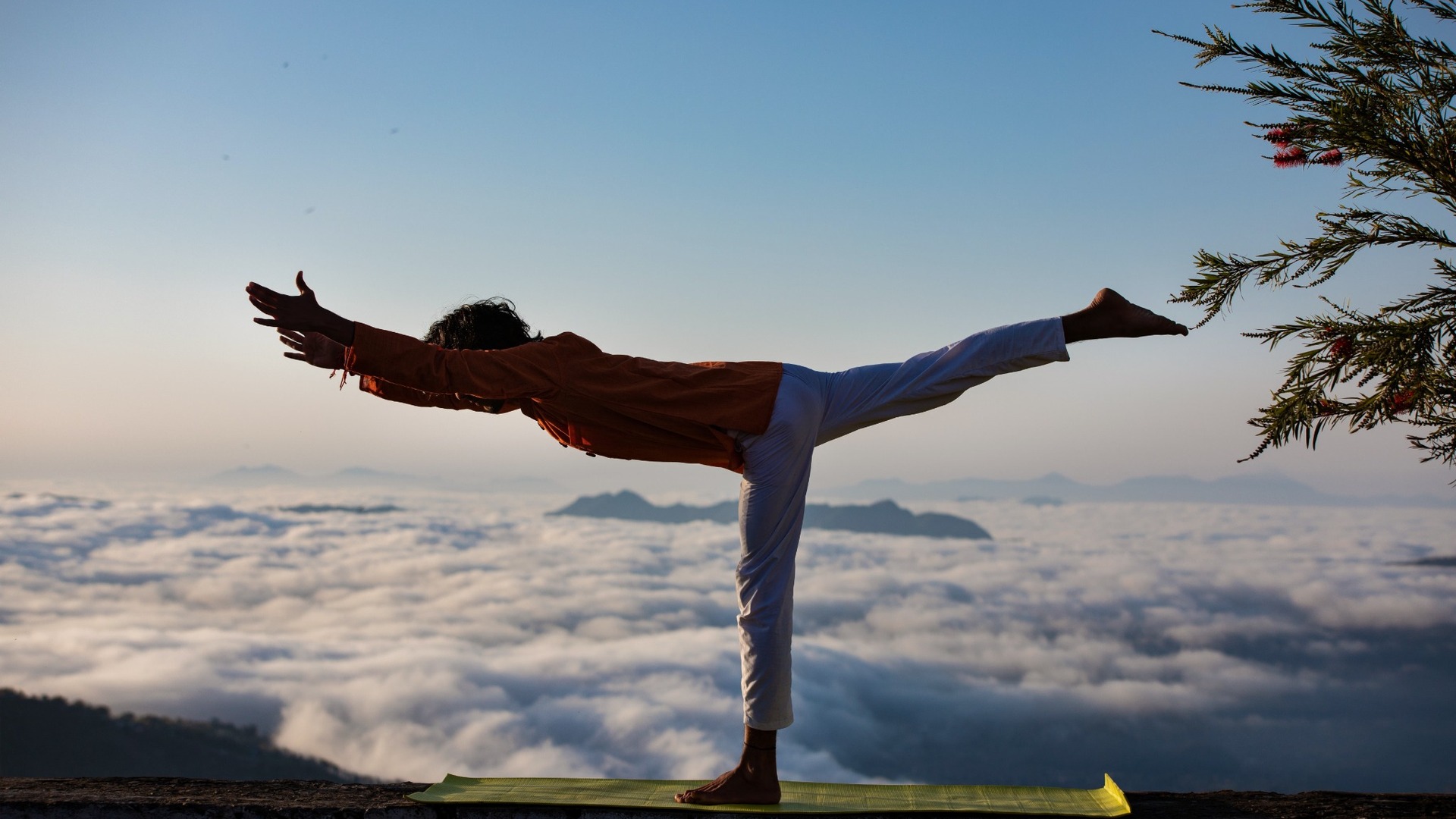
Yoga or Pilates? It’s a question people have been asking for years. From the outside, the two look pretty similar: there’s a mat, controlled movement and breathing. And after either class, there’s a good chance you’ll feel muscles you hadn’t given much thought to before. But take a few classes and you start to realise just how different they can be.
Yoga has always felt to me like a way of checking in with the whole body. Your muscles are involved, of course, but so are your breathing, balance, range of motion and sometimes your mind. Pilates feels more technical: even when a movement is small, how you do it matters a lot. Your torso position, pelvic alignment, breathing and control are all part of the exercise. So perhaps “Which is better, yoga or Pilates?” isn’t quite the question we need.
A more useful one is: what do I want to improve?
Yoga or Pilates: what’s the main difference?
Put simply, yoga is a more holistic mind-body practice, while Pilates is an exercise system with a stronger emphasis on movement control and strength. Yoga has a history stretching back thousands of years. What we see in gyms and studios today is only a small part of that much wider world. Modern classes usually include physical poses and breathing exercises, with meditation or relaxation depending on the style.
Pilates is much newer. Developed by Joseph Pilates in the early 20th century, it is built around controlled movement, concentration, breathing and, especially, control of the torso. You can feel those differences during a class. In yoga, you might move from downward-facing dog into a warrior pose, then find yourself balancing on one leg a few minutes later. At the end, you may lie down and focus on your breathing.
In Pilates, you might be doing a movement that looks ridiculously easy from the outside, only to wonder why your abs are burning after a few repetitions. That gives you a sense of each practice’s character.
Yoga and Pilates at a glance
| Yoga | Pilates | |
|---|---|---|
| Main focus | Flexibility, balance, breathing and awareness | Core control, strength and stability |
| Movement | Poses and flowing sequences | Controlled exercises and repetitions |
| Breathing | An important part of the practice | Coordinated with movement |
| Meditation | Plays an important role in some styles | Not a core component |
| Flexibility | A more prominent focus | May improve, but isn’t the main aim |
| Strength | Depends on the style | A more prominent focus |
| Equipment | Usually a mat and simple props | A mat or equipment such as a reformer |
Don’t read the table as a set of strict boundaries. Yoga can build strength, and Pilates can improve flexibility. An intense Vinyasa class may be far more physically demanding than many beginner Pilates classes. The style and level of the class matter just as much as the discipline you choose.
If you want to improve flexibility: yoga
If you often describe yourself as “stiff as a board,” yoga could be a good place to start. Many styles involve using your muscles and joints through different ranges of motion. In your first classes, you may be surprised by how difficult certain movements feel. Restrictions in your hamstrings, hips and shoulders can become obvious quite quickly. That’s not necessarily a bad thing. The aim isn’t to get your foot behind your head on day one.
Being able to squat more comfortably, bend down, move your hips more freely or simply feel less stiff in everyday life are perfectly valid goals. More controlled styles such as Hatha and Yin let you spend longer in positions and get a better sense of your body’s limits. Research on yoga also reports positive findings for flexibility and balance. First choice: yoga.
If you want to strengthen your core: Pilates
There’s a reason the word “core” comes up so often when people talk about Pilates. Many exercises require you to keep your torso stable or move it with control. One small point of confusion: people often hear “core” and think only of their abs. But it’s about more than a six-pack. We’re talking about muscles around the abdomen, lower back, hips and pelvis working together.

This is one of the things that can catch you off guard in Pilates. A movement doesn’t have to be large or fast to be challenging. Sometimes you move your leg just a few centimetres, but keeping your torso steady makes the exercise much harder than expected. That was one of the things I noticed most when doing Pilates: movements that looked simple were anything but simple when performed with proper form.
If you also run, cycle, play tennis or lift weights, Pilates can make sense as a complement to your main sport. First choice: Pilates.
If you’re going through a stressful period: yoga has a slight edge
Pilates requires concentration, too. Performing the movements properly, controlling your breath and thinking about which parts of your body you’re using naturally bring your attention to the task. In that sense, Pilates can also give you a mental break. Yoga can feel a little different, though. Breathing exercises, slower transitions and meditation in some styles can make the class feel like more than a physical workout.
On some days, you may leave yoga thinking “I feel a bit calmer” rather than “That was a good workout.” Research also suggests that yoga may help with stress management, sleep and overall mental well-being. If you want to move at the end of the day while giving your mind a chance to settle, yoga may be a good fit. The style matters here: a quiet Hatha or Yin class won’t feel the same as an intense Power Yoga session. First choice: yoga.
If you want to work on your posture: Pilates
If you spend a lot of time at a desk, you’ve probably caught yourself sitting with your shoulders slumped forwards and your back rounded. Then you try sitting upright, only to drift back into the same position five minutes later. Posture isn’t something you solve just by remembering to sit up straight.
This is where one of Pilates’ strengths comes in. You repeatedly pay attention to how you hold your torso, the position of your pelvis and how different parts of your body work together during movement.
Over time, you may become more aware of your body’s position. Studies also suggest that Pilates may have positive effects on posture. But don’t treat it as a miracle fix. An hour of Pilates each week won’t solve everything if you spend eight hours a day sitting in the same position. Your desk setup, daily activity, sitting time and wider lifestyle still matter. First choice: Pilates.
Yoga or Pilates if you have lower back pain?
This part of the comparison needs a little care. Search online for lower back pain and it’s easy to come away with “back pain = Pilates.” That idea isn’t entirely unfounded. Research on Pilates reports positive outcomes for pain and function in people with chronic, non-specific lower back pain.
But there’s an important detail: strong evidence doesn’t show Pilates to be better than other suitable exercises in every situation. Some studies find similar results to other exercise methods. There are also positive findings for yoga in chronic lower back pain.
So if your lower back hurts, “Why does it hurt?” matters more than “Yoga or Pilates?” If the pain has been going on for a long time, is getting worse or limits your movement, get assessed by a healthcare professional first. If yoga or Pilates is considered appropriate, your instructor can then adapt the exercises accordingly. Our comparison of yoga and Pilates for the lower back explores this in more detail.
If you want to improve balance: either one
Yoga tends to come to mind first when we think about balance. Poses on one leg, shifting your weight between legs and continually controlling your body position all challenge it directly. In your first yoga classes, you may be surprised by how much you wobble when standing on one leg. That doesn’t mean Pilates has nothing to offer here. Its work on torso control and postural stability can also support balance.
Research reports positive findings for both methods, particularly in older adults, so there’s no need to pick a single winner. First choice: either one.
Yoga or Pilates if you want to lose weight?
This is one of the topics that creates the most unrealistic expectations. Online, you’ll see completely different experiences:
- “I did Pilates but didn’t lose weight.”
- “My weight hasn’t changed, but I look slimmer.”
- “I lost weight doing yoga.”
- “I burn loads of calories on the reformer.”
Any of these could be someone’s personal experience, but we need to look at the bigger picture. Yoga and Pilates are both physical activities that use energy. Still, most sessions shouldn’t be treated as equivalent to aerobic exercise such as running, swimming or brisk cycling.
There are big differences within each discipline, too. An intense Vinyasa or Power Yoga class isn’t the same as a quiet Yin session. Likewise, beginner mat Pilates and a fast-paced reformer class may have very different intensities.
If weight management is your main goal, it makes more sense to look at your overall activity and diet than to choose only by asking which burns more calories. You can combine yoga or Pilates with walking, running, cycling, swimming or another aerobic activity. And honestly, one of the most important questions is: which can you actually keep doing? An exercise that theoretically burns more calories isn’t much use if you quit after two weeks.
Yoga or Pilates alongside another sport?
For me, this is one of the best things about both: you don’t have to see them as rivals. If your main sport is something else, their complementary roles can become even more useful. If you run, Pilates can help you work on torso control and strength, while yoga can support range of motion and relaxation.
If you cycle, moving your hips and back through yoga may feel good after hours in a similar position. Pilates can help you work on torso stability. If you do strength training, you can use yoga for mobility and relaxation on lower-intensity days.
As a rough guide, Pilates leans towards control and strength, while yoga leans towards mobility, balance and relaxation. But don’t read that as a fixed prescription. Depending on the styles you practise, those roles can overlap quite a lot.
Still deciding between yoga and Pilates? Ask yourself these 4 questions
If you’re still thinking “Fine, but which one should I start with?”, there’s no need to make this too complicated.
1. How do I want to feel after class?
If your answer is “I want to loosen up, relax and clear my head,” yoga may be closer to what you’re looking for. If it’s “I want to feel that I’ve worked my muscles and used my body with better control,” Pilates may be a better fit.
2. What do I most want to improve?
- Flexibility and mobility → Yoga
- Core control and strength → Pilates
- Stress management → Yoga
- Posture and torso stability → Pilates
- Balance → Either one
3. Which class format motivates me more?
If you enjoy flowing sequences, different poses and classes with a little more variety, you may feel drawn to yoga. If you like technical details, controlled repetitions and gradually getting better at a movement, Pilates may suit you more.
4. Which can I realistically stick with?
I think this is the most important question. If there’s a Pilates studio you love right next to your home, but yoga means travelling across town every time, “yoga is theoretically better for me” may not mean much in practice. The same goes for the instructor. Finding someone you like, who explains the movements clearly and makes you feel comfortable, can sometimes matter more than the choice between yoga and Pilates.
Can you do both yoga and Pilates?
Of course. For many people, combining them may be a better option than making them compete. But you don’t need to jump straight into “yoga on Monday, Pilates on Wednesday, yoga on Friday, Pilates on Sunday.” If you’re new to both, one yoga class and one Pilates class a week can be enough to start. After a while, you’ll get a sense of which you enjoy more.
You might end up focusing entirely on yoga. Pilates might win you over. Or you may continue using both for different purposes, which is the approach I find more useful. There’s no wrong choice here. If you’d like to try them at home, our home yoga routine and home Pilates programme are enough to get you started.
Yoga or Pilates: a quick decision guide
| Your priority | First option to try |
|---|---|
| Flexibility | Yoga |
| Stress management | Yoga |
| Breathing and awareness | Yoga |
| Core strength | Pilates |
| Torso control | Pilates |
| Working on posture | Pilates |
| Balance | Either one |
| General mobility | Yoga |
| Complementing another sport | Either one |
| Weight management | Choose the one you enjoy, plus aerobic activity |
| Still unsure | Try both |
Which one suits you?
For me, the biggest problem with the yoga-versus-Pilates debate is the urge to declare a winner. We don’t need one. When you try both, you realise they offer quite different experiences. Yoga has always made me think more about mobility, balance and mental relaxation. Pilates makes you much more aware of how you control a movement and use your torso. Which suits you depends on what you’re looking for.
And something being a better fit on paper doesn’t mean you’ll enjoy it. Yoga might match your goals perfectly, but if you dread going to every class, that won’t get you very far over time. Equally, enjoying Pilates and being able to keep attending is a good reason to choose it in its own right. So if you haven’t tried either, my suggestion is simple: try both before choosing.
Take a few yoga classes and a few Pilates classes, then see which feels better for your body and which you enjoy more. At the end of the day, the best exercise is the one you can keep doing regularly, rather than the one with the longest list of benefits online.
Sources
- National Center for Complementary and Integrative Health (NCCIH) — Yoga: Effectiveness and Safety
- Harvard Health Publishing — Yoga: Benefits Beyond the Mat
- NCCIH — Low-Back Pain and Complementary Health Approaches
- Yu Z. et al. — Efficacy of Pilates on Pain, Functional Disorders and Quality of Life in Patients with Chronic Low Back Pain: A Systematic Review and Meta-Analysis
- Systematic reviews of Pilates and postural balance
- Effects of Pilates on Body Posture: A Systematic Review
Frequently asked questions
Which is harder: yoga or Pilates?
It’s difficult to compare them directly. A gentle beginner Hatha class may feel quite easy, while an intense Vinyasa class can be seriously tiring. The same variation exists in Pilates. The class level, equipment and difficulty of the movements can completely change the experience.
Can you do yoga and Pilates on the same day?
Yes. If you’re new to them, though, separate days may make it easier to learn the movements and understand how your body responds. Later, you can do both on the same day by adjusting the intensity.
How many days a week should you do yoga or Pilates?
There’s no single number that works for everyone. A beginner can start with 1–2 sessions a week. If you feel good and recover well, you can gradually increase the frequency. At the start, focus on finding a rhythm you can maintain, rather than squeezing in as many classes as possible.
Does yoga or Pilates burn more calories?
That depends on the style and intensity of the class. Power Yoga and Yin Yoga don’t use the same amount of energy, and beginner mat Pilates is different from an intense reformer session. If weight management is your main goal, consider your overall daily activity rather than choosing only by calorie estimates.
Is yoga or Pilates better for lower back pain?
There are positive research findings for both. Pilates may help with chronic, non-specific lower back pain, but we can’t say it is definitely better than other suitable forms of exercise. Yoga also has positive findings. If the pain is severe or has been going on for a long time, speak to a healthcare professional before starting exercise.
Do you need to be flexible to do yoga or Pilates?
No. The idea that you need to become flexible before starting yoga is especially common, but many people start precisely because they want to improve their range of motion and flexibility. Both yoga and Pilates can be adapted for beginners.