
What Is Squash? How to Play, the Rules, and How It Compares to Padel and Tennis
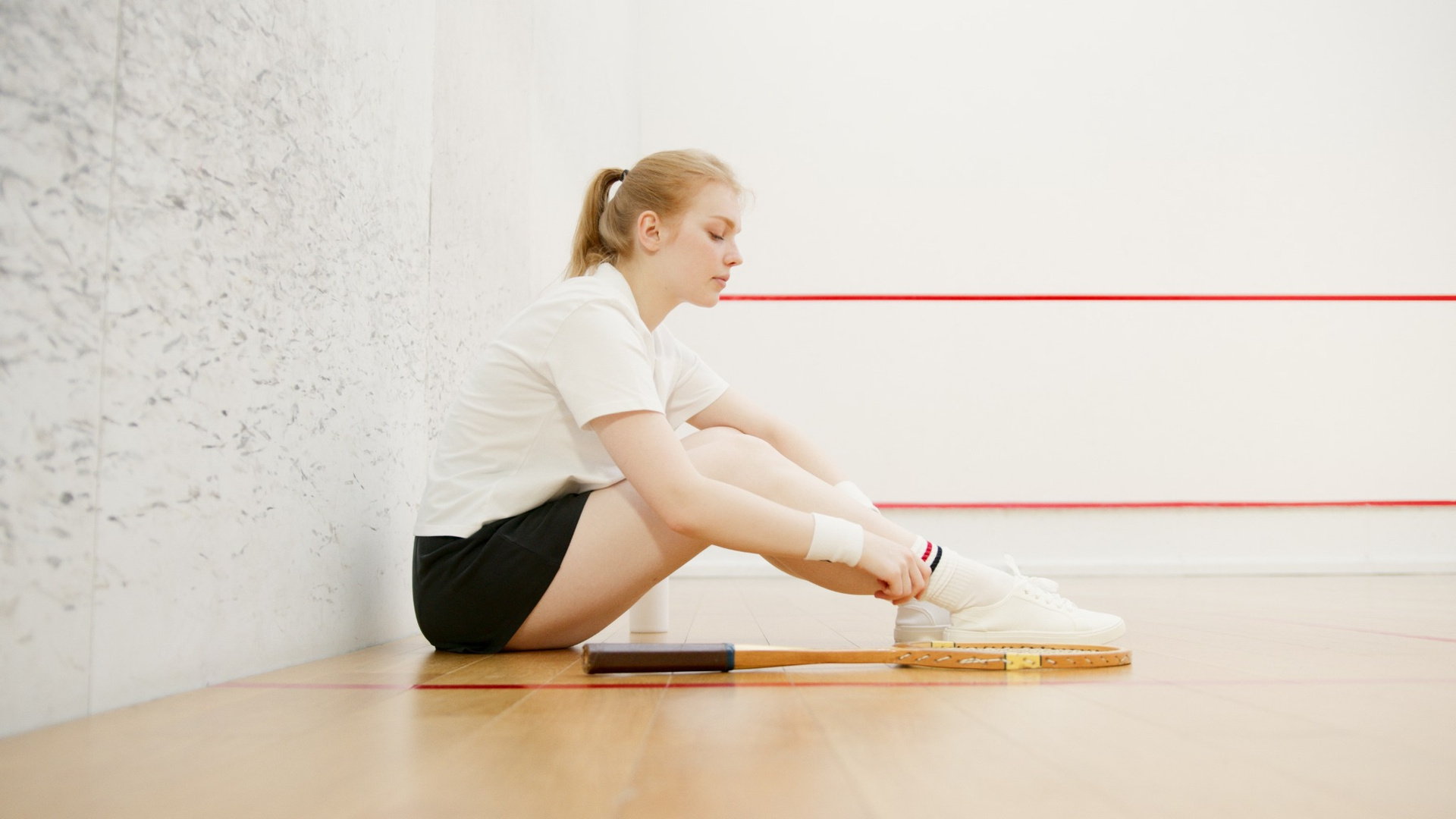
From the outside, squash might look like a simple sport: two people hitting a ball against a wall and chasing after it. Step onto the court, though, and you soon start wondering why that ball always seems to end up in whichever corner you’re nowhere near.
That’s part of the fun. With so little space, you don’t have much time to make decisions. Hitting hard can help in some situations, but putting the ball in the right place can make a much bigger difference. Another nice thing about squash is that it’s played indoors, making it a good option when the weather turns grey and rainy.
So, what exactly is squash, and which rules should you know before your first game? How much does it have in common with padel and tennis beyond the racket?
What is squash?
Squash is a racket sport, usually played by two people on a court enclosed by four walls, in which players take turns hitting a small rubber ball against the front wall. Both players share the same space, with no net between them.
The sport’s roots go back to the 1830s and Harrow School in England. Squash developed from an older racket sport called “rackets” and gradually acquired its own courts and rules. Its story has now reached the Olympic programme: squash will make its Olympic debut at Los Angeles 2028.
How do you play squash?
A rally begins with a serve, and the players then take turns hitting the ball. You can volley it before it bounces or let it bounce once on the floor. The important thing is to hit it before the second bounce. Your shot must then reach the front wall before touching the floor. You can hit directly to the front wall or use the side and back walls along the way.
When you first start playing, judging the angle of the rebound can take a little getting used to. A ball coming off a side wall may head somewhere quite different from where you expected. Rather than trying to hit every shot hard, it’s more useful to work on controlled shots that keep the rally going. Letting the ball bounce once also gives you time to get ready. You don’t need to volley everything in your first session. Start by getting a feel for how the ball travels and comes back off the walls.
What do the lines on the front wall mean?
The lines on the front wall can look a little confusing when you first walk onto the court. Once you know what they’re for, the game becomes much easier to follow.
- Out line: If the ball hits this line or goes above it, it’s out.
- Service line: On a serve, the ball must hit above this line and below the out line.
- Tin: This is the section at the bottom of the front wall. If the ball hits it or its upper edge, the shot is down and you lose the rally.
The service line only acts as a lower limit during the serve. Once the rally is underway, you can hit below it, as long as the ball lands in the valid area above the tin.
Squash serving rules
When you serve, one foot must be touching the floor inside the service box, without any part of that foot touching its boundary lines. Hit the ball before it bounces and send it directly to the front wall, between the service line and the out line.
Unless the receiver volleys it, the ball’s first bounce must land in the opposite back quarter of the court, without touching a line. This doesn’t mean the small service box on the other side. It means the whole back quarter containing that box.
Unlike tennis, squash doesn’t give you a second serve after a fault. If you win the rally while serving, you serve next from the other box. Between your feet, the wall and the landing area, that might feel like a lot to think about at first. Practising a few serves slowly helps you get used to the sequence.
How does scoring work in squash?
Squash commonly uses point-a-rally scoring, known as PAR. Whoever wins the rally earns a point, whether they were serving or receiving. The rally winner also serves next.
A game is played to 11 points. At 10–10, though, play continues until someone leads by two points. So 12–10 wins the game, while 11–10 doesn’t. Matches are usually best of five games, meaning the first player to win three games wins the match. Some formats use best of three instead.
Why does giving your opponent space matter?
With no net separating you, where you move after a shot matters just as much as hitting the ball. Once you’ve played your shot, you need to give your opponent room to see the ball, reach it and swing safely.
If interference occurs, a player can stop and ask for a “let”. Depending on the situation, the rally may be replayed, a point may be awarded as a “stroke”, or the request may be turned down. Getting in each other’s way doesn’t automatically mean you replay the point.
As a beginner, learning to move safely comes before memorising every detail of these decisions. If you think your racket or the ball could hit your opponent, stop rather than forcing the shot. That’s why your first lesson should cover where to move after hitting, as well as how to hit the ball.
What equipment do you need for squash?
To get started, you’ll need a squash racket, a ball suited to your level, indoor court shoes and protective eyewear. For clothing, choose sportswear you can move comfortably in.
You don’t have to buy everything before trying the sport. Ask the venue whether rackets and other equipment are available to borrow or hire. After a few sessions, you’ll have a better idea of what suits you.
What do the coloured dots on squash balls mean?
Squash balls may look similar, but the coloured dots tell you something about how they play. Ball choice is easy to overlook as a beginner, yet it can make a real difference to how quickly you get comfortable on court.
| Ball marking | General characteristics | Who is it for? |
|---|---|---|
| Blue dot | More bounce and more time to prepare for your shot | Beginners |
| Red dot | Less bounce than a beginner ball, but more than yellow-dot balls | Improving and recreational players |
| Single yellow dot | Lower bounce, requiring more control | Experienced players |
| Double yellow dot | Very low bounce; needs a good pace of play to stay warm | Advanced and competitive players |
Ball sizes and product names can vary between manufacturers, so check the level guidance on the packaging too.
A double-yellow-dot ball can make squash unnecessarily difficult for a beginner. Squash balls bounce better as they warm up. If you’re not yet playing longer rallies, keeping a low-bounce ball warm enough can be difficult. That leaves you with less time to reach it and keep the rally alive. So don’t put every missed ball down to your own ability during that first session. Check whether the ball you’re using is right for your level as well.
What should you look for in a squash racket?
Weight matters, but it doesn’t tell you everything. Two rackets weighing the same can feel quite different depending on whether more of that weight sits towards the head or the handle.
As a starting point, you could try models with a frame weight of around 130–150 grams. Treat that as a range to explore, rather than an ideal that works for everyone. How comfortably the racket sits in your hand and how easily you can control it matter too.
It’s also worth checking what the listed weight includes. Some manufacturers give the frame weight, while others may list the total weight including strings and grip. Comparing two rackets purely by the number of grams in their descriptions can therefore be misleading. If you have the chance to try different rackets during your first lessons, take it. After a few sessions, you’ll find it easier to recognise which one feels comfortable to use.
How do you hold a squash racket?
A useful starting point is to imagine shaking hands with the racket. Aim for a relaxed grip that lets you control it, rather than squeezing the handle as hard as possible. Keeping your index finger slightly apart from the other fingers can also help with the grip. Even so, having a coach show you where your hand should sit and how to angle the racket face will make things clearer. Something that sounds straightforward on paper may need a small adjustment once you try it. When you miss a ball, it’s tempting to grip the racket more tightly. Early on, though, learning to control the racket face is more useful than trying to generate extra power.
Choosing shoes and protective eyewear
One feature to look for in squash shoes is a non-marking sole. Lateral support suitable for indoor court sports matters too. You won’t just be running forwards: you’ll be stepping sideways, stopping and changing direction throughout the game.
Choose protective eyewear designed for squash. Everyday prescription glasses don’t provide the same protection as sports eyewear. If you need vision correction, you can look into prescription sports eyewear or suitable protective goggles designed to fit over your glasses.
Squash vs padel, tennis and pickleball
Because padel also uses walls, you might expect it to play much like squash. But the way players share the court and where they send the ball are quite different. In squash, both players hit towards the same front wall. In padel, the ball goes over a net into the opposing side of the court. For a closer look at how padel works, see our guide to padel.
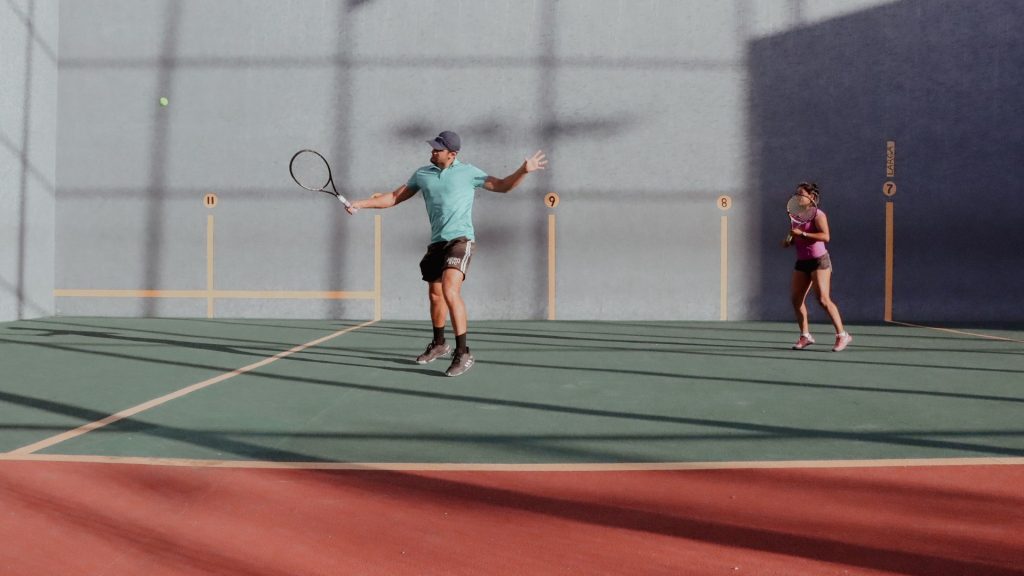
Here’s how the four sports compare:
| Feature | Squash | Padel | Tennis | Pickleball |
|---|---|---|---|---|
| Court | A shared space enclosed by four walls, with no net | A court divided by a net and enclosed by walls | A court divided by a net | A court divided by a net, smaller than a tennis court |
| Common playing format | Singles | Doubles | Singles or doubles | Singles or doubles |
| Basic scoring | A point on every rally; games to 11, win by two | 15–30–40, games and sets | 15–30–40, games and sets | Traditionally, only the serving side scores; usually games to 11, win by two |
| What beginners need to get used to | Wall rebounds and moving in a shared space | Waiting for rebounds off the glass and positioning with a partner | Serving, timing and keeping the ball in court | The two-bounce rule after the serve and the rules near the net |
| Learning curve | The right ball makes starting easier; positioning takes practice | Early rallies are achievable; using the walls takes practice | Serving and rallying with a standard ball may take more practice | Getting the first rallies going may feel easier for many people |
| Physical demands | Frequent acceleration, stopping and changes of direction | Partners share the court; demands rise with the pace | A noticeable difference between singles and doubles | Doubles can start at a gentler pace; singles requires more movement |
How easy a sport feels to learn, and how physically demanding it is, will depend on your sporting background and the pace of play. These comparisons aren’t a fixed difficulty ranking. Scoring systems can also vary with the format being played.
If you’re choosing between padel and pickleball, our padel vs pickleball comparison may help. We also cover pickleball’s serving and net-area rules in our guide to pickleball.
What can you expect from your first squash lesson?
Rather than jumping straight into a match, it’s helpful to spend your first lesson getting used to the ball and the court. Grip, basic shots, reading wall rebounds and giving your opponent space are all useful things to work on early.
Set yourself a small goal: keeping the ball in play with a few controlled shots in a row. You don’t need to keep score or try to win every rally on day one. Playing cooperatively with a friend at a similar level can make those first sessions more enjoyable too.
A small court doesn’t mean there isn’t much movement involved. Give yourself time to warm up and ease into the session. Your first visit doesn’t have to be a test you complete without taking a break. Alongside getting to know the ball, you can get a feel for your own pace.
What should you ask before booking a court?
Whether you’re looking for squash lessons in Istanbul or somewhere else, the advertised price may not tell you everything. Finding out whether court hire, coaching and equipment are included in the same fee helps avoid confusion later. Before booking, you can ask:
- Is the price for the whole court or per person?
- How long is the booking slot?
- Are rackets, beginner balls and protective eyewear provided?
- Does the lesson price include court hire?
- Do you need a membership, or can you make a one-off booking?
- What are the footwear requirements and cancellation terms?
For your first visit, consider a single lesson or session before committing to a longer membership. That gives you a chance to try squash and see whether the venue’s location and available times fit your routine.
You don’t need to know every shot or buy an expensive racket to start playing squash. A ball suited to your level and an introductory lesson covering the basics can be enough to get going. Start by keeping a few rallies alive. And give yourself a little time to work out why the ball keeps heading for that other corner.
Sources
- Squash Canada — History of squash
- LA28 — Additional sports on the Olympic programme
- World Squash Officiating — Current singles rules
- Play Squash — Equipment for beginners
- Play Squash — Choosing the right ball
- Dunlop — A racket example with its frame weight specified
- England Squash — Equipment guide
- FIP — Padel rules documents
- ITF — Tennis terminology and game structure
- USA Pickleball — How to play