
What is padel? Rules, court, and how it differs from tennis
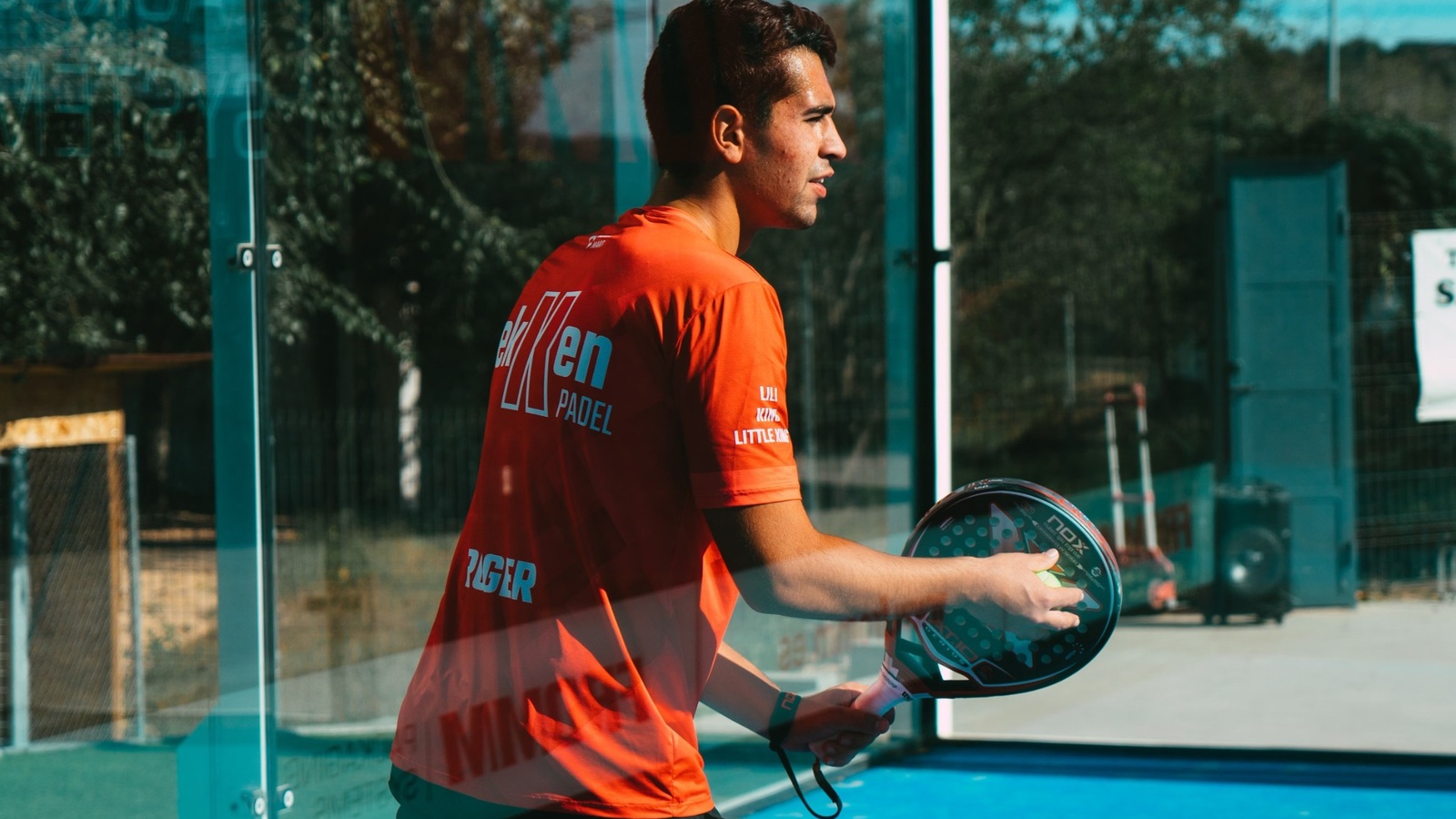
If you’ve started getting interested in racket sports over the past few years, there’s one word you’ve probably been hearing a lot. And it isn’t tennis, the first sport most of us think of when someone says “racket sport.” It’s padel. At first glance, padel can look like a different kind of tennis played on a smaller court. But with its own court, glass walls, racket, and playing strategy, it’s really a sport in its own right.
The scoring system is similar to tennis, so it’s easy to assume they aren’t all that different. Then you step onto the court and discover that the walls are part of the game and the serve has to be hit underarm. That can take some getting used to.
One of the best things about padel is that it’s usually played in doubles. It’s a fun activity to enjoy with friends, your partner, or someone you’re dating.
So what is padel, how do you play it, and what equipment do you need to get started? In this guide, we’ll cover the basic rules, court layout, racket styles, and the main differences between padel and tennis.
What is padel?
Padel is a racket sport that brings together elements of tennis and squash. It’s played on a rectangular court divided by a net and enclosed by glass and metal panels.
As in tennis, the aim is to hit the ball over the net and into your opponents’ court, making it difficult for them to return it legally.
The biggest—and often trickiest—difference for beginners is that the walls behind and beside the court are part of the game. After bouncing once on the ground, the ball can rebound off the glass. You can hit it back before it bounces on the ground a second time.
That’s why padel isn’t just about hitting the ball hard. Getting into the right position matters just as much. So does communicating with your partner, reading the rebounds off the walls, and being patient.
Padel is generally:
- played by two teams of two;
- played on a court smaller than a tennis court;
- played with solid, hole-punched padel rackets with no strings;
- started with an underarm serve;
- played using the glass and metal sections of the court.
Put those things together and you get a sport that’s both social and tactical.
How did padel begin?
Padel began in 1969 in Acapulco, Mexico. According to the story shared by the International Padel Federation, Enrique Corcuera created the sport almost by accident.
Corcuera’s original plan was to build a tennis court in his garden. The problem was that he didn’t have enough space for a standard-sized one.
So he built a court about 20 metres long and 10 metres wide, then enclosed it to stop the balls from flying away. Over time, those walls became part of the game.
Corcuera’s wife, Viviana, is said to have written the first set of rules. The sport later caught on in Spain and Argentina.
I don’t know who they played with or how they introduced it to people, but it seems they did a pretty good job. Today, padel is an international racket sport played by amateurs and professionals alike.
What is a padel court like?
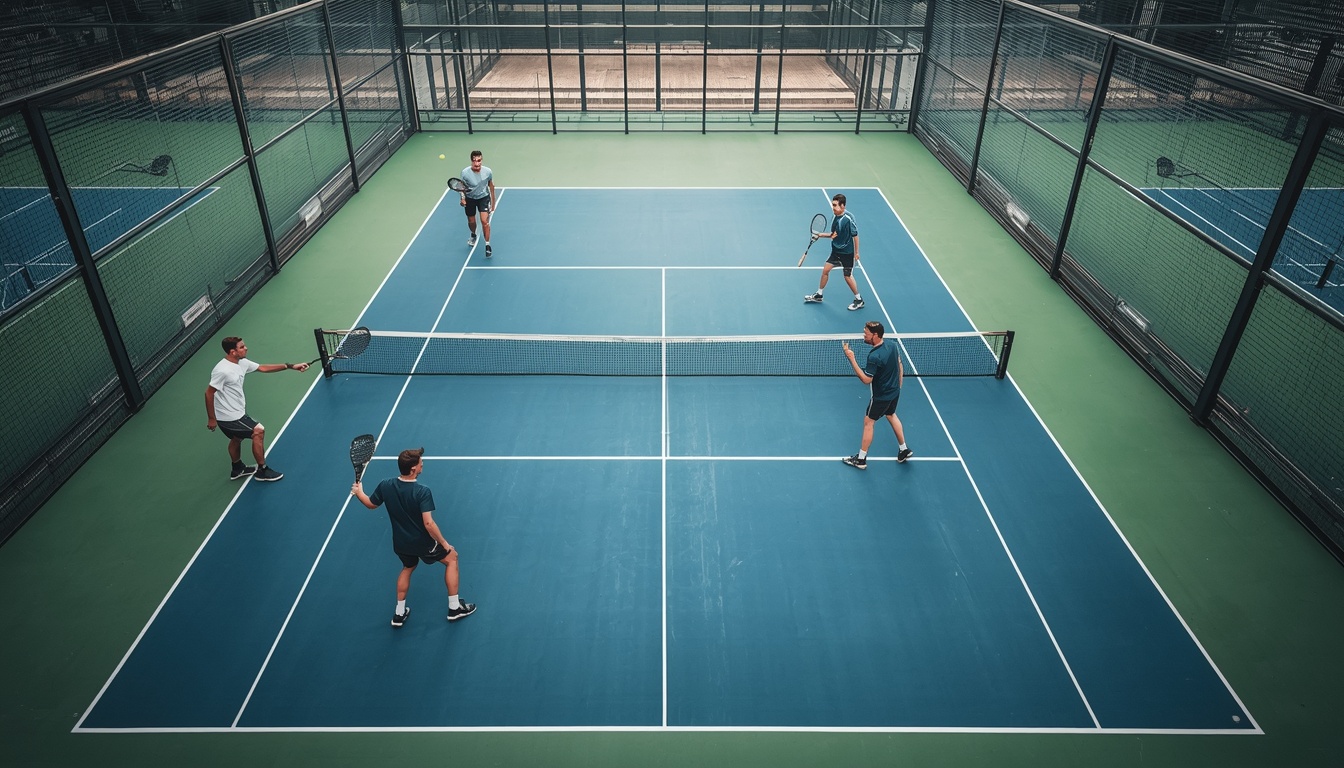
A standard padel court is 20 metres long and 10 metres wide. A net divides it into two equal halves. That makes it noticeably smaller than a standard tennis court.
Because the court is narrower, players stay closer to each other. You need to react quickly and, especially in doubles, move as a team.
The main parts of the court are:
- a net in the middle, similar to a tennis net;
- service lines;
- glass walls at the back;
- glass and metal mesh sections along the sides;
- doors at some courts that allow players to leave the playing area.
Under International Padel Federation rules, the court’s internal dimensions are 10 × 20 metres. The back walls are usually 3 metres high. Metal mesh panels above them can increase the total height.
How do the glass walls work in padel?
The glass walls aren’t there just to keep the ball from leaving the court. They’re an active part of the game.
If your opponent’s shot lands on your side and then hits the glass, the rally continues. You can return the ball before it bounces on the ground a second time.
For example, if your opponent sends the ball towards the back of the court:
- the ball lands on your side;
- it rebounds off the back glass;
- you track the angle of the rebound and return it.
But if the ball hits the glass or metal section on your opponent’s side before touching the ground, the shot is out.
Getting used to the walls can be tricky at first. Many beginners try to hit the ball before it reaches the glass. But in some situations, waiting for the rebound gives you a more controlled shot and makes the ball easier to play.
That’s one of the key skills that separates padel from tennis. You don’t always need to hit the ball as early as possible. Sometimes it’s better to let it reach the wall first.
How do you play padel?
Padel is usually played by four people in two teams of two. The aim is to send the ball into your opponents’ court and make it difficult for them to return it legally.
During a rally, the ball:
- can bounce only once on the opponents’ side;
- can hit a glass or metal wall after bouncing on the ground;
- can be volleyed out of the air;
- can be played off the glass on your own side and sent over the net;
- ends the point if it bounces on the ground a second time.
After you hit the ball, it has to go over the net and land on your opponents’ side. If it then hits a wall, the rally continues.
How do you serve in padel?
One of the biggest differences between padel and tennis is the serve. In tennis, you serve overarm, above your head. In padel, the serve is underarm.
When serving, a player:
- stands behind the service line;
- lets the ball bounce once on their side;
- hits it at waist height or below;
- sends it diagonally into the opposite service box.
The first serve comes from the right side of the court. The serving side alternates between right and left for each point. Just like in tennis, you get two serves. If the first one is a fault, you can try a second serve.
A serve is valid if the ball lands in the correct service box and then hits the glass wall. If it hits the metal mesh after bouncing in the service box, it’s a service fault.
The serve usually isn’t about winning the point outright. It’s more about setting yourself up to move towards the net. That’s why placement and what you do after serving matter as much as speed.
Padel scoring
Padel uses a scoring system similar to tennis. Points within a game go:
- 0;
- 15;
- 30;
- 40;
- game.
If both teams reach 40, the score is deuce. Under the traditional system, a team has to win two points in a row to take the game.
To win a set, a team usually needs to win six games and lead by at least two. If the score reaches 6–6, a tie-break may be played.
Most standard matches are played as best of three sets, with the first team to win two sets taking the match.
Some tournaments and social games use a “golden point” to speed things up. At 40–40, one deciding point determines the winner of the game. It’s a good idea to check which scoring system your club or organiser uses before you play. The format may be different from the one you know.
Padel racket vs tennis racket
The first thing you’ll notice when comparing a padel racket with a tennis racket is that the padel racket has no strings.
Padel rackets have a solid, firm surface with holes in it. They’re usually made from a combination of carbon fibre, fibreglass, and foam-like materials inside.
A tennis racket:
- has a longer handle;
- has a larger head;
- has a stringed hitting surface;
- is designed for bigger, longer swings.
Padel rackets are shorter and more compact, so they’re easier to control quickly in a tight space. The strings on a tennis racket flex more, giving you the potential to hit the ball at greater speed.
Padel racket shapes
When you’re shopping for a padel racket—or borrowing one at a club—you’ll come across a few different shapes. There are three main types.
Round rackets
They have a large sweet spot and are easier to control, which makes them one of the most common recommendations for beginners.
Teardrop-shaped rackets
These offer a more balanced mix of control and power. They may suit players who have picked up a little experience.
Diamond-shaped rackets
The balance point is closer to the top of the racket. This can help with powerful shots, but the racket is harder to control. Diamond shapes are generally aimed at more advanced players.
Beginners are often advised to look for a round racket weighing around 340–360 grams, with the balance point closer to the handle. But the right weight varies from player to player. Just because someone recommends a particular model doesn’t mean it’s the right one for you. You may need to try a few different rackets before you find your match.
Padel rackets have a safety cord attached to the handle, designed to go around your wrist. Wearing it during play matters for your safety and the safety of the people around you.
It might seem unnecessary—or even a bit silly—at first, but it really does help. Search “padel fails” on YouTube and you’ll see what can happen when the cord isn’t on your wrist.
Is a padel ball the same as a tennis ball?
Padel and tennis balls look similar, but they aren’t exactly the same.
Padel balls generally have lower internal pressure than tennis balls. This helps them move more controllably around the court and gives them a rebound off the glass that suits the pace of the game.
A beginner might not notice the difference straight away. But ball pressure has a real effect on the tempo of play and how the ball rebounds off the walls.
You might use a tennis ball for a casual trial game, but for regular training it’s better to use balls made specifically for padel.
What’s the difference between tennis and padel?
Padel and tennis have similar scoring systems, but the way they’re played is quite different.
| Feature | Padel | Tennis |
|---|---|---|
| Format | Usually doubles | Singles or doubles |
| Court | 10 × 20 metres, enclosed | Larger and open |
| Walls | Glass walls are part of the game | No walls |
| Racket | Short, solid, and perforated | Longer and strung |
| Serve | Underarm | Usually overarm |
| Style | Positioning, patience, and teamwork | Power, spin, and court control |
| Learning curve | More accessible at a basic level | Technical progress may take longer |
Because the padel court is smaller, beginners may get to the ball more often. The underarm serve also makes it easier to get a game going.
That said, becoming good at padel isn’t as easy as it might seem. Reading wall rebounds, holding your position at the net, using lobs, and moving with your partner are all skills that take time to develop.
How can a tennis player switch to padel?
Since both sports use a racket, someone who plays tennis may adapt to padel faster than someone who’s never played a racket sport before.
If you know tennis, racket–ball coordination, basic volleys, and footwork will feel familiar. But some of your tennis habits may get in the way in padel. You might need to adjust certain movements—or leave them behind altogether.
Shorten your swing
If you play tennis, you may be used to long, wide swings, especially on shots from the baseline.
The padel court is smaller and the ball can come back to you sooner, so compact movements work better. Taking the racket too far back can leave you late on a fast incoming ball.
Don’t try to hit every ball hard
Keep the glass in mind. A hard shot can rebound off the back wall and hand your opponent an easy return. Power isn’t always an advantage. What matters is sending the ball under control to the right part of the court.
Don’t treat the wall like an opponent
A tennis player’s first instinct is often to hit the ball before it reaches the back glass. That’s a perfectly normal habit to bring from tennis. But in padel, the glass can help you defend. Waiting for the rebound may bring a difficult ball to a height that’s easier to play.
Learning to play with the wall—or at least not seeing it as your opponent—can help you improve as a beginner.
Move up to the net with your partner
Tennis players are often used to covering a large area on their own. But padel is usually played in teams of two.
Both players should move side by side and stay at a similar depth on the court. If one player moves up to the net while the other hangs back, it can leave big gaps for the opponents to target.
Padel is a team sport. You need to communicate when a ball comes through the middle, retreat together to cover lobs, and move up to the net at the same time.
Even with plenty of tennis experience, it’s hard to build an effective padel game if you and your partner aren’t moving in sync.
What equipment do you need to play padel?
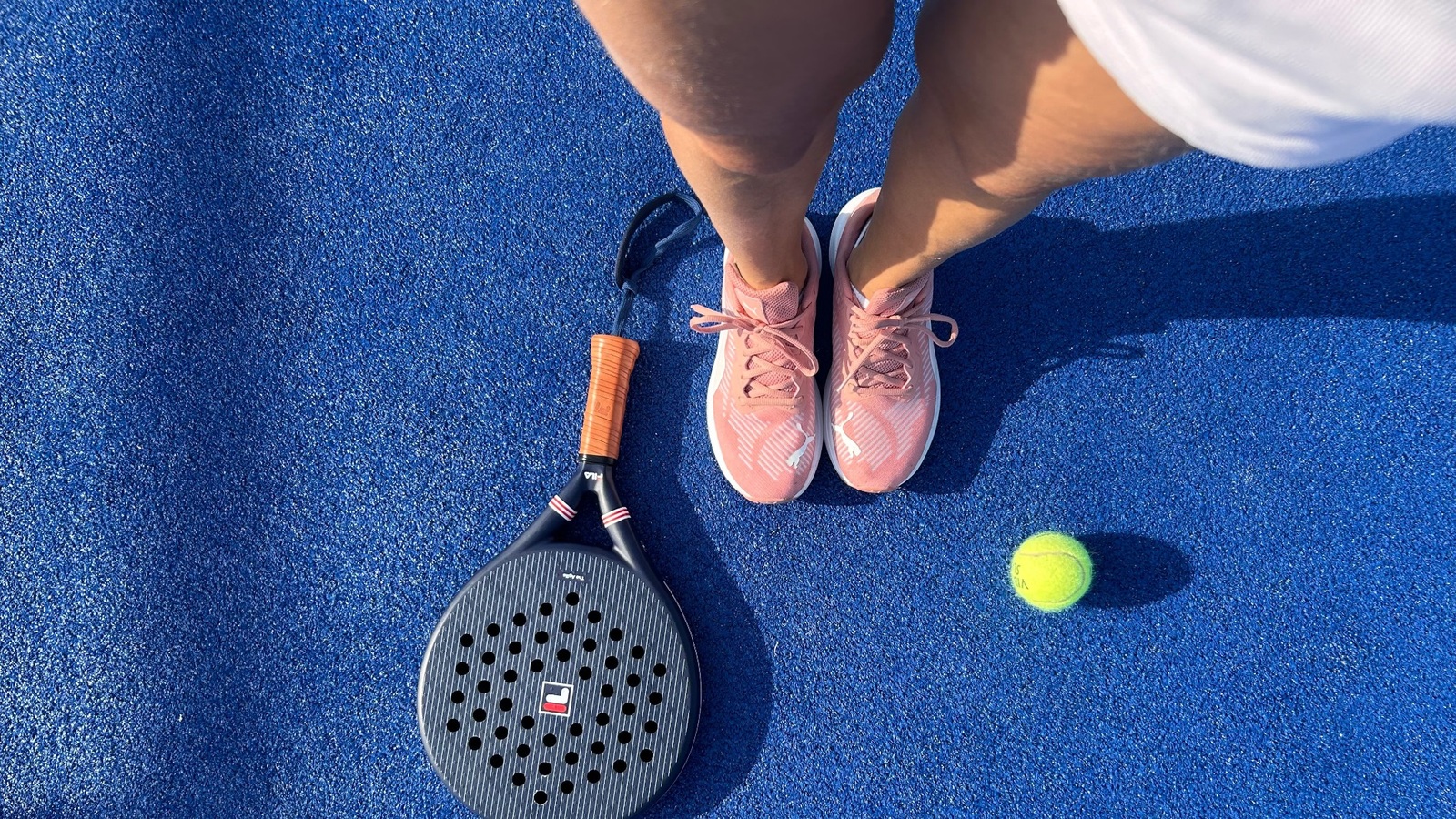
You don’t need a lot of equipment to get started.
Padel racket
You don’t need to buy a racket for your first lesson. Many padel clubs offer rentals or demo rackets. Before booking, ask whether rentals are available and whether a racket is included in the lesson price.
If you decide to buy one, you could start with a round, control-focused racket that isn’t too heavy and is suited to beginners. But I think it’s better to rent one before buying. You may not yet know whether you’ll enjoy the sport or want to keep playing regularly. Renting also gives you the chance to try different models.
Padel rackets can cost anywhere from a few thousand lira to around TRY 20,000–30,000. There may be more expensive models too; that was roughly the top price range I came across when I was looking.
Padel balls
Use padel balls, which look like tennis balls but have different pressure characteristics. They’re usually sold in cans of three.
Suitable sports shoes
Padel involves frequent changes of direction, short sprints, and sudden stops. That makes shoes with good lateral support important.
For your first try, clean tennis or court shoes should be fine. Once you start playing regularly, you may get better grip from shoes designed for padel courts.
Running shoes are mostly designed for forward movement, so they may not give you enough support for quick side steps. If you’re planning to play regularly, court shoes with strong lateral support are a better choice.
Comfortable sportswear
A T-shirt, shorts, or leggings that let you move freely are all you need. Padel can be played on indoor and outdoor courts, so choose your clothes based on the setting and weather.
On a sunny day outdoors, a cap, sunscreen, and a water bottle can come in handy too.
Racket wrist cord
The safety cord on the padel racket should stay attached to your wrist throughout the game. If the racket slips out of your hand, the cord can help stop it from hitting someone nearby.
What to expect at your first padel lesson
Your first padel lesson probably won’t start with a pile of technical details. Your instructor will usually explain the aim of the game, how to hold the racket, how to make controlled contact with the ball, and the basic layout of the court.
There’s a good chance your first few shots won’t go particularly well. Don’t let that get you down.
A first lesson will usually cover:
- how to hold the racket properly;
- forehand and backhand shots;
- the underarm serve;
- basic volleys;
- positioning on the court;
- simple balls rebounding off the glass;
- moving with your partner;
- short point-based games.
Since it’s your first time, balls coming off the glass may give you trouble. Just when you think the ball is coming straight at you, it can change direction and speed after hitting the wall. That can be confusing at first. Once you get used to it, though, the game becomes much more fun.
At this stage, try to watch the bounce instead of rushing towards the ball. After a few lessons, you’ll start reading rebounds off the glass more comfortably.
Rather than expecting to win lots of points or hit powerful smashes in your first lesson, focus on keeping the ball in play and getting into the right position. You’ll get more out of it that way.
Is padel difficult for beginners?
Here’s one of padel’s biggest advantages: at a basic level, it can be easier to learn than some other racket sports. If you’ve tried tennis before and found it difficult, padel may be worth a go too.
The underarm serve, smaller court, and doubles format can help you keep rallies going for longer. Don’t be surprised if you’re ready for a short match after your first or second lesson.
As you improve, more complicated skills start to matter:
- predicting rebounds off the glass;
- reacting to lobs;
- holding your position at the net;
- directing volleys to the right spot;
- moving in sync with your partner;
- predicting where the ball will go after a smash.
That’s the appeal of padel: the barrier to getting started is relatively low, but there’s plenty of room to keep improving.
Padel or pickleball?
If you’re looking online for a new racket sport, there’s a good chance you’ll come across both padel and pickleball. Both sports have been attracting more and more attention in recent years.
They can sometimes be confused because both are relatively easy to pick up at a basic level. But their courts and playing styles are quite different.
Pickleball is played on a smaller, open court with a perforated plastic ball. Padel uses a pressurised ball similar to a tennis ball and is played on a larger court enclosed by glass walls.
Wall rebounds are at the heart of padel. In pickleball, play near the net and the rules around the area known as the “kitchen” matter more.
For a closer look at how the two sports differ, check out our article, “What Is Pickleball? One of the Fastest-Growing Racket Sports of Recent Years.”
Who is padel for?
Padel can suit players of different ages and fitness levels.
It’s worth trying if you’re looking for a new social sport, want a regular activity to do with your friends, enjoy team games, or have wanted to try tennis but found the learning curve a little intimidating.
If you’ve played tennis or squash before, your racket–ball coordination may help you settle in more quickly.
The court is smaller, so you don’t need to cover distances as wide as you do in tennis. But padel isn’t a low-intensity sport. Short sprints, sudden changes of direction, reaching for low balls, and repeated volleys can add up to a serious workout during a match.
If you have an issue with your knees, ankles, shoulders, or elbows, it may be a good idea to check that this kind of activity is right for you before getting started.
A few things to know before you start playing padel
If all this has convinced you to give padel a try, I’m glad to hear it. Here are a few last tips to help make your first match more enjoyable:
- Rent a racket on your first day instead of buying an expensive one.
- Don’t rush when the ball rebounds off the glass.
- Keep communicating with your partner.
- Try to keep the ball in play instead of hitting every shot as hard as you can.
- Move up to the net together.
- When your opponents play a lob, both of you should move back.
- Always wear the racket’s safety cord around your wrist.
- Choose court shoes with good lateral support instead of running shoes.
- Do a short warm-up before the match.
Your first goal in padel shouldn’t be to win points. It should be to keep the ball in play for a few shots. As your control improves, speed and attacking shots will find their way into your game naturally.
Is padel worth trying?
I think it absolutely is. Especially if you have a friend, partner, or someone you’re dating to play with, it can turn into a really fun way to spend time together.
There are more padel courts around Turkey now, particularly in Istanbul, so giving the sport a try is easier than it used to be.
Put together tennis-style scoring, walls that bring squash to mind, and doubles teamwork, and you get a pretty dynamic racket sport.
Speaking for myself, I wanted to play tennis for years but never quite worked up the nerve. The time and effort it takes to become a good player felt a little daunting in the middle of everyday life. I don’t think tennis is a sport you can make quick progress in with just one lesson a week.
Padel helps close that gap, at least a little. And don’t read too much into “a little”—I’m just saying. It doesn’t mean I’ve given up on tennis for good. Anyway, that’s a story for another article.