
What Is Pronation? The Differences Between Overpronation, Supination and a Neutral Gait
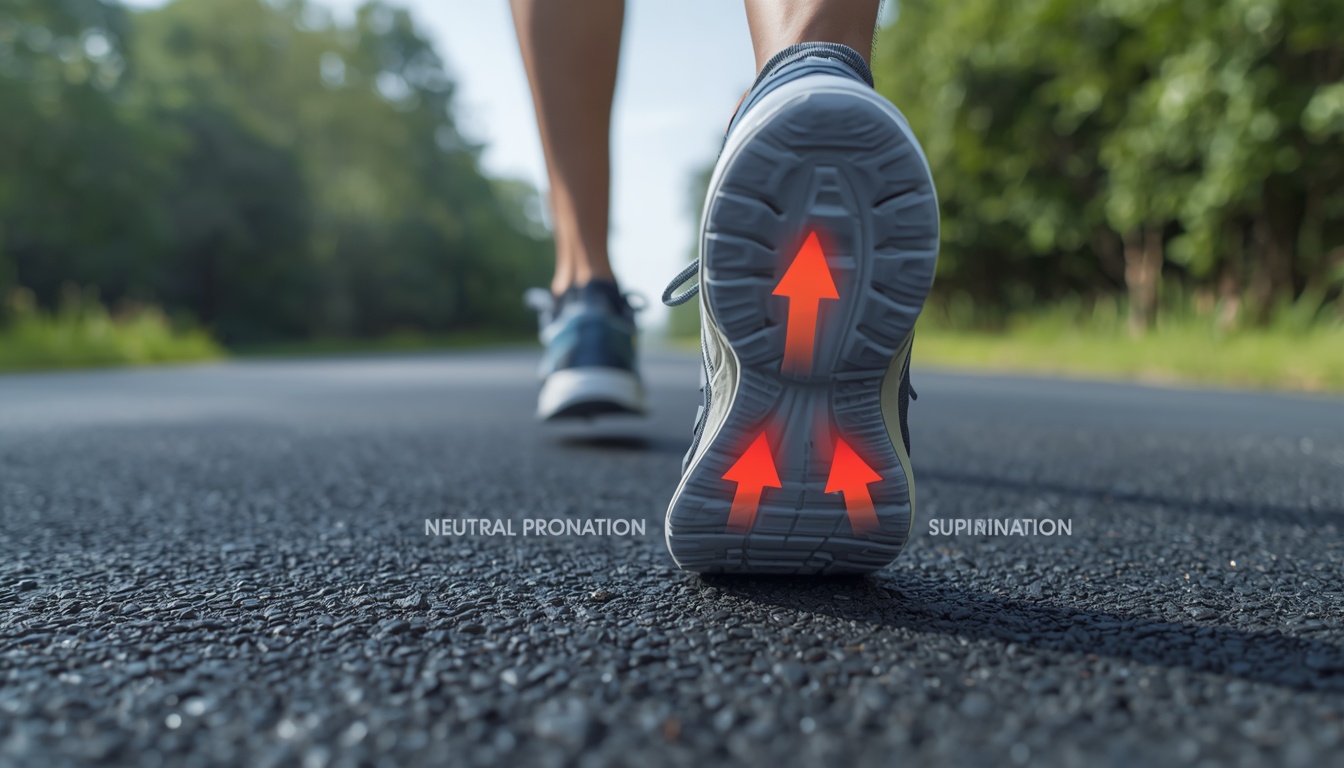
When I decided to start running, the first thing I researched wasn’t training plans. Like plenty of other beginners, I went straight to running shoes. And as I browsed different models online, unfamiliar terms kept popping up.
- Neutral gait.
- Stability.
- Supportive shoes.
- Supination.
- And, more than anything, pronation.
Honestly, I thought it was a health problem at first. Maybe I had it too and had somehow gone my whole life without noticing.
But the more I read, the more I realised I’d got the wrong idea.
Pronation isn’t a problem that only affects certain people. It’s a completely natural movement we all make when we walk and run. What matters isn’t whether it happens, but how much.
This is where things get confusing. Some of the information online still relies on ideas that were widely accepted years ago. For a long time, anyone who overpronated was told they absolutely needed supportive running shoes, usually called stability shoes. These days, the picture is a little more nuanced.
So what exactly is pronation? What do overpronation and supination mean? And how much attention should you really pay to them when choosing running shoes? Let’s take a look together.
What Is Pronation?
Pronation is the controlled inward rolling movement of the foot after it makes contact with the ground.
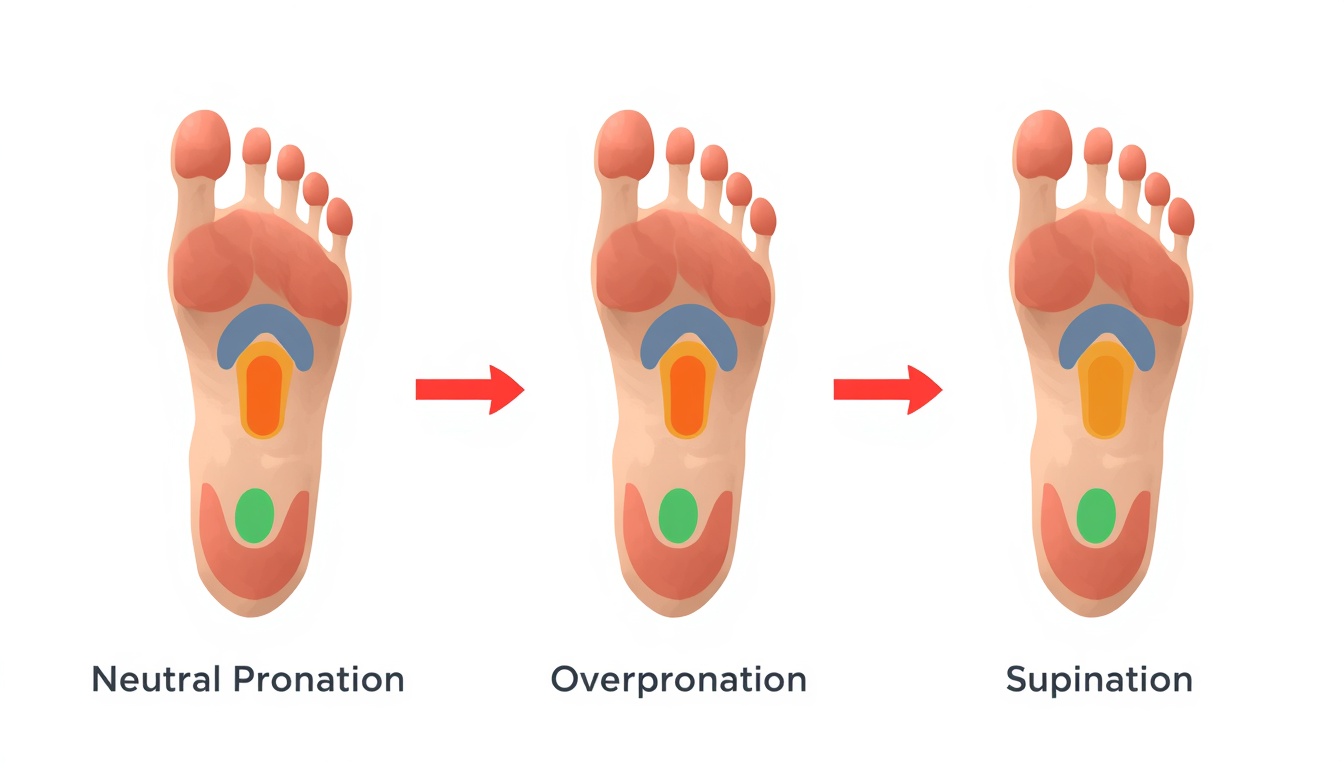
That might sound like something undesirable. But it’s a perfectly natural biomechanical movement. Every time your foot lands, impact forces are transmitted through your body. Pronation helps your foot absorb that impact in a more controlled way.
Think of it a bit like a car’s suspension. Just as suspension softens bumps for a more comfortable ride, pronation helps your foot cushion the landing. Its role isn’t to damage your foot. Quite the opposite: it helps protect your body.
Does Everyone Pronate?
The short answer: yes.
This is where one of the biggest misunderstandings starts. When someone says, “I pronate,” they often assume that means something is wrong. But we all pronate. It’s a natural part of walking. Pronation itself isn’t the issue. What may need attention is a foot that rolls inward much more or much less than usual. That’s why you’ll generally come across three patterns:
- Neutral gait
- Overpronation
- Supination
Understanding these terms makes it easier to put running shoe advice into context.
What Is a Neutral Gait?
A neutral gait involves the foot rolling slightly inward after landing, with body weight transferring evenly towards the forefoot. This helps both impact absorption and the push-off phase work efficiently.
People with a neutral gait generally have a wider range of running shoes to choose from. That’s handy. But there’s something worth remembering.
A neutral gait doesn’t mean you won’t get injured. Running technique, training load, muscle strength, recovery and how well your shoes suit you are all at least as important as the way your foot moves.
What Is Overpronation?
Overpronation means the foot rolls inward more than usual after landing. In some people, this can be quite noticeable. That extra inward movement may change how load is distributed and put more stress on certain areas.
In the past, many experts believed overpronation led directly to injury. Supportive running shoes were often recommended as the solution. Research in recent years, though, suggests the relationship isn’t that simple.
It wouldn’t be right to say that everyone who overpronates will inevitably get injured. Equally, plenty of runners with a neutral gait get injured for other reasons. How far your foot rolls inward isn’t the only thing that determines your injury risk.
Do We Still Need Supportive Running Shoes?
You’ll still see advice like this online:

“If you overpronate, you must wear stability shoes.”
The approach today is more cautious about blanket recommendations. Many modern guides and scientific studies suggest that pronation alone isn’t enough to choose a running shoe.
Several things need to be considered together:
- How comfortable you feel in the shoe
- Previous injuries
- Your running experience
- Training intensity
- Muscle strength
- Movement control
- What you’ll use the shoe for
Rather than choosing a shoe based only on a quick gait analysis in a shop, it makes more sense to look at the whole picture. If you think your feet tend to roll inward excessively, you can select the relevant answer to the support-needs question in our running shoe finder. The tool will move stability models higher up the recommendations without removing neutral models. That’s a ranking preference, not a diagnosis.
What Is Supination?
In running shoe advice, supination is often used to describe underpronation: when the foot doesn’t roll inward enough after landing, or weight stays more towards the outside of the foot. This can limit how well the foot absorbs impact. The outer edge of the foot and the heel area may then carry more load.
It’s less common than overpronation. Particularly for long-distance runners, it’s something to consider alongside shoe choice, running technique and injury history. The same rule applies here, too. Having a supinated gait doesn’t automatically mean you’ll get injured. It’s one factor among several that need to be considered.
Can You Test Your Pronation at Home?
Many new runners wonder:
“Can I work out how I pronate at home?”
The short answer: you can pick up some clues. But you shouldn’t expect a definitive result. One of the most commonly suggested methods online is the wet foot test. You lightly wet your foot, stand on a flat surface that will show the print, and look at the footprint to get an idea of your arch shape.
It sounds practical enough. But there’s an important limitation: a footprint made while standing still isn’t the same thing as your foot’s movement while running. When you run, plenty of other factors come into play, including:
- Your speed
- How tired you are
- The surface
- Muscle strength
- Your shoes
So it wouldn’t be sensible to look at a wet footprint alone and conclude, “I overpronate,” or, “I have a neutral gait.” At most, the test can give you a rough indication.
Is a Gait Analysis More Useful?
Some running shops and sports centres offer gait analysis. Usually, you’ll run on a treadmill for a short time while a camera records how your foot lands and moves. These assessments can provide more information than static tests. After all, they at least try to look at your foot in motion. But they’re not perfect either.
A few minutes of running won’t always fully reflect your usual training conditions. Your running form may change as you get tired. The way your foot moves can be different over a long run. The surface, your pace and the shoes you’re wearing can affect the results, too. Gait analysis is a useful tool, but it shouldn’t be treated as enough on its own to make a final decision.
How Does Pronation Affect Running Shoe Choice?
Pronation used to be one of the main criteria for choosing running shoes. In many shops, staff would first identify your gait pattern, then recommend shoes thought to match it. That approach has shifted somewhat. Research in recent years suggests that choosing shoes based solely on pronation type doesn’t always produce the best result. Instead, more attention is being given to:
- How comfortable the shoe feels on your foot
- Whether it allows your natural running movement
- Your training history
- Previous injuries
- The intended use
- Your running distances and surfaces
That’s why many experts now recommend considering your overall needs rather than focusing only on gait analysis. The same thinking applies to more specialised models, such as carbon-plated running shoes.
Who Might Benefit from Stability Shoes?
None of this means:
“Stability shoes are pointless now.”
They’re not. Supportive shoes can still be helpful for plenty of runners. They may benefit people who:
- Have a clear need for more movement control
- Have experienced certain running injuries
- Feel more comfortable in supportive shoes
The important thing is to choose the shoe around the person’s overall needs, rather than a pronation assessment alone. So stability shoes aren’t unnecessary. They just shouldn’t be recommended to everyone automatically.
Common Myths About Pronation
“Pronation is a bad thing.” False. Pronation is a natural and necessary movement. On its own, it’s nothing to worry about.
“If you overpronate, you’ll definitely get injured.” False. Injury risk can’t be put down to pronation alone. Training load, recovery, strength, running technique and shoe choice all need to be considered together.
“The wet foot test gives a definitive answer.” False. It can provide a rough indication, but it won’t give you a definitive assessment of your running gait. “A neutral gait is the healthiest.” Not always. Everyone’s biomechanics are different. What matters most is being able to run comfortably and without pain.
So, How Much Does Pronation Really Matter?
Pronation isn’t something to be afraid of. When you first hear the word, it can sound like a health problem. That’s exactly what I thought. But the more I looked into it, the more I realised it was simply a natural movement we all make when walking and running.
What matters more is how that movement varies from person to person, and whether it actually affects your running. Pronation used to sit at the centre of running shoe selection. Sports science now takes a broader view.
It’s not just about how your foot lands. These things matter just as much:
- How comfortable you feel in your shoes
- Your training habits
- Your injury history
- Your running goals
- What you need the shoes for
If there’s one thing to take away from this article, it’s this: when choosing running shoes, look at the whole picture rather than getting stuck on one test or one term.
Frequently asked questions
Is pronation bad?
No. It's a natural movement that helps your foot absorb impact.
Does overpronation cause injuries?
Not automatically. Overpronation alone doesn't tell you your injury risk. Training load, recovery, strength, running technique and shoe choice need to be considered together.
Can I test my pronation at home?
Methods such as the wet foot test can give you a rough indication. They don't provide definitive results.
Do I need special shoes because of my pronation?
Not always. Comfort, intended use and individual needs are at least as important as pronation when choosing shoes.
Are stability shoes still used?
Yes. They can be very helpful for some runners. But that doesn't mean everyone who overpronates must wear stability shoes.