
How to Do Wall Balls: HYROX Weights, Target Heights and Technique
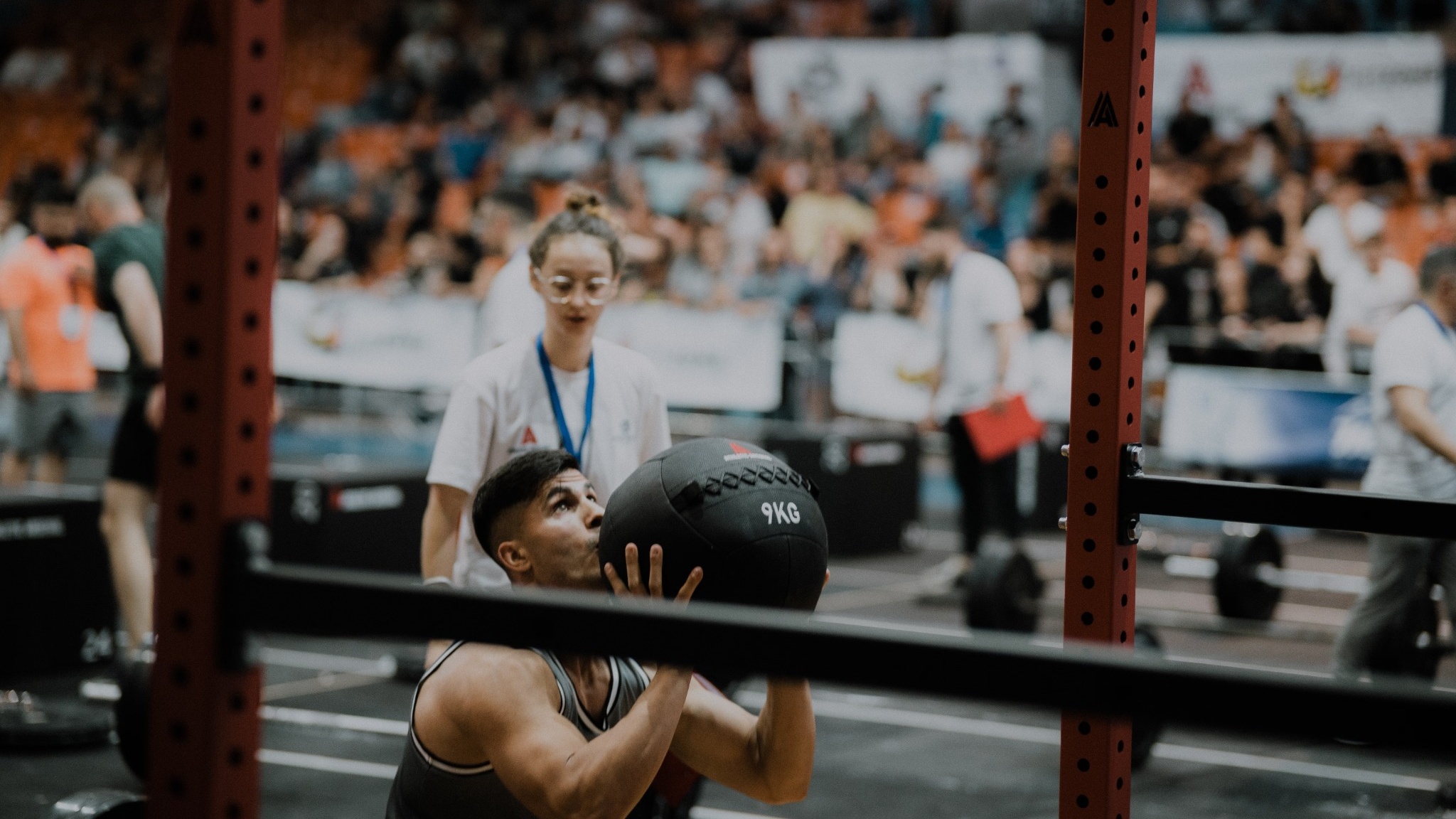
There’s a little rush of excitement when you finish your last run at HYROX. You’ve only got one station left. There’s a ball in front of you and a target up above. From the outside, it looks simple enough. I won’t lie: after all that running and all those stations, you’d think you could manage this last exercise, right? But your legs have already done plenty of work, and after a few reps, that ball might not feel quite so light. A wall ball combines a squat with an overhead ball throw. In HYROX, it’s the final station before the finish: 100 valid reps in a Singles race. Getting the ball to the target is only part of it. You also need to keep doing the movement properly as you get tired.
What Is a Wall Ball, and Which Muscles Does It Work?
There are two main parts to the movement. You squat while holding the ball in front of your chest, then use the drive from standing up to throw it towards the wall target. Catch the returning ball and move into your next rep.
So far, that might not sound too difficult. But your legs and glutes work as you stand up, while your shoulders and arms help with the throw. Your core helps keep you steady while holding and catching the ball. Put several reps together and your conditioning comes into play too. You’re getting your whole body involved.
You don’t need to grab the heaviest ball on your first attempt. Learn the movement with a lighter one. If catching the ball is already throwing you off balance, adding weight won’t make things any easier.
How Heavy Are HYROX Wall Balls, and How High Is the Target?
According to the official 2026/27 HYROX Singles rulebook, these are the individual race standards:
| Singles division | Ball weight | Target height | Valid reps |
|---|---|---|---|
| Women Open | 4 kg | 2.70 m | 100 |
| Women Pro | 6 kg | 2.70 m | 100 |
| Men Open | 6 kg | 3.00 m | 100 |
| Men Pro | 9 kg | 3.00 m | 100 |
Women Pro and Men Open use the same ball weight, but different target heights. So when you’re training, check the target as well as the number printed on the ball.
This table covers Singles. For team formats and the loads used at other stations, see our HYROX divisions and weights guide. Check the organiser’s latest rules before your race too.
How to Do Wall Balls
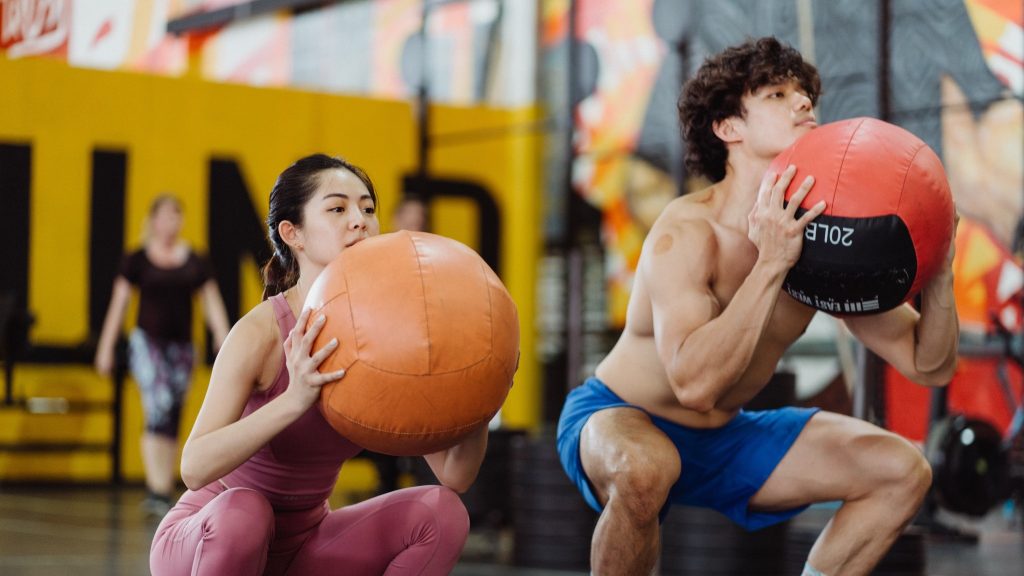
1. Get Your Starting Position Right
Stand with your feet roughly shoulder-width apart. Hold the ball in both hands in front of your chest, rather than reaching it out away from you. Find a distance where you can see the target and catch the ball without constantly stepping forwards and backwards.
How far you stand from the wall depends partly on your height and your throw. Try a few reps with a light ball. If you’re chasing it after every throw, you might be standing too far away or you may still need to adjust your throw. Look for a distance where you can comfortably catch the ball while staying in place.
2. Pay Attention to Your Squat
Squat down with the ball in front of your chest. Keep your feet flat on the floor and let your knees track in the same direction as your toes. Avoid dropping your chest and folding forwards to get through the movement.
You’ll find the required race depth in the rules section below. One useful way to check your depth in training is to film a few reps from the side. It’s easy to think, “That was definitely deep enough,” only to watch the video and find it tells a slightly different story.
3. Use Your Leg Drive to Help the Throw
Push through the floor with your feet. As your legs and hips extend, transfer that upward drive into the ball and let your arms finish the throw. Don’t try to launch it using only your shoulders while you’re still at the bottom of the squat.
Take your time getting that sequence right during your first attempts. A few good reps are a better start than rushing to get the ball to the target.
4. Catch the Ball and Keep Your Rhythm
After the ball hits the target, catch it under control in front of your chest, then squat again. If the catch sends your upper body backwards, adjust your distance and how hard you’re throwing.
And don’t throw harder than you need to. Use enough force to reach the target. Trying to catch a ball that comes back somewhere different every time is the last thing you’ll want when you’re already tired.
5. Remember to Breathe
It’s easy to hold your breath when you’re concentrating on the movement. To start with, try breathing out as you stand and throw, then breathing in as you squat. Over time, you’ll find a rhythm that feels comfortable.
If you need to put the ball down and spend ages catching your breath after a few reps, make the sets smaller. There’s no need to force long sets while you’re still learning.
What Counts as a No-Rep in HYROX?
Under the official rules, you must start holding the ball in both hands with your hips and knees extended. At the bottom of the squat, your hips must go below knee level, and your throw must hit the correct target’s strike zone. Insufficient squat depth or incorrect target contact means a no-rep: the repetition doesn’t count.
If the ball drops to the floor, pick it up, stand fully upright and start again with a squat. You can’t catch it after a bounce and carry straight on. Even where digital displays are used, correct movement, contact with the physical target and judge confirmation remain the official standards. The current penalty table lists leaving before completing 100 reps as a disqualification.
So don’t walk away thinking, “I counted 100, I’m done.” It’s easy to lose count when you’re tired, and some reps you counted might not have been accepted by the judge. Make sure you’ve finished before leaving the station.
Common Wall Ball Mistakes
Trying to Throw Using Only Your Arms
Getting the ball to the target for the first few reps doesn’t necessarily mean you’ve got the technique sorted. If you’re not using enough leg drive, your shoulders may start tiring and your throws may fall short. If that happens, go back to a lighter ball and practise linking the upward drive with the throw.
Chasing the Ball After Every Rep
If one throw takes you forwards and the next takes you sideways, you might be sending the ball somewhere different each time. Pick a line on the floor as your starting point in training. After a few reps, check where you’re standing. If you keep moving around, adjust your distance and your throw.
Pushing Too Hard in the First Set
You’re at the last station and the finish is close. It’s tempting to think, “Just a few more and I’ll get this done.” But if you exhaust yourself in the first set and then spend a long time recovering, rushing hasn’t helped much.
The same thing can happen at other stations. If you’re preparing for your first race, take a look at our guide to common HYROX mistakes too.
How Should You Break Up the 100 Reps?
Seeing 100 reps on the plan might leave you wondering how you’re going to finish them. You don’t have to do them unbroken. You could try 10 sets of 10 or 5 sets of 20, for example. These are options to test; the race doesn’t require a particular set structure.
I wouldn’t recommend going straight into big sets on your first attempt. Start with sets of 10 and see how you feel. If those are comfortable, try 15 or 20 in another session. You can also make the sets smaller as you get tired. For example, you could use 20+20+15+15+10+10+10.
Just keep one thing in mind: doing 20 reps is different from doing another 20 after a short break. If your first set goes well but by the third you’re standing over the ball waiting to recover, smaller sets may suit you better.
Try two approaches in separate sessions and compare your total time, including breaks. Note which approach produces fewer mistakes too. Don’t judge the whole plan by how good the first set feels. You’ve still got the rest to finish.
How to Practise Wall Balls on Tired Legs
If you’re new to wall balls, I’d recommend starting when you’re fresh. Learn to control the ball and squat properly first, then add running. You don’t need to put everything together at once. As your technique improves, you can gradually make your sessions more like the race.
Here’s a starting point you can try. Adjust the reps and recovery to your own level:
- Warm up with a few minutes of easy walking or cycling. Then do some bodyweight squats and a few practice reps with a light ball.
- Do 3 sets of 6–8 reps with a light ball. Rest long enough to start the next set with good form.
- Once that feels comfortable, try an easy 400-metre run followed by 8–10 wall balls in a separate session. You can complete 3 rounds, recovering between them.
When you add running, don’t make your time the first thing you focus on. Is a throw that felt easy when you were fresh now falling short? Are you losing your balance on the catch? If so, reduce the reps or slow the run down. Carrying on with poor form just to finish the round won’t do you much good.
Burpees are another movement that can feel quite different after a run. For technique and how they’re used in HYROX, see our guide to doing burpees.
Wall Ball Alternatives for Home or the Gym
Not every gym has a wall ball target, and you might not have anywhere suitable to throw a ball at home. That doesn’t mean you have to skip the work altogether. You can practise parts of the movement separately.
- Goblet squat: Hold a dumbbell or kettlebell in front of your chest and squat. This can help you get used to squatting with a load held in front of your body.
- Light dumbbell thruster: As you stand up from the squat, press the dumbbells overhead. This lets you practise transferring leg drive into an upper-body push. There’s no release or catch, though, so it doesn’t cover the whole wall ball movement.
- Medicine ball squat: If you have a ball but no target, squat without throwing it. You can get used to holding the ball and squatting with it.
- Light medicine ball throws: If you have suitable space and a ball designed for throwing, you can practise the throw separately. Don’t treat a slam ball exercise as exactly the same thing, though. Throwing the ball down towards the floor changes both the direction and the task.
Thrusters and medicine ball squats are also among CrossFit’s suggested wall ball substitutions. Keep the weight at a level you can control.
And having a ball at home doesn’t automatically mean you should start throwing it against a wall. Both the wall and the ball need to be suitable, and you need enough clear space around you. If you don’t have that space, stick with squats and thrusters. If you’re entering a race, get some practice with a proper target when you can. Squatting at home can help you prepare, but you’ll still need to practise throwing to the target and catching the ball on its return.
Sources
- CrossFit — The Wall-Ball Shot: movement overview and basic technique.
- HYROX Single Rulebook — Season 2026/27: section 8.8, printed pages 34–36; leaving the station early is covered in section 12.2, page 45. Checked on 18 October 2026.
- CrossFit — Medicine ball workouts and substitutions.