
What Is Rope Flow? Why Is Everyone Swinging a Rope Around?
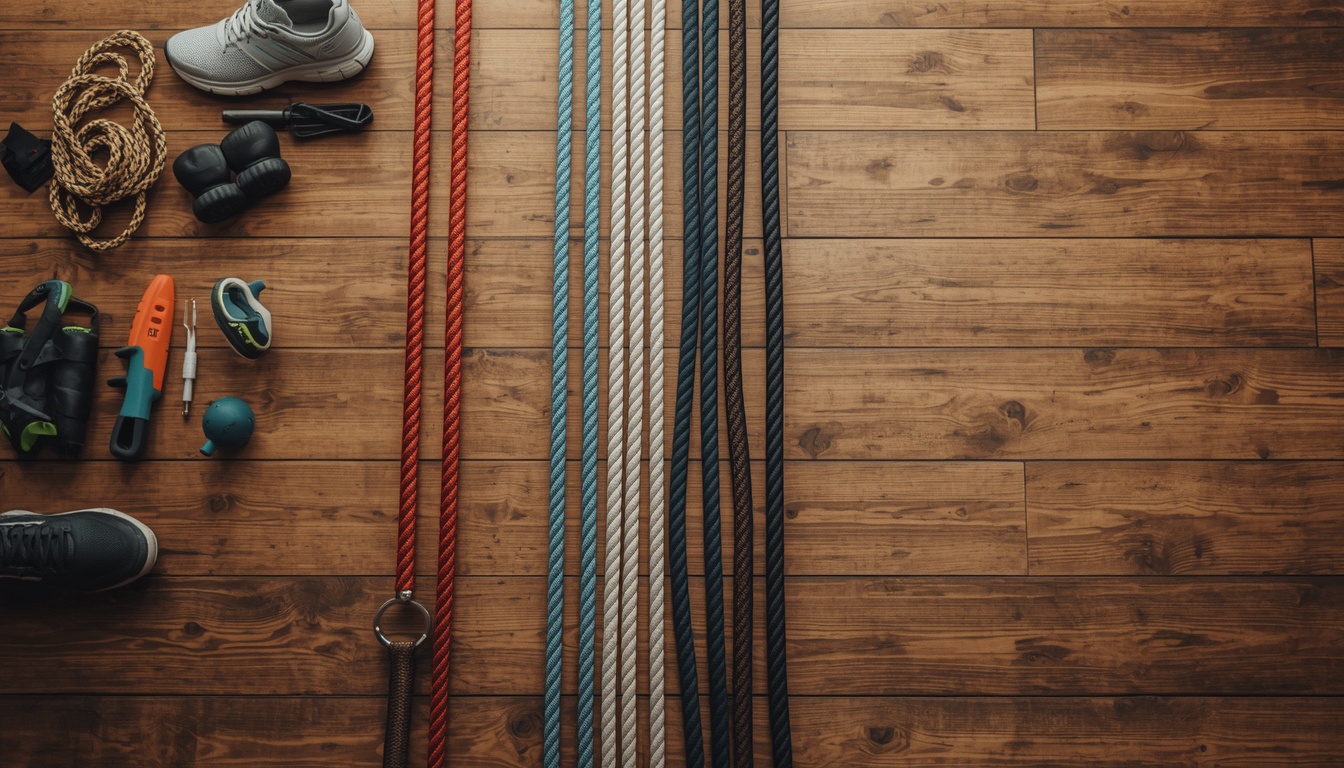
There’s something interesting I keep noticing in the fitness world. Whenever a sport starts getting popular, new equipment soon follows. Sometimes genuinely useful products appear. Other times, an accessory takes off mainly because of clever marketing. When Rope Flow started popping up on my social media feeds, I initially thought it belonged in that second group.
People were swinging a long rope rhythmically around their bodies, changing direction, stepping from side to side, and sometimes moving so smoothly that it almost looked like dancing.
At first, I assumed it was another cardio trend. I even thought it might be a variation of battle ropes. But after doing some research, I realised there was more to it.
Rope Flow wasn’t just about burning calories. People were using it to practise coordination, support shoulder mobility, develop a sense of rhythm, and warm up dynamically before training.
That’s when it really caught my attention. Is Rope Flow as useful as people say, or is it another fitness craze?
Let’s take a look at what I found.
What Is Rope Flow?
Put simply, Rope Flow is a movement practice that involves swinging a purpose-made rope of a suitable length and weight around your body in rhythmic, circular patterns.
It looks fairly simple at first. You pick up a rope and swing it around. Once you try it, though, you quickly discover that there’s a little more going on.
Your arms aren’t working alone. Your shoulders, hips, spine, core, and feet all get involved. Even your breathing starts to settle into the rhythm.
Rather than treating Rope Flow as a traditional strength exercise, it makes more sense to think of it as coordination practice aimed at improving how you move.
The goal isn’t to use the heaviest rope possible. It’s to keep your movements smooth, rhythmic, and controlled.
That’s what the word “flow” refers to: connecting movements without interruption, until the rope starts to feel almost like an extension of your body.
Where Did Rope Flow Come From?
Although Rope Flow has become more visible on social media in recent years, the idea itself isn’t entirely new.
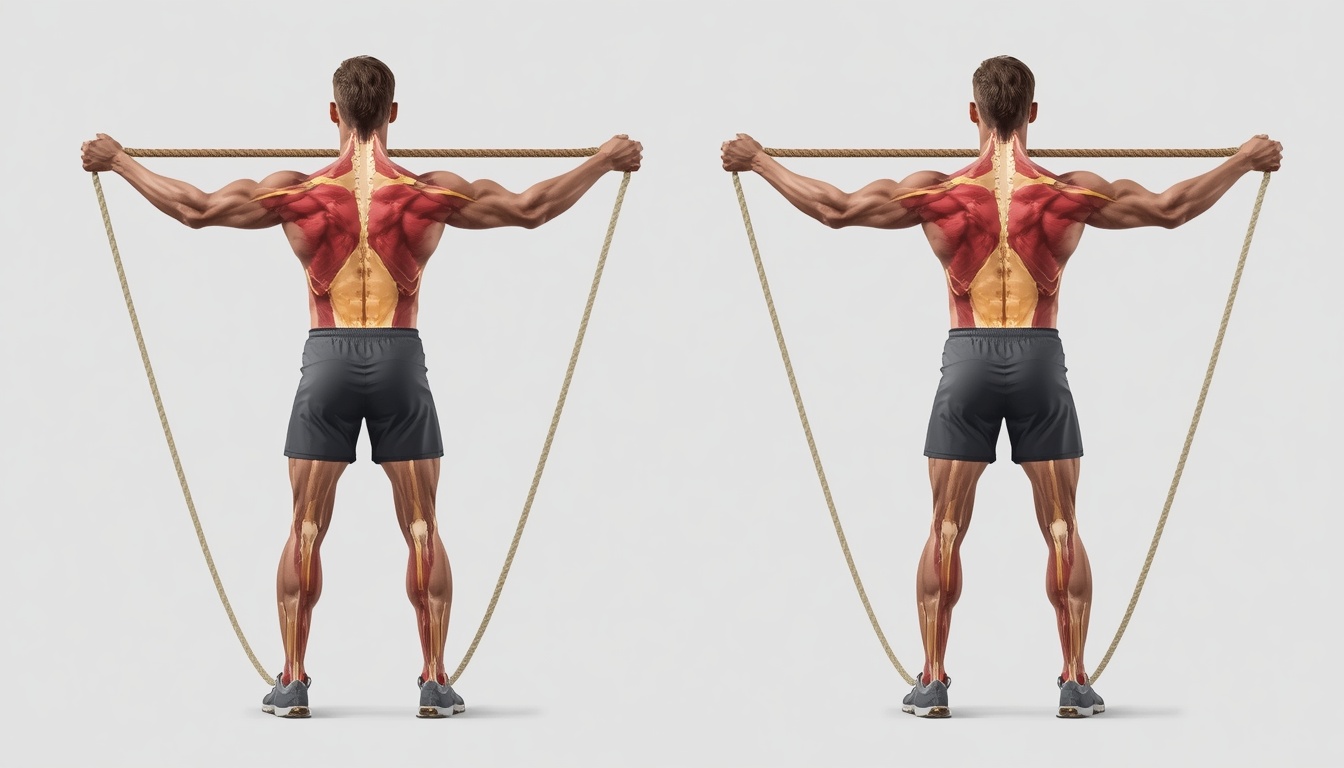
Performance coach David Weck has played a major role in popularising it. His underlying approach is straightforward: many everyday human movements involve rotation rather than happening only in a straight line.
When we run, walk, swim, throw a ball, or even reach for something, our bodies continually transfer force between the right and left sides.
Rope Flow developed as one tool for practising and refining these natural movement patterns. But there’s an important detail to keep in mind.
Search for Rope Flow online and you may find bold claims about “reprogramming your nervous system,” “improving athletic intelligence,” or “completely retraining your body.”
Those phrases sound intriguing, but strong scientific evidence directly supporting them is currently lacking. When assessing Rope Flow, it’s more useful to focus on the available evidence than on marketing language.
Are Rope Flow and Battle Ropes the Same Thing?
This seems to be one of the most common points of confusion. Both names contain the word “rope,” so it’s easy to assume they’re different names for the same exercise. In practice, their main similarity is the type of equipment involved. Their goals are quite different.
| Battle ropes | Rope Flow | |
|---|---|---|
| Goal | Move the ropes powerfully and quickly | Maintain smooth movement and rhythm |
| Main focus | Conditioning and muscular endurance | Coordination and movement control |
| Typical experience | Your heart rate rises and your arms tire quickly | Movements stay controlled, continuous, and rhythmic |
So Rope Flow is more than a lighter version of battle ropes. They’re two training approaches with different purposes.
Rotation Is at the Heart of the Movement
Much of what we do in everyday life involves more than moving in a straight line.
Think about walking. As your right leg steps forward, your left arm moves forward too. Your torso rotates slightly, and your weight shifts from one side to the other.
Something similar happens when you run, throw a ball, take a swimming stroke, or row. Your body uses rotational movement to help produce and transfer force.
Rope Flow is built around practising this natural movement pattern.
As the rope swings, your shoulders aren’t the only things moving. Your hips join the rotation, your rib cage moves, your core helps stabilise your torso, and your feet keep adjusting your balance. That makes it much more than an arm exercise.
It’s a coordination-focused practice that asks your whole body to work together.
Why Does Coordination Matter So Much?
We hear the word “coordination” all the time in sport. But what does it actually mean? Put simply, it’s your muscles carrying out the movement your brain has planned, with the right timing and in the right sequence.
- Your brain plans the movement.
- Your nervous system sends the information to your muscles.
- Your muscles produce the appropriate force.
- The result is a smooth, controlled movement.
During Rope Flow, that process happens repeatedly within seconds.
The rope changes direction. You reposition your hands. Your hips and torso adjust. Your feet help you stay balanced.
All of this keeps happening without you consciously thinking through every step. That’s why Rope Flow can be viewed as practice for movement control rather than simply producing more force.
Why the Interest in Cross-Body Movement?
Watch Rope Flow videos closely and you’ll notice that the right and left sides work together through much of the practice. As one hand moves, the opposite side helps maintain balance. Your hips may turn one way while your shoulders move into a different position.
These patterns are generally described as cross-body movements.
They aren’t unique to Rope Flow. We use similar patterns when walking, running, swimming, rowing, skiing, and even climbing stairs. That’s why many performance coaches include cross-body exercises when working on athletes’ coordination.
There’s an important distinction, though. Research supporting the benefits of cross-body movement doesn’t automatically establish the same benefits, to the same extent, for Rope Flow itself.
Research specifically on Rope Flow is still limited. It’s more reasonable to see it as one possible tool for practising these movement patterns.
Can Rope Flow Really Help Shoulder Mobility?
Shoulder health is one of the most common themes in online claims about Rope Flow.
Is there something to it? I don’t think a simple yes-or-no answer tells the whole story.
The shoulder is one of the most mobile joints in the body. Maintaining that movement capacity involves using it regularly through different angles.
During Rope Flow, your shoulders do more than move up and down. There’s internal rotation, external rotation, circular movement, rhythmic movement of the shoulder blades, and rotation involving the rib cage.
Together, these movements give your shoulders practice in different directions. With appropriate technique, Rope Flow may be a useful way to support shoulder mobility. But there’s an important limit here.
If you already have a shoulder injury, persistent pain, or restricted movement, Rope Flow shouldn’t be treated as a remedy.
Start with an assessment by a doctor or physiotherapist. If they consider it suitable, it may then be added as a supporting exercise. For otherwise healthy people, it can be viewed as a way to help maintain shoulder range of motion when performed with appropriate technique.
Can Rope Flow Replace Cardio?
That depends partly on how you practise.
A gentle Rope Flow session may raise your heart rate a little. That alone doesn’t make it a conventional cardio workout.
Longer sessions at a faster pace will naturally raise your heart rate more. But if your main goal is to improve cardiovascular fitness or expend a lot of energy, activities such as running, cycling, rowing on an ergometer, or swimming are more effective options.
Rope Flow’s appeal lies elsewhere: it involves the whole body while you work on movement quality. That’s why many athletes use it alongside their main training for:
- Dynamic warm-ups.
- Active recovery.
- Coordination practice.
- Movement skill development.
What Does the Science Say?
For me, this is where the conversation needs to stay especially grounded. Online, you’ll find both exaggerated praise and unnecessary criticism.
The more realistic picture sits somewhere between the two.
There are still relatively few scientific studies examining Rope Flow directly. That makes it difficult to say confidently that it delivers a particular benefit. However, research into coordination, motor learning, rhythmic movement, and rotational exercise suggests that training based on these principles can improve movement control.
Rope Flow draws on those principles. It’s therefore more realistic to treat it as a complementary tool that may support movement quality when programmed appropriately, rather than a new miracle exercise.
Honestly, I find that approach more reassuring. Lasting progress in sport usually comes from training methods that work together, rather than one special exercise.
What Are the Potential Benefits of Rope Flow?
Look through posts about Rope Flow and you’ll notice the same claims appearing again and again:
- “It improves your coordination.”
- “It increases your mobility.”
- “It strengthens your nervous system.”
- “It boosts your athletic performance.”
Some of these ideas may have merit, but the reasoning is often left unexplained. And the evidence behind certain claims is limited. So let’s look at the main potential benefits individually.
1. It May Help You Practise Movement Coordination. For me, this is where Rope Flow’s strongest appeal begins.
As soon as you start swinging the rope, your hands are joined by your shoulders, hips, core, feet, and even your eyes in following the movement.
Getting the rope caught around your feet or losing the rhythm during your first attempts is completely normal. You’re learning to put movements together in the right order, rather than simply trying to use more muscle.
With regular practice, your body starts following the rope more comfortably. Movements become smoother, and maintaining balance gets easier. What you’re practising is coordination between different parts of your body.
2. It May Support Shoulder Mobility. One of the biggest problems with modern life is how little we move. We sit at computers, use our phones, drive, and spend hours in the same position. Over time, our shoulders may start rounding forward, our chest muscles can become tight, and our upper backs may become more rounded.
Rope Flow brings movement in different directions: internal and external rotation, circular patterns, and rhythmic movement of the shoulder blades. Used with appropriate technique, it may offer useful movement variety, particularly if you spend much of your day at a desk.
Again, it isn’t a treatment for an existing shoulder injury. For healthy people, it can be considered a supporting activity.
3. It Offers a Dynamic Warm-Up Option. This is one of the uses that makes the most sense to me.
Many people warm up with a few minutes of walking or some brief stretching. Those can be useful approaches. Rope Flow brings several things into play at once: your heart rate gradually rises, your shoulders move, your hips rotate, your core gets involved, and your feet help maintain balance.
One sequence can begin preparing your whole body for training. It may be used as dynamic movement preparation before running, rowing, tennis, pickleball, boxing, or functional training.
4. It Can Help You Develop Rhythm and Smoother Movement. One feature that sets Rope Flow apart from many exercises is its continuity.
Once you start, the goal is to link one movement into the next, then into another, while keeping the flow going.
That won’t necessarily feel easy in the first few days. Movements may stop halfway, and you might lose the rope’s rhythm. With repetition, though, the patterns begin to feel more natural.
That’s probably why people describe Rope Flow as a skill-based exercise. Learning is a significant part of the practice.
5. It Can Bring Variety to Your Routine. Sometimes the biggest obstacle to progress is monotony. The same movements, the same machines, the same repetitions. Eventually, motivation starts to fade.
Rope Flow offers a different experience. You’re learning new patterns, focusing on rhythm, and noticing small improvements in how smoothly you move.
Even those little changes can make you want to keep going. Long-term success depends on more than finding the best programme. Being able to stick with activities you enjoy matters too.
Who Might Enjoy Rope Flow?
Generally, people without significant health problems who enjoy learning new movements can consider trying Rope Flow. It isn’t limited to one particular sport.
For example, it may be added as a supporting activity by:
- Runners.
- Hikers and trekkers.
- Swimmers.
- Rowers.
- Martial artists.
- CrossFit athletes.
- Athletes preparing for HYROX.
- People who do functional training.
It can also be an enjoyable option if you work at a desk and want to move more during the day.
Who Should Be More Cautious?
Like any exercise, Rope Flow won’t suit everyone.
Speak to a doctor or physiotherapist before starting if you:
- Have recently had shoulder surgery.
- Have experienced shoulder dislocation or significant shoulder instability.
- Have severe lower back pain.
- Experience dizziness or balance problems.
I’d also suggest avoiding a heavy rope when you’re new to it. Progress in Rope Flow is about performing movements smoothly with appropriate technique, rather than lifting or swinging heavier equipment.
Is Rope Flow Enough on Its Own?
My answer here is straightforward: no.
Rope Flow doesn’t replace strength training, demanding cardio sessions, or resistance training for muscle growth.
It’s better viewed as a complementary training tool.
If your goal is to get stronger, you still need strength work. If you want to improve endurance, you need regular cardio training. And if you want to perform better in a particular sport, sport-specific practice still matters.
Alongside those things, Rope Flow may help you work on movement quality and coordination, while adding something different to your routine.
That’s where its value lies. It doesn’t promise a miracle on its own, but it can be a useful addition in the right place.
How Do You Choose a Rope Flow Rope?
Once you decide to try Rope Flow, the first thing you’ll need is a suitable rope. They may look similar at a glance, but the choice involves more than you might expect.
Length, weight, thickness, and material can all affect how smoothly the rope moves and how it feels to use. Choosing an appropriate one can make learning considerably easier.
What Length Should It Be? Recommendations vary slightly between manufacturers, but a common starting method is similar.
Stand on the middle of the rope. For many users, having the holding points reach roughly between chest and shoulder height is a useful starting point.
A rope that’s too long may hit the ground excessively and make rhythm harder to maintain. One that’s too short can restrict your movement and make some techniques harder to learn. Check the manufacturer’s sizing guide as well as the stated length: the same size label can mean different lengths across brands.
Is a Heavier Rope Better? There’s a familiar assumption with fitness equipment: heavier must be better. Rope Flow gets its share of that thinking too. For beginners, though, a heavy rope often makes learning unnecessarily difficult.
The main goal is to maintain rhythm and flow.
As your technique develops, you can explore different rope weights. To begin with, a lighter rope that you can control comfortably is a more sensible choice.
Common Beginner Mistakes
Watch a Rope Flow video and it can look easy. Pick up the rope yourself, and you’ll soon discover the learning curve.
Mistakes are completely normal at first. The important thing is to avoid turning them into habits.
1. Starting Too Fast. One common mistake is trying to swing the rope as quickly as possible. In Rope Flow, rhythm comes before speed. Slow, controlled movement is more useful than fast, disorganised swinging.
2. Trying to Do Everything with Your Arms. At first, many people put all the effort into their arms. Smooth Rope Flow involves the shoulders, torso, hips, core, and feet working together. That cooperation is what makes the movement look fluid.
3. Starting with a Heavy Rope. Using heavy equipment before your technique is established can make you tire sooner and reduce movement quality. Learning the technique matters more than increasing the weight.
4. Constantly Chasing New Moves. The people you see on social media may have been practising for years. Trying their complex combinations in your first week can quickly become discouraging. Learn a few basic movements well and make them smooth before moving on.
5. Continuing Through Pain. Muscular fatigue is normal. Sharp pain, especially in your shoulder, elbow, or lower back, is a reason to stop. Review your technique and seek professional guidance if needed.
How Long Does Rope Flow Take to Learn?
There’s no fixed answer.
It depends on your sporting background, coordination, and how consistently you practise.
If you’ve done martial arts, dance, rowing, tennis, or similar activities that involve coordination, the basic patterns may feel more familiar. If you haven’t, struggling to find the rhythm in the first few days is perfectly normal.
Focus on establishing the basics with appropriate technique. Progress usually comes from repetition and patience, rather than rushing.
How Many Days a Week Can You Practise?
If you’re using Rope Flow to support your training, rather than as your main workout, roughly 10–20 minutes on 2–4 days a week may be enough for many people.
For example, you could use it:
- As a dynamic warm-up before strength training.
- To prepare for movement before a run.
- For a gentle session on an active recovery day.
- As a short movement break after spending a long time sitting.
Prioritise movement quality over simply extending the session.
So, Is Rope Flow Worth Trying?
When I first saw Rope Flow, I honestly thought it was another fitness trend we’d soon forget. Plenty of similar trends have appeared and faded over the years. But the more I looked into it, the more my opinion changed.
Its strongest point is making movement feel more deliberate and enjoyable. It won’t turn you into a stronger, faster, or more resilient athlete on its own. You still need regular strength work, cardio, and sport-specific training for that.
But if you want to practise coordination, add movement variety, or approach your training from a different angle, Rope Flow is worth considering.
Perhaps the nicest part is that, whatever your performance level, it can remind you how enjoyable learning to move can be.
For me, that’s what makes it valuable.
Frequently asked questions
Are Rope Flow and Battle Ropes the Same Thing?
No. Battle ropes focus more on conditioning and strength-related work. Rope Flow is a different practice aimed at coordination, rhythm, smooth movement, and mobility.
Can Rope Flow Help with Weight Loss?
Like any physical activity, it can increase energy expenditure. However, burning calories isn’t its main purpose. Your eating habits and overall activity level remain the main factors in weight management.
Can Beginners Try Rope Flow?
Yes. A light rope of an appropriate length lets you start with basic movements. Your first goal should be learning suitable technique, rather than complex combinations.
Do You Need a Special Rope?
Ropes made specifically for Rope Flow are generally preferred for a better experience. At the beginner stage, though, appropriate technique and regular practice matter more than equipment.
Does Rope Flow Build Muscle?
It may contribute to muscular endurance to some extent, but its main purpose isn’t hypertrophy, or increasing muscle size. Resistance training remains the most effective approach for that goal.
Can You Practise Rope Flow Every Day?
Many people can practise daily if the intensity stays low. Beginners are better off focusing first on learning the basics and paying attention to how their bodies respond.