
How to choose your first trekking shoes: a beginner's guide

Hiking has been getting more and more popular in Turkey over the last few years. People are heading out onto all kinds of routes to get away from the rush and stress of everyday life, even if only for a day. Speaking for myself, as someone who lives in Istanbul, I got so worn down by the traffic, the crowds and the stress of work that I found the answer in nature.
I started with routes close to home and gradually set my sights higher. Turkey has some tremendous routes, after all. The first ones that come to mind are definitely the Lycian Way, the Phrygian Way, the trails of Cappadocia and plenty more.
When I first took up hiking, the first question on my mind was: what kind of trekking shoes should I buy?
At first glance all sports shoes look much the same, but that’s not really true. As best I can, I’d like to pass on a few tips to anyone who’s as confused at the start as I was.
What is trekking?
Before we get to the shoes, let’s start with what trekking actually is. Trekking is the name for long-distance walking on established or partly established routes out in nature.
It’s a very different thing from the short city routes we’re used to. You’ll come across all sorts of ground that will test you: dirt, stony tracks, mud, forest paths, steep slopes and rocky passes. On trails like these you use different gear from what you’d use in everyday city life.
Why do you need trekking shoes?
Lots of us think about doing our first hike in ordinary running shoes. And unfortunately, most people do just that.
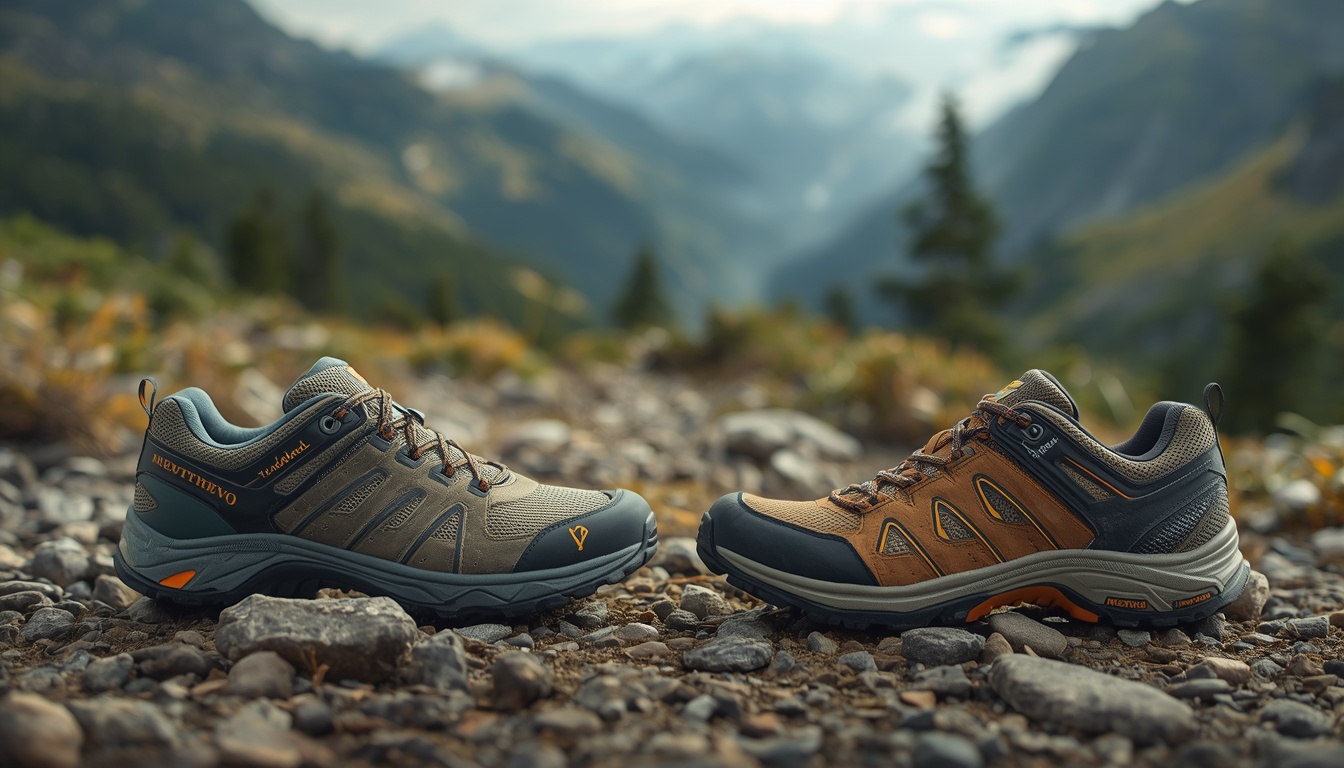
If your route is short and easy, shoes like these can do the job, but as the trail gets harder it won’t come as any surprise when you run into problems. The most common ones are:
- Your foot sliding around
- Twisted ankles
- Sore soles
- Stubbed toes
- Slipping on wet ground
- Feeling stones through the sole
Trekking shoes are designed to cut these problems down as much as possible.
How are trekking shoes different from ordinary trainers?
A tougher sole
The ordinary running shoes you might wear on the trail are designed for flat surfaces. Trekking shoes, on the other hand, have deeper tread patterns.

Pick up a trekking shoe, put its sole next to an ordinary running shoe, and you can see the difference with your own eyes. That different sole gives you a few advantages: better grip in mud, on dirt, on wet rocks and on loose ground.
If you’re wondering what sole thickness means in running shoes, have a look at our article on stack height.
More protection
On most trekking shoes the toe is stiffer than on ordinary shoes, and some even have extra protective material. The idea is that when you kick a stone or a tree root, you don’t feel the impact in your toes. That might not sound like a big deal at first. But plenty of athletes have injured their toes.
More durable materials
With the running shoes we wear around town, lightness comes first. With trekking shoes it’s the other way round. What you get is a shoe that stands up better to wear, abrasion, rocks and mud.
More stability
When you’re walking in nature, your feet obviously aren’t always on flat ground. On uneven terrain there’s a risk of twisting your ankle.
On trekking shoes, side supports reduce how much your foot slides left and right. That way your ankles are better protected than they would be in an ordinary running shoe. If you want to avoid nasty things like rolling or spraining an ankle, trekking shoes are a sensible choice.
The Gore-Tex question
When you’re researching trekking shoes, you’re bound to come across the term Gore-Tex. In short, Gore-Tex is a special membrane that keeps water out and breathes up to a point. You’ll see the benefit in the winter months, but in summer especially it can make your feet feel warmer, and if you step right into water, the damp inside takes quite a long time to dry.
So Gore-Tex definitely isn’t something you have to buy. If your budget stretches to it, then of course I’d recommend it. But it’d be good if you could get a summer pair of trekking shoes as well. Personally, if I could only have one pair, I’d go for a model without Gore-Tex. Plenty of people who hike mostly in summer and in dry weather don’t go for Gore-Tex models.
Low-cut or high-cut trekking shoes?
So you’ve decided to buy trekking shoes. You’ve even decided to go for Gore-Tex, but you’re not done yet. Because now a second question comes up: low cut or high cut?
| Low cut (Low) | High cut (Mid) |
|---|---|
| Lighter and more comfortable than high-cut models | Supports your ankles |
| You can walk faster | Gives you confidence on technical terrain |
| You can even wear them every day | Suited to tough, rugged routes |
What size trekking shoes should you get?
The mistake most beginners make is buying the same size as their everyday shoes. The thing to keep in mind here is that on a hike, your feet can swell over the course of the day.
So when you’re choosing your shoes:
- Leave half a finger’s width of space in front of your toes.
- Try them on with the thick trekking socks you’ll wear on the trail.
Stubbed toes out on the trail are a misery you really don’t want.
What should you buy as your first trekking shoes?
If you’re just starting out too, you can steer clear of very expensive technical models. Low-cut models can be a good choice to begin with. You’ll be picking easier routes at first anyway, so you can put comfort first.
And lots of people overlook this, but I’d really recommend trying them on with good-quality trekking socks. I didn’t pay any attention to this at first, and later realised I’d made a big mistake.
If you want your shoes to stay water-repellent for a long time, don’t forget to look after the DWR coating.
The thing to remember is that the most expensive trekking shoe isn’t always the best trekking shoe.
The right choice for you is the model that fits your feet and suits the way you walk and the routes you’ll be doing. For more on routes, gear and hiking technique, have a look at our Trekking category.