
What is a SUP board? The kit you need to get started
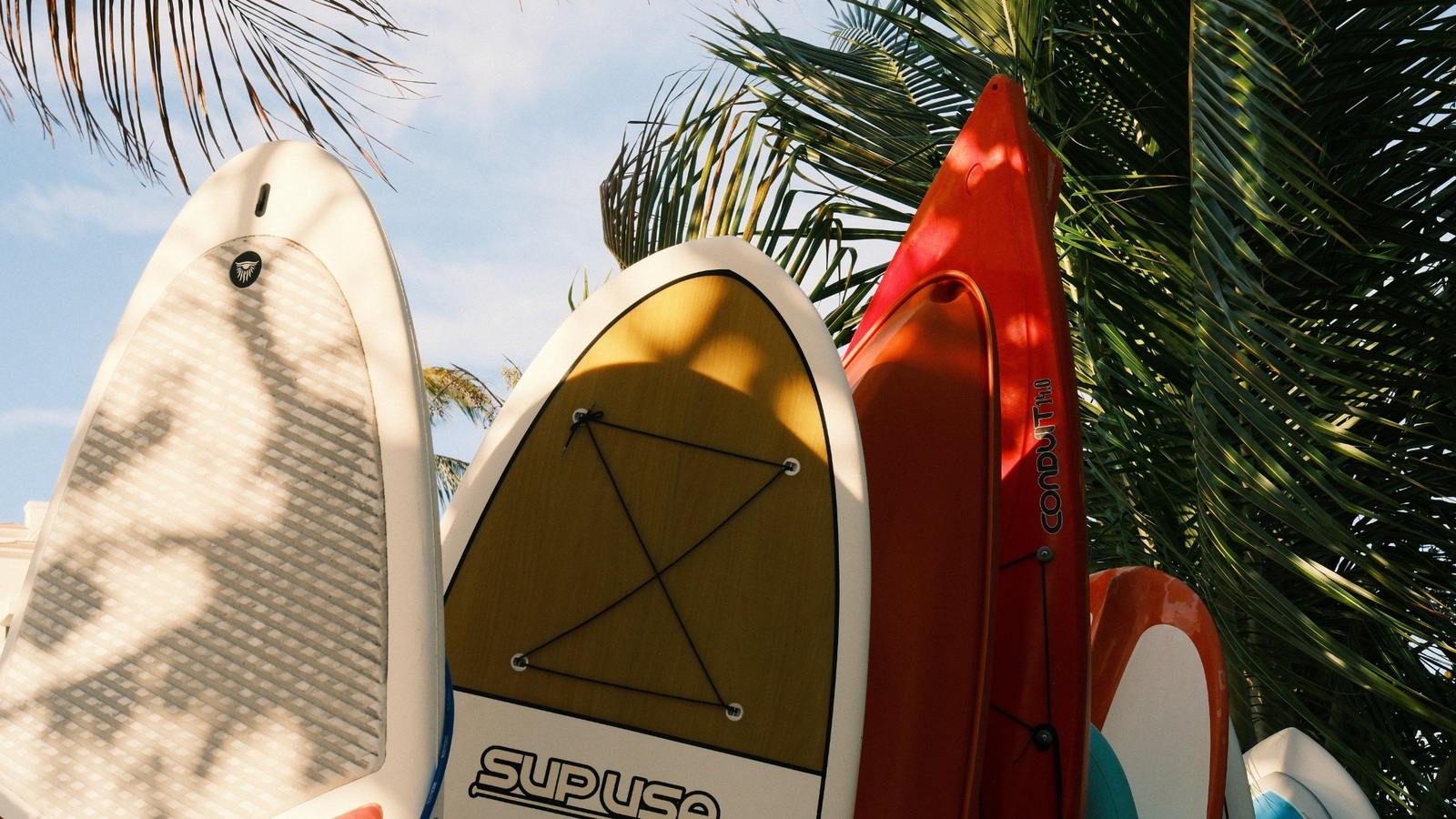
You’ve probably noticed more and more people on SUP (stand-up paddleboarding) boards lately, out on the sea, on lakes and in sheltered coves. It’s easy to get into, it’s fun, and it has taken off fast in Turkey. Scroll through social media and you’ll find no shortage of people paddling around. From the outside it looks like nothing more than standing on a board and pulling a paddle through the water, but SUP is a proper water sport that asks for balance, coordination, fitness and stamina.
If you’re thinking of giving SUP a go, a few questions have probably crossed your mind:
- What exactly is SUP?
- What kit do I need to get started?
- How much should I budget?
- What should I look for when choosing my first board?
This guide sets out to answer all of them for anyone who wants to get into SUP. If you’re still torn between SUP, kayaking and surfing, have a look at my piece comparing the three on difficulty, cost and kit.
What is a SUP board?
SUP is short for “stand-up paddle”. In Turkish it’s sometimes called “ayakta kürek sörfü”, which means much the same thing.
The basic idea is very simple. You stand on a wide, stable board and move across the water using a paddle.
SUP’s roots go back to Polynesian and Hawaiian culture, but it only really caught on in its modern form in the early 2000s. Today people do it all over the world, both for fun and competitively.
One of SUP’s biggest selling points is that it’s relatively easy to learn. Even people who have never surfed, kayaked or tried rowing can get moving on the water at a basic level after a few hours’ practice. After that you can head out on your own or with friends. There are even yoga sessions held on SUP boards these days.
The benefits of SUP
It works your whole body
Plenty of people think of SUP as a sport that’s all about arm strength. But when you paddle with the right technique, your:

- Abdominal muscles
- Lower and upper back
- Shoulders
- Chest muscles
- Glutes
- Legs
are all actively working. Your core muscles in particular stay switched on the whole time to keep you balanced.
It’s low impact
One of SUP’s most important benefits is that it’s a low-impact form of exercise. High-impact sports like running put your joints under a lot more load, while SUP puts far less strain on them. That’s why people of all ages can do it comfortably.
It improves balance and coordination
Even though SUP usually happens in coves or calm water, standing on a moving platform keeps your body’s balance system working constantly. People who paddle regularly can develop noticeably better balance and coordination over time. In that sense, SUP is a really enjoyable way to support your physical development.
It gets you close to nature
SUP is a great chance to step away from the rush of everyday life. Paddling across a quiet cove early in the morning, or out on the water at sunset, is one of the nicest ways to shake off the stress of the day. That’s why so many people see SUP not just as a sport but as a way to unwind.
What types of SUP board are there?
Now we’ve covered the basics and the benefits, let’s get a little more technical. Not every SUP board is built for the same job. There are different models depending on what you want to use it for.
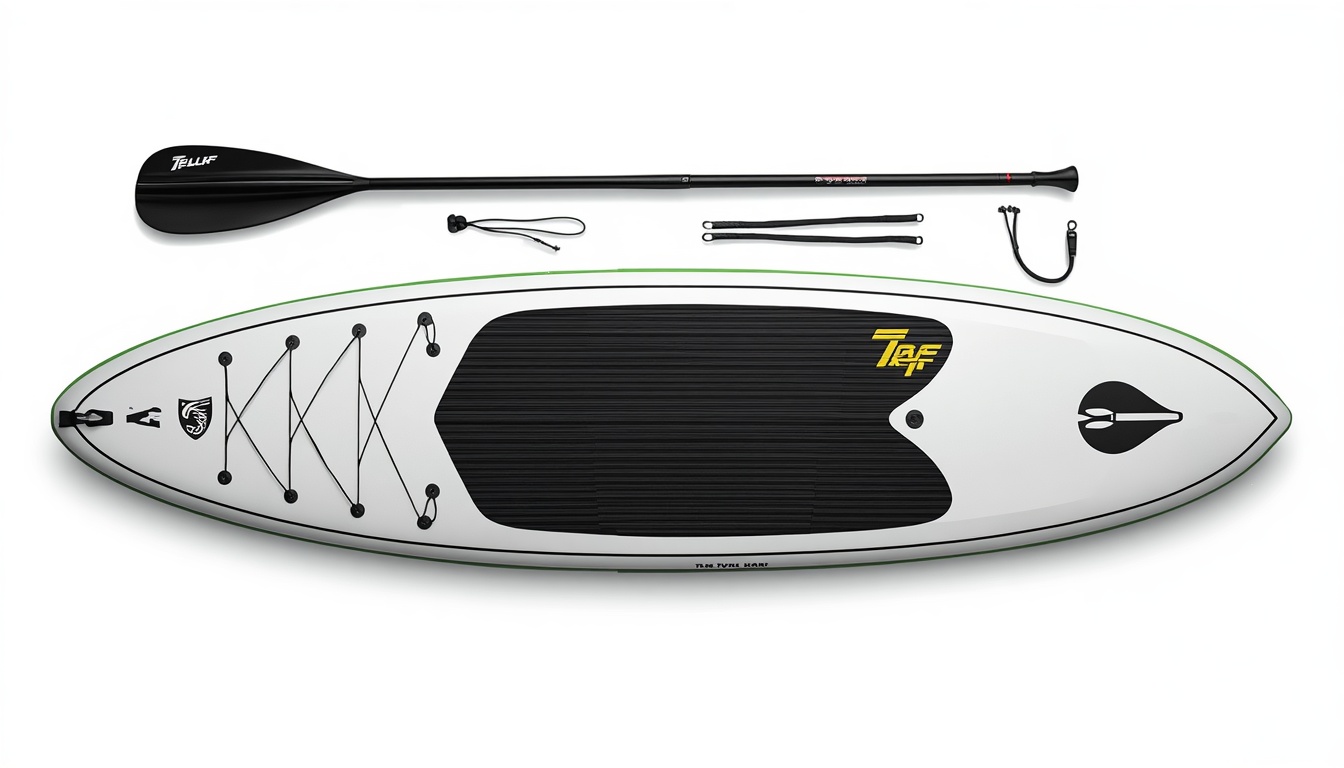
All-round SUP
This is the most common choice for beginners. Why it works:
- It’s more stable
- It’s easy to use
- It copes with different water conditions
- It suits family use
If you’re buying your first SUP, an all-round model is one of the safest bets. If your needs change later on, you can always move to a different type.
Touring SUP
Designed for paddlers who want to cover longer distances. Features:
- A longer hull
- Better tracking in a straight line
- More speed
It may look tempting at first, but beginners can find it a bit harder to balance on.
Race SUP
Built for paddlers who are after speed and performance.
- A narrower shape
- More speed
- Less stability
Not recommended as a first board. It’s better suited to more experienced paddlers.
Yoga SUP
Designed for people who want to do yoga on the water.
- A wider deck
- More stability
- A non-slip top surface
SUP yoga sessions are becoming more and more popular, especially in big cities.
Inflatable or hard SUP board?
It’s one of the questions that comes up most when you’re buying a SUP.
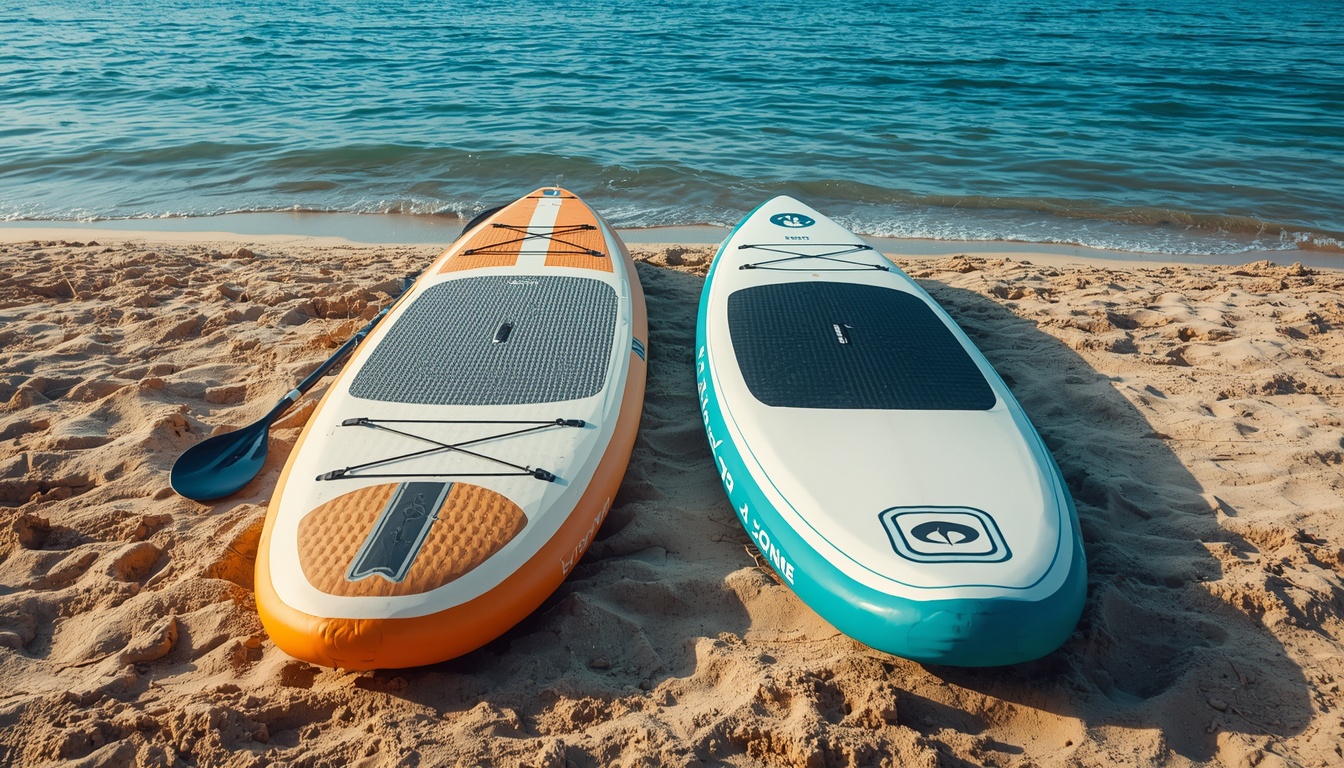
Inflatable SUP board (iSUP)
This is by far the most widely used type of SUP today.
| Pros | Cons |
|---|---|
| Easy to carry | More flex than a hard board |
| Fits easily in a car boot | Top-end performance is slightly lower |
| Takes up little space at home | — |
| Stands up well to knocks | — |
For beginners it’s one of the most sensible options.
Hard SUP board (hardboard)
Made from materials such as fibreglass, epoxy or carbon.
| Pros | Cons |
|---|---|
| Higher performance | Harder to transport |
| Better speed | Needs storage space |
| Better feel for the water | More vulnerable to knocks |
Worth considering if you’re thinking about racing or performance. Otherwise, an inflatable will be plenty for most paddlers.
What kit do you need to get started?
One of the best things about SUP is that you don’t need much kit.
1. SUP board
For beginners, these are the features to look for:
- An all-round design
- A length of 10’6″ to 11′
- A width of 32–34 inches
- Inflatable construction
Together, these make a big difference to stability and ease of use.
2. Paddle
SUP paddles are usually made from aluminium, fibreglass or carbon. To start with, an adjustable paddle with an aluminium or fibreglass shaft will do the job.
As for length, your paddle should generally be 15–20 cm taller than you.
3. Leash
A leash is the safety strap that connects your foot to the board. If you fall in, it stops the board drifting away from you. On open water especially, it’s absolutely vital for your safety. Plenty of beginners think they can do without one, but it’s actually one of the most important pieces of safety kit you can have.
4. Life jacket or buoyancy aid
Even if you can swim, wearing a life jacket is recommended. It makes you a great deal safer, particularly on open water, in windy weather and on long-distance trips.
5. Waterproof bag
Really handy for keeping things like your phone, keys and wallet safe. A small dry bag is enough for most people.
6. Pump
If you go for an inflatable board, you’ll need a pump. Most models come with one in the box, but it’s worth checking before you buy.
If you’re planning to paddle a lot, an electric pump will save you a lot of time.
SUP board prices: how much does it cost to get started?
If you want to buy your own SUP, how much you’ll need to set aside depends on the kit you choose. For entry-level paddlers, though, average costs look like this:
| Kit | Average price |
|---|---|
| Inflatable SUP set (board, paddle, pump, carry bag) | 10,000 – 25,000 TL |
| Leash (safety strap) | 500 – 1,500 TL |
| Dry bag (waterproof bag) | 300 – 1,500 TL |
| Life jacket or buoyancy aid | 1,000 – 4,000 TL |
If those figures make you wince, there’s good news. Lots of water sports centres rent boards by the hour or by the day. In fact, rather than taking on that kind of cost straight away, it may make more sense to rent or book a beginner lesson first. That way you can find out whether SUP is for you without spending as much.
With a decent entry-level inflatable SUP set and the basic safety kit, you can get into the sport for an average budget of around 12,000 – 30,000 TL.
Where can you go paddleboarding in Turkey?
With its long coastline and sheltered coves, Turkey gives you plenty of options for SUP. Beginner or seasoned paddler, you’ll find routes to match your level.
Caddebostan and Fenerbahçe (Istanbul)
If you live on Istanbul’s Asian side, Caddebostan’s seafront is without doubt one of the most popular SUP spots. You’ll see plenty of paddlers out early in the morning and again towards sunset. Thanks to the rowing clubs and water sports centres in the area, you can get some lessons quickly and join group sessions.
Büyükçekmece (Istanbul)
If you’re on the European side, Büyükçekmece is a very good alternative. With relatively calm water and a long stretch of shoreline, it works both for beginners and for training.
Akyaka and the Gulf of Gökova (Muğla)
Say SUP in Turkey and Akyaka is one of the first places that comes to mind. The still waters of the Azmak River and the one-of-a-kind views across the Gulf of Gökova make it an unforgettable experience for beginners and experienced paddlers alike.
Fethiye (Muğla)
With clear water and plenty of shelter, Ölüdeniz and the coves around it are among the best places for SUP. The sea is usually calm in the mornings, which is a big help for beginners.
Kaş (Antalya)
With its turquoise sea and striking coastline, Kaş is a favourite with SUP fans. Experienced paddlers can put together long routes along the coast.
Kekova (Antalya)
If you like the idea of paddling past a sunken city, Kekova should be near the top of your list. The calm coves around it are very well suited to SUP.
Datça (Muğla)
The Datça Peninsula has great routes for long-distance SUP trips, especially on windless days. Known for its natural beauty, it’s ideal if you’re after a peaceful paddle.
Bodrum (Muğla)
Areas such as Bitez, Ortakent and Torba are popular with paddlers, thanks to both kit rental and sheltered coves.
Çeşme and Alaçatı (Izmir)
Alaçatı is better known for wind sports, but on still mornings the conditions are very good for SUP. The coves around Çeşme are also a nice option for beginners.
Cunda Island and Ayvalık (Balıkesir)
The calm coves and clear sea around the Ayvalık Islands offer some lovely SUP routes. Sunrise paddles are particularly popular here.
What to look for when choosing where to paddle
If you’re a beginner, you need to be more careful about where you go.
- Choose calm, sheltered coves.
- Don’t go out on the water when it’s very windy.
- Stay away from areas with heavy boat traffic.
- Check the weather and sea conditions before you go.
- Don’t stray far from the shore on your first few attempts.
Sticking to spots with no waves or currents for your first few sessions will make learning SUP far more enjoyable. As you gain experience, you can start looking at more challenging routes.
Is SUP hard to learn?
Not at all. Compared with a lot of outdoor sports, SUP is one of the easier ones to pick up.
On day one, your goal shouldn’t be to stand up and cover long distances. You’re learning something from scratch. Could you run before you could walk? Think how many times a baby falls over while taking its first steps. In the same way, you’re going to fall in the first time you go out on a SUP. The fun part is that you’re landing in water.
Don’t try to paddle standing up on your first attempts. Sit on the board and paddle on your knees. You might be reading this and thinking I’m exaggerating. But you can fall in even when you’re kneeling. First:
- Paddle on your knees.
- Get a feel for your balance.
- Practise in calm water.
- Then try standing up.
Most people manage to get moving at a basic level within a few hours. Remember, everyone learns at a different pace and has a different level of fitness. A friend might be paddling comfortably within a couple of hours while you need a bit more practice. As long as you’re patient, you’ll be enjoying SUP before long.
For guides to rowing, kayaking, sailing and other water sports, have a look at our Water Sports category.