
What Is Rowing? Should You Start on an Erg or on the Water?
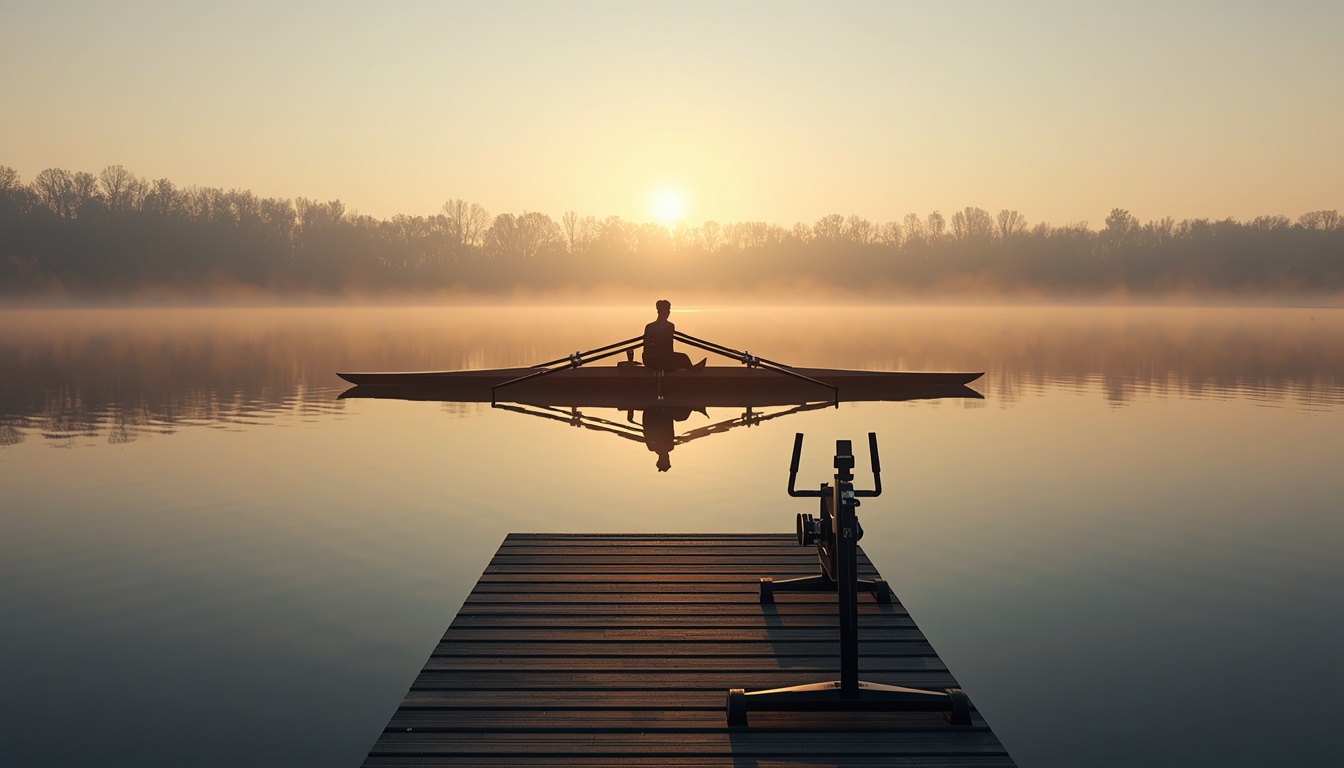
In recent years, rowing has become increasingly popular here in Türkiye. Head to the waterfront early in the morning or around sunset, and you’ll often see people out rowing.
Unfortunately, some people online dismiss the sport as “a way to fleece office workers.” I couldn’t disagree more. If a sport helps people leave their everyday stress behind, I think that’s a pretty good thing. I’d much rather see more people discover a worthwhile sport than watch another ridiculous trend take off.
But if you’re thinking about trying rowing for the first time, one question usually comes up:
“Should I go to the gym first, or learn directly on the water?” When I started looking into it, the internet only made things more confusing. Some people insisted you should practise on an erg first. Others said, “Rowing is a water sport. You don’t learn it in a gym.”
And, as with any new subject, there was a whole new vocabulary waiting for me: erg, sculling, sweep, catch… Sometimes I really do understand the appeal of “ignorance is bliss” or “stop overthinking and give it a go.” If you’re caught in the same dilemma I was, I’ll do my best to clear up a few questions.
Let’s start at the beginning.
What Is Rowing?
In its simplest form, rowing is the art of moving a boat using oars. But it isn’t quite as easy as it looks from the shore. At first glance, many people assume it’s all about arm strength. In reality, most of the power in a professionally executed rowing stroke comes from the legs.
That might surprise you. It certainly surprised me. You can easily picture the arms, back and shoulders doing the work. Finding out how important the legs are is a little less expected.
During the stroke, the legs initiate the drive. The hips and trunk transfer that power to the boat. The arms finish the movement. That makes rowing a full-body sport, working all these muscle groups together:
- Legs
- Glutes
- Back
- Abdominals
- Shoulders
- Arms
That’s exactly what makes rowing special. It’s demanding, but also incredibly satisfying. Done regularly, it brings noticeable improvements in fitness and overall physical health.
Why Has Rowing Become So Popular in Recent Years?
Social media certainly plays a part. People enjoy trying different sports these days. But that isn’t the only reason.
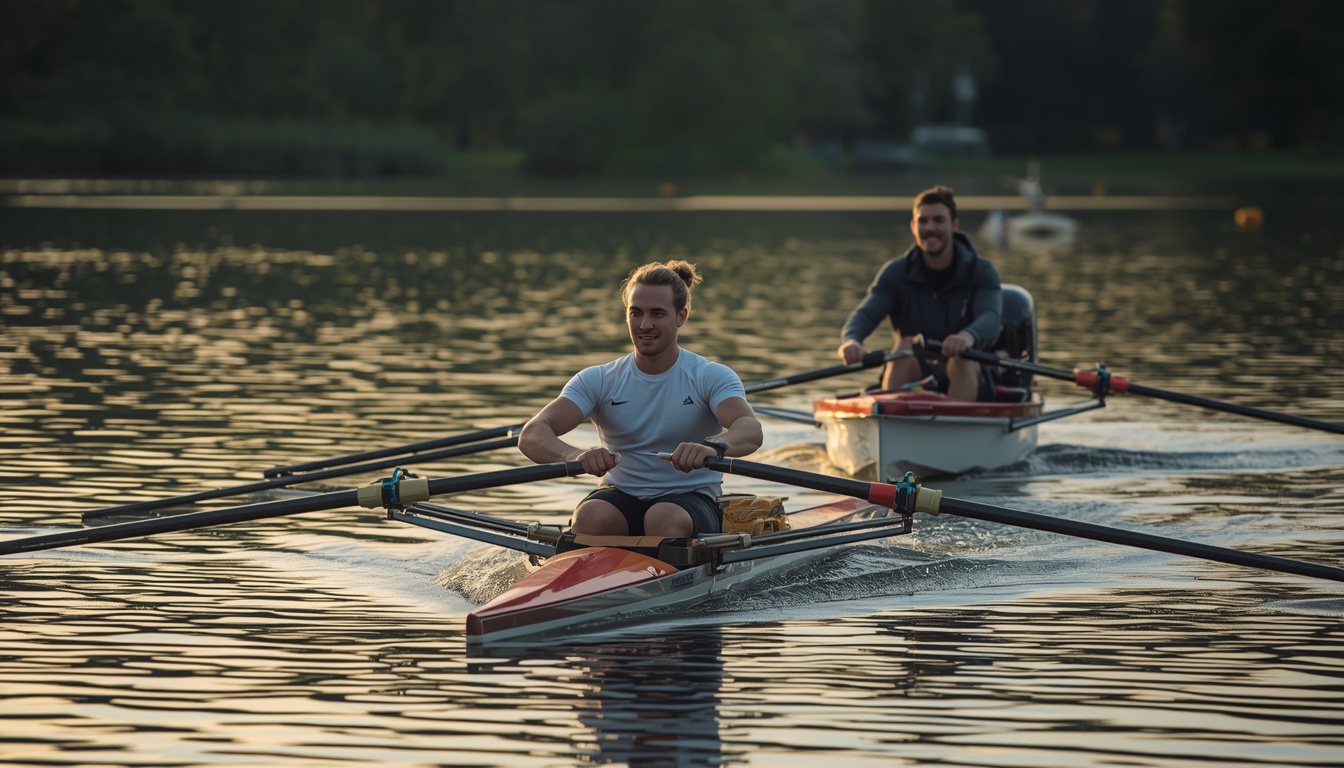
From a health perspective, rowing puts much less strain on your joints than you might expect.
When running, for example, your knees and ankles experience loads several times your body weight with each step. In rowing, that load is much more controlled. If you’re curious about how running shoes deal with those forces, take a look at our guide to stack height.
That’s why many people turn to rowing when they want to improve their fitness without putting unnecessary strain on their joints. Another reason is energy expenditure. Even a moderately paced rowing session can use more energy than you might think. You get an effective cardio workout while developing strength and endurance at the same time.
For me, though, the biggest reason is the mental side. Rowing on the water feels almost like meditation for many people. No phone. No notification sounds. No city noise. Just the sound of the water and the rhythm of the oars…
After a while, the sound of the blades entering and leaving the water becomes so familiar that the clutter in your head slowly gives way to quiet. I think that’s the part of rowing that keeps you coming back.
So, What Is an Erg?
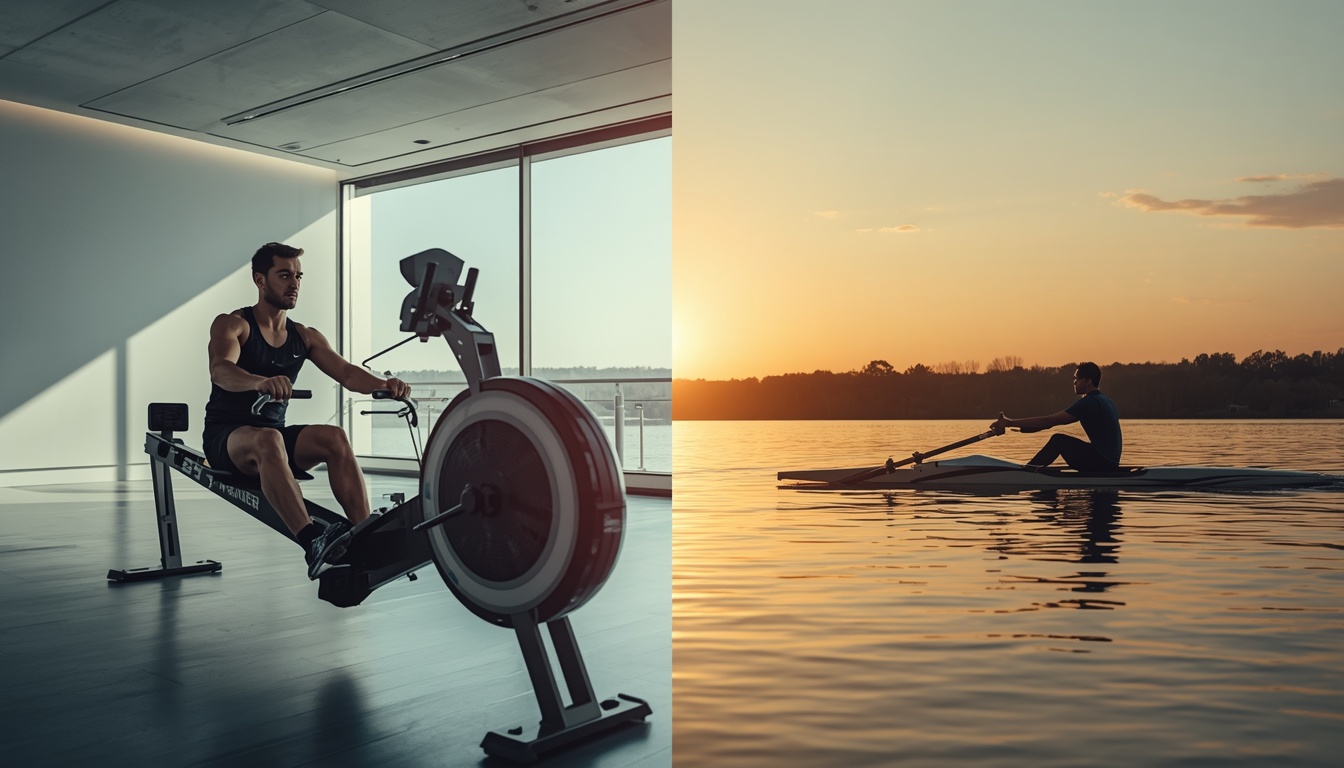
“Erg” is short for rowing ergometer. In other words, the rowing machines you see in gyms.
They certainly aren’t identical to a real boat. But they’re designed to reproduce the rowing movement as realistically as possible.
Even professional rowers do a significant share of their training on an erg during winter or when the weather keeps them off the water.
Advantages of the Erg
An erg makes things considerably easier for a beginner. Its biggest advantage comes down to balance.
The first time you get into a boat, finding your balance can be tricky. That doesn’t mean you’re definitely going to fall in. But feeling as though you might take an unplanned swim at any moment is perfectly normal for those first few minutes. Don’t worry: that feeling largely fades after a few sessions.
On an erg, you can focus entirely on your technique. You can also:
- Train without worrying about the weather.
- Work out at a time that suits you.
- Track distance and pace.
- Monitor your heart rate.
- Build your fitness consistently.
If you want to develop a strong physical foundation, an erg is a very useful tool.
Disadvantages of the Erg
As effective as an erg is for training, it can’t completely replace the water. There are several skills you need to learn in a boat:
- Keeping the boat balanced
- Staying on the right course
- Coordinating the oars
- Getting a feel for wind and waves
An erg can’t teach you those things. Training only on the machine won’t make you a good rower on the water.
Does It Make Sense to Start Directly on the Water?
I’d say absolutely. Most clubs design their beginner programmes with exactly that in mind.
They won’t send you out alone in a racing shell on your first lesson. Training usually starts in more stable boats.
Before heading out, you learn the basic theory. Then you start rowing under an instructor’s supervision. Your seating position, grip and stroke technique are checked throughout, and mistakes are corrected as they happen.
Struggling on the first day is completely normal. None of us is born knowing how to row. If you find yourself thinking, “I’m never going to manage this,” during your first lesson, you certainly won’t be the first. After a few lessons, even you might be surprised by how much progress you’ve made.
Which Should You Start With, Then?
There isn’t one right answer. It depends entirely on your goal. If improving your fitness is your main priority, you can start on an erg. That doesn’t mean your first time on the water will be effortless, though.
Personally, I’d go straight to a club and take lessons. But I think the most effective approach is to combine the two: water sessions at the weekend and erg training at the gym during the week. That way, both your technique and fitness will develop much faster.
Do You Need to Be Strong to Start Rowing?
This is another common question. No, you don’t need to be strong to get started. Seeing the impressive back muscles of professional rowers might make you think, “I’m nowhere near that level.” Don’t let that put you off. Nobody expects you to produce huge amounts of power as a beginner. Your first goal should be learning the right technique. Strength, endurance and fitness will develop over time as you train.
Who Is Rowing Suitable For?
In my view, rowing is suitable for almost everyone. If any of these sound familiar, it’s worth giving it a chance:
- You’re getting a little bored with running…
- You want a cardio workout without putting too much strain on your knees…
- You want to burn calories and build strength at the same time…
- You’re looking for a new hobby or a way to meet people…
- You enjoy spending time outdoors…
How Would I Start Rowing?
If I were starting today, I’d sign up for a beginner course at a club without much hesitation.
On Istanbul’s Asian side, there are plenty of established and newer rowing clubs between Kalamış and Maltepe. I’m sure there are options around Tuzla too.
Finding an available place can be a little harder in summer, but there really is plenty of choice. Prices aren’t as high as people often imagine, either. Membership packages offered after the introductory course can make the cost even more manageable. If I wanted to build fitness faster, I’d add erg sessions at the gym during the week. Honestly, though, my priority would be spending time on the water.
Final Thoughts: Your First Step into Rowing
It’s great to see rowing reaching more people in Türkiye. If it’s been on your mind for a while, I have just one piece of advice:
Don’t wait for the perfect time to start.
Start on an erg or head straight onto the water. What matters is taking that first step. If you have the opportunity, the ideal approach is to support your water sessions with erg training. That way, you can develop your technique and improve your fitness much faster.
Trust me: when your boat starts gliding quietly across the water and you truly feel the rhythm of the oars for the first time, one thought will cross your mind: “Why didn’t I try this sooner?”
Not sure whether rowing or another sport is right for you? Our Find Your Sport quiz uses 7 questions to suggest sports that match your preferences and show you where to get started in your province in Türkiye.
On days when you’ll be spending a long time on the water, choosing the right clothing layers can also make a real difference to your comfort. For guides to SUP, canoeing, sailing and other activities, explore our Water Sports category.