
How to choose trekking trousers: a guide to fabric, water repellency and stretch
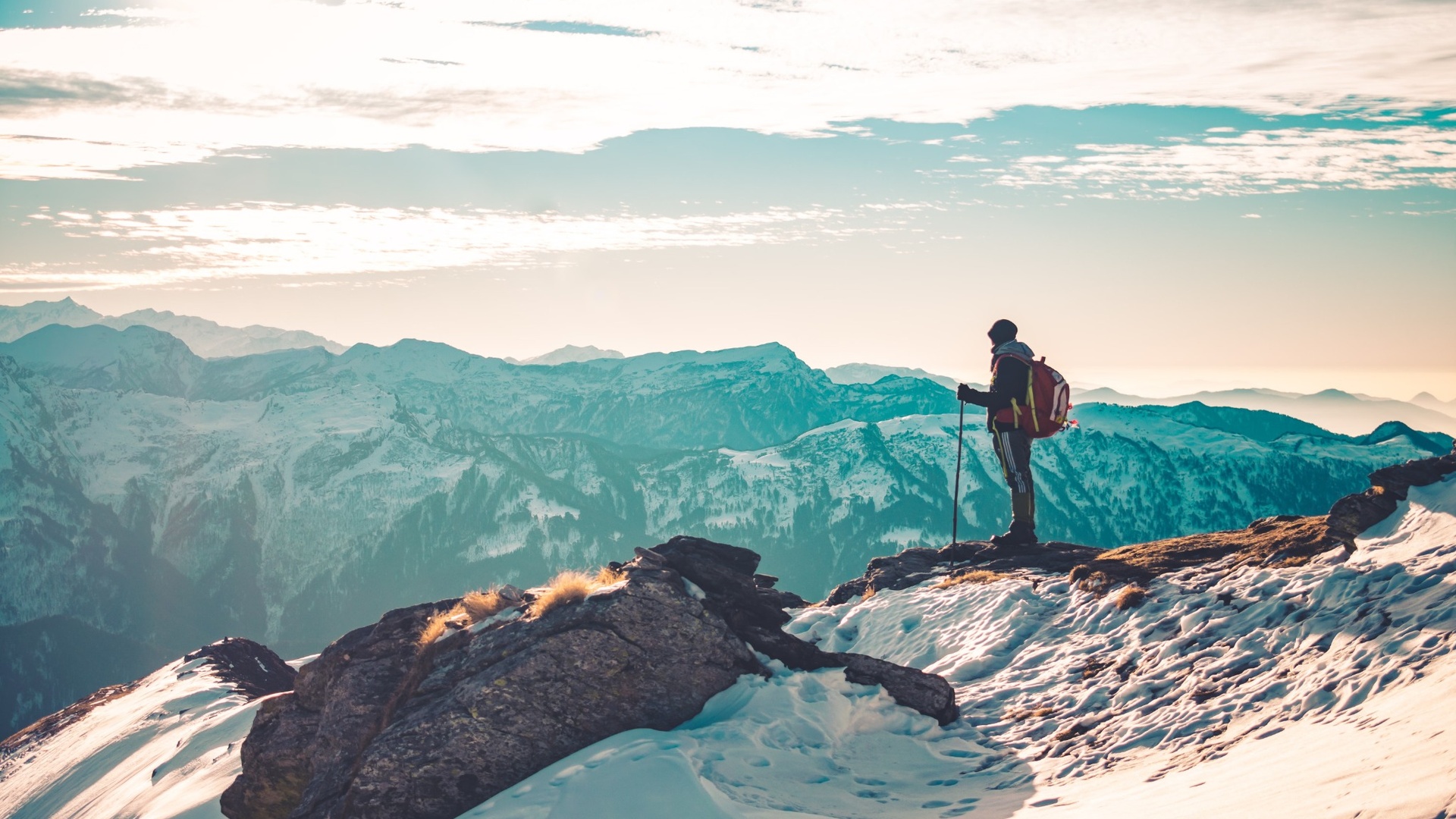
When we’re getting our kit together for trekking, most of us spend ages looking at shoes, jackets and even backpacks. When I started trekking, the first thing I researched was trekking shoes; sadly, I didn’t give much thought to choosing trekking trousers. They were on my list, but I was in “we’ll sort something out” mode. People heading out on their first walk often think the same way: “I’ll just manage in tracksuit bottoms or an everyday pair of trousers.”
That approach can work on short, easy trails. But as the distances get longer, the weather changes and the terrain gets a bit tougher, you start to realise how much your trousers matter. Trekking means constant ups and downs, big strides, crouching when you need to, and sometimes pushing through scrub. And you’re doing all of that for hours in the same pair of trousers, sometimes with rain, mud, wind and sweat thrown in.
When you’re browsing trekking trousers, some designs and colours might catch your eye. But the real job of a good pair isn’t so much to “look outdoorsy” as to not restrict your movement, to dry quickly and to give you enough protection in whatever weather you might run into. So what exactly should you look for when you’re choosing trekking trousers?
How are trekking trousers different from ordinary trousers?
The basic difference comes down to the movements the trousers were designed around. Think of an everyday pair: the trousers you wear around town have a very simple job. You don’t lift your knees very high when you walk, you don’t need to take big strides all the time, and you usually only crouch down and get up again when you drop something or tie your shoelaces.
On a trek, though, we pull our knees up higher than usual when climbing onto rocks, we may need to take a wider stance on a steep descent, and the fabric is stretched again and again as we step over obstacles. That’s why trekking trousers usually come with features like these:
- stretchier fabrics,
- quick-drying synthetic fibres,
- cuts that make it easier to move,
- reinforced areas,
- practical pockets,
- a water-repellent finish on some models.
The idea isn’t to have every feature in one pair of trousers. Depending on where you’re going and the season, some features matter more than others, so looking for the pair that suits your own route, rather than “the most fully featured model”, is a much better approach.
Which fabric is best for trekking trousers?
Look at the product details for trekking trousers, or take a quick glance at the label, and you’ll usually come across materials like polyester, nylon and elastane. Unfortunately, there’s no single “best fabric”, which is why most trekking trousers are made from blends that combine more than one fibre.
| Fabric | Strengths | Weaknesses | Best suited to |
|---|---|---|---|
| Polyester | Dries quickly, lightweight | Not as abrasion-resistant as nylon | Hot weather, sweaty walks |
| Nylon | Highly durable | Can be heavier at the same thickness | Scrub, rocky ground, rough terrain |
| Elastane | Stretch and freedom of movement | Doesn’t provide durability on its own | Steep climbs, high steps, crouching |
| Cotton | Everyday comfort | Holds water, dries slowly, gets heavy | Short trails with a predictable forecast |
Polyester
Polyester is definitely one of the materials you’ll come across most often in the world of outdoor clothing. Its biggest advantage for trekking is that it doesn’t hold as much water as cotton and dries relatively quickly. Drying quickly matters more out on the trail than you might think: it’s a real advantage, especially in hot weather or on walks that make you sweat. You’ll often see polyester-based fabrics in lightweight models.
Nylon
Nylon might not sound particularly appealing, but it’s a very common material in trekking trousers and usually turns up in models where durability matters. If we’re pushing through scrub, scraping against rocks or walking on rougher terrain, the durability of the fabric comes to the fore. Another important point here is the thickness of the fabric, the weave, and the type and proportion of the other materials used; all of these affect how durable the trousers are.
Elastane
Elastane matters a lot in trekking trousers, because it’s the fibre that gives them their stretch. When you’re taking high steps, crouching or walking up steep slopes, fabric that moves with you makes things much more comfortable; just think how uncomfortable a fabric with no stretch would be while you’re on the move. One small distinction, though: more elastane doesn’t automatically mean better. A very stretchy pair of trousers isn’t always more durable or better.
Are cotton trousers OK for trekking?
If your walk is short and you’re heading out on a day when the weather’s predictable, you can go for cotton trousers. But if you’re planning long trekking routes, cotton shouldn’t be your first choice.
The reasoning is very simple: once cotton gets wet, it holds on to the water for a long time and dries slowly. Don’t just think of rain here; the same goes for when you sweat. On top of that, because it holds the moisture, whatever you’re wearing gets heavier. In hot weather that’s uncomfortable, but the real danger comes when the temperature drops, because walking in wet clothes is not only uncomfortable but can also make you ill. There’s a reason quick-drying synthetic fabrics are so widely used in trekking clothing.
Can you go trekking in jeans?
It’s not an option worth choosing, but we’ll cover it anyway: yes, to some extent you can, but I wouldn’t recommend it. Jeans are especially unsuitable for long routes. They can be pretty tough in everyday life, but they have some clear drawbacks for trekking. For a start, they’re not as comfortable to move in as trekking trousers, and you’ll feel that straight away on big strides or steep climbs.
Denim gets heavy when it soaks up water and takes a long time to dry. Wearing jeans on a short trail near the city isn’t the end of the world, but if you’re planning a full-day or multi-day trek, a proper pair of trekking trousers will make the walk far more comfortable.
Do trekking trousers need to be waterproof?
This is something people often get mixed up about: trekking trousers don’t have to be waterproof. In fact, in most situations, waterproof trousers may be more than you need. The more waterproof a product is, the more its breathability and everyday comfort can suffer; if you’re walking in hot weather in particular, the sweat that builds up inside will bother you. That’s why many trekking trousers go for a water-repellent finish instead, which is a more balanced solution.
Water-repellent and waterproof aren’t the same thing
When you hear “water-repellent finish”, don’t picture a product that keeps water out completely. Water-repellent trousers slow down how quickly light rain or wet vegetation soaks into the fabric, but if you’re caught in heavy rain for a long time, the water will get through. Fully waterproof trousers use a different construction that stops water passing through the fabric, and they make sense in prolonged rain, very bad weather or tougher outdoor conditions.
For day treks, though, most people only need quick-drying trousers with a light water-repellent finish. If heavy rain is forecast for a long stretch, rather than switching to a different pair of trousers altogether, it can make much more sense to pack a lightweight pair of rain trousers in your backpack as well.
What is DWR?
Once you start getting into trekking and outdoor sports, you’re almost bound to come across the term DWR. DWR is a water-repellent treatment applied to the surface of a fabric; thanks to it, water droplets bead up on the surface and roll off instead of soaking straight into the fabric. But it doesn’t make your trousers fully waterproof. Some people think DWR makes things completely waterproof; if you think so too, I’m afraid you’re wrong. What’s more, a DWR coating weakens over time with use and washing, so it needs renewing every so often.
So when you see DWR in a product description, don’t read it as “I can walk in the rain for hours in these trousers”. Think of it more as extra protection against light rain, dew or wet vegetation.
Why does stretch matter so much?
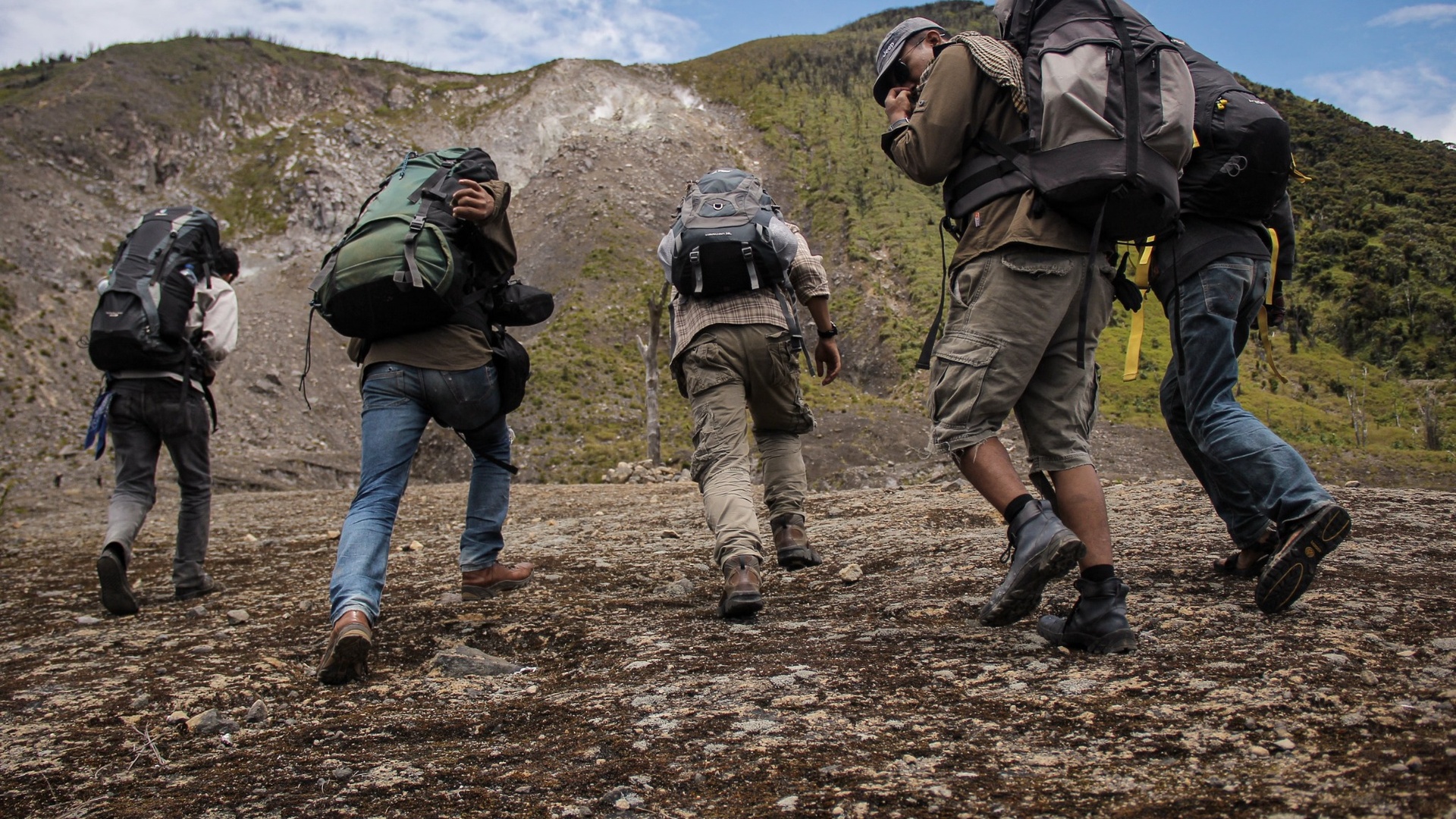
When you try on trekking trousers in a shop, don’t just stand in front of the mirror. Crouch down a little, lift your knee up and move as if you’re taking big strides, because that’s what you’ll be doing, and more, once you’re wearing them outdoors. It’s especially important that the fabric doesn’t pull too tight around the hips and knees.
Some trekking trousers have anatomically shaped knees, or a different cut in the crotch to give you more freedom of movement. These may look like small details, but you’ll notice them on walks that go on for hours. You don’t want your trousers tugging at you with every step; it’s little things like that which can spoil your enjoyment of being out in nature.
What should summer trekking trousers be like?
In summer, priorities change and these four things move to the top of the list:
- lightweight fabric,
- quick drying,
- good breathability,
- enough stretch.
Thick, windproof trousers are pretty uncomfortable in hot weather. Shorts might look cooler, especially if you’re walking across open ground, but long trousers have some clear advantages: they give you extra protection from the sun, insects and scrub. That’s why thin, lightweight trekking trousers are very handy in the summer months.
How should you choose trekking trousers for autumn?
Autumn is a bit more complicated: mornings can be cool, it can warm up around midday, and rain can roll in a few hours later. So rather than focusing on a single feature, you’ll be better off choosing a more balanced pair for autumn. A medium-weight pair that dries quickly and has light water repellency makes sense for most autumn walks; as it gets colder, wind protection becomes more and more important too.
If you’re heading up high-altitude routes in late September, October or November in particular, don’t choose your clothes based on the temperature in the city, because the weather in the mountains can be very different. In our guide to autumn trekking in Turkey, we went into detail about where you can go at this time of year and what conditions to be ready for.
What should winter trekking trousers be like?
In winter, as you might guess, the priority shifts to warmth and protection from the weather. This is where softshell trousers often come in; they’re usually wind-resistant, thicker and stretchy. But buying the thickest pair isn’t always the right answer either, because we generate a serious amount of heat when we walk. Inevitably, that body heat makes us sweat, and moisture can build up inside the trousers.
When you’re choosing trousers for cold weather, you need to think about your walking pace, the temperature and the altitude together. In very cold conditions, adding a thin thermal layer under your trousers can be a more flexible solution than relying on one very thick pair. On winter walks, keeping an eye on the weather is at least as important as what you wear; in our trekking safety guide we looked separately at following the forecast and preparing for emergencies.
Are zip-off trekking trousers worth it?
Some people never choose zip-off trekking trousers, while for others they’re a favourite. These models, which unzip to turn into shorts, have been around for a long time, and I’d say they’re a handy option, especially on routes that start cool in the morning and warm up towards midday. You get both long and short trousers from a single pair.
On the other hand, the zip around the knee can bother some people when they walk, and these models can be a bit heavier than standard trekking trousers. It really comes down to how you like to use them: they’re very practical on long routes with big temperature swings, but not essential on short day walks. If you can’t decide, you could buy a pair and try them out; just don’t go for a very expensive model the first time, so you can find out cheaply whether they really suit you.
Don’t get hung up on the number of pockets
With outdoor trousers, the number of pockets is sometimes used as a marketing weapon: brands try to win you over with lines like “this product has 8 pockets”. But lots of pockets don’t make a pair of trousers good; what matters is that the pockets don’t get in your way when you move. If the pocket you keep your phone in slaps against your leg with every step, it’s not much of an advantage.
At the very least, one or two secure zip pockets can be handy for carrying your phone, car keys or other small items. On long treks most of your gear will be in your backpack anyway, so there’s no need to expect too much from your trouser pockets.
Check the hems too
The bottom of your trousers can matter more than you think. Very wide legs might feel comfortable at first, but they can catch on bushes as you walk or bunch up too much over your shoes. Some trekking trousers have elastic, press studs or zips to narrow the hem.
If you’re wearing them with trekking boots in particular, it’s worth checking how the hem sits over your boots. Check the length in the shop too, and not in ordinary trainers: if possible, do it in the shoes and hiking socks you’ll be wearing on the trail, because a thick sock can change how both the shoe and the hem sit.
Should trekking trousers be tight-fitting?
The short answer is no, but they don’t need to be very baggy either. The best option is usually a cut that follows the shape of your body without restricting your movement: very baggy trousers catch more easily on bushes and rocks, while very tight ones hold you back when you take high steps.
If you’re buying online in particular, don’t just look at the waist size; checking the fit around the hips and legs is at least as important as the waist. Even if the waist fits the way you want, the hips and legs can let you down. Sizing can also vary a lot between models from outdoor brands, even in the same size, so don’t assume “I’m an L in brand X, so I’ll be an L in brand Y too”.
What should you choose for your first pair of trekking trousers?
If you’re buying trekking trousers for the first time, you may not need a very technical pair. For most people, this combination will be plenty to start with:
- lightweight or medium-weight fabric,
- mainly polyester or nylon,
- some elastane,
- quick drying,
- light water repellency,
- a comfortable cut,
- at least one zip pocket.
You can happily wear a pair like this through spring, summer and much of the autumn. After that, as you do more routes, your needs will start to become clearer anyway: if you’re mostly doing winter trekking, you might move towards a warmer, more wind-resistant pair, and if you walk in hot regions, towards a thinner one.
In short: what should you look for in trekking trousers?
When you’re buying, lots of technologies might tempt you, and they’re bound to push up the price of the trousers. Yet it’s far more important that the trousers suit the weather you’ll be walking in, dry quickly and don’t restrict your movement. For most day treks you don’t need fully waterproof trousers; a lightly water-repellent, quick-drying, stretchy pair will be much more useful.
And don’t buy them after only trying them on standing still: lift your knee, crouch down and take a few big strides. You’ll find out whether trekking trousers are comfortable not in front of the mirror, but once you start moving. If you’re buying your first pair, don’t overcomplicate things; the right fabric, enough stretch and quick drying will usually do more for you than dozens of technical features. You can find our other walking guides in our Trekking category.