
What is DWR and how do you restore it?

I first spotted a bottle of DWR spray at Decathlon. I picked it up, skimmed the label and put it right back on the shelf. At the time, I didn’t give it much thought.
Then there’s that moment on a rainy walk when you notice droplets rolling right off someone else’s jacket while yours is steadily soaking up water. A damp jacket gets uncomfortable fast. DWR is what helps those drops bead up and roll away.
If you’ve shopped for outdoor clothing, you’ve probably come across DWR already. It turns up on everything from hiking shoes and running jackets to ski jackets and technical trousers.
What does DWR mean?
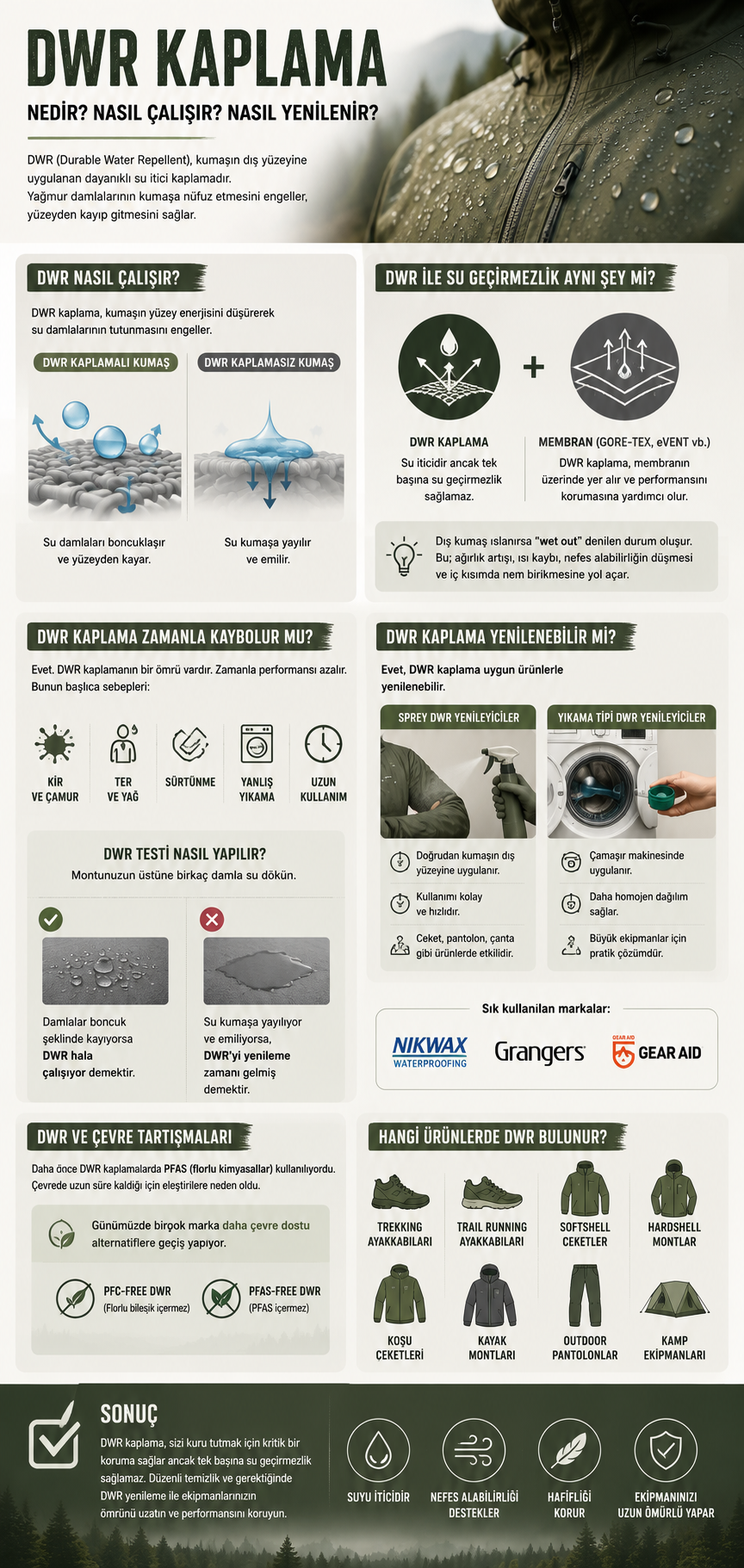
DWR stands for durable water repellent. It’s a finish applied to the outside of a fabric to slow down water absorption. Rain forms beads on the surface and rolls off more easily.
How does DWR work?
Many untreated fabrics start absorbing water when they get wet. A DWR finish lowers the surface energy of the fabric, making it harder for water droplets to spread and cling to it. They tend to stay in beads and roll off instead. That’s handy when you’re out running or hiking in the rain.
Does DWR make a jacket waterproof?
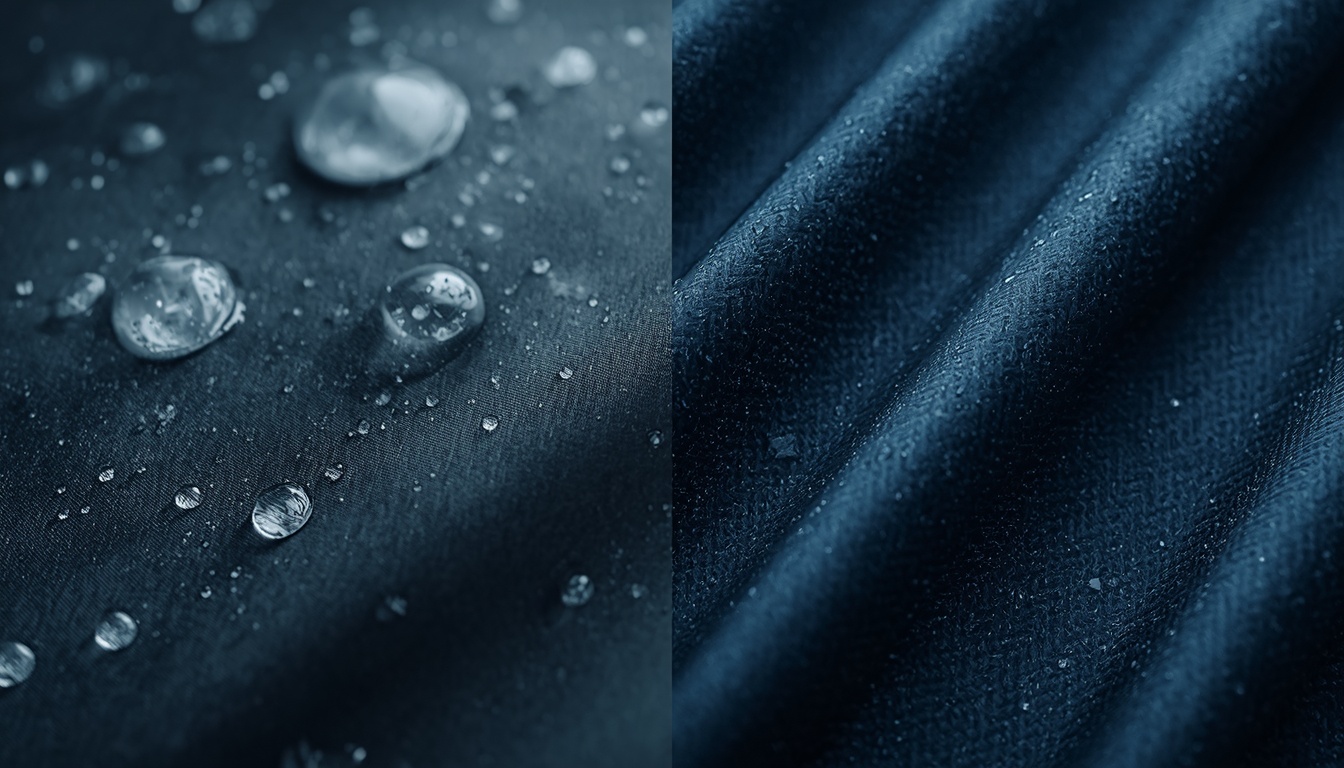
DWR helps the outer fabric shed water. In a waterproof jacket, a membrane or waterproof coating does the job of keeping water from passing through. Many jackets made with waterproof systems from brands like Gore-Tex, eVent and Pertex also have DWR on the outer fabric. The two work together. For more on jackets, see our Gore-Tex and softshell comparison.
Why does DWR matter?
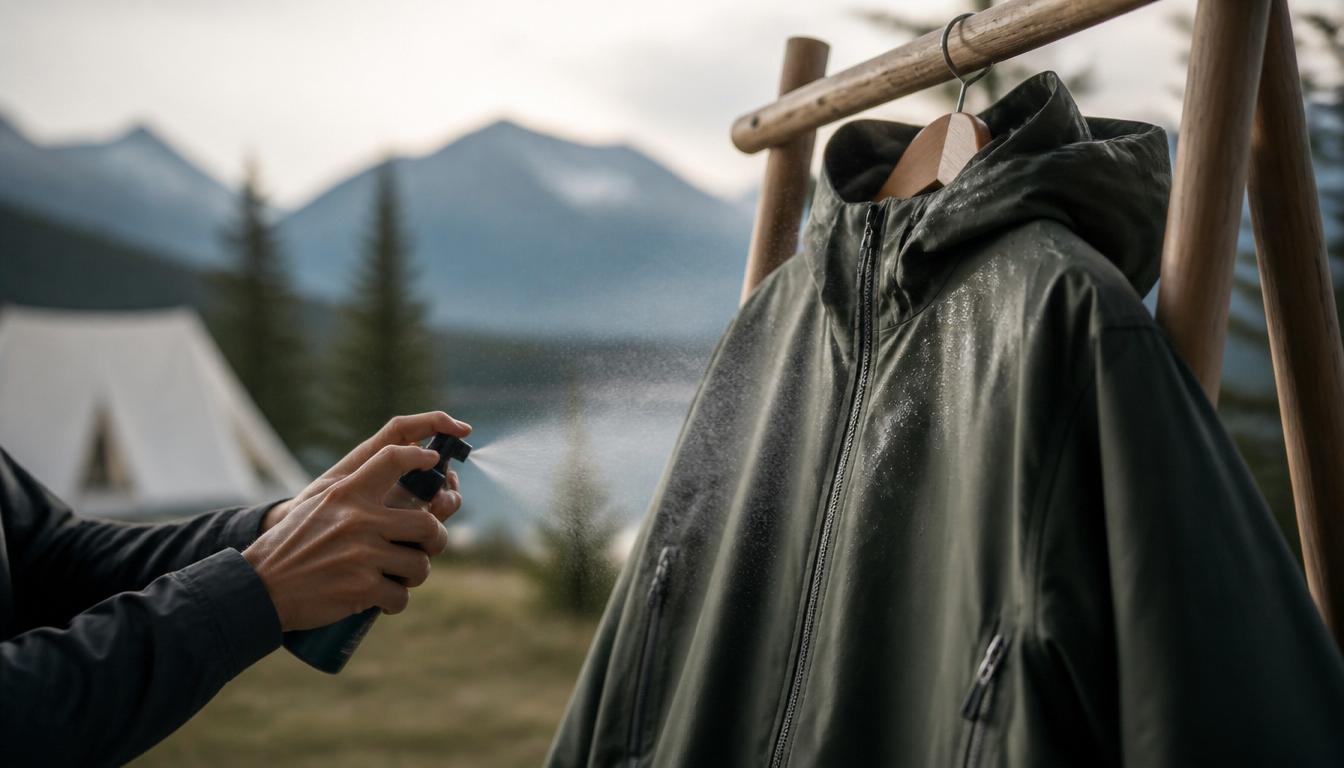
It’s easy to see Gore-Tex on the label and assume the jacket has the rain covered. But when the outer fabric gets saturated, it can wet out. Even with a waterproof membrane underneath, the jacket can feel heavier and colder. Breathability can drop, and moisture can build up on the inside.
A working DWR finish delays wet-out, so the jacket stays comfortable for longer.
Does DWR wear off?
Yes. The finish loses some of its effectiveness over time. Here’s what can speed that up.
- Dirt
- Mud
- Sweat
- Friction
- Improper washing
- Extended use
Look at the shoulders first. The spots where your backpack straps rub can wear faster than the rest of the jacket. If the fabric starts soaking up water sooner than it used to, the finish may be losing its effectiveness.
There’s a quick test you can do at home. Put a few drops of water on the jacket. If they bead up and roll off, the DWR is still doing its job. If they spread out and soak in, it’s time to restore the finish.
Can you restore a DWR finish?
Yes. Plenty of outdoor gear care brands make products for the job. You’ll usually see two options.
Spray-on DWR treatments
Apply the spray directly to the outside of the fabric. It’s quick and easy to use, and it can work well on jackets and similar garments.
Wash-in DWR treatments
Wash-in treatments go in the washing machine. They can distribute the finish more evenly and be practical for larger items. Common brands include Nikwax, Grangers and Gear Aid.
DWR and the environment
Some older DWR finishes used fluorinated chemicals from a group called PFAS. They worked well at repelling water, but drew criticism because they can persist in the environment for a long time. In recent years, many outdoor brands have been switching to finishes labelled:
- PFC-free DWR
- PFAS-free DWR
What does PFAS-free mean for outdoor gear?
What gear uses DWR?
Rain jackets are an obvious example, but you’ll also find DWR on:
- Hiking shoes
- Trail running shoes
- Softshell jackets
- Hardshell jackets
- Running jackets
- Ski jackets
- Outdoor trousers
- Camping gear
If you’re deciding between a softshell and a hardshell, our guide to the three-layer clothing system explains where each fits.
The takeaway
A DWR finish slows down how quickly the outer fabric absorbs water, helping you stay drier for longer. If you hike, run, camp or go mountaineering, take a look at the gear you already use. Chances are, you’ll find DWR on more than your rain jacket.
If you want to get years out of a jacket or pair of shoes, clean them regularly and restore the finish when water stops beading.
For more on technical fabrics, jackets and outdoor gear care, browse our outdoor clothing guides.