
How Much Does Fleece Thickness Affect Warmth?
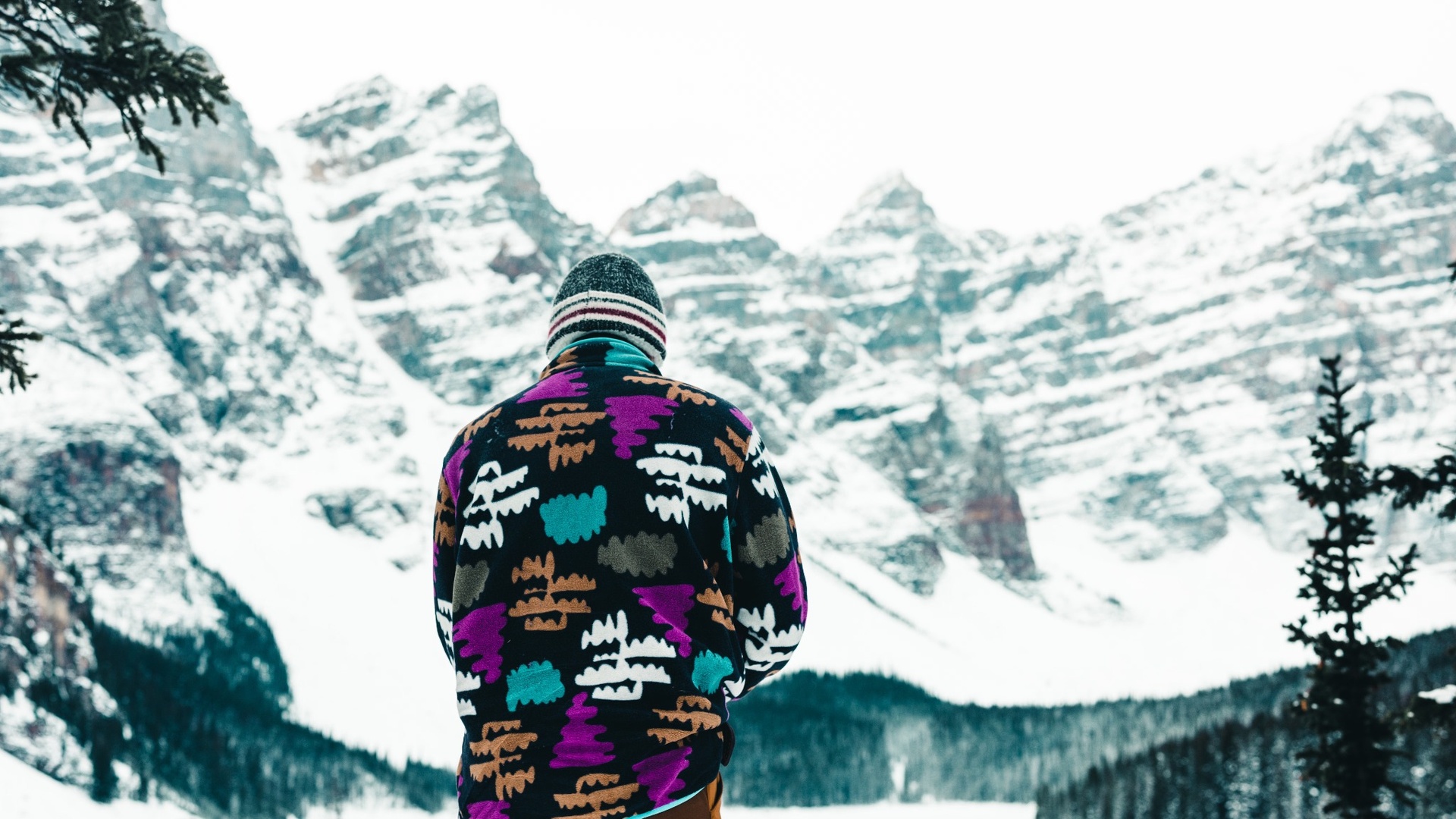
When you’re shopping for a fleece for cold weather, it’s tempting to reach for the thickest one. Fair enough: more fabric, more warmth. But things can change once you start heading uphill. If you’re already unzipping it at the start of your walk, that thickness might be more than you need.
Thickness matters, especially when you’re comparing similar fabrics. Pick up two fleeces with different constructions, though—one tightly knitted, the other with a long, fluffy pile—and working out which will keep you warmer gets harder. Add wind and movement, and the choice you made in the shop may feel quite different outdoors.
What actually keeps you warm inside a fleece?
Fleece traps air between its fibres. That layer of air slows heat transfer from your body to your surroundings. The fabric doesn’t generate heat; it helps you hold on to the heat you produce. That’s why fabric weight is only part of the picture. Loft—the volume created by those raised fibres—matters too. A light, lofty fleece can provide good insulation. A fabric that feels heavier in your hand won’t necessarily keep you warmer.
What does “200 grams” on the label mean?
First, check the unit next to the number. 200 g/m² means one square metre of the fabric weighs 200 grams. It doesn’t tell you the total weight of the finished fleece. Garment weight is a separate figure. The hood, zip, pockets, size and cut all affect it. Two fleeces made from the same fabric can weigh different amounts simply because one has a longer cut or more pockets.
| What the label says | What it means |
|---|---|
| 200 g/m² | The weight of one square metre of fabric |
| 400 g garment weight | The total weight of the finished garment, including all its components |
| 100 / 200 / 300 series | A manufacturer’s fabric classification; check the description |
Be particularly careful about reading series names as exact fabric weights. Polartec has 100, 200 and 300 series fabrics, but similar numbers across different brands don’t guarantee the same fabric or the same level of warmth. Insulation doesn’t necessarily increase in direct proportion to fabric weight, either. A 300 g/m² fleece isn’t automatically twice as warm as a 150 g/m² one.
Why does fabric construction make a difference?
The difference between a long-pile fleece and one with a grid-patterned inner surface goes beyond looks. Fluffy, long-pile fabrics aim to create more air-trapping volume without adding much weight. Polartec High Loft is one example. A fabric like this can provide good insulation while still feeling light in your hand. Of course, not every fluffy fleece performs the same way; the yarn and overall construction matter too.
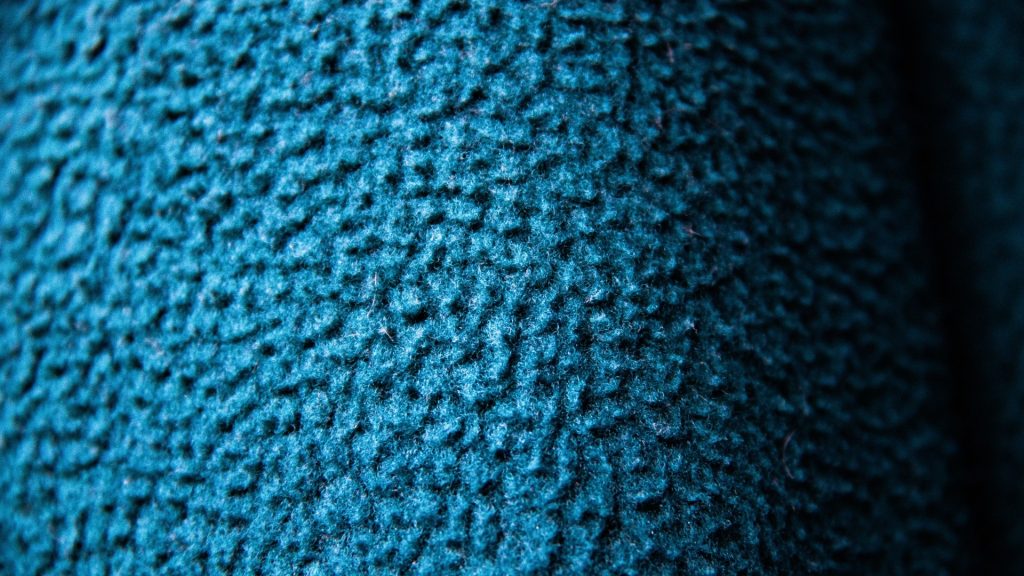
Fabrics with a grid-patterned inner surface and channels between the raised sections leave more room for air and moisture to move through. The raised areas contribute to insulation, while the gaps help excess heat escape. That can be useful on a brisk walk or an uphill stretch. Choosing a fleece starts to become a matter of finding the right construction for what you do. One that feels comfortable while you’re moving may not be enough on its own when you stop for a break.
Does a thick fleece block the wind?
Not always. In fact, this is a familiar fleece disappointment: something that felt wonderfully warm when you left home doesn’t offer the same protection out in the open. The air permeability of a conventional fleece makes it easier to release excess heat while walking. When the wind picks up, though, air moving through the fabric can increase heat loss. Thickness alone won’t solve that.
Some models use a tighter knit or a dedicated protective layer to improve wind resistance. If that’s a feature you need, look for it in the product description. “Thick fleece” isn’t enough to go on. On a windy trail, adding a suitable wind shell over your existing fleece may be more useful than buying a thicker one. If it’s raining, your outer layer needs rain protection too.
Heading uphill and sitting in a camp chair call for different things
A fleece that feels a little cool at the start of a walk can feel just right ten minutes later. You’re producing more heat as you move. But if you dress too warmly, get sweaty and then stop, you may start feeling cold in those damp clothes. Choosing your fleece for the coldest moment of the day and trying to keep it on for the entire walk won’t always be comfortable. You may need to open the zip, take a layer off or add one during a break.
These distinctions can help when choosing:
| What will you be doing? | What kind of fleece could work? |
|---|---|
| Brisk walking with plenty of uphill sections in cool weather | A thin model that allows air and moisture to pass through easily |
| Gentle walks and everyday wear | A medium-thickness model |
| Sitting around camp for long periods in cool weather | A thicker or loftier model with greater insulation |
| Walking on an exposed, windy trail | A suitable fleece paired with a wind-blocking outer layer |
These are starting points. How easily you feel the cold, your other clothing and the weather can all change what works for you.
So, what temperature can you wear it in?
“Will this fleece be enough at 5°C?” isn’t a question fabric weight alone can answer. At the same air temperature, one person might be climbing a hill while another stops to enjoy the view. One may be wearing a wind shell over their fleece; the other may have only a T-shirt underneath. That’s why assigning a fixed temperature to a “200-weight” or “300-weight” fleece isn’t a reliable general rule. If a manufacturer gives a temperature recommendation, check what activity and clothing layers it assumes.
Your own experience can tell you more. Do you regularly overheat while walking in your current fleece? Or does the problem only start when you stop? For the first, a thinner model or venting heat earlier might help. For the second, an extra layer to put on during breaks may make more sense.
Try it on with your jacket before buying
A fleece can feel comfortable on its own. But if your shoulders feel restricted, your arms are harder to move or the fabric gets squeezed flat under the jacket you’ll actually wear, the combination may not work for you. Reach forwards and lift your arms overhead. Does the hem ride above your waist? Does the collar bother you? Are the cuffs too loose? Check how easy the full-length zip is to use, too; you may find yourself reaching for it often to adjust your temperature while walking.
If you’ll mostly wear it hiking, you don’t have to choose the fleece that feels warmest while you’re standing still in a shop. If it’s for evenings at camp, don’t give up the insulation you need just to save a little space in your bag. Before checking the label, think about how you’ll spend most of your time wearing it.