
How Long Does It Take to Run 5 km? Tables with 10 km and Walking Times
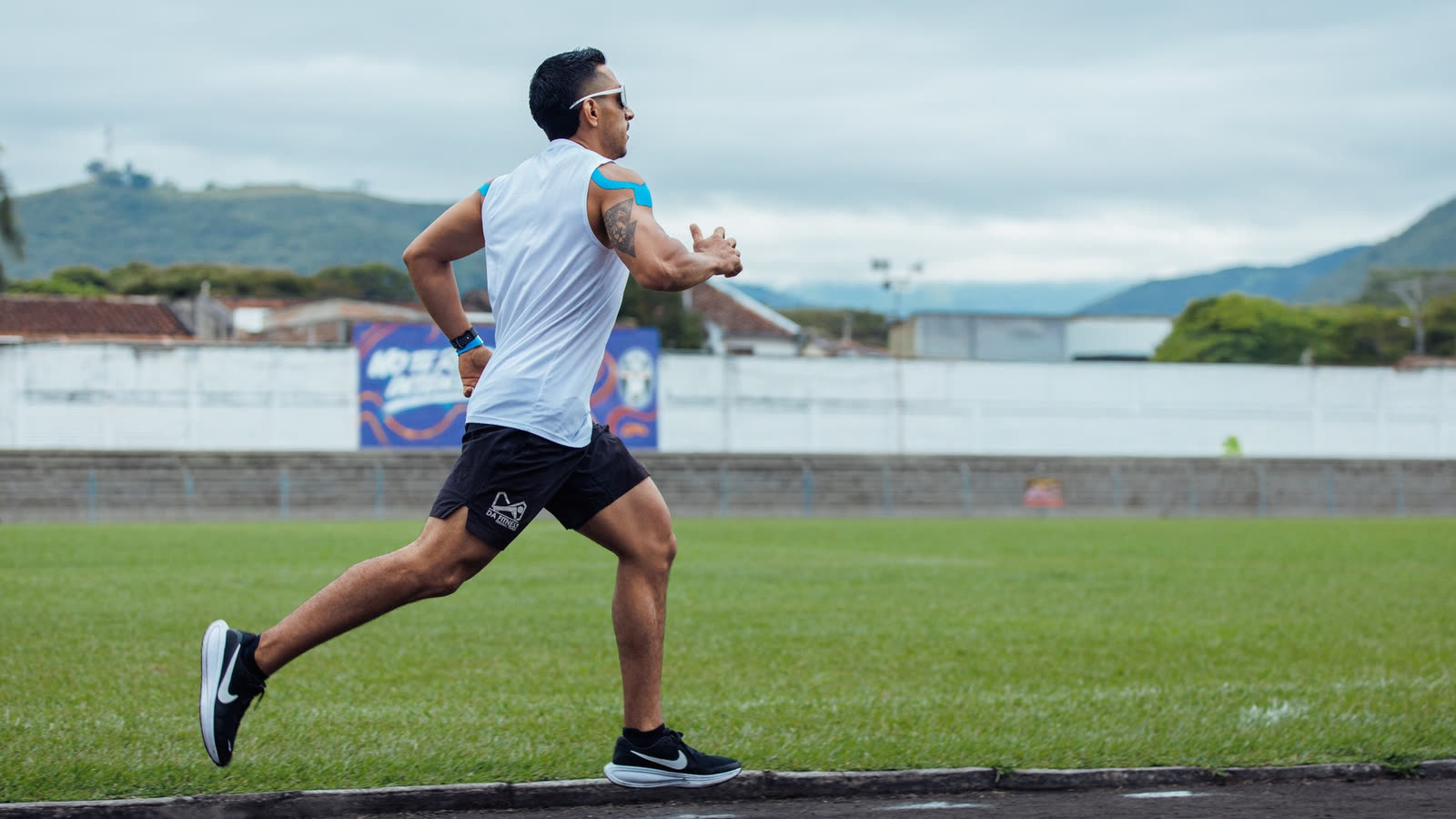
How long it takes to run 5 km depends on your pace: at 6 minutes per kilometre, you’ll finish in 30 minutes; at 7 minutes per kilometre, in 35 minutes. Walking the same distance at 5–6 kilometres per hour takes 50–60 minutes. These aren’t population averages, just calculations using distance and speed; find the result for your own pace in the table below.
Times for 1, 3, 5 and 10 km by pace
Pace tells you how many minutes it takes to complete one kilometre. For example, 6:30 min/km means each kilometre takes six minutes and thirty seconds. The times below assume you maintain the same pace throughout the distance; stops, walking breaks or speed changes will affect your actual finish time.
| Pace (min/km) | Speed (km/h) | 1 km | 3 km | 5 km | 10 km |
|---|---|---|---|---|---|
| 4:00 | 15.0 | 4:00 | 12:00 | 20:00 | 40:00 |
| 4:30 | 13.3 | 4:30 | 13:30 | 22:30 | 45:00 |
| 5:00 | 12.0 | 5:00 | 15:00 | 25:00 | 50:00 |
| 5:30 | 10.9 | 5:30 | 16:30 | 27:30 | 55:00 |
| 6:00 | 10.0 | 6:00 | 18:00 | 30:00 | 1:00:00 |
| 6:30 | 9.2 | 6:30 | 19:30 | 32:30 | 1:05:00 |
| 7:00 | 8.6 | 7:00 | 21:00 | 35:00 | 1:10:00 |
| 7:30 | 8.0 | 7:30 | 22:30 | 37:30 | 1:15:00 |
| 8:00 | 7.5 | 8:00 | 24:00 | 40:00 | 1:20:00 |
| 9:00 | 6.7 | 9:00 | 27:00 | 45:00 | 1:30:00 |
| 10:00 | 6.0 | 10:00 | 30:00 | 50:00 | 1:40:00 |
| 12:00 | 5.0 | 12:00 | 36:00 | 1:00:00 | 2:00:00 |
Times were calculated as pace × distance, and speeds as 60 ÷ pace. Hourly speeds are rounded to one decimal place; time calculations use the unrounded pace. The last two rows can also be used for walking calculations. A speed appearing in the table doesn’t determine whether you’ll walk or run at it.
Read the table from left to right: find your pace first, then move to the column for your target distance. If you don’t know your pace yet, you can also ask “What would finishing in 30 minutes require?” The answer in this example is 6:00 min/km, but finding it in the table doesn’t mean you can sustain that pace straight away.
If your distance or goal isn’t in the table, enter the distance and time into the Pace Calculator. A goal of 32 minutes for 5 kilometres, for example, corresponds to 6:24 min/km. That makes the calculation clear instead of leaving you to pick a round finish time and guess what to do each kilometre.
How long does it take to walk 5 km and 10 km?
Speed determines the answer for walking 5 km, too. At 4 kilometres per hour, 5 kilometres takes 75 minutes; at 5 kilometres per hour, 60 minutes; at 6 kilometres per hour, 50 minutes. Maintaining the same speed for 10 kilometres takes twice as long.
| Walking speed | Pace | 5 km | 10 km |
|---|---|---|---|
| 4 km/h | 15:00 min/km | 1 hour 15 minutes | 2 hours 30 minutes |
| 5 km/h | 12:00 min/km | 1 hour | 2 hours |
| 6 km/h | 10:00 min/km | 50 minutes | 1 hour 40 minutes |
This calculates uninterrupted moving time: time = distance ÷ speed. Traffic lights, photo stops and rest breaks add to the time between leaving home and returning. When fitting a walk into your calendar, consider the time you actually need to set aside, not just your watch’s moving time.
For example, a 5-kilometre walk at 5 kilometres per hour takes 60 minutes. If you stop for a total of 10 minutes along the way, the elapsed time from start to finish is 70 minutes. Both results can be correct; they measure different things. Agreeing on that distinction before comparing times with a friend can spare you an unnecessary “Why am I so slow?”
If you’re curious about your walk’s estimated energy expenditure, enter your time, distance and relevant details into the Walking Calorie Calculator. Don’t read this table as a calorie chart; the same finish time doesn’t mean the same energy expenditure for everyone.
How long does the “average person” take to run five kilometres?
First, you need to decide whose average you’re looking for. You can’t put people on a race results list in the same group as people taking up running today. Race participants have already chosen to enter a particular event; their average isn’t the average for the whole population. Having age and sex information doesn’t remove that distinction.
That’s why we don’t give a time here and say “Every beginner finishes in this time.” The table shows the outcomes of different paces: 25 minutes for 5 kilometres requires 5:00 min/km, 35 minutes requires 7:00 min/km, and 40 minutes requires 8:00 min/km. These are calculation examples, not labels for your experience level.
When considering a starting goal, ask something more concrete: what distance can I currently cover on a similar route, and at what effort? If all you have is a short run log, don’t translate it directly into a 5- or 10-kilometre performance. Your fastest recorded kilometre and the pace you can maintain over a longer distance aren’t the same information.
What affects your time?
Route and conditions
Don’t carry a calculation for a flat route over to a hilly course with the same expectations. Effort on a treadmill and outdoors doesn’t have to be identical, either; Jones and Doust’s study compared the effects of air resistance and incline on energy cost. Don’t treat a time from the table as a promise you have to fulfil in every setting.

Temperature
On a hot day, don’t put a time goal ahead of health symptoms. The CDC heat guide for athletes notes that exercising in hot conditions increases the risk of dehydration and heat-related illness. If you feel weak or faint, stop the activity and move to a cool place; get medical help if needed.
Measurement
The distance on your watch may not always exactly match the actual course distance. Garmin’s manual recommends moving to an open area away from tall buildings and trees for a better satellite signal. A weak signal can affect the calculated pace, too; read more in why GPS watches make errors between buildings.
How you pace the run
Going very fast in the first kilometre and keeping a steady pace throughout the distance are different plans. Remember that the table only provides the overall calculation. To avoid getting carried away by race-day excitement and drifting from your goal early on, read our 5K pacing guide, where we discuss how to spread that time across the course.
How can you choose your own target time?
Instead of choosing a time first and trying to make every run fit it, look at your logs. Check the total time, walking breaks and how you felt on the same or a similar route. Don’t treat a single good day or a single difficult day as a complete summary of your ability.
Say you’ve completed 5 kilometres in 35 minutes and are thinking about 32 minutes in the future. The maths gives a current average pace of 7:00 min/km and a target pace of 6:24 min/km. The Pace Calculator helps you see that difference; it doesn’t, on its own, decide whether the goal suits you or how many weeks it will take.
Write down clearly what you want to improve, too. Finishing without stopping, running the same route more comfortably and targeting a time at a particular race are different aims, rather than just “getting faster”. If you’re still struggling to cover the distance, you can focus on finishing before reducing your target time. The fastest row in the table isn’t the one you have to choose by the end of this article.
If you can’t yet run five kilometres without stopping
Don’t view walking breaks as a failure when you look at the time tables. Alternating running and walking at the beginning is also used in the NHS Couch to 5K plan. Your first goal may be following your own beginner plan before trying to match someone else’s finish time.
Advenway’s Couch to 5K programme uses timed running and walking blocks. You can follow that day’s blocks instead of calculating how many kilometres to reach in every session. Check the tool to see how the programme progresses, and use your weekly log to assess the next stage.
Here’s another important distinction: running for 30 minutes without stopping doesn’t automatically mean running 5 kilometres. At 6:00 min/km, you cover 5 kilometres; at 7:30 min/km, you cover 4 kilometres. These follow directly from the pace calculation. If you meet the time goal but cover less distance, it doesn’t make your run worth less; you’re simply distinguishing two different goals.
Moving from five kilometres to ten
In the table, the 10-kilometre time is twice the 5-kilometre time if you maintain the same pace. But that isn’t a performance guarantee: whether you can sustain your 5-kilometre pace over a longer distance is a separate question. Don’t substitute “I run 5 in this time, so 10 will take exactly twice as long” for a training plan.
If you’re considering the next distance, Are you ready to move up to 10K? is a useful next read. When you want to chase a specific race time, you might also be interested in pace groups and using a pacer. Choose your target distance first, then think about how to prepare for it.
If you’d also like to see your run’s estimated energy expenditure, head to the Running Calorie Calculator. The tables in this article have a simpler job: making the relationship between distance, pace and time clear. Your own runs will tell you which row to start from.
Frequently asked questions
If I run a kilometre in 5 minutes, will I finish 5 km in 25 minutes?
If you hold the same pace for the whole distance, the maths gives 25 minutes. But a one-kilometre record only shows the result of that run; it doesn't guarantee you can keep the same pace for five kilometres. When choosing your goal, don't look only at your fastest short section.
How do you work out your 5 km time when you walk-run?
To find your total finishing time, take your running, walking and any stopping time into account together. For example, if your running sections add up to 20 minutes, your walking sections to 15 minutes and your stops to 5 minutes, the time from start to finish is 40 minutes. Keep your average moving pace and the pace of your total elapsed time separate.
Is finishing 5 km in 40 minutes bad?
If you keep moving the whole way, this time equals an average pace of 8:00 min/km. On its own, it doesn't label you a success or a failure. Did you want to complete your walk-run plan, run without stopping or set a race time? Compare your logs with your own goal first.