
Can You Use a Three-Season Tent for Winter Camping? When Do You Need a Four-Season Tent?
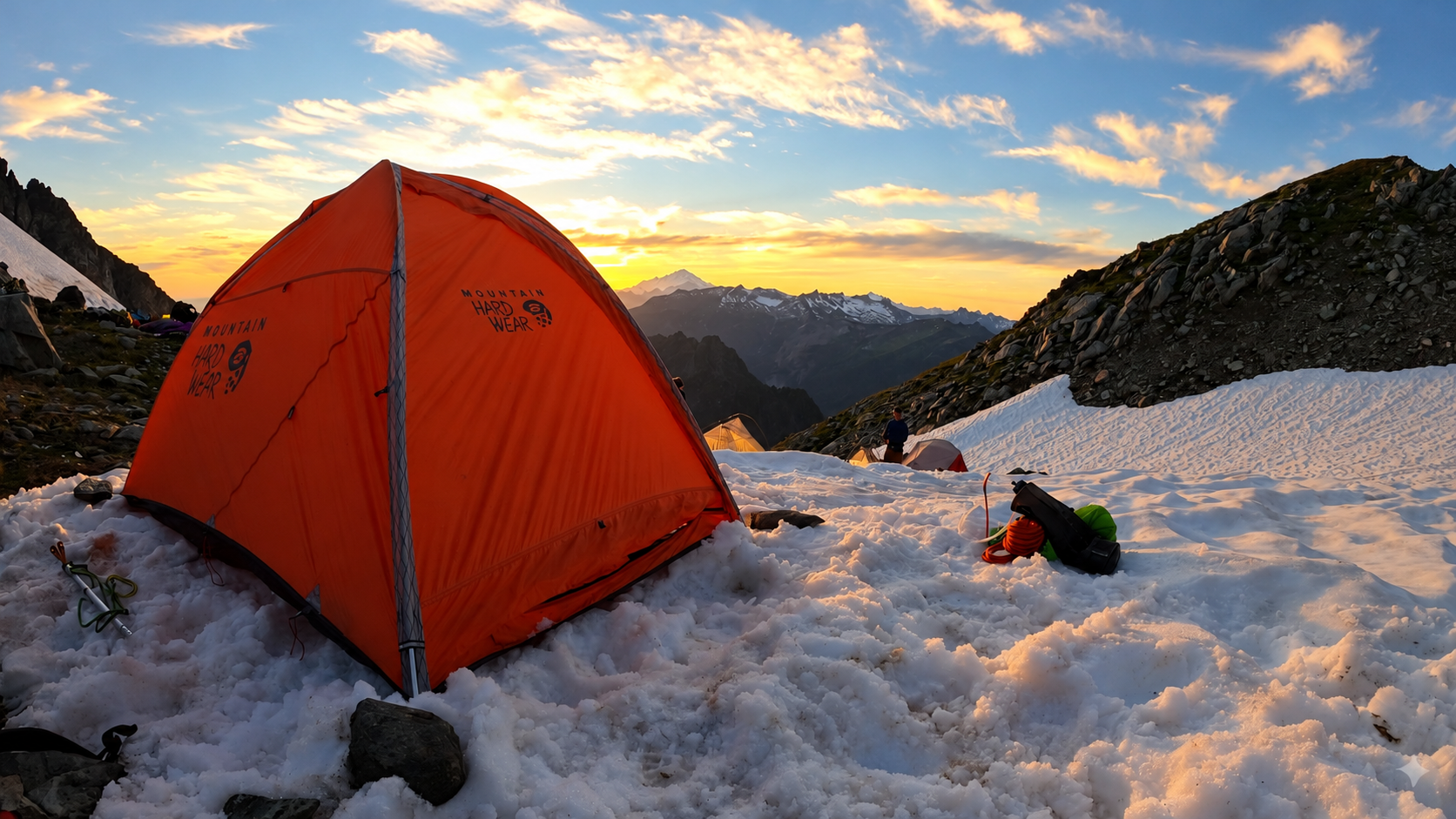
Someone in your friend group stumbles across a camping video on Instagram or YouTube. And just like that, they’re hooked. A message lands in the group chat: “Should we go this weekend too?” Sounds good. Fill the thermos, dig out the thick socks, reach for the tent… Then you spot the label: “Three-season.”
So, can you take a three-season tent winter camping? Does the tent that served you well all year really break up with you when the fourth season arrives? If those questions sound familiar, here’s some reassurance: A three-season tent can work for winter camping in certain conditions. But if strong winds, heavy snowfall or snow accumulating on the tent are expected, you need a four-season tent designed for those conditions. The deciding factors are the conditions at your campsite and the capabilities of your particular tent, rather than the month on the calendar. A calm coastal camping trip in December and a night on an exposed mountain that same month are two very different plans. You can pack the same coffee for both. You’ll need to be a little more selective about the tent.
Does a three-season tent stop working when the fourth season arrives?
Three-season tents are generally designed for the milder conditions of spring, summer and autumn. Low weight and ventilation are priorities. The inner tent may have large mesh panels, while the rainfly provides protection from rain and wind.
Four-season tents stand out for their ability to handle tougher weather. Their pole layout, shape and materials are designed to cope with wind and snow loads. The inner tent generally has less mesh and more solid fabric. That doesn’t mean “four-season” is a promise of equal comfort in every kind of weather. A more enclosed tent built for winter conditions can feel stuffy on a hot summer night.
| Feature | Three-season tent | Four-season tent |
|---|---|---|
| Priority | Low weight and ventilation in mild conditions | Structural strength in demanding conditions |
| Inner tent | Generally more mesh | Generally less mesh and more solid fabric |
| What to check before choosing | Rain protection, ventilation and the model’s intended limits | Design for wind and snow, ventilation and intended use |
What kind of winter trip could suit a three-season tent?
Picture a reasonably sheltered campsite, with no snowfall forecast and no exposure to strong winds. The weather outlook is calm, getting back is straightforward if you need to leave, and your sleeping gear is suitable for the expected overnight temperature. Your three-season tent could be worth considering for that trip.
The key phrase is “worth considering.” We’re not handing every three-season tent a blanket winter pass. An ultralight backpacking tent with plenty of mesh may perform quite differently from a more robust model in the same conditions. REI also notes that a three-season tent can be used for camping below the treeline, particularly when stormy weather isn’t expected. For strong winds and heavy snowfall, it recommends a four-season tent.
Before you leave, make sure you can answer these questions:
- How will the wind and precipitation change overnight?
- Is the campsite actually sheltered?
- What does the tent manufacturer say about this type of use?
- If conditions deteriorate, can you pack up and get back safely?
“Sunny during the day” is good news. Check the overnight forecast too. The sun won’t be keeping watch while you sleep.
When do you need a four-season tent?
If heavy snowfall, snow accumulating on the tent or strong winds are expected, your choice should move towards tents designed for those conditions. The tent’s supporting structure becomes especially important at high, open or exposed campsites. Still, a four-season label doesn’t make every problem disappear. These tents have different intended uses too. A model designed for winter camping in sheltered areas isn’t the same as a mountaineering tent built for severe conditions on exposed terrain. Manufacturers make that distinction for a reason.
When buying a new tent, look beyond the words “four-season.” Check which environments and conditions it was designed for. Otherwise, the model you choose may fall short of what you need. And upgrading your tent doesn’t upgrade the weather forecast. If conditions exceed the limits of your equipment or experience, you can change your weekend plans. The campsite will still be there.
Is snow on the ground the same as snow falling onto your tent?
A tent surrounded by snow makes a great photo. But snow beneath the tent and snow piling up on top of it call for different preparations. Snow on the ground raises questions about insulation underneath you and securing the tent properly. Snow falling onto the tent and accumulating there adds weight to its structure. Throw strong winds into the mix and the situation changes considerably.
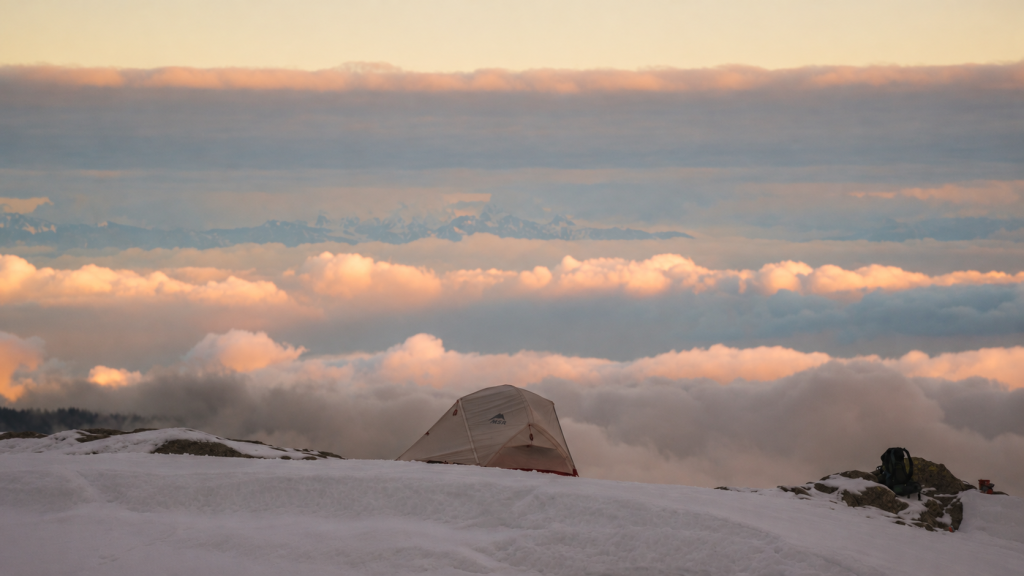
That’s why a photo of a three-season tent pitched on snow doesn’t prove that the model can handle heavy snowfall. We don’t know what happened after the photo was taken. Maybe everyone slept beautifully. Maybe they packed up at five in the morning. Don’t treat “I’ll get up and brush the snow off” as a substitute for a suitable tent either. Heading outside several times during a freezing night to clear snow isn’t exactly convenient. A structure that can handle snow loads is one of the central concerns of winter tent design.
Will a four-season tent stop me from getting cold?
“So I’ll buy a four-season tent and that’s sorted,” you might think. If only it were that easy. A tent helps keep wind and precipitation out. A more enclosed model can offer a more sheltered space inside. But a four-season label doesn’t tell you that you’ll sleep comfortably at a particular temperature.
Your sleeping bag, sleeping pad and dry clothing work together to determine overnight comfort. When choosing a sleeping bag, consider the lowest expected temperature and check what its “comfort” and “limit” ratings actually mean. If you tend to sleep cold, don’t mistake the lowest number on the label for a promise of a comfortable night. These ratings can’t fully account for everyone’s individual comfort.
Your sleeping pad has a job beyond giving your back somewhere soft to land. It insulates you from the cold ground. Its R-value measures that insulation: the higher the value, the greater the insulation. You can’t tell whether a pad is suitable for winter simply because it looks thick.
Before spending your entire budget on a tent and heading out with a summer sleeping bag, take a look at all three. Your new tent may be lovely. You don’t want to spend the night shivering and staring at its zip.
Should I close every vent to stay warm?
On a cold night, closing every vent can feel like the obvious move. Understandable. But shutting those openings makes it easier for moisture to build up inside. Moisture from your breath and body can condense on cold surfaces. When you spot droplets on the tent in the morning, you might wonder whether it leaked. Condensation could be the culprit.
Closing off all ventilation can add another problem to the one you’re trying to solve. Use your tent’s vents according to the weather conditions and the manufacturer’s instructions. With double-wall tents, a correct, taut pitch matters too. Four-season tents can also suffer from condensation. Trying to seal your tent like a centrally heated room is one of the less enjoyable ways to wake up with a damp sleeping bag.
Don’t run a camping stove inside the tent or an enclosed vestibule to keep warm. Fuel-burning equipment in enclosed spaces can cause carbon monoxide poisoning and fires.
What about “three- to four-season” tents?
You may also come across the label “three- to four-season” while shopping. Some models have mesh panels in the inner tent that can be covered or uncovered, allowing ventilation to be adjusted for different conditions. But don’t look at that range on the label and decide, “This one can handle anything.” If you’re considering a model like this, check the conditions it was designed for and the limits specified by its manufacturer.
Starting small is a good idea for your first winter camping trip
For your first winter camp, consider an easily accessible place where you can leave without much difficulty, rather than a remote spot at the end of a long hike. A short trip gives you a chance to get to know your equipment too. Pitch the tent before you go. Discovering a missing peg at home is quite different from discovering it after dark at the campsite. Check the poles, rainfly and guy lines, and go over the manufacturer’s pitching instructions.
If you’ve decided to buy a new tent, first think about the kind of camping you want to do. Will you head out occasionally in calm conditions, or regularly camp on snowy, exposed terrain? Borrowing or renting can help you understand your needs before buying. And give yourself permission to leave early. You haven’t signed a contract promising to last the night. Breakfast in town can be part of the weekend plan too.
What should you remember while packing?
Owning a three-season tent doesn’t mean you have to stay home all winter. Winter camping may be possible in calm, sheltered conditions, with a plan that stays within your tent’s intended limits. A trip with strong winds or heavy snowfall forecast calls for a four-season tent suited to those conditions. Think about the tent, sleeping bag and sleeping pad together. Then check the forecast one more time. Unzipping your tent and enjoying that first coffee in the cold morning air is a lovely feeling. Making sure the car heater isn’t your only dream all night? That starts with preparing properly.