
What Is Trail Running? How Is It Different From Road Running?

Running doesn’t have to mean roads, tracks or a route along the waterfront. That’s part of why trail running is catching the attention of more and more runners.
You might have seen the videos on YouTube or Instagram: a runner, or a small group, making their way along narrow forest trails. Sometimes they’re stepping over rocks. Other times they’re trying to keep their balance on muddy ground.
At first glance, it might look like an ordinary run through nature. But you’re watching a form of endurance sport that has grown rapidly in recent years: trail running.
It used to be seen as a discipline mainly for serious, highly trained athletes. These days, runners of all levels are getting interested. One reason is that people want more than simply to run faster. They also want to spend time outdoors and take on the challenges that natural terrain brings.
Many runners now train on roads or familiar running routes during the week, then spend their weekends on forest paths or mountain trails. Turkey has plenty of places to explore:
- Cappadocia.
- The Lycian Way.
- The Kaz Mountains.
- Uludağ.
- The Kaçkar Mountains.
And those are just the first ones that come to mind. The many trail events held around the country throughout the year also show that this is no longer a niche hobby. So, what actually separates trail running from road running? Let’s take a closer look.
What Is Trail Running?
At its simplest, trail running means running on natural terrain rather than paved roads.
But one sentence doesn’t quite do it justice. It’s more than a change of surface. It can change how you run, how you pace yourself and even how you think. Trail running often takes place on:
- Forest paths.
- Mountain trails.
- Rocky ground.
- Dirt tracks.
- Muddy routes.
These surfaces aren’t as predictable as a road. Every step can bring something different. One section might have loose stones; a few metres later, you could reach a narrow path covered in roots or a steep climb. That unpredictability is part of what makes trail running special. You’re constantly paying attention to the ground and your surroundings, as well as your speed.
How Is Trail Running Different From Road Running?
From the outside, you’re doing the same thing in both: running.
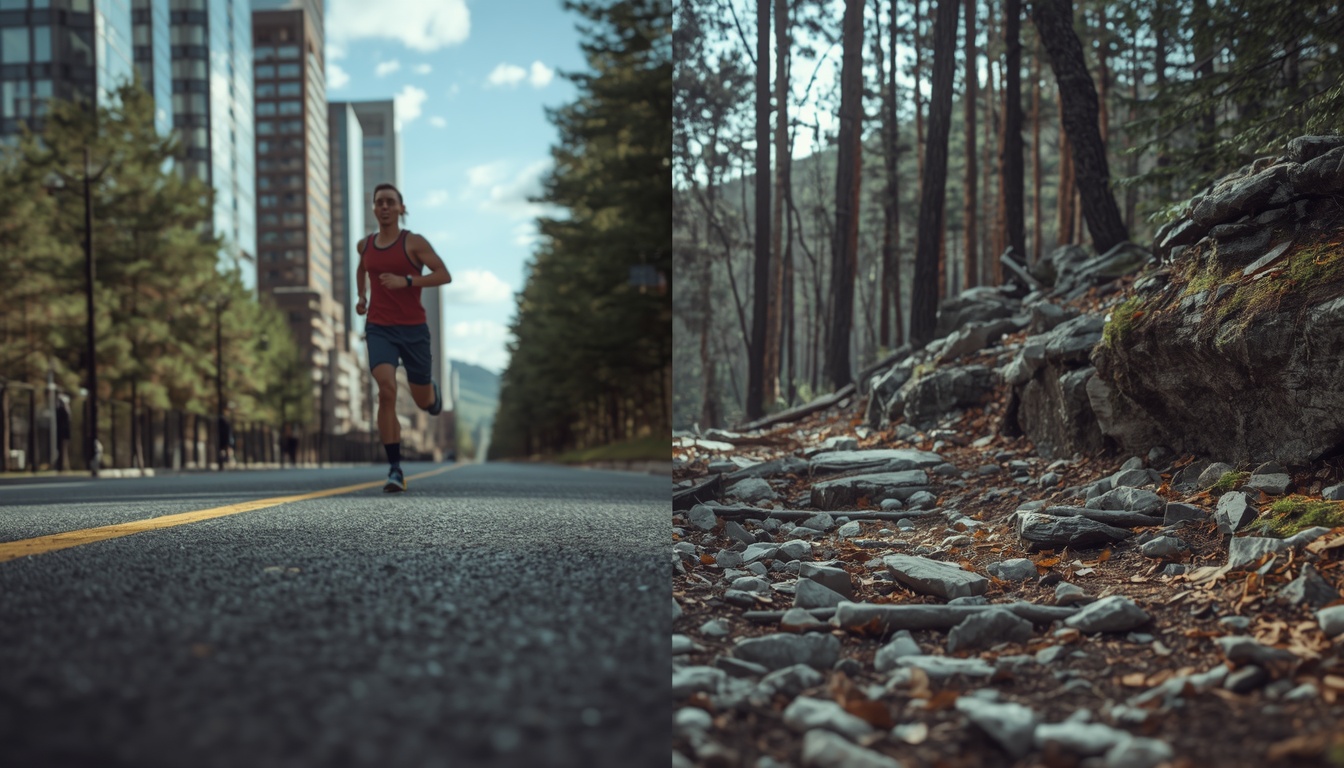
Once you try them, though, the differences become much clearer.
| Feature | Road running | Trail running |
|---|---|---|
| Surface | Generally consistent and predictable | Constantly changing; rocks, roots, mud and loose gravel can appear on the same route |
| Pace | Holding a steady pace is often a key goal | Pace varies; walking climbs and slowing down on technical descents are normal |
| Focus | Speed and finishing time | Managing your energy across the route |
On the road, one of your main aims is often to settle into a steady pace. The surface is familiar and largely predictable.
On trails, things work differently. You might run comfortably for a few minutes, then reach a steep climb and switch to walking. Soon afterwards, a technical descent appears. Staying in control matters more than speeding up. The aim isn’t always to be the fastest runner. It’s to use your energy well from the start of the route to the finish.
A useful reminder for the trails is:
“Manage your rhythm, not your ego.”
The Terrain Makes the Biggest Difference
On a trail, you can’t always know exactly what the ground will be like a few metres ahead.
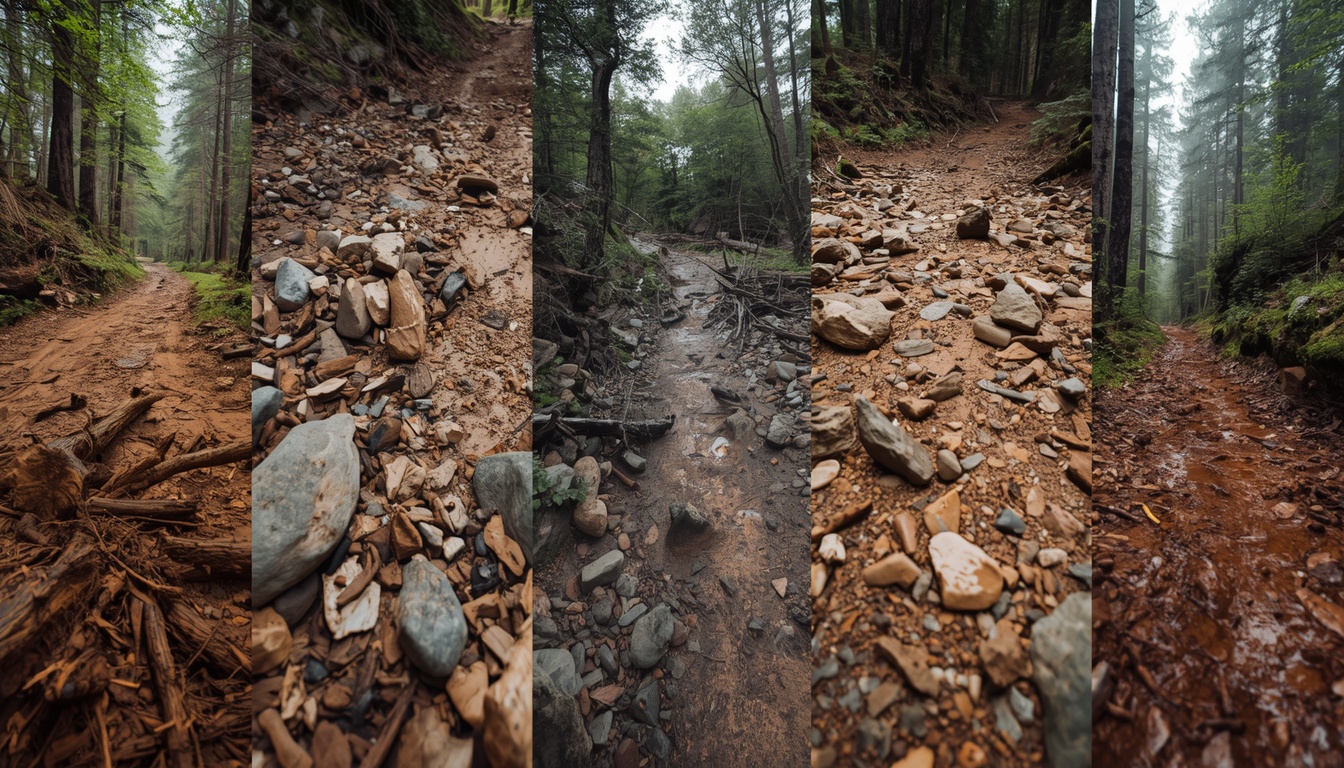
You may have studied the route beforehand, but conditions can still change. Wet rocks, mud, tree roots, loose gravel and narrow paths can all appear on the same run.
That means your balance and coordination are working alongside your leg muscles. You need to stay attentive. Where you place your foot can sometimes matter more than how fast you’re moving.
That’s why many people see trail running as a technical discipline that keeps you closely engaged with nature, as well as a running sport. I tend to agree.
Pace Isn’t Everything in Trail Running
Many people new to road running quickly become interested in pace: their average, their time per kilometre, their race result.
On trails, those numbers often move into the background because the gradient and terrain keep changing. Someone who comfortably runs at 5:30 per kilometre on the road might choose to walk several hundred metres up a steep trail.
That’s completely normal. Many experienced trail runners deliberately walk steep climbs to save energy. Judging a trail run purely by the numbers on your watch can therefore be misleading. What matters is moving through the route efficiently and managing your energy well.
Why Do People Love Trail Running?
There’s no single answer.
Some love being in nature. Others want a break from crowded streets. Some enjoy testing themselves in a different way, both physically and mentally.
Perhaps that’s part of the appeal: everyone can follow the same route and still have a completely different experience. One runner notices the views; another is focused on the next step. For many people, a few hours on the trails are more than a training session. They’re a chance to step away from the pace of city life and reconnect with the outdoors.
Who Is Trail Running For?
The words “trail running” often bring steep mountains, ultramarathons and elite athletes to mind. That can make it seem like a sport only for people with exceptional fitness.
You don’t need to be a professional athlete to get started. None of us begins a sport as an expert. An easy forest path or a simple dirt walking trail can be more than enough for your first outing.
You don’t need long distances or difficult routes on day one. If you’ve never run before, build some basic endurance first. Then start gaining experience on short, non-technical trails. If you already run regularly, you can begin by taking some of your training onto easy paths. Each new route will teach you something different.
Why Are Trail Running Shoes Different?
At first glance, a trail shoe may not look very different from a road running shoe. Turn it over, and the difference becomes clearer. Trail running shoes have pronounced outsole lugs designed to grip the ground. These can provide much better traction than road shoes on mud, dirt and loose surfaces. Many models also have:
- Extra protection around the toes against rocks.
- More durable upper materials.
- A more robust sole construction.
Some include waterproof membranes too. But waterproof doesn’t automatically mean better. On summer runs, breathability may matter more than keeping water out. We look at whether you really need Gore-Tex in a separate guide. Choose your shoes with the route and season in mind, rather than judging them by the feature list alone.
If you’d like help narrowing down the options, our running shoe selector lists trail models sold in Turkey based on terrain, pace and budget. Each card shows the shoe’s drop, stack height and weight. If a brand hasn’t published a specification, it’s left blank rather than guessed.
Why Does Safety Need More Planning on Trails?
On a road run, many things you might need are within reach. You may find a shop or drinking fountain when you’re thirsty. If something goes wrong, public transport or a taxi may be an option. Trails can be different. On some routes, you might go kilometres without passing a settlement. That’s why planning is such an important part of trail running. Especially on longer outings, carry:
- Enough water.
- Small snacks for energy.
- A phone.
- An offline map of the area.
- Clothing suited to the conditions.
A running pack is a practical way to carry these. If you’re heading onto an unfamiliar route, learn about it beforehand and, where possible, don’t make your first visit alone. Trail running offers a wonderful sense of freedom. Heading into nature also means taking more responsibility for yourself.
Common Beginner Mistakes
Many new trail runners make similar mistakes. The good news is that a few small habits can help prevent most of them.
1. Trying to Hold Your Road Pace
This may be the most common mistake. Climbs, technical descents and changing surfaces all affect your pace. Avoid treating trail pace as a direct comparison with road performance. They make different demands on you.
2. Choosing the Wrong Shoes
Road shoes can work on easy trails. On technical terrain, though, the grip and protection of trail shoes are a real advantage. Nobody wants an enjoyable outdoor session to end with an avoidable injury.
3. Starting Too Fast
Many experienced trail runners keep the opening kilometres of a race controlled. The hardest part of the course may still be ahead. Using your energy well until the end matters more than making the first few kilometres your fastest.
4. Not Carrying Enough Water
In hot weather especially, your water needs may rise more quickly than expected. Even on shorter routes, planning ahead is better than wishing you’d brought more.
5. Underestimating the Outdoors
Running through nature is trail running’s biggest attraction. It’s also where many of the surprises come from. The weather can change quickly. The ground may be more technical than you expected. Check the forecast and route conditions before setting out.
How Do Trail Races Work?
Trail races differ from road races in several ways. Distance matters, but so does total elevation gain.
Two races might both be 20 kilometres long. One could be almost flat, while the other includes more than 1,000 metres of climbing. Looking at kilometres alone won’t tell you how demanding they are. Gradient and technical difficulty matter too.
Many events have checkpoints or aid stations where runners can refill water and pick up food. For longer races, organisers also publish mandatory kit lists. These often include safety items such as:
- A waterproof jacket.
- A whistle.
- First-aid supplies.
- An emergency blanket.
Is Trail Running Worth Trying?
Trail running is more than swapping pavement for dirt. It offers a different way to experience running.
Sometimes that means slowing down. Sometimes it means walking. And sometimes it means simply enjoying the landscape around you. That may be exactly what makes it special.
Every route is different. Different weather brings a new experience. No two runs feel quite the same. If you enjoy running and want to explore beyond the road, trail running is well worth a try. A short forest path near your city might be the perfect place to take that first step.
Still not sure whether it suits you? Our Find the Right Sport for You quiz uses seven questions to suggest sports that match your preferences and places to get started in your province.
Pace works differently on trails than on roads. If you’d like to compare your road-running targets, our running pace calculator can help you work out average pace and kilometre splits.
Frequently asked questions
Do You Need to Start With Road Running?
No. You can start directly with trail running. Having some basic running fitness and choosing easy routes at first will make the experience safer and more enjoyable.
Can You Trail Run Without Trail Shoes?
Road running shoes can work on easy, dry trails. On technical, slippery or rocky ground, trail shoes offer better grip and protection.
Does Trail Running Include Walking?
Yes. Walking is completely normal, particularly on steep climbs. Many experienced runners do it deliberately to save energy.
Is Trail Running Dangerous?
Appropriate equipment, route planning and attention to the weather can reduce the risks considerably. As with any outdoor activity, you still need to stay attentive and make sensible decisions.
Can Trail Running Help With Weight Loss?
Its energy demands can contribute to weight management alongside regular training and balanced eating. It shouldn't be treated as a stand-alone weight-loss method.