
Skiing or snowboarding? Which is easier for first-timers?
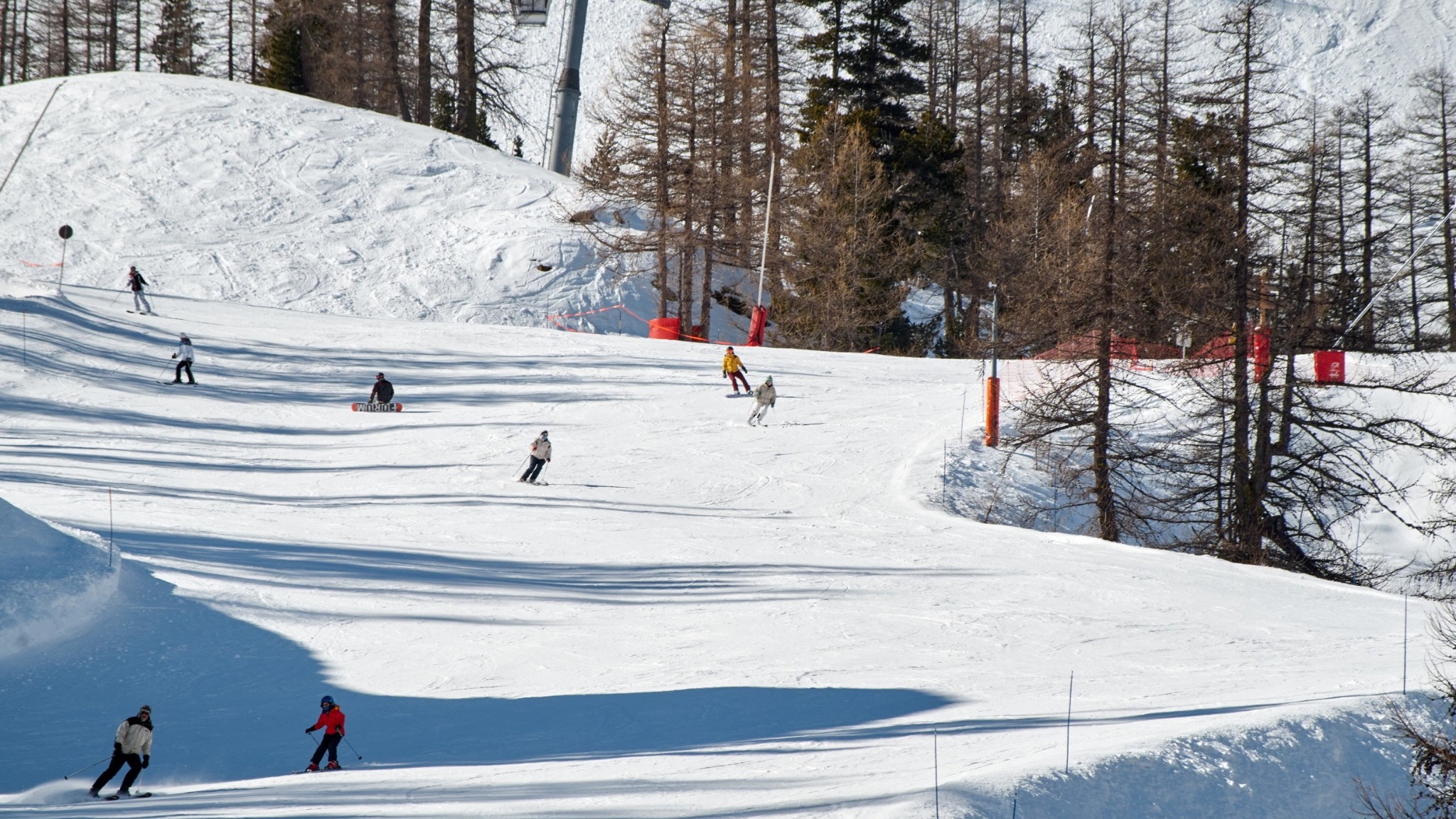
Some of us love a winter holiday without caring much for skiing or snowboarding. Snow-covered mountains, cold air and all that white scenery are enough. For others, a winter holiday is at least partly about winter sports. If you’re in the second group, one of the first questions you’ll need to answer before heading to a ski resort is this: should you try skiing or snowboarding?
From the outside, it can look like a simple matter of taste. On skis, your feet move independently of each other; on a snowboard, you stand sideways on a single board. But once you’re out on the piste, you realise the difference between the two goes much further than that. How you learn, how you fall, how you use the lifts, how comfortable your boots are and even how much you enjoy a few days’ holiday can all depend on the sport you choose.
Skiing is generally said to be easier for first-timers. That isn’t entirely wrong, since most people get used to the basic movements on skis more quickly. Snowboarding asks for a bit more patience at the start. On the other hand, once you’ve cracked the basic turns and edge control, some people progress quite quickly on a snowboard. So we can’t just say “skiing is easy, snowboarding is hard” and leave it there.
In short: skiing or snowboarding?
If you can’t decide, here’s the simplest way to think about it:
| If… | Your first option |
|---|---|
| I want to get sliding as quickly as possible on day one | Skiing |
| I have a background in skateboarding, wakeboarding or a similar board sport | Snowboarding is worth considering |
| I only have a 1–2 day holiday | Skiing |
| Falling a lot on the first day won’t put me off | Snowboarding |
| Comfortable boots really matter to me | Snowboarding |
| I want to move easily on flat ground | Skiing |
| I’m more drawn to that smooth, gliding feel on a board | Snowboarding |
| I have no idea | Best to try it with a beginner lesson |
Now let’s look at the reasons.
Which is easier to learn?
There’s a saying you’ll hear a lot in winter sports: “Skiing is easier to learn and harder to master; snowboarding is harder to learn but quicker to progress.” It shouldn’t be taken as a hard rule, but as a summary of what starting out feels like, it isn’t bad.
Your first day on skis
On skis, your body faces forwards and your two feet are independent. Because this stance is closer to the way we stand in everyday life, finding your balance in the first few hours can feel easier than on a snowboard. One of the first things you’ll learn in a beginner lesson is how to slow down and stop by holding your skis in a V shape. Simple turns come next.
First lessons usually take place on a beginner slope. With good instruction, you may be able to start coming down in a controlled way on your very first day. That’s a real motivation boost, and it may even have you thinking, “Actually, that wasn’t so hard.”
But things change as you progress. Parallel turns, proper use of your edges, shifting your weight and controlling your speed on steeper pistes all take serious technical work. So while skiing is relatively easy to start, there’s a lot of detail to work on at the higher levels.
Your first day on a snowboard
Snowboarding is a bit different. We don’t spend everyday life standing sideways with both feet strapped to the same board, so the starting position may not feel natural at first. On top of that, you need to learn edge control before you can pick up speed with any confidence. Until you understand how hard to press the heel-side or toe-side edge of the board into the snow, falling is very easy.
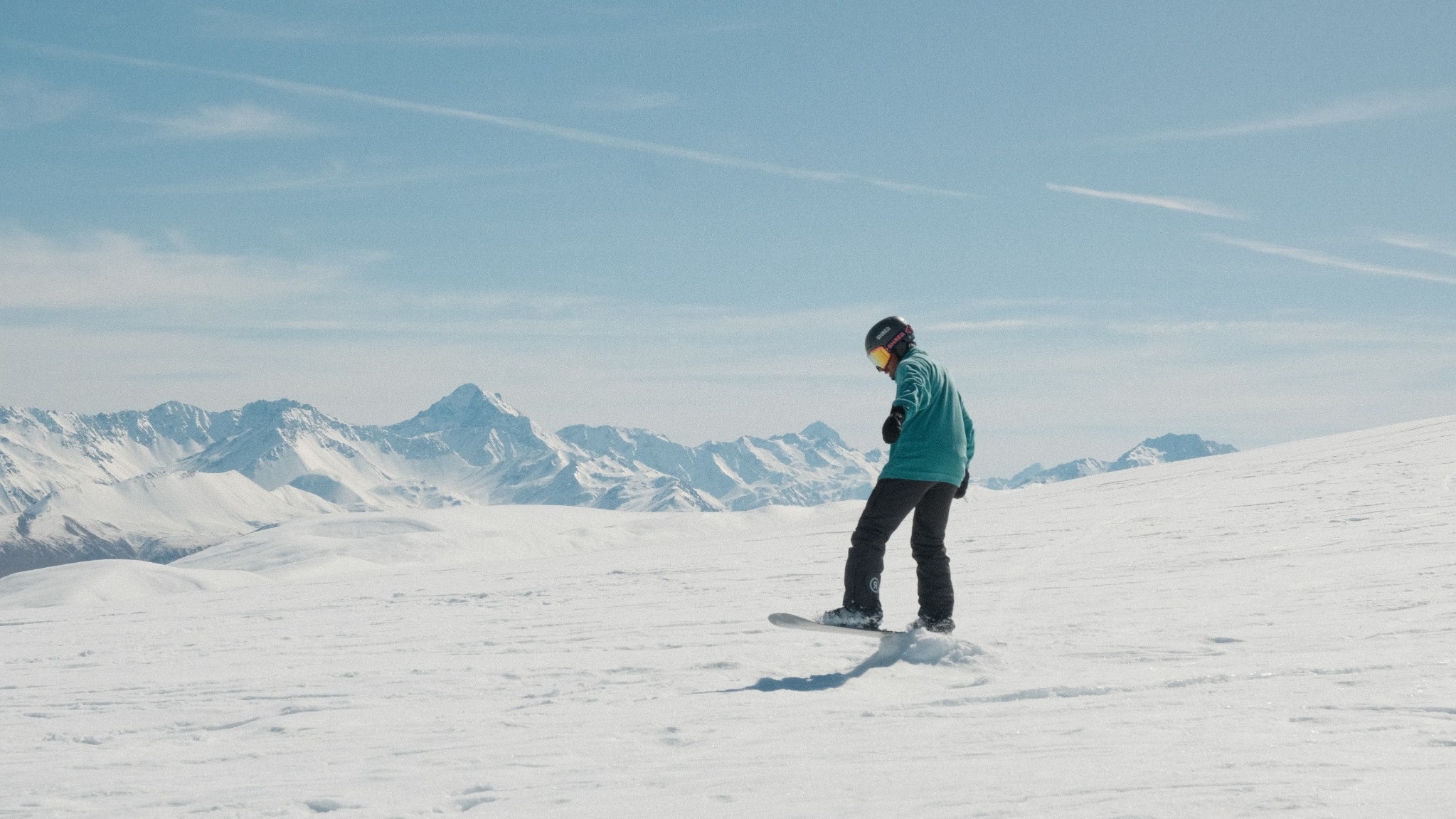
If you’ve gone on a winter holiday with friends who ski while you’re trying to learn to snowboard, your spirits may sink a little on the first day. Your friends might already be making their way around the piste, more or less, while you’re still trying to stand up on the board and move a few metres. That’s completely normal. Once the basic turns and edge control start to settle in over a few days, the fun side of snowboarding starts to show itself.
If you’re only going for 1–2 days, which makes more sense?
In my view, this is one of the most important questions when choosing. If your first ski trip is only one or two days long, skiing may be the more sensible start for most people. Not because skiing is a better sport, but because you’re usually more likely to be sliding in control within a few hours than you would be on a snowboard. A one- or two-day plan often means a resort close to a city: at Uludağ, the pistes sit between 1,776 and 2,135 metres, with a total vertical drop of 359 metres — short runs you can do again and again, which suit a first day well.
On a snowboard, on the other hand, a good part of your first day may be spent on:
- finding your balance,
- falling,
- getting back up,
- working out edge control,
- learning to get on and off the lift
and other basic skills like these.
But if snowboarding excites you far more, you don’t have to start on skis just because the first days are harder. Even if you don’t fully get there on your first holiday, you can pick up where you left off next winter. What matters here isn’t a few hours of ease so much as which sport you want to keep doing.
The first-day experience is actually very different
One of the biggest differences between skiing and snowboarding shows up not only while you’re sliding down the piste, but while you’re trying to get to it.
Boot comfort and using the lifts on skis
Ski boots don’t have a great reputation for comfort. The hard plastic shell holds your foot and ankle firmly in place; that matters for control on the piste, but it’s far less pleasant when you’re walking from the hotel or car park to the lift. That’s also why the sock you wear inside the boot matters more than you might think: a thick sock can squash inside the boot and actually make your foot colder. We explained why a thin, moisture-wicking pair works better in our guide to hiking socks.
On the plus side, with skis on your feet you can push yourself along flat sections using your poles. Approaching the chairlift and carrying on after you get off also becomes quite easy once you’re used to it.
Boot comfort and using the lifts on a snowboard
Snowboard boots are generally softer and feel much more comfortable to walk in than ski boots. The chairlift, though, is a bit more of a hassle. You usually need to unstrap your back foot and move along with one foot attached. At the top of the lift, you slide off with one foot still strapped in, then stop somewhere suitable and strap your back foot in again.
And when you hit a flat connecting track, the skiers keep moving with their poles while you lose speed on your snowboard, which can be a bit frustrating. These may look like small details, but you feel the difference when you spend the whole day on the piste.
Which is more physically tiring?
Both can be more tiring than you expect. After all, you’ll be trying to stay balanced, falling, getting back up and using muscles you’re not used to. Still, the tiredness you feel from skiing and snowboarding is a little different.
Where does fatigue build up when skiing?
On skis, your thighs in particular are working for long stretches. Your quadriceps, hamstrings, the muscles around your hips and the core that keeps you balanced all work hard. It’s perfectly normal to feel quite comfortable on your first few runs and then wonder in the afternoon why your legs are so tired.
Where does fatigue build up when snowboarding?
Snowboarding also works the lower body hard, but beginners have another problem: constantly getting up off the ground. Falling often in the first few days and standing up again every time can use more energy than you’d think. On top of that, your legs, ankles and core are working non-stop to keep you balanced.
So even if you exercise regularly, you may find yourself wondering at the end of your first snowboarding day, “Why am I this tired?” If you’re going to be on the slopes several days in a row, the time you set aside for recovery in the evenings matters just as much as the hours on the piste; don’t skip the recovery process altogether.
Is there a difference in injury risk?
Both sports carry a risk of injury. Proper instruction, controlled speed and suitable equipment are important for reducing that risk. There can, however, be some differences in the areas where injuries are more common.
Areas often discussed in skiing
On skis, your two feet move independently. When you fall, the skis heading in different directions can create a twisting force on the knee. That’s why knee ligaments, especially the ACL, are among the areas often discussed in skiing injuries. Because you use poles, injuries to the thumb and hand can also occur.
Areas often discussed in snowboarding
On a snowboard, having both feet strapped to the same board changes the way you fall. Beginners in particular may reflexively reach out with their hands when falling forwards. That’s why hand and wrist injuries are among the things to watch out for in snowboarding; the shoulder can also be at risk in falls. So it can make sense for beginner snowboarders to consider wearing wrist guards.
For both sports, we strongly recommend wearing a proper snow-sports helmet. Ski and snowboard helmets are tested to a standard specific to snow sports, such as ASTM F2040; they are also tested in cold and wet conditions and designed to cover the ears. That’s why the cycling helmet sitting at home isn’t the right choice on the piste. A helmet won’t make you invincible, of course, and it’s no substitute for skiing in control; but it is an important part of the right safety equipment.
Does it help if you’ve done other sports before?
Sports you’ve done before may partly help at the start. But you shouldn’t think along the lines of “I’ve done that sport, so I’ll definitely find snowboarding easy.”
If you have a skateboarding, surfing or wakeboarding background
Standing sideways, balancing on a board and the feeling of using your body as one unit may not be new to you. So starting on a snowboard may feel a bit more natural. Edge control on snow, though, is still a different skill. Having a surfing background, for example, doesn’t automatically make snowboarding easy; it may just help you get used to some movements and body positions more quickly.
If you’ve done ice skating or similar sports
Because of the forward-facing stance, the independent use of your legs and the idea of using edges, ski movements may feel a bit more familiar. But here too, the techniques aren’t exactly the same. See your previous sports experience as a small advantage, and don’t make it the only factor in your decision.
Which is more comfortable in terms of equipment?
This varies a bit from person to person, but in my view, if you’re starting for the first time, snowboarding wins on boot comfort. Snowboard boots are softer, so walking and moving around during the day is much easier. Ski boots are stiff and heavy. When you look at how easy the equipment is to use on the piste, though, the advantage may swing back to skiing.
For skiing, the basics are:
- skis,
- bindings,
- poles,
- ski boots.
For snowboarding, the list is a little shorter:
- snowboard,
- bindings,
- snowboard boots.
Beginner snowboarders may also choose to wear extra protection such as wrist or hip guards. Adding these to your rental equipment in the first year can noticeably reduce the fear of falling.
Should you buy equipment for your first holiday?
My answer here is very clear: no. If you’re trying skiing or snowboarding for the first time, renting instead of buying a board or a ski set is both cheaper and more sensible. We’ve gone through which items are better bought and which are better rented, one by one, in our ski equipment guide for beginners.
That’s because you don’t yet know:
- which sport you’ll stick with,
- which boot fits your foot,
- what kind of equipment stiffness you prefer,
- how many days a year you’ll ski
None of that is clear yet, so spending serious money on a full set before your first ski or snowboard holiday may well be unnecessary.
If you have the budget, putting the money towards lessons rather than buying equipment at this first stage is a better investment. A good instructor won’t just teach you how to turn; they’ll also show you how to use the lift, how to control your speed, the basic rules of the piste and how to move safely.
Once you’ve decided to stick with the sport, you’ll have plenty of time to think about your own equipment. When you get to that point, don’t rush; we’ve covered what’s worth waiting for and what should be bought in season when shopping for end-of-season outdoor equipment in a separate article.
Who is skiing better suited to?
If you say “yes” to a few of these, starting with skiing may make sense:
- I want to make progress as quickly as possible on day one.
- I only have a few days’ holiday.
- I don’t want to spend most of the first day falling over.
- Moving easily on flat ground matters to me.
- Sliding while facing forwards feels more natural to me.
- I can put up with stiff boots for a while.
Especially if you’re completely undecided and just thinking, “Let’s give it a go,” skiing may be the easier way to start for most people.
Who is snowboarding better suited to?
If these sound more like you, snowboarding is worth serious consideration:
- I love skateboarding, wakeboarding or similar board sports.
- I don’t mind if the first few days are hard.
- Standing sideways on a board and that smooth, gliding feel appeal to me more.
- I really don’t like stiff ski boots.
- I can give the sport more than a few days.
- To be honest, I’ve wanted to learn to snowboard all along.
That last point may be the most important of all. If you really want to snowboard, there’s not much sense in forcing yourself onto skis just because “skiing is easier to learn.”
What should you do if you can’t decide?
If you have the time and the means, you can try both. But if you do, don’t keep switching between skiing and snowboarding on the same day; give yourself some time to get used to each one. It’s also worth checking the snow when choosing a resort; you can follow current snow depth at ski resorts across Turkey on a single page.
Skiing may feel easier at first. Snowboarding may dent your morale a bit in the first few hours, but by the end of the day you may notice the technique slowly starting to click. So don’t answer the skiing-or-snowboarding question purely on the basis of “Which one did I fall over less on?”
Let your real question be this: which one did I enjoy learning more? Because that’s most likely what will decide which sport you stick with in the long run.
The bottom line: skiing or snowboarding?
If you’re starting completely from scratch and only going on a winter holiday of a few days, skiing may be the easier start for most people. You’re more likely to learn to stop, turn and make your way down the beginner slope in control in a shorter time. When deciding where to take that first holiday, you can also have a look at our guide comparing Turkey’s ski resorts by level and season.
Snowboarding takes a bit more patience on the first day. Edge control, the sideways stance, falling and getting back up, and using the lifts can all make the learning process harder. But if snowboarding excites you far more, don’t let that put you off; after a few days of learning, things can get a lot more enjoyable.
Because after a certain point, the question “Which one is easier?” starts to lose its importance. A much better question takes its place: when are we heading up for the next run?