
What is a dry bag? Why it's essential kit for water sports
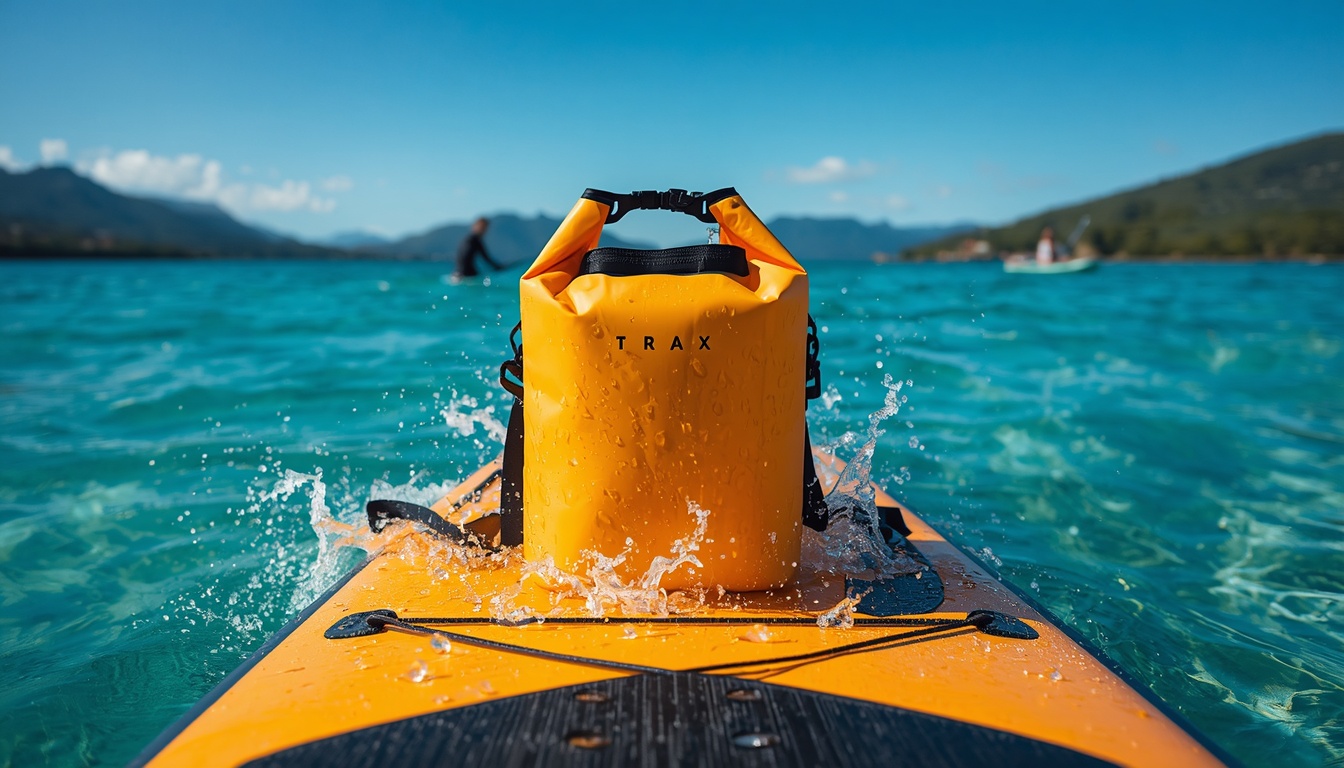
Once you start getting into water sports, one of the pieces of kit you’ll come across, and in my view one of the most important, is the dry bag. It might not cross your mind at first, but over time you may well realise you really do need one.
At first glance, a dry bag can look like any ordinary bag. Plenty of people even think, “I’ve already got a backpack, so why pay extra for a dry bag?” After all, we tend to assume that a phone, keys or wallet will be safe enough inside a bag with a zip.
But once water gets involved, nothing is quite as certain as you think.
Walking along the shore, out on a SUP, paddling a canoe or sea kayak, or even just spending time on a boat, a wave, a splash or a sudden downpour can be enough to damage your things. Your bag doesn’t even have to go in the sea. Sometimes just a few drops of water can leave your phone or other electronics useless.
That’s exactly the problem a dry bag was designed to solve.
What is a dry bag?
A dry bag is a type of waterproof bag specially designed to keep water out, closed by rolling down the top.
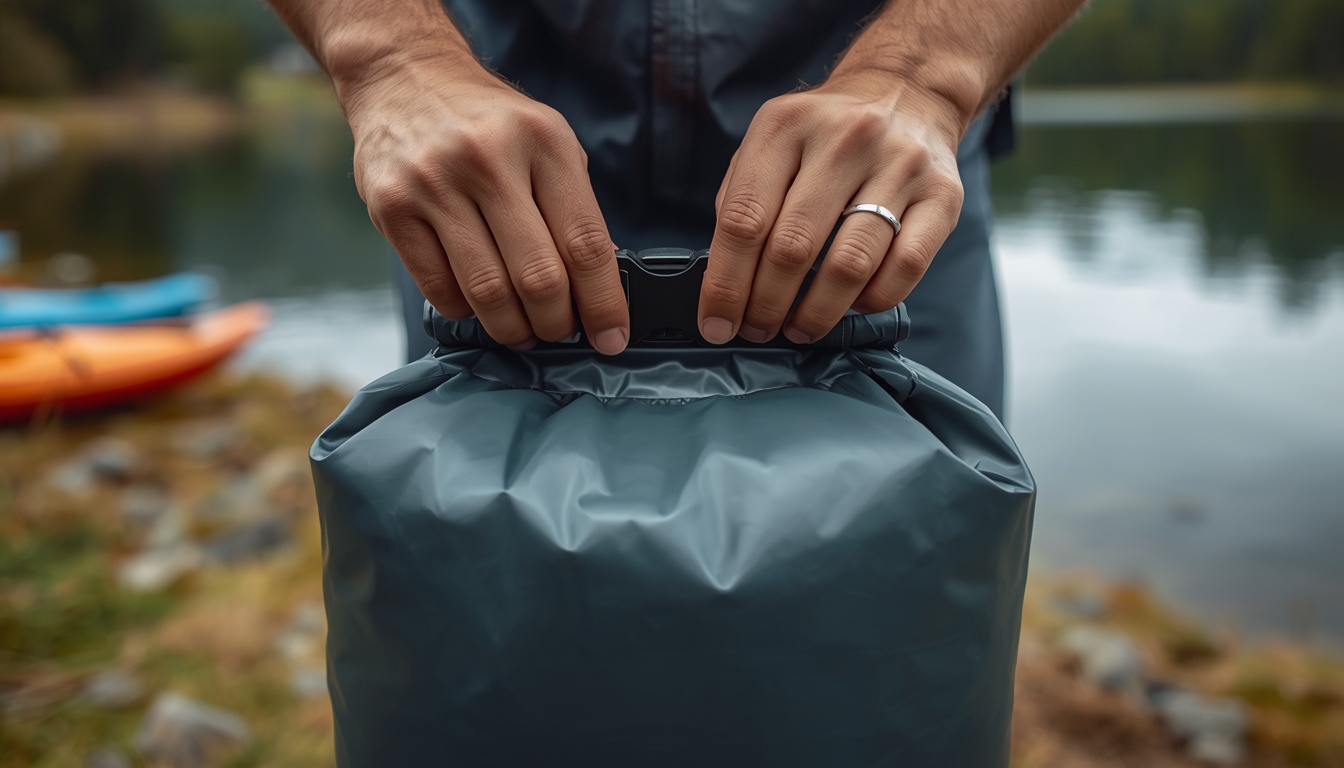
Ordinary bags use zips, but dry bags usually have what’s called a roll-top closure. (Don’t confuse it with the similarly named dry sack; the two are made for different purposes.) Once the top has been rolled down a few times, the buckles clip together. This makes it harder for water to get in and also largely stops the air inside the bag from escaping.
As a result, a dry bag gives a high level of protection against rain, splashes and brief contact with water. So whatever you put inside stays dry.
How does a dry bag work?
When you first see a dry bag, you might think it all comes down to the material. In fact, the secret lies mostly in the closure.
The top is rolled down at least three or four times before the buckles are clipped together. That all but closes off any gap water could get through.
I’m stressing this because a lot of people buy a good-quality dry bag and then roll the top down just once before closing it. Then, when they find water inside, they decide the bag is rubbish. Most of the time, though, the problem isn’t the bag itself; it’s the way it’s being used.
Is a dry bag completely waterproof?
So does a dry bag really keep out every drop? A good-quality dry bag will protect your things from:
- rain,
- sea spray,
- a wet deck on a boat,
- water on a canoe or SUP,
- brief contact with water
without any trouble. But every dry bag has its limits.
Many models are sold as “waterproof” or “water resistant”, but those don’t offer the same level of protection. Zipped or low-quality models in particular aren’t designed to spend a long time underwater.
So don’t think of a dry bag as something that can be used underwater all the time, like an underwater camera. Still, I can safely say it’s one of those products that saves the day in everyday use.
Which sports are dry bags used for?
Mention dry bags and most people think of canoeing and paddling first. In recent years, I’ve also started seeing them a lot in SUP paddlers’ kit. But they’re useful for far more than that:
- Stand Up Paddle (SUP)
- Canoeing
- Sea kayaking
- Rafting
- Sailing
- Fishing
- Camping
- Trekking
- Boat trips
- Beach holidays
These days, even plenty of motorcyclists use dry bags to keep their things protected in wet weather.
What size dry bag should you choose?
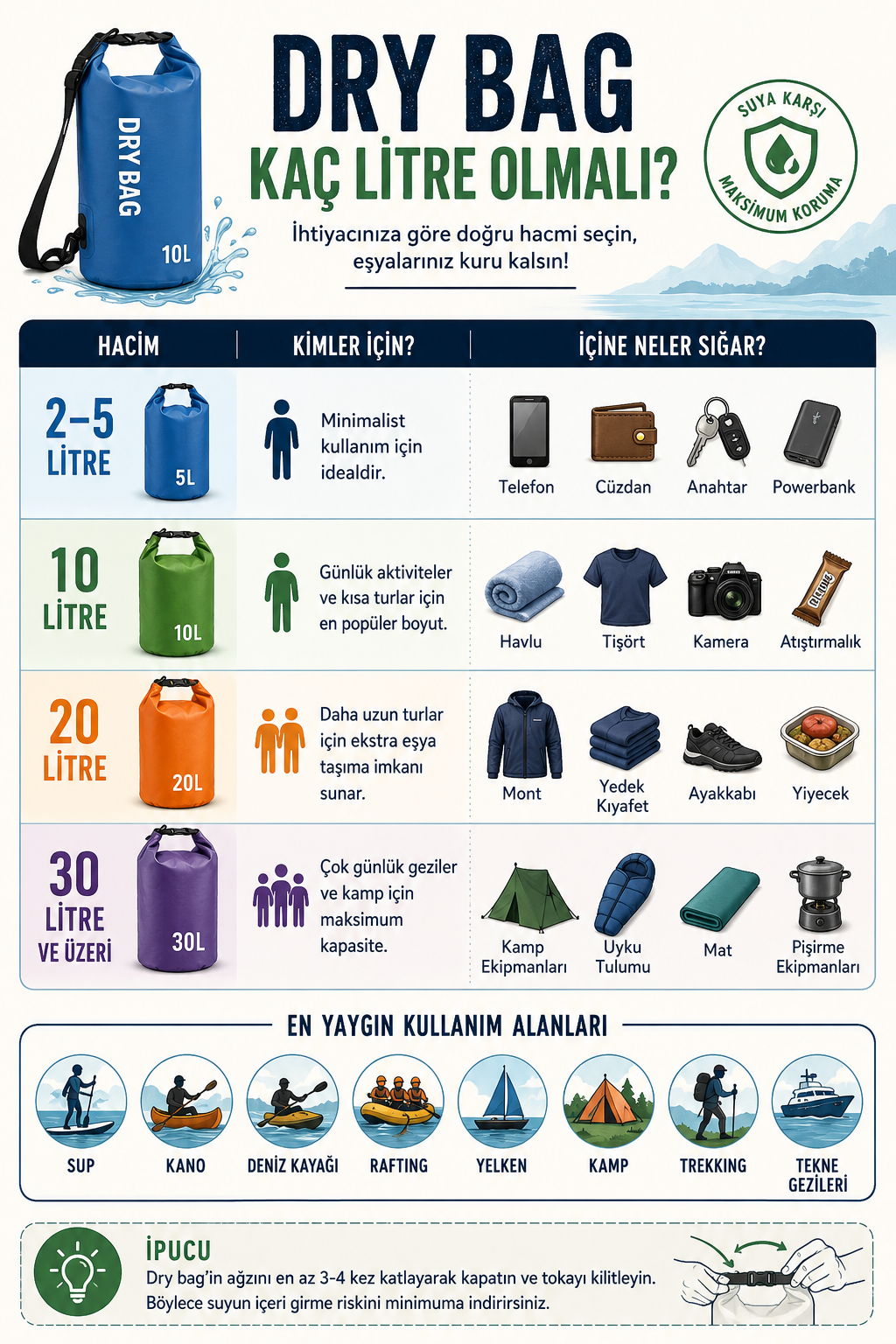
Dry bags are sold by volume in litres. The right size depends entirely on what you’ll use it for.
| Volume | What fits, and who is it for? |
|---|---|
| 2-5 litres | Phone, wallet, keys, power bank and small personal items. Anyone into water sports should have at least one this size at home. |
| 10 litres | A phone and wallet plus a towel, T-shirt, snacks, a camera or even a tablet. One of the most popular sizes. |
| 20 litres | Spare clothes, a light jacket, shoes or food. Handy on long SUP and canoe trips. |
| 30 litres and up | Camping gear, a sleeping bag, tent kit and multi-day trips. |
What to look for when buying a dry bag
Material
The most common materials are PVC and TPU. PVC bags are cheaper but can be a bit heavier. TPU is lighter, more flexible and usually more durable. The trade-off is that it costs a bit more.
Seams
If you want a dry bag that will last you for years, pay close attention to how the seams are made.
Good-quality bags use welded seams instead of conventional stitching. That greatly reduces the chance of water seeping in through the seams.
Straps
Smaller bags can be carried by hand. With larger ones, though, a shoulder strap or backpack-style straps make a big difference to comfort. If you’re thinking of buying a bag of 20 litres or more, make sure you check this.
Light-coloured interior
Here’s a small but useful tip. In dry bags with a light-coloured inside, it’s much easier to find your phone, keys or small bits of kit. It’s one of those details that seems minor but makes a real difference once you’re using it.
Do you need a dry bag for your phone?
If all you’re carrying is a phone, you don’t have to buy a dry bag. A waterproof phone pouch can be a cheaper and more practical option.
But if you’re also carrying a wallet, car keys, a towel or clothes along with your phone, a small dry bag makes much more sense.
Common mistakes when using a dry bag
- Filling it right to the top. That way you can’t roll the top down enough, and water is more likely to get in.
- Not rolling the top down enough times.
- Not clipping the buckles together properly.
- Packing it with sharp objects.
- Not cleaning it after it’s been in contact with salt water.
Rinsing your dry bag in fresh water and letting it dry completely when you get back from the sea will make it last longer.
Who needs a dry bag?
If you only go to the seaside once a year, you don’t need to buy one. But if you regularly:
- go paddleboarding,
- go canoeing,
- go sea kayaking,
- join boat trips,
- want to protect your electronics when camping or trekking,
a dry bag will be a very sensible investment. And if you’ll be spending a long time in the water, choosing the right wetsuit becomes just as important.
Prices vary widely depending on brand, size and material quality. The models I looked at ranged from around 600 TL to 13,000 TL. Whatever your needs and budget, you’ll easily find one that works.
The bottom line: should you buy a dry bag?
A dry bag can look like an unnecessary bit of kit at first. But once you start spending time on water sports, it’s easy to see why they’re so popular.
You don’t need expensive solutions to protect your phone, wallet or spare clothes. A good-quality dry bag in the right size will help you carry your things safely, both at sea and out in nature.
If you’re new to SUP, canoeing, sea kayaking or similar water sports, there’s no need to rush out and buy a dry bag on day one. First, see whether you’re really going to stick with it.
If, over time, these activities become part of your life, a good-quality dry bag that fits your budget is one piece of kit you won’t regret buying.
For guides to bags, footwear and other kit, take a look at our Gear Guide category.