
What is a leash? Why wearing one is vital in water sports

Once you start getting into board-based water sports, you’ll come across a piece of kit called a “leash“. It might look like a minor detail at first, but it’s actually one of the most important bits of safety equipment you can have.
The idea is very simple. It’s a cord that attaches to your ankle or waist. Plenty of people think, “I can swim, I don’t need one.”
To be honest, when I started out I also thought a leash was just an optional extra. But after watching SUP and surfing accidents, I completely changed my mind. Seeing how the wind can push a SUP board dozens of metres in a matter of seconds made me realise why a leash matters so much. A leash isn’t designed to keep you afloat; it’s designed to keep your kit from getting separated from you.
And if you’re thinking, “So what if the board drifts a few metres away? I’ll just swim after it,” let me remind you that water is no joke. Once wind and current come into play, a few metres can turn into dozens within seconds. So what exactly is a leash? Which sports is it used for? Do you really need one? Let’s take a look.
What is a leash?
A leash is a piece of safety equipment that connects the board to the rider. One end is fixed to the board. The other usually goes around your ankle, wrist, just below the knee or your waist.

That way, the board doesn’t get away from you when you fall in. In windy weather especially, a board can move far faster than you’d expect. You start swimming after it and, before you know it, it’s a long way off. That’s exactly what a leash was developed to prevent.
What does a leash do?
Its basic job is very simple: keeping the board attached to you. But the benefits don’t stop there. Used properly, a leash:
- Stops you losing your board.
- Makes you safer.
- Saves you wasting energy.
- Makes it easy to reach something you can hold on to in the water in an emergency.
Out on open water, that last point matters more than you’d think. When you’re tired, the safest place to rest is very often the board itself.
Do you need to wear a leash for SUP?
SUP is usually done in calm bays and seas. Even though it’s generally thought of as safe, in my view you should still wear a leash.
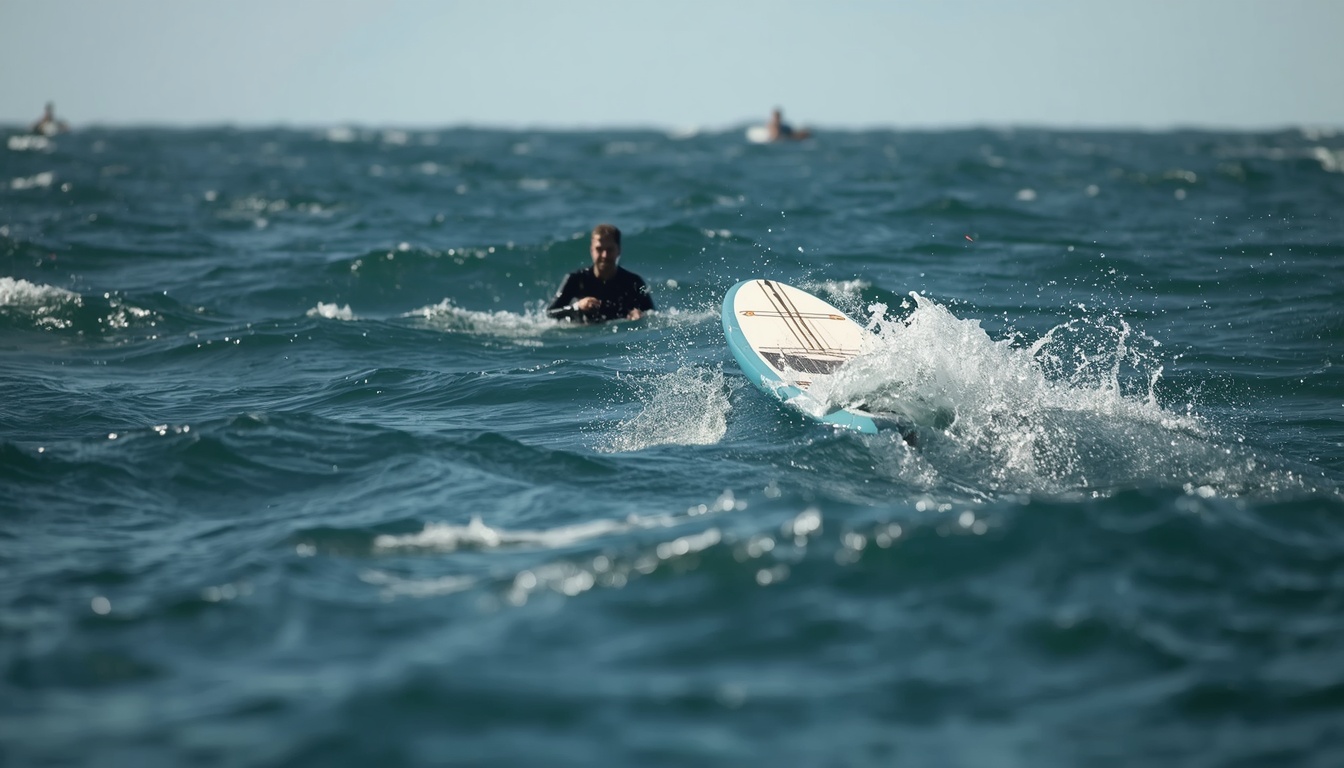
SUP boards are very light. So wind, waves and currents can carry the board away from you in a matter of seconds.
Picture this. You fall off the board. Just as you’re trying to climb back on, a strong gust blows and the board drifts a few metres away. The moment you start swimming after it, the board keeps on moving.
Now you’re not swimming towards a fixed target but one that keeps getting further away. Before long it can turn into a chase, and you can end up far more tired than you expected. In some cases you might not be able to catch the board at all. On top of that, more and more SUP paddlers have been heading a long way out from the shore in recent years. That makes staying attached to your board even more important. It’s why many instructors make wearing a leash compulsory.
Remember that your SUP board is also your most important piece of safety equipment. When you’re tired, you can climb onto it, rest, or stay afloat on it until help arrives. So keeping the board close isn’t only about not losing your kit; it matters a great deal for your safety too.
Do surfers use a leash?
Absolutely. In fact, a leash is a standard piece of surfing kit. When a wave knocks you off, you don’t have to swim a long way to get your board back. With a leash, the board stays attached to you the whole time. It also greatly reduces the risk of a loose board hitting other people.
Using a leash for wing foiling and other foil sports
Leashes are widely used in foil sports as well. But the set-up is a little different here. For example, you can use a board leash and a wing leash at the same time. That’s because it’s not only the board that can get away from you: the wind can carry off the wing you’re holding too. So many wing foilers choose to use two separate leashes.
Do you need a leash for canoeing and sea kayaking?
Things work a bit differently here. In canoes and sea kayaks, other safety solutions are used instead of the classic ankle leash. In sit-in sea kayaks especially, you’re already inside the boat, so there may be less need for a leash. But on fishing kayaks, or to stop gear going missing, different tether systems can be used. So leashes aren’t just for board sports.
What types of leash are there?
They’re not all the same. There are different models for different uses.
| Type | Features |
|---|---|
| Straight leash | The most classic model; it hangs straight. Usually the choice for surfing. |
| Coiled (spiral) leash | The model SUP paddlers choose most. When it’s not in use, it springs back shorter, so it doesn’t drag through the water. Handy for flat-water SUP. |
| Waist leash | Attaches to your waist instead of your ankle. Used for some open-water activities; not suitable for every sport. |
How to choose the right leash length
The general rule here is very simple: your leash should be about the same length as your board.
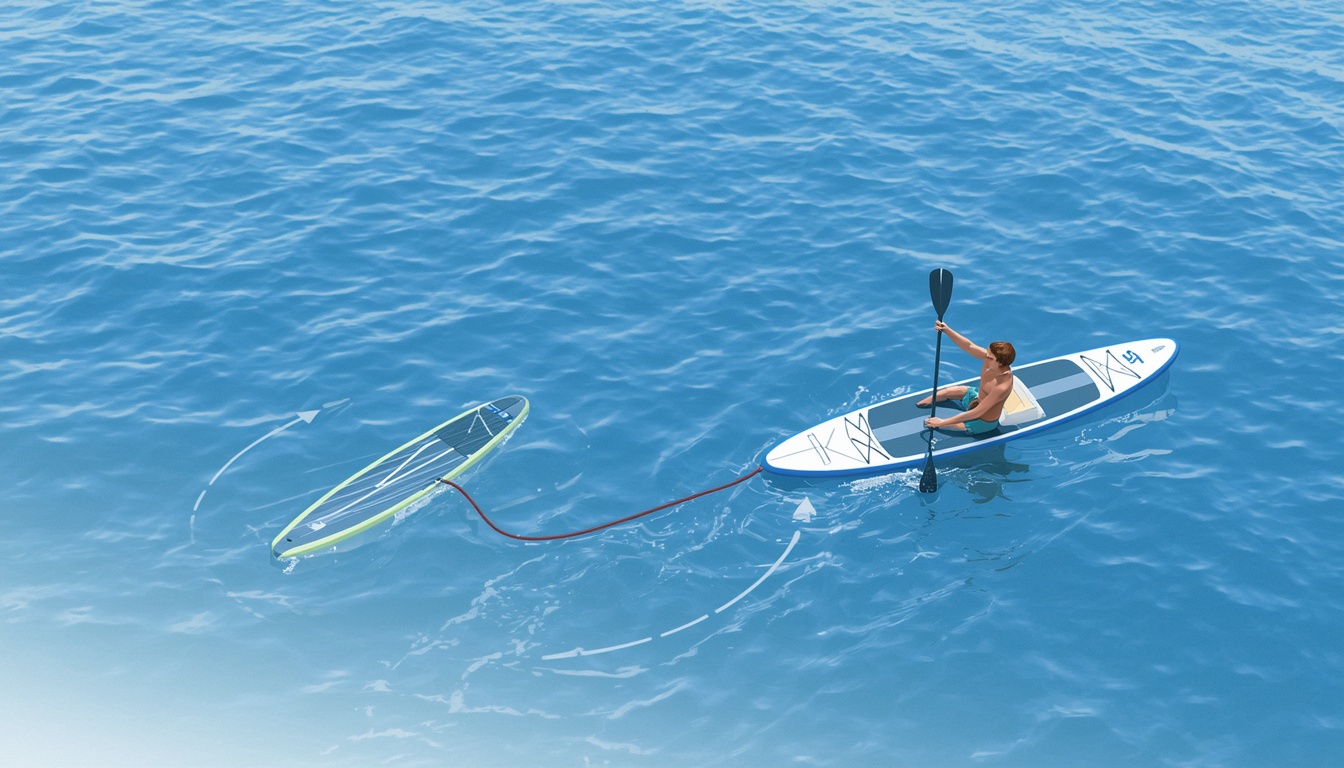
If you ride a 10-foot board, for example, you’d normally go for a leash that’s around 10 feet long.
- A leash that’s too short: can restrict the board’s movement.
- A leash that’s too long: can get tangled for no good reason.
Either way, it can make your ride less comfortable.
What are the risks of not wearing a leash?
A lot of people think a leash is only there to stop you losing your kit. In reality, it’s a much bigger deal than that. Without a leash:
- The board can drift away from you.
- You may have nothing left to hold on to when you’re tired.
- Getting back can become harder on open water.
- The wind can blow the board away very quickly.
- Other people’s safety can be put at risk too.
One of the biggest mistakes people make at sea is thinking, “Nothing will happen to me.” Conditions on the water can change within minutes. You might be a very strong swimmer, but wind, current and waves are usually more powerful than we think.
Sometimes a few seconds of carelessness is all it takes for the whole outing to end badly.
Remember: if you lose your kit, it costs you money. But when your health and your life are at stake, it’s a completely different matter.
Should you always wear a leash?
Generally, yes. But there are some exceptions. On fast-flowing rivers or in activities like rafting, for instance, different safety procedures may apply. We’ve covered why an ankle leash can be dangerous on a river in a separate article.
Think about several people in the same raft on a rafting trip. Now imagine falling into the water in a powerful current and your leash snagging on a rock. That could put you in serious danger. So whatever sport you do, learn its safety rules and use the right equipment for it.
What to look for when buying a leash
When you’re buying one, I’d suggest not looking at the price alone.
Thickness
Thicker leashes are more durable. But they can be a little heavier.
Attachment points
Corrosion-resistant fittings last longer. If you’ll be using yours in salt water, I’d especially recommend keeping an eye on this.
A comfortable cuff
The part that straps to your leg should be good quality. Otherwise it can start to rub on long sessions.
What you’ll use it for
A leash made for SUP isn’t the same as one designed for big-wave surfing. So pick a model that suits your sport.
Would I use a leash?
Without a doubt. Safety always comes first for me. I hope it does for you too.
Whatever sport you do, I’d urge you not to cut corners on safety kit.
The bottom line: why is a leash essential?
At first glance, a leash may look like a simple length of cord. But in water sports, it’s a far more important piece of safety equipment than you might think. If you’re into SUP, surfing, wing foiling or other foil sports in particular, wearing a leash will make you a lot safer.
I’ve never thought of a leash as performance gear. To me, it’s safety equipment. In many board sports, a leash deserves the same thinking as the helmet you wear when you ride a bike. Finally, ask yourself this:
If my board drifted away from me in a matter of seconds, could I really catch it?
If you can’t answer “yes” to that without hesitating, a leash isn’t just one option for you; it’s a smart safety precaution. For guides to SUP, paddling, diving and other water sports, take a look at our Water Sports category.