
How to breathe while snorkeling: a beginner’s guide
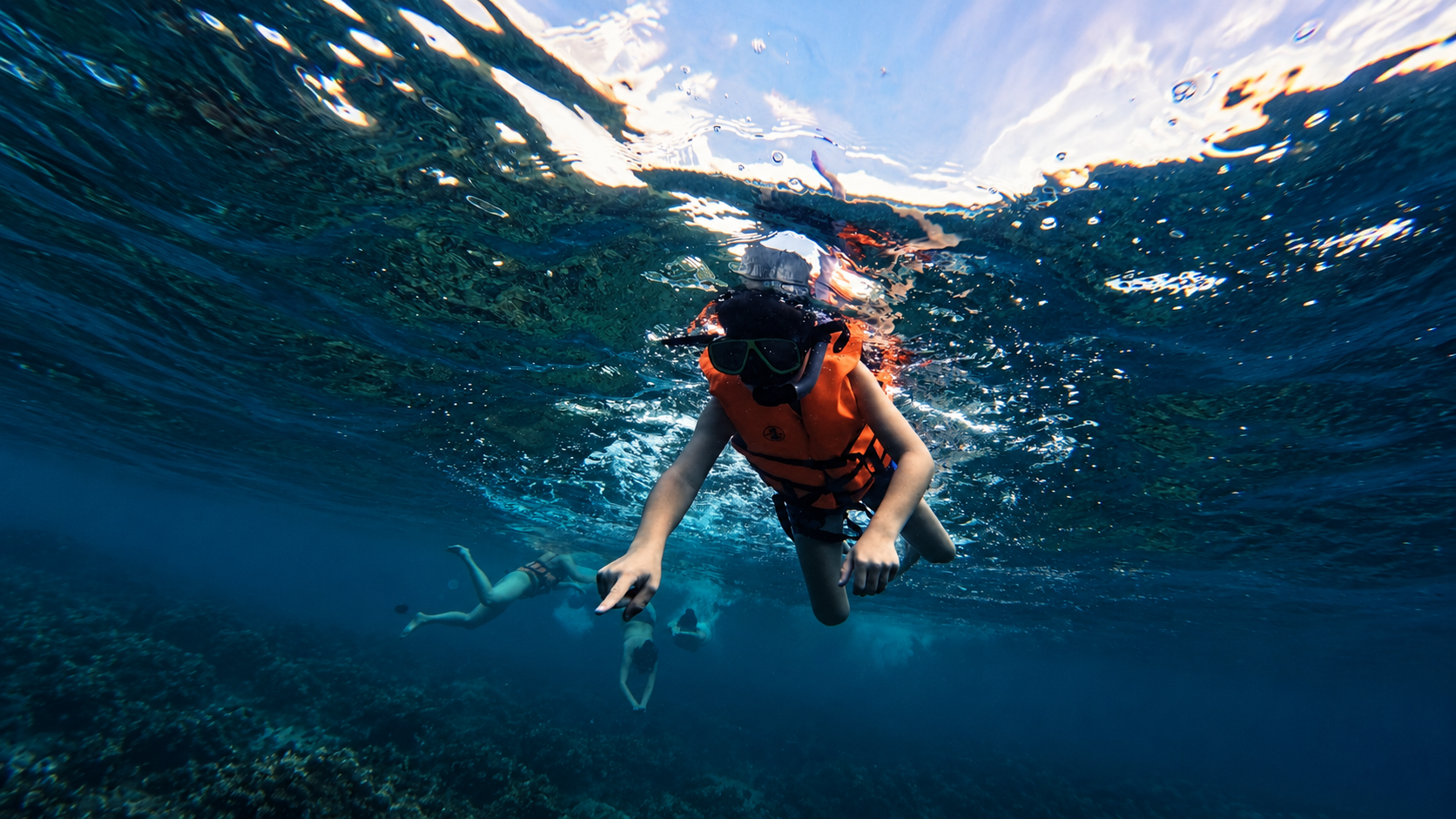
Today, I want to talk about one of the most important parts of getting started with snorkeling: breathing through a snorkel. Honestly, I couldn’t use this simple piece of equipment for years. I tried it as a child, swallowed some water, and ended up with a serious fear of it. Years went by, and I still couldn’t snorkel. Then one day I’d had enough: I was going to get over that fear. And I did.
When we first get into the water with a snorkel, it can feel as though we need to relearn one of the simplest things we do every day: breathing. Our face is in the water, there’s a mouthpiece between our lips, and before we know it, we’re thinking, “What if water gets in?” So feeling tense for the first few minutes is perfectly normal. Believe me, I’ve had plenty of practice with that feeling. I probably know exactly what you’re going through.
The good news is that snorkeling doesn’t require a special breathing technique. A few habits can make a real difference, though, helping you stay comfortable, in control, and safe.
Practise breathing through a snorkel close to shore first
I didn’t head straight out to sea to get over my fear. I put on my mask and snorkel in shallow water where I could stand. Before putting my face in, I took a few breaths through the mouthpiece. Anyone watching from shore probably thought, “What on earth is he doing?” I didn’t care.
You might instinctively bite down hard on the mouthpiece. Try not to. There’s no need to tense your jaw, and after a few minutes, you’ll start feeling the strain. Next, put your face in the water and focus on just one thing: settling into a comfortable breathing rhythm. There’ll be time to explore your surroundings in a moment.
Take calm breaths, rather than short, shallow ones
When we panic, we often start breathing quickly and shallowly without noticing. Through a snorkel, that can feel uncomfortable and make the sensation of breathlessness worse. Instead, try a rhythm that’s a little slower than usual:
- Breathe in comfortably through your mouth.
- Breathe out calmly, without holding your breath.
- Take your time, particularly when breathing out.
Don’t force yourself to take an enormous breath just because you think you should “breathe deeply.” But avoid tiny, rapid breaths too. Aim for comfortable, full breaths that move enough fresh air through the snorkel. If the tube is too narrow, unnecessarily long, or poorly made, breathing may already be harder. Choosing suitable equipment matters more than you might think.
Breathe through your mouth, not your nose
With a snorkel, air goes in and out through your mouth. If your mask fits correctly, your nose sits inside it, and that’s completely normal. At first, your usual instinct to breathe through your nose may kick in. If that happens, lift your head out of the water, settle yourself, and try again. Don’t force yourself to keep going.
Here’s a little practice exercise: in shallow water, with your face in the water, spend 30–40 seconds focusing only on breathing in and out through your mouth. Your body can get used to the pattern surprisingly quickly.
What should you do if water gets into your snorkel?
A wave, the wrong head angle, or a brief dip below the surface can let water into the tube. If that happens, don’t panic and try to suck in a sharp breath.
Lift your head above the water. If you don’t feel comfortable, take the snorkel out of your mouth and breathe normally. If you’re stable where you are, you can put the mouthpiece back in and try clearing the water with a strong exhale. Snorkels with purge valves make this a little easier. Still, practise it in shallow water first, rather than trying it for the first time away from shore.
If you keep coughing, your breathing doesn’t settle, or you feel panicky, call it a day: head back to shore and rest. There’s no rule at sea that says you have to push through.
If you’re thinking about breath-hold diving
Exploring at the surface with a snorkel and diving underwater while holding your breath are different skills. If you’re just starting out, staying at the surface can be plenty of fun and is the safer option.
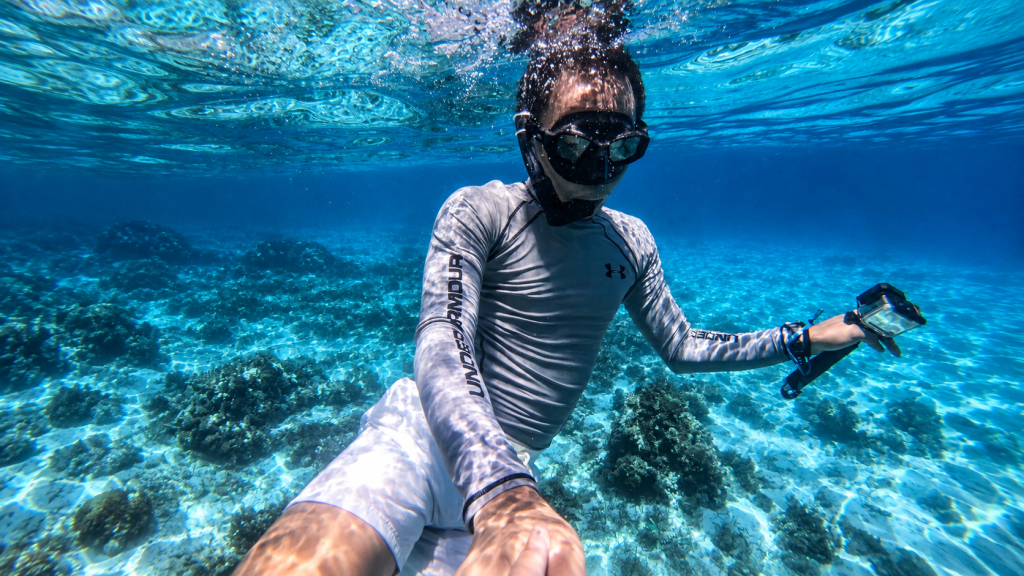
Don’t take repeated deep, rapid breaths before attempting a dive. That doesn’t mean you’re storing more oxygen. It can delay your body’s warning that you need to breathe and increase the risk of a blackout. Don’t try breath-hold diving alone. Have a buddy and actually watch one another; don’t both dive at the same time.
Often, it’s your pace that disrupts your breathing
If your breathing becomes unsettled while snorkeling, look at your pace first, rather than assuming it’s the current. Kicking too hard with your fins, constantly lifting your head, or suddenly swimming farther out to investigate something can raise your heart rate. Choose a pace that leaves you able to keep your head above water and rest. If needed, roll onto your back, bring your face out of the water, and recover with a few normal breaths.
The aim on your first day is to feel comfortable in the water, rather than cover as much distance as possible. Once your breathing stays calm, you’ll start noticing more of the colors and little details anyway.
A quick safety note
As a beginner, don’t head out snorkeling alone, in areas with boat traffic, or on days with noticeable waves or currents. If you experience chest pain, unusual shortness of breath, dizziness, lightheadedness, or a cough that won’t settle, get out of the water immediately and seek medical help if needed.
The basic rule of breathing through a snorkel is simple: if you can’t breathe comfortably, stop first and get comfortable again. The underwater world isn’t in a hurry.
Sources
- Divers Alert Network (DAN) — Snorkeling and Scuba Diving: risks associated with taking in water, hyperventilation, currents, and snorkeling alone.
- PADI — Snorkels: tube diameter, length, and snorkel features that affect comfortable breathing.
- Divers Alert Network (DAN) — Shallow-Water Blackout: hyperventilation before breath-hold diving and the risk of a blackout.