
What is merino wool, and why is it so popular for outdoor clothing?

When you start researching outdoor gear or walk into a shop, the sales assistant may tell you a product is made from merino wool. So what exactly is merino wool? At first you might assume it’s some special fabric technology. Some people even think it’s a brand.
You’ll usually see labels like “100% Merino Wool” or “Merino Blend” on a brand’s premium ranges, and they cost noticeably more than ordinary T-shirts. When someone says “wool”, you probably picture the classic stuff we all know – the jumpers that made us itch as children, left us overheated and that we couldn’t wait to pull off… But merino wool is a bit different. It doesn’t itch.
It can handle sweat. It slows down odour. You can even wear it in summer.
So how did merino wool become so popular? Let’s take a look.
What is merino wool?
Merino wool is a natural wool that comes from Merino sheep. These sheep are mainly raised in countries such as Australia, New Zealand and South Africa.
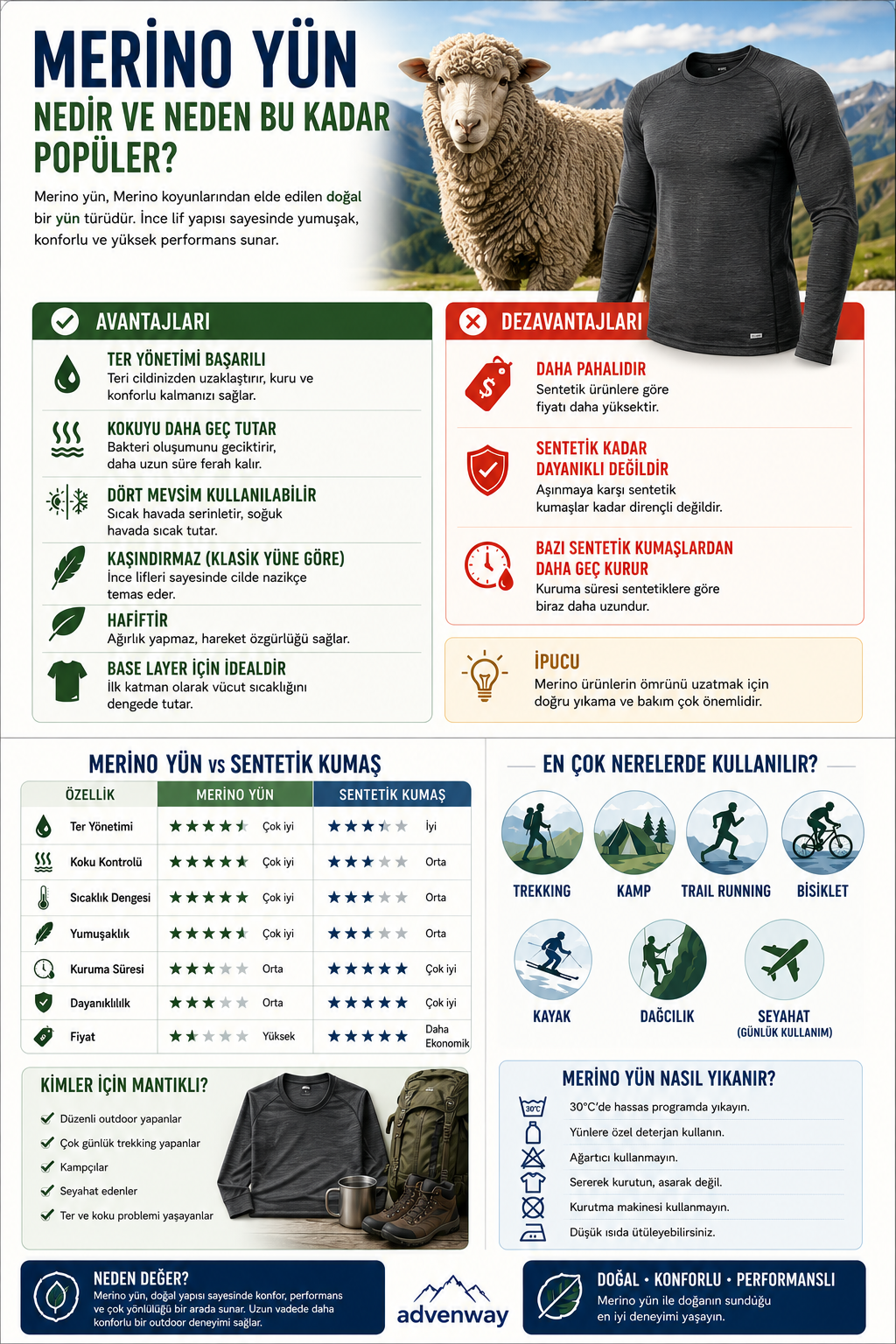
Compared with ordinary sheep’s wool, merino fibres are much finer. That’s what makes it so special. Finer fibres:
- Feel softer.
- Irritate the skin less.
- Are far more comfortable for everyday wear.
If you’re wearing merino for the first time, this might surprise you. The wool we’ve been used to since childhood usually makes us itch and overheat. With merino, you largely don’t get that feeling.
Why has merino wool become so popular?
If you ask me, there’s no single reason. What made merino so popular in the outdoor world is that it offers several qualities at once. On top of that, it genuinely delivers on its promises, which is a big plus.

For a piece of clothing, being:
- lightweight,
- good at handling sweat,
- slow to start smelling,
- adaptable to different weather
is a huge advantage for outdoor activities. And merino wool naturally offers a good deal of that.
Can you wear merino wool in summer?
Lots of people are surprised to hear you can wear merino in summer. I won’t lie, I was surprised too when I first heard it. Because the obvious question pops into your head: “Wool, in summer?”

Merino, though, helps regulate your body temperature thanks to the structure of its fibres. It moves sweat away from your skin and helps manage moisture.
Of course, I’m not talking about thick winter merino here. In summer, lighter-weight merino T-shirts are a good choice, especially for summer treks and long walks.
Why is merino wool such a popular choice in winter?
Merino wool helps hold on to some of the warm air your body produces. That’s why many outdoor brands use merino as a base layer – the first layer of a layering system. It’s also why it’s the go-to first layer for sports such as trekking, camping, skiing and mountaineering.
Does merino wool really handle sweat?
I mostly wear merino as a base layer. I haven’t had the chance to test it properly over a long period in summer yet, but in winter I can say it’s done a good job with sweat. Merino fibres can hold a certain amount of moisture within their structure and release it gradually. That can cut down on the clammy feeling you get after sweating.
That doesn’t mean you’ll stay completely dry, of course. Like any fabric, merino will get wet during hard effort. But it performs far better than cotton. Cotton is poor at getting rid of sweat, and when it’s wet it feels heavy on you and can be uncomfortable.
Does merino wool not smell?
Merino wool can slow the growth of odour-causing bacteria more effectively than synthetic fabrics. If you’ve ever worn a base layer, you’ll know how much that matters. The first layer, right against your skin, is the part that gets sweatiest during activity. That’s why, on:
- multi-day treks,
- bikepacking trips,
- camping trips,
- travels
you’ll see people wearing the same merino T-shirt for several days. Don’t get me wrong, though. It isn’t true that merino wool never smells. It can simply take noticeably longer to start smelling than synthetic fabrics.
Does merino wool itch?
I haven’t had any problems with itching in the merino I’ve worn. But it’s worth saying that everyone’s skin is different. People with very sensitive skin may feel slight discomfort. Even so, I can safely say it’s far more comfortable than traditional sheep’s wool.
Does merino wool have any downsides?
Of course it does. No piece of gear is perfect. If you ask me, merino’s biggest downsides are these:
Price
Compare it with other products and the first thing you’ll probably notice is the price. Merino products are noticeably more expensive than synthetic ones.
Durability
Another downside of merino is durability. Synthetic fabrics are generally more resistant to wear and tear than merino wool.
That’s why many brands blend merino with materials such as nylon or polyester to make it more durable.
Drying time
Merino performs well compared with cotton, but it may not dry as fast as some synthetic fabrics. If you do high-intensity sport, you might notice this small difference. But weighed against the benefits, it isn’t a big problem for me.
Which sports is merino wool used for?
These days you’ll find merino in all sorts of outdoor activities. For example:
- Trekking
- Hiking
- Camping
- Trail running
- Cycling
- Skiing
- Mountaineering
- Travel
and plenty of people wear it day to day as well.
How do you wash merino wool?
Washing is one of the most important things to get right. Merino products may look tough, but washing them the wrong way can seriously shorten their life. As a general rule:
- Follow the care label.
- Wash at a low temperature.
- Don’t use harsh chemicals.
- Don’t tumble dry on high heat.
Unless the label says otherwise, sticking to these will help your merino last. For looking after your outer layers, have a look at our DWR coating article.
And whatever you buy, don’t take the washing instructions lightly. Don’t tell yourself “it’ll be fine”. Their lifespan really can be cut short.
Who does merino wool make sense for?
If you ask me:
- people who trek regularly,
- campers,
- anyone who loves long walks,
- people who take part in multi-day outdoor activities,
- travellers who want to pack light
can get real benefit from merino. On the other hand, if you only go for the odd walk around town, you don’t necessarily need to pay top prices straight away.
Would I choose merino wool?
It’s already part of my kit. If you’re thinking of going the merino route too, I’d just remind you that you don’t have to buy everything in merino. Every activity we do has different needs.
Still, I’d definitely want at least one merino piece in my wardrobe as a base layer. And for anyone who wants to try merino, I think the most sensible place to start is a good-quality base layer or a thin merino T-shirt.
The verdict: should you buy merino wool?
Merino wool isn’t an urban myth. Nor has it earned its name in the outdoor world for nothing. Used for the right things, it offers real advantages. In particular:
- its sweat management,
- the way it slows down odour,
- the fact you can wear it year-round,
- its comfort
have made it a favourite fabric for many outdoor athletes.
My advice is to decide first which sport you’ll be doing regularly. If a merino T-shirt or base layer isn’t one of the first things you need, I wouldn’t rush to buy one.
Finally, ask yourself this:
Do I really need what merino wool has to offer, or do I just want it because it’s popular?
The answer will go a long way towards telling you what’s right for you. For more guides on technical fabrics, jackets and outdoor clothing, have a look at our Outdoor Clothing category.