
What Is a Sled Pull? How to Do It and Which Muscles It Works
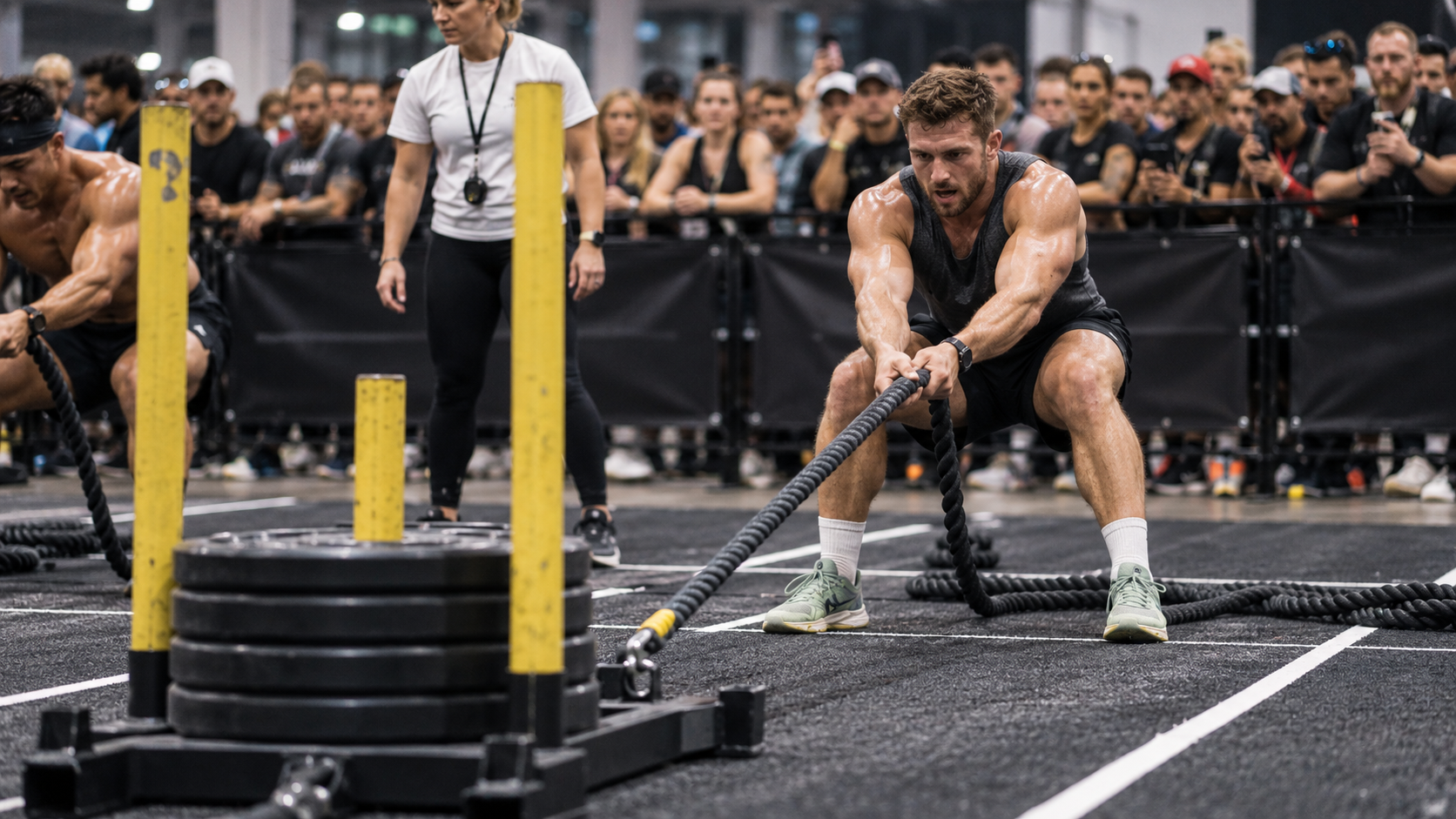
You may have seen someone at the gym pulling a thick rope to bring a loaded sled toward them. Someone else holds handles attached to a sled and walks backward. When both are labeled “Sled Pull,” it’s fair to wonder: “So which one are we doing?”
Both are sled-pulling exercises. But gathering a rope with your hands and dragging a sled while walking backward aren’t the same movement. The version you choose also changes which muscles do more of the work.
Although it has become a familiar sight in HYROX videos in recent years, the movement didn’t begin with the race. Sleds were already used in strength and conditioning. You don’t need a HYROX entry to give one a try.
What is a sled pull, and what are the different versions?
A sled pull is an exercise where you pull a loadable sled using a rope, straps or suitable handles. You’re not lifting the weight off the floor; the sled slides along the surface.
One common version involves pulling the sled toward you with a rope. You face the sled and gather the rope hand over hand. As one hand pulls toward you, the other reaches forward to take the next grip. This is the rope-pulling version you see in HYROX; the athlete can also take backward steps within the designated area.
In another version, you hold the handles or strap and walk backward rather than gathering the rope hand over hand. This is called a backward sled drag. As the sled moves toward you, you keep stepping away from it.
There are also exercises where you attach the sled behind you with a suitable harness and walk or run forward. You may see these grouped under the same heading, but they’re different from a rope pull. This article focuses mainly on pulling a sled toward you with a rope.
Which muscles does a sled pull work?
Pulling the rope works your back muscles, particularly your lats, along with the arm muscles that bend your elbows. Repeatedly gripping the rope without losing hold also challenges your forearms and grip. You might find your hands tiring before your back does.
Your core isn’t taking a break either. You need to hold your position so you don’t collapse forward or fall backward out of control as you pull. Your legs and glutes contribute according to your technique. Bending your knees and using your body weight, or taking short backward steps, means your arms aren’t doing everything alone.
In the backward-walking version, your quads play a more noticeable role. So one video calling it a “back exercise” and another a “leg exercise” isn’t necessarily a contradiction. Look at the movement being performed first. You can also see different sled-pulling variations in Rogue’s sled training guide.
How to do a rope sled pull
Prepare the load and space
Don’t pile on the weight for your first attempt. Depending on the surface, even an empty sled can make you work. Asking a trainer to demonstrate is a good idea too, especially since you may not notice what your lower back and feet are doing while you gather the rope.
First, check the sled attachment and rope. Are the plates properly positioned? Is the rope damaged? Is the sled’s path clear? If you’ll be stepping backward, check the space behind you too.
Set your position and start pulling
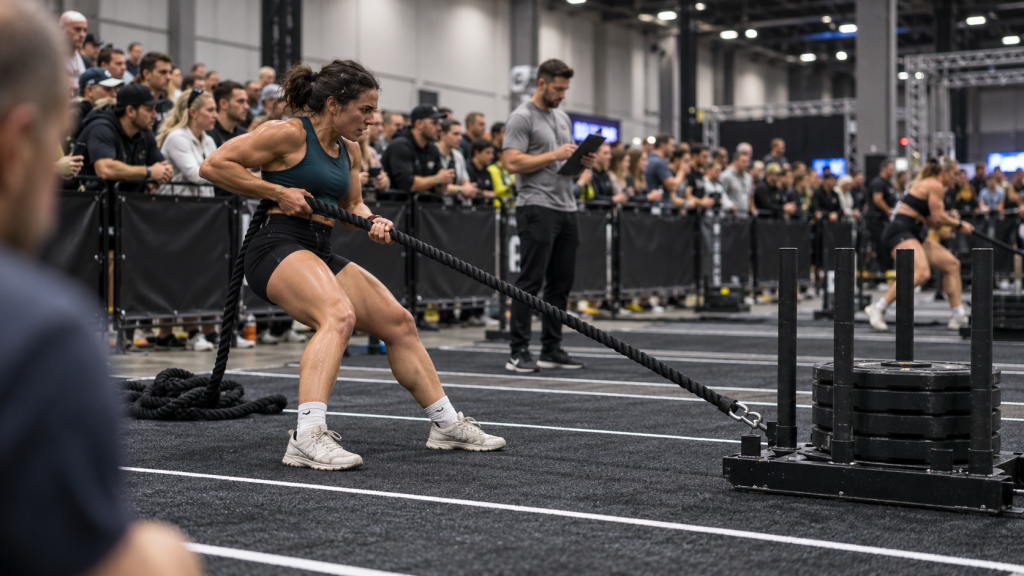
Face the sled. Place your feet where you can keep your balance, bend your knees and move your hips slightly back. You don’t need to squat as low as possible. Find a height where you can pull without rounding your lower back or losing balance.
Gently take the slack out of the rope. Then begin pulling toward you, alternating hands. Rather than yanking with all your strength at once, move the sled with a series of pulls you can repeat.
Don’t let the rope pile up under your feet
You can gather the rope while staying in place, or use short backward steps if there’s enough room. Either way, watch for rope collecting under your feet. It’s easy to focus on the sled and forget the rope you’ve dropped on the floor.
Don’t wrap the rope around your hand, wrist or body. Doing that for a stronger grip can put you in a difficult position when the load moves. If the rope starts slipping, stop and reset your grip or reduce the load. Letting it slide rapidly through your hands can cause friction injuries. For technique options, see Centr’s Sled Pull guide.
What weight should you start with?
To me, one of the most misleading things about this exercise is looking only at the plates. Just because someone else pulls a certain weight comfortably doesn’t mean it will feel the same for you. Their sled, carpet and technique may all be different.
Friction between the sled and the surface changes how much force you need. A load that moves easily in one gym may feel much heavier on another carpet. Empty sleds don’t necessarily weigh the same either.
For your first attempts, choose a load you can move steadily for several pulls. If you’re throwing your whole body backward, your feet are slipping or you can’t hold the rope from the start, reduce the weight. If the movement at the end of the distance still looks like it did in the first few meters, you’re on the right track.
How can you track progress?
Using the same sled and surface makes progress easier to track. Rather than just writing “pulled 40 kg,” note whether that’s plate weight or the total including the sled. Add distance and rest, and you’ll have a record you can compare with your next session.
How do you add sled pulls to your training?
You can use sled pulls to train your back, arms and grip together. A lighter load also lets you cover a longer distance. But a heavy pulling session doesn’t have to look the same as one where you’re trying to keep going for longer.
For example, you might have finished your back exercises and then done loaded carries. If your hands are already tired when you reach the sled, account for that. Leaving your first attempts until the very end of a session like that can make learning the movement harder.
A sample beginner session
A beginner could try this short session:
- After a general warm-up, do a few short pulls with a very light load.
- Perform 3 × 8–10 meters of rope sled pulls with a weight you can control.
- Rest for around 90–120 seconds between sets. Take longer if your hands and breathing need more time to recover.
This is a general example to help you learn the movement, not a personalized program. It isn’t the HYROX distance standard either.
It’s normal to hesitate when switching hands or to think about where to put the rope in your first session. Increasing the load before those things feel comfortable only makes the job harder. Covering the same distance with fewer stops counts as progress too.
In later sessions, you can make small increases to the load or distance. Don’t change everything at once. Stop if you experience sharp pain, dizziness or a loss of control.
If the sled won’t move, is strength always the problem?
Sometimes, yes: the load is too heavy. But sometimes you’re standing too upright with locked knees and trying to do most of the pulling with your arms. If your feet are slipping, you need traction before you can produce useful force.
Another problem is letting the rope go completely slack after every pull. The next movement first takes up the slack, followed by another hard tug. The sled moves a little, stops, and the process starts again. Trying a lighter load can help you see where those interruptions come from.
Sometimes you’re standing on the rope that’s piled up in front of you. However hard you pull, you’re blocking its movement yourself. Pay attention to the space around your feet as well as the sled.
Can it fix knee pain?
You may come across online claims that backward sled drags fix knee pain. An exercise being used in some training programs doesn’t make it suitable for every knee or back problem. If you already have pain, get it assessed before trying to solve it by adding weight.
HYROX Sled Pull distance and weights
Sled Pull is HYROX’s third station. In the standard adult Singles divisions for 2026/27, the total pulling distance is 50 meters: 4 × 12.5 meters.
| Singles division | Total weight incl. sled |
|---|---|
| Women Open | 78 kg |
| Men Open | 103 kg |
| Women Pro | 103 kg |
| Men Pro | 153 kg |
These figures include the sled’s own weight. You don’t add that much plate weight on top.
Sled Pull rules in the race
Use the lane assigned by the judge. At the start, the sled and athlete must be in their respective designated areas. During the pull, stay inside the athlete’s box at the end of the lane. You can’t step on its front or rear straight line while holding the rope. Pulling while sitting or kneeling is prohibited.
The entire sled must cross the end line of the 12.5-meter section before you change direction. Then move to the other end of the lane and pull it back. The rope must stay in your lane. It may extend behind the working area, but must not obstruct a neighboring lane.
Source: HYROX Singles 26/27, Section 8.3. Check your own format’s rules for Doubles, Relay and Adaptive.
If you’re preparing for HYROX, include these area boundaries in your gym practice. Walking backward down a long corridor while pulling a sled won’t feel the same as gathering a rope within a small space.
What if your gym doesn’t have a sled?
Cable pulls or back exercises suited to your level can help build pulling strength. Carrying exercises can train your grip too. They won’t, however, teach you how to get the sled moving or manage rope gathering on the floor.
If you’re doing general strength training, you can keep going without a sled. It isn’t essential equipment for every program. If you’re preparing for a race, occasional sessions at a gym with a real sled and rope will be more useful. That way, race day won’t be your first time picking up the rope and figuring out what to do with it.
Sources
- Rogue Fitness — The Benefits of Training with the Dog Sled: Rope pulls and different sled exercises.
- Centr — HYROX station guides: Sled pull: Pulling techniques. Current official rulebooks take precedence for race rules.
- HYROX Singles Rulebook 2026/27: Distance, weights and movement standards.