
How to Choose a Bike Lock — U-Locks, Chains and Folding Locks Compared
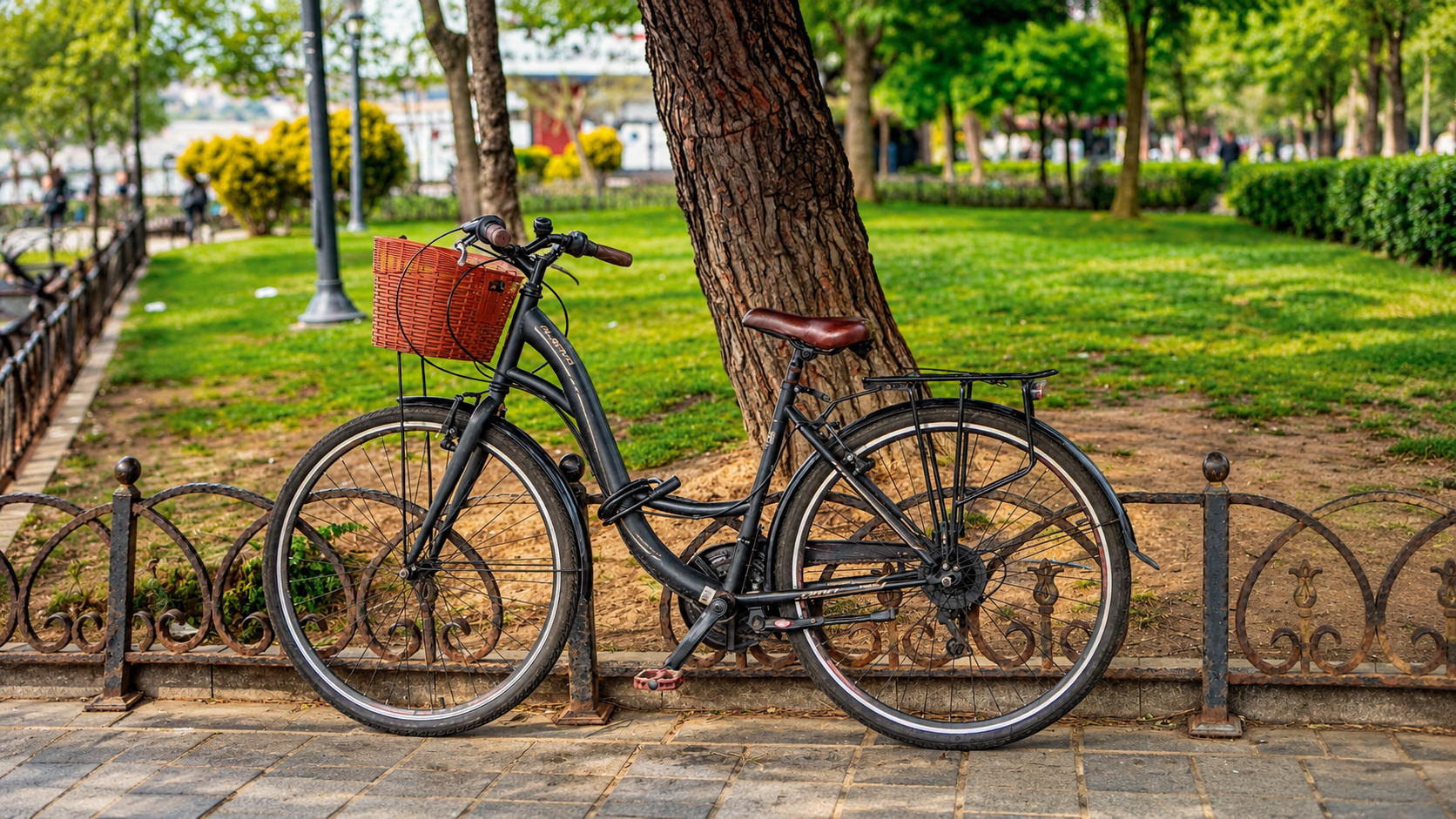
You can spend thousands of lira on a bike and still give one of its most basic pieces of security gear barely a second thought. In the shop, it’s tempting to pick up a lock and let your wrist do the judging. Feels heavy? Must be tough. Weight can tell you something, but start with three questions. Where will you leave your bike? How long will it be on its own? What will you lock it to?
A two-minute grocery stop and leaving your bike in the same spot for hours every day are two very different jobs. That’s where the differences between locks start to matter.
A lock makes theft harder and more time-consuming, which makes your bike a less inviting target. Choose one that makes sense for the way you actually ride and park.
How much risk is your bike exposed to?
A simple way to narrow down your options is to think about where you usually stop.
- Low risk. Your bike is in sight, in a busy spot, and only there for a short while. Think a stop at the bakery, a coffee run, or leaving it by the entrance while you train.
- Medium risk. You leave it outside for a few hours while you’re at work or school. There may be plenty of people around, but the bike is still unattended for a while.
- High risk. Your bike stays out overnight, at a station, in a quiet spot, or in an area where bikes are often stolen. An e-bike, a pricey gravel or road bike, or a carbon frame also raises the stakes.
For low-risk stops, a lock that’s easy to carry counts for more. At medium or high risk, how much room it takes up in your bag can move down the list. Saving a few hundred grams on a lock that falls short can get expensive later.
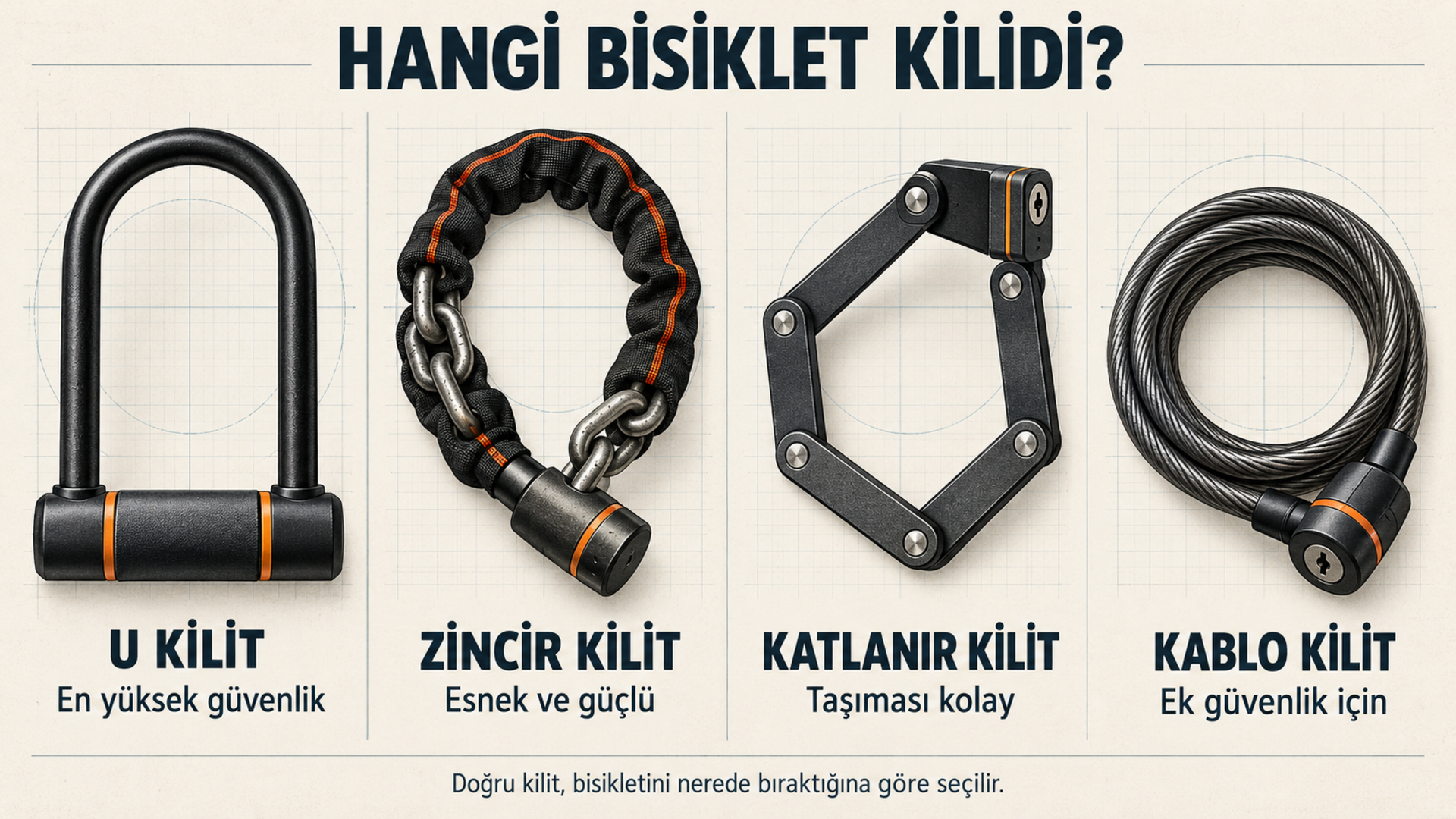
A U-lock is often the strongest choice
A U-lock, also called a D-lock, has a U-shaped shackle made of hardened metal. A good one tends to hold up better against cutting tools than many chains and thin cable locks. If you regularly park in the city, it’s usually the first type worth looking at.
Some of that strength comes from the shape. A good fit leaves little room to work a pry bar into the gap, and some designs require two separate cuts. The trade-off is a rigid, bulky lock. Getting it around the frame, rear wheel and a fixed post can be awkward, especially on smaller bikes. A larger U-lock makes the job easier, but the extra space inside can give tools more room to work.
Who is it a good fit for?
- You leave your bike parked in the city for a few hours at a time.
- You own a valuable bike or an e-bike.
- You’re happy carrying the lock in a backpack or on a frame mount.
- You want as much security as you can get from a single lock.
Look for a hardened steel body, a reputable independent security rating, and a mechanism that locks both ends of the shackle. Check the inside dimensions too. You want enough room for the frame, wheel and post, with as little spare space as possible.
A chain lock gives you more ways to lock up
A chain can go around things a U-lock can’t. A thick post, an awkwardly shaped railing, a couple of bikes you need to secure together? A chain makes those jobs easier. It’s often easier to loop one through the frame and both wheels, too.
A good chain lock can be seriously tough. Thin links made of ordinary metal may look the part, but they’re easier to cut. Look for sturdy links and a solid lock body. If either gives way easily, it sets the security level for the whole lock.
Then there’s the weight. You’ll feel a sturdy chain in your bag on a daily ride. Wearing it over your shoulder might seem handy until you have to stop suddenly or take a fall. If you can, secure it to the bike or carry it in a bag.
Who is it a good fit for?
- You leave your bike for long stretches at the same parking spot.
- You use thick or unusually shaped anchors.
- You need to lock several bikes together.
- Weight is lower on your list of priorities.
A chain can make an excellent main lock for bike parking at home or work. If it’ll be coming along for every ride, check what it weighs before you buy it.
A folding lock balances security and convenience for everyday rides
Folding locks use metal bars joined by hinges. Folded up, they pack down small. Open one up and it can reach around more than a U-lock can. That explains the appeal for city riders. It fits in a bag or a frame mount, and you’ve got a little more room to work with at the rack.
Take a close look at those hinges. They’re often the most vulnerable part of the lock. Quality models reinforce them, while an entry-level lock can look sturdier than it really is.
A good folding lock can be a practical fit for daytime city riding and medium-risk stops. For higher-risk parking, check how the specific model stacks up against a good U-lock. And if a folding lock is easy enough to carry that it actually comes with you, that’s a security upgrade in itself.
Who is it a good fit for?
- You ride around the city every day.
- You want to carry your lock on every ride.
- You find a rigid U-lock awkward to use.
- You mostly park during the day in medium-risk spots.
Check the manufacturer’s security rating, how the hinges are built, and any independent test results. Bar thickness only tells part of the story, and a cheap folding lock rarely offers the same protection as a good U-lock.
Where does a cable lock fit in?
Cable locks are light, long and easy to use. On their own, they offer too little protection for most parking situations. Thin cables in particular can be cut relatively quickly with basic hand tools.
Pair one with a U-lock or chain and it comes in handy for things that are easy to remove, like the front wheel, your helmet, or the saddle. A cable may do for a quick grocery stop on a low-value bike. If you’re leaving a good bike outside overnight, use a sturdier main lock.
How you lock up matters even more
Even a great lock can let you down if you put it in the wrong place. The classic example is locking only the front wheel. A thief can leave the wheel where it is and walk off with the rest of the bike. Lock only the frame and both wheels are still vulnerable.
Run your lock through the frame, the rear wheel if you can, and a genuinely fixed anchor. On most bikes, the rear wheel carries part of the drivetrain, which makes it more valuable and a little more work to remove. For a pricey bike that calls for two locks, use the main one for the frame and rear wheel and the second one for the front wheel.
Give the anchor a look too. A thin signpost, a removable railing panel, or a short post you can lift the bike over can undo all that work. Go for a sturdy bike rack, a thick post fixed to the ground, or a solid metal railing.
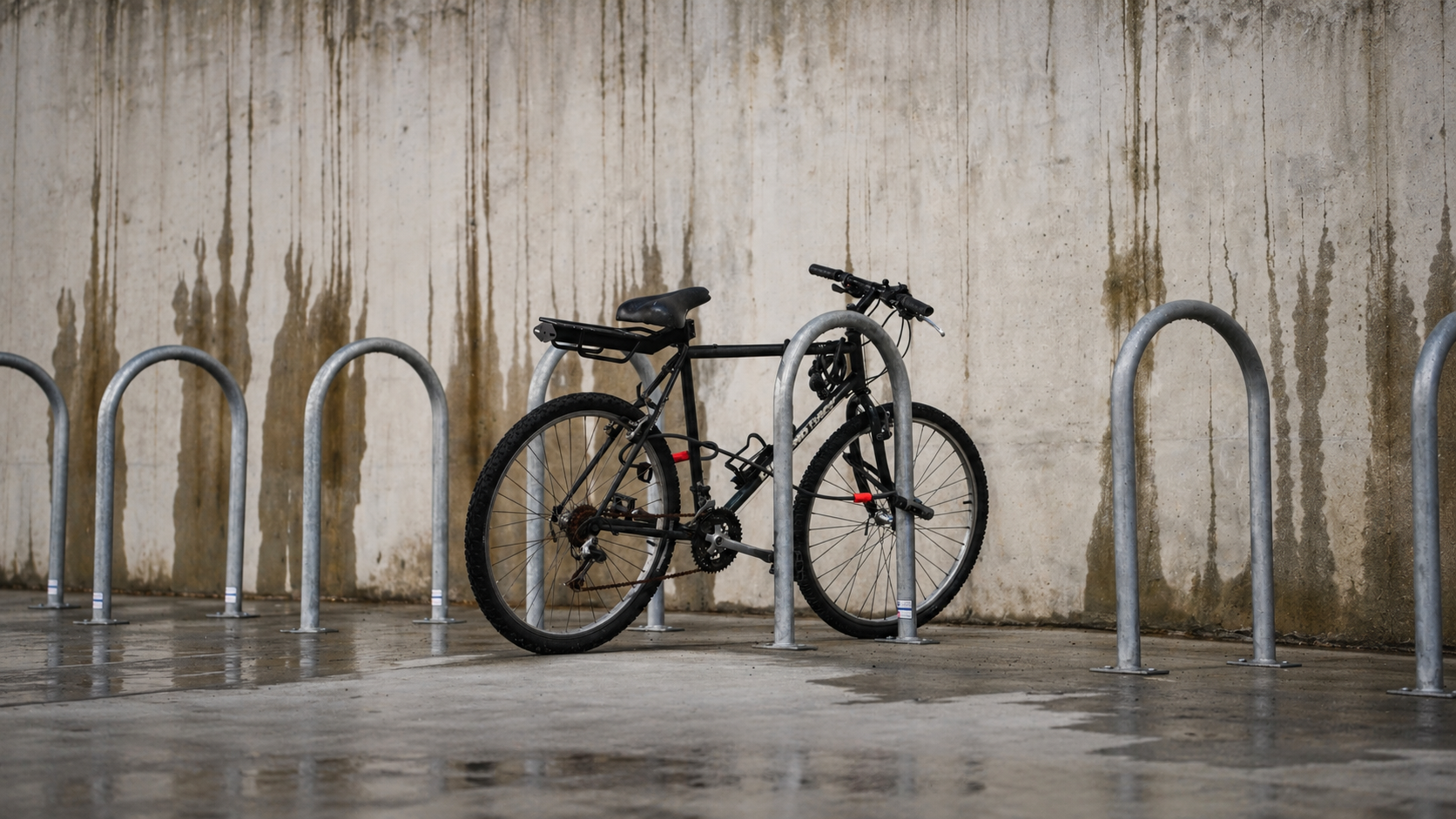
Keep the lock off the ground and leave as little space inside it as you can. A lock resting on the ground is easier to strike, and extra space gives tools room to work.
Do two locks really make a difference?
Yes, especially on a valuable bike. Two different types of lock can make a thief switch tactics and spend more time at the rack. Pair a good U-lock with a sturdy chain to get that benefit. A second U-lock can also add more protection than a cable.
A good U-lock may be plenty for a 15-minute daytime stop on a mid-range city bike. If your bike spends hours outside work every day or stays out overnight, a second lock can add a meaningful layer of security.
A quick guide to choosing a lock
| How you use your bike | What to consider | Why it works |
|---|---|---|
| Short daytime stops | Mid-range U-lock or good folding lock | Easy enough to carry and still a deterrent |
| A few hours parked at work or school | Quality U-lock | Good cutting resistance for everyday use |
| E-bike or expensive bike | U-lock plus a second sturdy lock | Secures the frame and both wheels and takes longer to defeat |
| Regular parking spot at home or work | Thick chain or U-lock plus chain | Flexible around anchors when weight is less of a concern |
| Rides and tours where you carry the lock throughout | Quality folding lock | Compact and flexible enough for most city stops |
One last thing to keep in mind
With enough time and the right tools, a determined thief can break through many locks. What you can do is make your bike a harder target.
For everyday city parking, a good U-lock is usually the safest starting point. If ease of carrying decides whether the lock comes with you, a quality folding lock may make more sense. If your bike spends long stretches at the same spot, the strength and flexibility of a chain come into their own.
Think about the place you leave your bike most often and how many hours it sits there. Once you have that answer, the lock aisle gets a lot easier to navigate.